
 Ana Megawati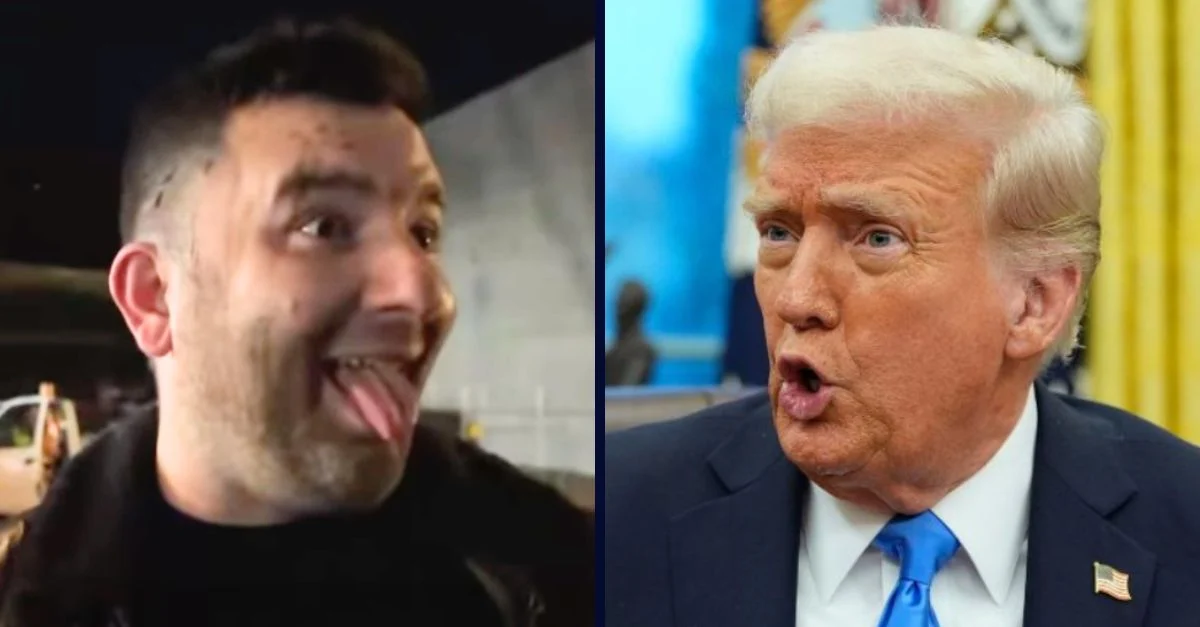
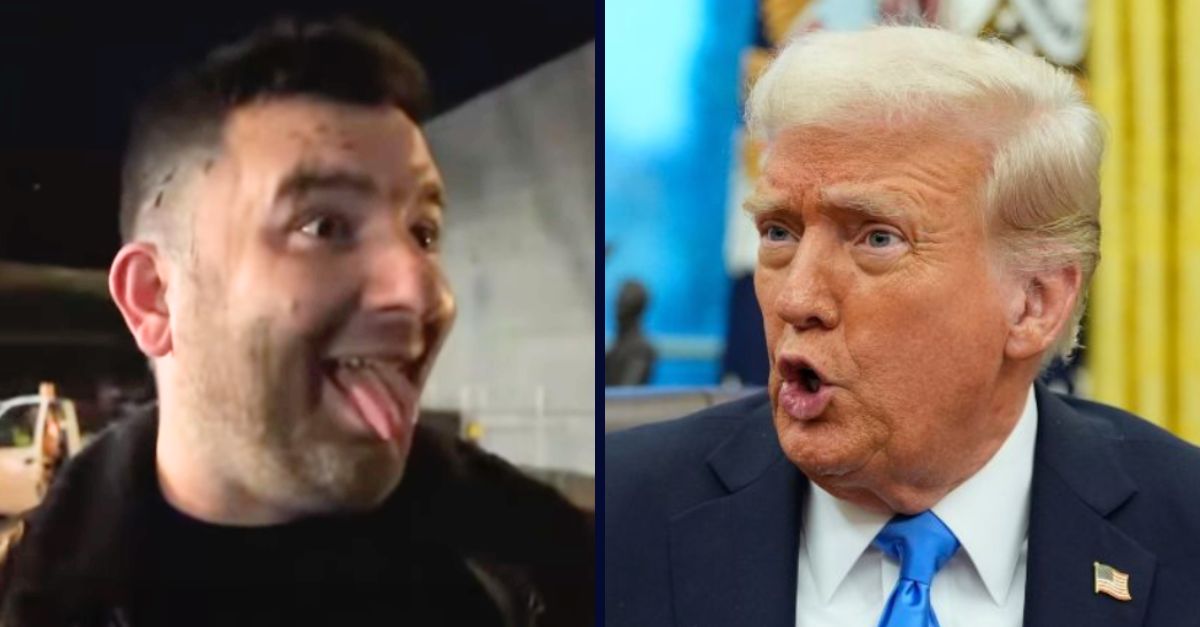
A military veteran from Oregon, Travis Juhr, 41, finds himself at the center of a complex legal maelstrom, facing a confluence of serious federal and local charges. Juhr, already accused of making violent threats against President Donald Trump and supporters of Immigration and Customs Enforcement (ICE) through a series of social media posts, was dramatically re-arrested on new allegations of arson and criminal mischief immediately following a court appearance for his initial threats case. This development adds a significant layer to a narrative that intertwines national security concerns, domestic extremism, and the volatile landscape of contemporary political discourse in the United States.
Juhr’s arrest at a federal courthouse in Portland last Friday, coming moments after he entered a plea of not guilty to the federal threats charges, underscores the gravity and multi-faceted nature of the accusations against him. He was booked on multiple counts of second-degree arson, reckless burning, and criminal mischief. These new charges stem from a vandalism report filed on February 3, involving an incident near the U.S. Immigration and Customs Enforcement building located in the city’s South Waterfront neighborhood, as reported by The Oregonian newspaper. The dual legal battles highlight the intense scrutiny law enforcement agencies are placing on individuals suspected of threatening public safety and democratic processes.
Allegations of Presidential and Public Threats
The initial federal case against Juhr revolves around a series of alarming online communications, which federal prosecutors allege constitute direct threats to the life of a sitting President and others. According to the federal complaint, these threats, made last year, were sufficiently credible to prompt an investigation by the U.S. Secret Service, the agency primarily responsible for protecting the President and other high-ranking officials. One particularly stark alleged statement, reported to the Secret Service, read, "I can'[t] wait till Trump is dead." Another, even more explicit, claimed Juhr "wanted to ‘mag dump Trump,’" a colloquial and violent phrase implying the emptying of a firearm magazine into a target.
Beyond the President, Juhr is also accused of targeting supporters of ICE, a federal agency that has frequently been the subject of protests and political contention. The complaint details at least half a dozen such threats. The scope of these alleged threats extended to a Nevada commissioner, April Becker, who publicly confirmed to The Nevada Independent that she was targeted in posts on X (formerly Twitter). In messages directed at the commissioner, Juhr allegedly wrote, "I’m coming down to Nevada for you" and ominously added, "I hope you have your doors and windows locked. Because I love a challenge when hunting my PREY. #MAGAHuntersPDX." This specific hashtag suggests a potential alignment with or appropriation of political identifiers, further complicating the perceived intent behind the threats.
Federal prosecutors also detailed threats against private citizens. Two individuals specifically mentioned in the complaint are described as a mother and her 13-year-old son, who had attended an ICE counterprotest event called "Patriots Night," an assembly designed to support immigration enforcement. The messages allegedly sent to the minor were chilling: "Divine punishment will be the price for your wickedness," and "Jesus can’t save you from what’s coming," followed by, "Excited for the obituaries." Such targeted harassment, particularly against a minor, raises significant concerns about online conduct and the potential for digital rhetoric to spill over into real-world harm.
Chronology of Escalation and Enforcement
The sequence of events leading to Juhr’s current predicament illustrates a progression from online expression to direct law enforcement intervention. The timeline begins with the alleged social media threats made last year, which eventually drew the attention of federal authorities.
- Last Year (2025): Travis Juhr allegedly begins posting threatening messages on Facebook and X, targeting President Donald Trump, ICE supporters, and a Nevada commissioner. These posts, including explicit calls for violence and death, are subsequently reported to the U.S. Secret Service.
- Early February 2026 (February 3): An act of vandalism occurs near the ICE building in Portland’s South Waterfront neighborhood. Juhr is later accused of committing arson, reckless burning, and criminal mischief in connection with this incident.
- Prior to Mid-February 2026: A Portland police officer files an extreme risk protection order (ERPO) against Juhr. This action was prompted by accusations that Ju Juhr was exhibiting "increasingly hostile" behavior towards law enforcement officers and making threats to use lethal force. ERPOs, also known as "red flag laws," allow temporary removal of firearms from individuals deemed a danger to themselves or others.
- Mid-February 2026: FBI agents execute a search warrant at Juhr’s home. During the search, they discover an alleged cache of weapons, including AR-style rifles, shotguns, Tannerite explosives, and other armaments. This discovery significantly elevates the perceived threat level associated with Juhr’s online rhetoric, transforming abstract online threats into a tangible concern about potential violence. Juhr is arrested on federal charges related to threatening the President and others.
- Late March 2026 (Last Week/Friday): Juhr appears in federal court in Portland to enter a plea of not guilty to the federal threats charges. Immediately after this court proceeding, he is re-arrested by local authorities on the new charges of second-degree arson, reckless burning, and criminal mischief related to the February 3 vandalism at the ICE facility.
This chronological unfolding paints a picture of escalating concern from law enforcement, moving from monitoring online activity to physical intervention and subsequent additional charges.
The Portland ICE Facility: A Flashpoint
The U.S. Immigration and Customs Enforcement building in Portland, located in the 600 block of South Bancroft Street, holds particular significance in this case. This facility has long been a focal point for numerous anti-ICE demonstrations, reflecting ongoing national debates over immigration policy and enforcement practices. Juhr’s alleged involvement in these protests, described by The Oregonian as including instances where he was seen wearing a bomber-style jacket and holding a Captain America shield, suggests a history of engagement with the issues surrounding the facility. The subsequent accusation of arson and vandalism at or near this specific location, therefore, adds a layer of alleged direct action to his previously documented online threats and protest activities. The alleged attack on this building, a symbol of federal authority and a flashpoint for social activism, could be interpreted as an attempt to translate ideological opposition into physical disruption and intimidation.
Weapons Cache and Extreme Risk Protection Orders
The discovery of an alleged weapons cache at Juhr’s residence during the FBI raid in mid-February provided a critical turning point in the investigation. The presence of AR-style rifles, shotguns, and Tannerite explosives, alongside other unspecified weapons, significantly amplified the perceived threat level associated with his online declarations. Federal law enforcement agencies often consider the possession of such an arsenal by individuals making violent threats as a strong indicator of intent and capability, transforming mere words into a more serious security concern.
The application for an extreme risk protection order (ERPO) by a Portland police officer prior to the FBI raid underscores the alarm Juhr’s behavior had generated among local law enforcement. ERPOs, or "red flag laws," are state-level legal mechanisms designed to temporarily prevent individuals who pose a danger to themselves or others from possessing firearms. The fact that an officer sought such an order, citing Juhr’s "increasingly hostile" demeanor toward law enforcement and threats of lethal force, indicates a pattern of concerning behavior that predated the federal charges. This pre-emptive measure highlights the proactive steps authorities can take to mitigate potential violence when individuals display warning signs. The implementation of an ERPO typically involves a court hearing where evidence of dangerousness is presented, and if granted, prohibits the individual from purchasing or possessing firearms for a specified period, often with a pathway for restoration of rights if the threat subsides.
Defendant’s Background and Defense
Travis Juhr’s background, as presented by his public defender in court, paints a picture of a decorated military veteran with extensive service. His defense team has highlighted his decade of active duty experience with the U.S. Navy, followed by five years of service with the Coast Guard. During his military career, Juhr reportedly received training as a paramedic and a rescue swimmer, skills that suggest a history of dedication to public service and high-stress environments. This professional background often serves as a mitigating factor in legal proceedings, though its relevance can be debated in cases involving alleged threats and violence.
Further details gleaned from Juhr’s deactivated Facebook page suggest a post-military career path in technology. He reportedly claimed to have studied cybersecurity at Mt. Hood Community College and worked as a voice and network engineer. A LinkedIn post from the previous month also indicated he was starting a new position as an IT systems architect for the state of Oregon. However, a spokesperson for the state of Oregon later clarified to The Oregonian that Juhr was not employed by the state at that time, casting some doubt on his current professional status.
The public defender has also reportedly sought a mental health assessment for Juhr. This move is common in cases where the defendant’s behavior appears erratic or disproportionate, aiming to understand underlying psychological factors that may have contributed to the alleged actions. Such an assessment could be crucial in determining Juhr’s state of mind at the time of the alleged offenses and may influence the course of the legal proceedings, potentially affecting plea negotiations or sentencing if he is convicted.
Legal Framework and Broader Implications
The charges against Travis Juhr touch upon several critical areas of law and societal concern, particularly in an era marked by heightened political tensions and the pervasive influence of social media.
Threats Against Federal Officials and the President: Federal law, specifically 18 U.S. Code § 871, makes it a felony to knowingly and willfully mail or otherwise make any threat to take the life of, or to inflict bodily harm upon the President of the United States. Similar statutes protect other federal officials. The Secret Service takes all such threats seriously, dedicating significant resources to their investigation, regardless of perceived intent or feasibility. The legal bar for what constitutes a "true threat" — one that can be prosecuted without infringing on First Amendment rights — has been a subject of evolving jurisprudence, generally requiring that the speaker intends to communicate a serious expression of an intent to commit an unlawful act of violence to a particular individual or group.
The Role of Social Media: This case highlights the double-edged sword of social media platforms. While they offer avenues for free expression and political discourse, they also serve as conduits for the rapid dissemination of violent rhetoric and threats. Law enforcement agencies face the immense challenge of monitoring vast amounts of online content to distinguish between protected speech, hyperbolic expressions, and genuine threats that require intervention. The ability to identify, track, and respond to threats made across various platforms is a constant race against technological advancement and the sheer volume of digital communication.
Free Speech vs. Criminal Threats: The Juhr case, like many involving online threats, navigates the delicate balance between the constitutional right to free speech and the government’s compelling interest in protecting public safety. While individuals are generally free to express unpopular or even offensive opinions, that freedom does not extend to making true threats of violence. Courts consistently rule that threats intended to intimidate or instill fear fall outside the protection of the First Amendment. The legal challenge often lies in proving intent and ensuring that the context of the communication demonstrates a clear and unambiguous threat.
Societal Impact of Polarization: The backdrop of Juhr’s alleged actions—targeting a President, ICE supporters, and even a minor attending a political event—reflects a disturbing trend of increasing political polarization and hostility in the United States. The weaponization of political rhetoric, both online and offline, contributes to an environment where individuals may feel emboldened to act on extremist views. Such cases underscore the urgent need for civic discourse that prioritizes respect, even amidst disagreement, and for robust mechanisms to address individuals who cross the line into promoting or enacting violence.
Ongoing Legal Proceedings
Travis Juhr currently faces a complex legal future, with proceedings expected to continue on multiple fronts. The federal charges related to threatening the President and others are distinct from the state-level charges of arson, reckless burning, and criminal mischief, though both sets of allegations could impact each other. His public defender will likely pursue all available legal avenues, including challenging the evidence, exploring potential defenses related to intent or mental state, and negotiating with prosecutors. The outcomes of these cases could carry significant penalties, including lengthy prison sentences, reflecting the serious nature of threatening federal officials and engaging in acts of violence or vandalism. The ongoing investigations and legal battles serve as a stark reminder of the vigilant efforts required to safeguard both democratic processes and public safety in an increasingly volatile socio-political landscape.

 Yuyun Lusiyani
 Joko Widodo
 Jia Lissa
 Pevita Pearce
 admin
admin
