
 Ana Megawati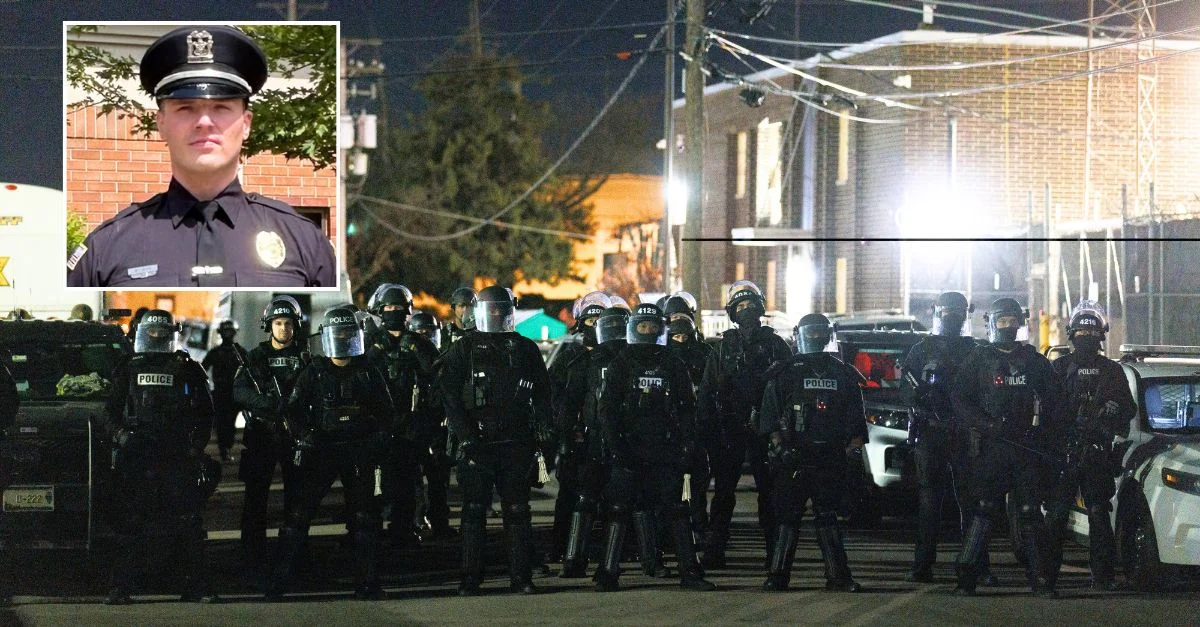
A U.S. District Judge has mandated the immediate reinstatement of an Illinois police officer, Radule Bojovic, criticizing the Trump administration’s handling of his employment status as "shockingly cavalier" in a case stemming from claims of illegal immigration. The ruling by U.S. District Judge Jorge Luis Alonso on Tuesday, issued as a temporary restraining order (TRO), prohibits the Department of Homeland Security (DHS) from interfering with Bojovic’s work with the Hanover Park Police Department. This decision allows Officer Bojovic, a Montenegrin national who has resided in the U.S. for nearly a dozen years with a pending asylum application, to continue serving his community while his immigration case proceeds through the federal system. The case highlights ongoing tensions between federal immigration enforcement priorities and individual due process rights, particularly for those with long-standing ties and contributions to American society.
Officer Radule Bojovic: A Decade-Long Journey to Law Enforcement
The legal battle surrounding Officer Radule Bojovic is rooted in a complex immigration history that began over a decade ago. Bojovic, a native of Montenegro, first entered the United States in 2014 alongside his family. At the time, he was a 16-year-old minor. Shortly after their arrival, his father initiated an "Application for Asylum and for Withholding of Removal," a comprehensive legal process designed to protect individuals fearing persecution in their home countries. Radule Bojovic was included as a dependent in this application.
The U.S. asylum system is notoriously backlogged, with applications often taking many years, sometimes a decade or more, to be adjudicated. This extensive waiting period means that applicants, while their cases are pending, are often eligible to apply for employment authorization documents (EADs) from U.S. Citizenship and Immigration Services (USCIS). These EADs allow asylum seekers to legally work and contribute to the economy while awaiting a decision on their status. Bojovic successfully applied for and received such authorization, with his most recent renewal granted in September 2025.
During this period of legal residency and employment authorization, Bojovic pursued a career in law enforcement, a testament to his integration and commitment to his new home. He underwent rigorous training and successfully graduated from the Suburban Law Enforcement Academy, a significant achievement for any aspiring police officer. The Hanover Park Police Department publicly celebrated his graduation, noting in a social media post just one month before his EAD renewal in September 2025, that he was set to embark on "intensive 15 weeks of field training and evaluation as he continues preparing to serve the Hanover Park community." This demonstrated not only his dedication but also the trust and investment the local agency had placed in him.
Operation Midway Blitz and the Federal Crackdown
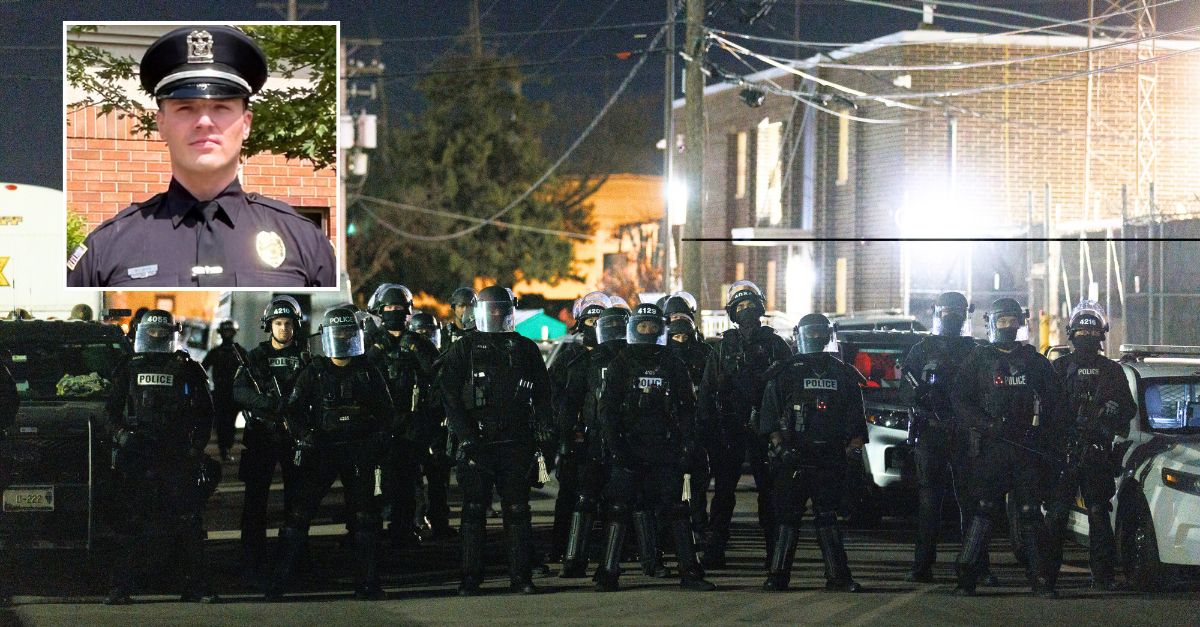
The situation took a dramatic turn in October 2025, when federal immigration authorities launched "Operation Midway Blitz," a wide-ranging enforcement action targeting individuals suspected of immigration violations across Chicago and its suburbs. This operation was part of a broader, intensified effort by the Trump administration to increase immigration enforcement, often characterized by high-profile arrests and strong rhetoric against so-called "sanctuary" jurisdictions.
It was during this operation that Officer Bojovic became a target. Federal agents from DHS and Immigration and Customs Enforcement (ICE) arrested him, subsequently issuing press releases that publicly boasted about the apprehension. In these statements, federal agencies alleged that Bojovic had "overstayed his visa by more than 10 years" and was "prohibited from owning or possessing firearms" because he was an "illegal alien." These claims immediately sparked controversy, given Bojovic’s status as a uniformed police officer with a valid work permit and pending asylum case.
Federal officials also seized the opportunity to launch a pointed attack against Illinois Governor J.B. Pritzker, a vocal critic of President Donald Trump and a proponent of "sanctuary state" policies designed to limit state and local cooperation with federal immigration enforcement. Then-Assistant DHS Secretary Tricia McLaughlin issued a scathing statement: "Pritzker doesn’t just allow violent illegal aliens to terrorize Illinois’s communities, he allows illegal aliens to work as sworn police officers. What kind of police department gives criminal illegal aliens badges and guns?" The ICE press release echoed this sentiment, adding, "This is just the latest instance of Governor JB Pritzker’s continued refusal to abide by federal laws, jeopardizing the welfare of Illinois residents." These statements underscored the political dimension of the arrest, positioning it as a direct challenge to Illinois’s stance on immigration and an indictment of local law enforcement practices.
The Legal Quagmire: Revocation of Work Authorization
Following his arrest, Officer Bojovic was detained for two weeks, a period that highlighted the immediate and severe consequences of federal immigration actions. He was eventually released on bond and, demonstrating his commitment to his duties, returned to work with the Hanover Park Police Department in November 2025, even as federal authorities initiated removal proceedings against him.
However, the administrative actions against Bojovic continued. On December 11, 2025, USCIS issued a "Notice of Intent to Revoke" (NOIR) his employment authorization. This came despite the fact that his authorization had been renewed just months prior in September. The NOIR contended that Bojovic had been removed from his father’s asylum application eight days earlier, on December 3, 2025. Bojovic, through his legal representation, vehemently disputed this claim, asserting it was either untrue or erroneous.
The situation escalated in January 2026, when Bojovic received official notification that his employment authorization had indeed been revoked. The revocation notice reiterated the claim that he had been removed from his father’s asylum application on December 3, 2025, and further stated that he had failed to respond to the NOIR. Bojovic, however, maintained that he had responded to the notice in a timely manner, sending his reply via FedEx. His response, according to the judge’s later recounting, "correctly explained that the factual basis for revocation asserted in the NOIR was incorrect," challenging the very premise of the federal government’s action.
Facing a complete loss of income, the interruption of his burgeoning career, and the inability to meet his financial obligations, Bojovic subsequently filed a complaint in federal court seeking the reinstatement of his work authorization. Concurrently, he moved for a temporary restraining order (TRO) to allow him to return to work immediately while the legal complexities of his case were untangled.
Judge Alonso’s Scathing Indictment of Federal Conduct
U.S. District Judge Jorge Luis Alonso, an appointee of former President Barack Obama, presided over Bojovic’s request for a TRO. His six-page order, issued on Tuesday, not only granted Bojovic’s request but also delivered a sharp rebuke to the federal government’s approach.
Judge Alonso appeared notably disturbed by the Trump administration’s dismissal of Bojovic’s concerns regarding the severe impact of losing his livelihood. The administration had argued that "economic harms are not irreparable and damage to career prospects is merely speculative." Judge Alonso directly countered this, writing, "Defendants are shockingly cavalier about the consequences that may flow from the loss of a person’s livelihood and the interruption of a fledgling career." This strong language underscored the judge’s view that the federal government was displaying a profound lack of empathy and consideration for the real-world implications of its administrative actions.
Furthermore, Judge Alonso pointed out a critical deficiency in the federal government’s legal defense. He noted that the administration’s response brief to Bojovic’s complaint was "most notable for what it does not say: it does not defend USCIS’s revocation decision on its own terms. That silence speaks volumes." This observation suggested that the government struggled to provide a robust legal justification for its decision to revoke Bojovic’s work permit, particularly given his timely response to the NOIR and his challenge to the factual basis of the revocation.
In his concluding remarks, Judge Alonso weighed the equities of the case, finding them to "weigh rather decisively in Plaintiff’s favor." He emphasized Bojovic’s status as a public servant who "has not been shown to present any threat to the community (quite the opposite, if anything)." The judge articulated that he "fails to see what the government gains by suspending his employment without pay based on what appears likely to be, so far as the parties have shown at this early stage, a legal and/or factual error." This ruling not only protects Bojovic’s ability to work but also sends a clear message about the importance of due process and the scrutiny federal agencies face when their actions appear arbitrary or based on questionable factual grounds.
Broader Implications and Reactions
Judge Alonso’s ruling has significant implications for Officer Bojovic, the Hanover Park Police Department, and potentially thousands of other asylum seekers across the United States.
For Officer Bojovic: The TRO allows him to return to his duties, providing immediate financial relief and safeguarding his career trajectory. It validates his claim that the revocation of his work permit was likely erroneous and offers him a crucial reprieve in his ongoing immigration battle. However, the TRO is temporary; the underlying immigration case and the lawsuit for permanent reinstatement of his work authorization will continue.
For Hanover Park Police Department: The department, which had invested in Bojovic’s training and publicly acknowledged his commitment, can retain a sworn officer who was deemed fit to serve. The department’s likely relief stems from being able to maintain its staffing levels and avoid the disruption of losing a trained officer over a federal administrative dispute. While no official statement has been released post-ruling, the department’s earlier public congratulations to Bojovic suggest an implicit support for his continued service.
For Asylum Seekers and Immigration Advocacy Groups: This ruling is likely to be hailed by immigration advocacy organizations as a victory for due process and a check on what they often describe as overzealous and politically motivated federal enforcement actions. It could offer a glimmer of hope for other asylum seekers who, despite having valid work permits and contributing to their communities, face arbitrary administrative challenges or enforcement actions. Groups such as the American Civil Liberties Union (ACLU) and local immigrant rights organizations would likely point to this case as evidence of the need for greater scrutiny of DHS and USCIS decisions, particularly when they appear to be based on flawed information or political directives. They would emphasize that asylum seekers are often fleeing dangerous conditions and, once here, seek to build new lives and contribute, as exemplified by Bojovic’s desire to serve as a police officer.
For Federal-State Relations and the Trump Administration’s Immigration Policy: The judge’s sharp criticism of the "shockingly cavalier" approach by the Trump administration further highlights the deep ideological and legal fissures between federal immigration enforcement and state/local policies, particularly in "sanctuary" jurisdictions like Illinois. The administration, through DHS and ICE, had used Bojovic’s arrest to publicly condemn Governor Pritzker and Illinois’s policies. Judge Alonso’s ruling, however, suggests that these federal actions may have overstepped legal bounds or failed to adhere to proper administrative procedures. This case could embolden other local jurisdictions and legal challenges against federal enforcement efforts that are perceived as punitive or lacking due process. The Trump administration, on the other hand, is likely to view this as judicial interference with its executive authority to enforce immigration laws and could potentially appeal the TRO, although temporary restraining orders are often difficult to overturn quickly. They would likely reiterate their stance that individuals without finalized legal status should not hold positions of public trust, especially those involving firearms.
Legal Precedent and Future Cases: While a temporary restraining order is not a final judgment on the merits of the case, Judge Alonso’s strong language and detailed reasoning provide important insights into how federal courts may scrutinize DHS and USCIS actions. His emphasis on the irreparable harm caused by the loss of livelihood and the seemingly unsubstantiated basis for the revocation could set a precedent for future challenges to administrative decisions affecting employment authorization for asylum seekers. Legal experts would likely analyze this ruling for its implications on administrative law, due process rights for non-citizens, and the balance of power between the judiciary and the executive branch in immigration matters.
The Road Ahead
A status hearing for the case is scheduled for Thursday morning, where both parties will likely discuss the next steps in the legal proceedings. While Officer Bojovic can return to work, the core issues of his asylum application and the legality of the USCIS revocation remain to be fully litigated. The case underscores the complex and often contentious landscape of U.S. immigration policy, where individual lives, federal directives, and judicial oversight frequently collide. The outcome of this ongoing legal battle will not only determine Officer Bojovic’s future but could also shape the discourse and legal precedents for countless others navigating the intricate U.S. immigration system.



 Yuyun Lusiyani
 Joko Widodo
 Jia Lissa
 Pevita Pearce
 admin
admin
