
 Ana Megawati
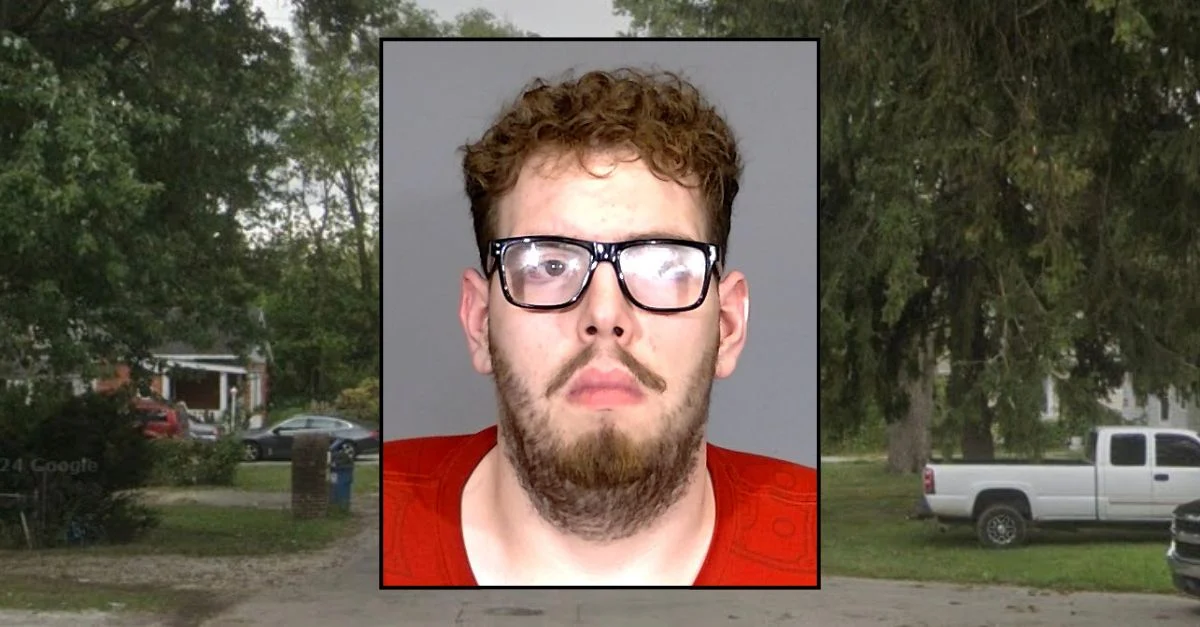
Diedrich Holgate, a 47-year-old Texas native, has been re-arrested in Oregon following allegations that he issued dozens of new threats against President Donald Trump to his probation officer, a mere weeks after being released from prison for a prior conviction involving similar threats. The federal petition for his arrest details a troubling pattern of escalating rhetoric, culminating in direct threats of violence and intimidation, raising serious concerns about public safety and the efficacy of supervised release protocols for high-risk individuals.
Allegations of Renewed Threats and Immediate Re-Arrest
According to a federal petition filed for his arrest, Diedrich Holgate allegedly sent numerous text messages to his probation officer, explicitly stating his intention to "kill the president." One particularly stark message reportedly read: "Trump’s gonna fkn pardon me or I’ll kill him!!!!!" This statement not only conveyed a direct threat but also hinted at a perceived entitlement or a desperate attempt to manipulate the legal system through coercion. Further alleged communications included chilling phrases such as, "I’m done playin," and "Dead Dead Dead," underscoring the severity and directness of his purported intentions. The volume of these communications, described as "dozens of text messages," indicates a sustained and deliberate effort to convey these threats.
These new allegations emerged shortly after Holgate’s release on January 21, when he was ordered to reside at a halfway house in Portland as a condition of his supervised release following his prior conviction. However, the stability intended by this arrangement was short-lived. The arrest petition indicates that Holgate was "terminated" from the halfway house after being caught "smoking a vape," a seemingly minor infraction that nonetheless signaled a disregard for the explicit conditions of his supervision. It was in the wake of this termination, and reportedly just weeks after his initial release from federal custody, that the alleged barrage of threatening texts began.
The probation officer, whose identity remains protected due to the nature of their role and the threats received, described the distressing nature of these communications during Holgate’s preliminary hearing. The officer testified that Holgate repeatedly declared he was "going to kill the President" and, chillingly, threatened the officer personally, stating they "would be erased." These threats were not merely directed at the President; they also encompassed the federal officer tasked with his supervision, suggesting a broader defiance of authority and a potential for generalized aggression. The officer expressed a genuine belief to the court that Holgate possesses the capacity to carry out his threats against President Trump, a critical assessment that undoubtedly influenced the court’s subsequent decision.
A Detailed History of Presidential Threats: The 2024 Conviction
Diedrich Holgate’s current legal predicament is not an isolated incident but rather a continuation of a persistent pattern of behavior that led to his conviction and sentencing just last year. Throughout 2024, Holgate engaged in a concerted campaign of threats targeting both then-President Joe Biden and former President Donald Trump. His methods were varied and persistent, utilizing social media platforms, direct messages to the White House, and repeated calls to the U.S. Secret Service, demonstrating a deliberate and widespread intent to disseminate his violent messages across multiple channels.
The federal indictment from his prior case detailed several specific instances of these threats. In June 2024, during a call to the Secret Service’s Washington Field Office, Holgate declared, "The president is going to die." He then asserted, "I have the right to kill the president," adding chillingly, "I don’t care if it is Trump or Biden." This indiscriminate targeting highlighted a potential underlying animosity towards the institution of the presidency itself, rather than solely a specific individual, suggesting a deeper ideological or psychological motivation.
The threats escalated further in August 2024, when Holgate reportedly called the Secret Service again. During this call, he allegedly stated, "I will hang his ass for treason," and promised to "f—ing kill everybody." He then broadened the scope of his threats to include "POTUS, FLOTUS, and SCOTUS," an acronym referring to the President of the United States, the First Lady of the United States, and the Supreme Court of the United States, respectively. This expansion of targets to include the President’s spouse and the highest judicial body in the country indicated a profound level of animosity and a perceived threat to the very fabric of American governance and its democratic institutions.
His conviction for these earlier threats underscored the gravity with which federal authorities view such declarations. The judicial system, through this prior sentencing, had attempted to address Holgate’s behavior, leading to his incarceration and subsequent supervised release. The rapid recurrence of similar threats so soon after his release, however, suggests a significant challenge in deterring his conduct and raises questions about the long-term effectiveness of conventional punitive measures in his specific case.
The Legal Framework: Understanding Threats Against the President
Threatening the President of the United States is a profoundly serious federal offense, meticulously codified under 18 U.S. Code § 871. This statute makes it explicitly illegal for any person to knowingly and willfully mail or otherwise make any threat to take the life of, to kidnap, or to inflict bodily harm upon the President of the United States. The law, which has roots dating back to 1917, was enacted primarily to protect the President, and by extension, the stability and continuity of the U.S. government, from acts of violence or intimidation that could destabilize the nation.
The U.S. Secret Service, primarily known for its visible role in providing physical protection to high-ranking officials, including the President, Vice President, and their immediate families, also holds a crucial investigative mandate. This mandate includes the exhaustive investigation of all threats made against its protectees. These investigations are meticulous, involving extensive intelligence gathering, sophisticated risk assessment protocols, and, when necessary, seamless coordination with federal prosecutors to bring charges against those who issue such threats. The Secret Service’s documented involvement in Holgate’s prior case, meticulously recording his calls and messages, was central to his initial indictment and conviction. Their continued vigilance and rapid response are paramount in cases like Holgate’s, where a documented history of threats indicates a persistent and elevated risk.
A conviction under 18 U.S. Code § 871 can carry a substantial sentence of up to five years in federal prison, a significant fine, or both. The legal standard for what constitutes a "true threat" — one that the speaker intends to communicate a serious expression of an intent to commit an act of unlawful violence to a particular individual or group of individuals — is often a subject of rigorous debate in court, particularly in cases involving ambiguous language or context. However, the explicit and repetitive nature of Holgate’s alleged statements, both in his prior conviction and the current allegations, leaves little to no room for ambiguity regarding his purported intent.

Supervised Release and the Challenge of Recidivism
Holgate’s case vividly highlights the complex and often challenging realities inherent in the federal supervised release system. This system is meticulously designed to facilitate a prisoner’s reintegration into society while simultaneously ensuring the paramount objective of public safety. Supervised release imposes strict and specific conditions on individuals post-incarceration, often including mandatory requirements to report regularly to a probation officer, reside in approved housing facilities, maintain gainful employment, and, crucially, refrain from any further criminal activity or illicit drug use. The overarching goal is to closely monitor behavior and provide necessary support, thereby significantly reducing the likelihood of recidivism.
In Holgate’s specific instance, his release on January 21 came with explicit directives, including the requirement to reside at a Portland halfway house. Halfway houses serve as critical transitional living facilities, offering a structured and supervised environment coupled with essential resources to assist individuals in adjusting to life outside the confines of prison. His alleged termination from this facility for "smoking a vape" was not merely a minor rule infraction but a significant breach of trust and a direct violation of a core condition of his release. This incident, occurring just prior to the new alleged threats, strongly suggests a rapid breakdown in his adherence to the established terms of his supervision.
The subsequent alleged threats made directly to his probation officer represent an extremely severe violation of supervised release. Such acts not only demonstrate a profound contempt for the legal system and its authorities but also place federal officers in a position of potential danger, undermining the very system designed to manage and monitor former inmates. The federal petition explicitly states that "Probable cause has been established that a violation of supervised release has been committed," based on Holgate making "multiple threatening statements via text message to his probation officer." Furthermore, the petition noted his alleged failure to report to his probation officer as instructed and his refusal to live in approved housing, compounding the list of significant violations.
Cases of recidivism, particularly those involving repeated threats against high-profile public officials, pose a significant and multifaceted dilemma for the criminal justice system. Balancing the rehabilitative goals of supervised release with the paramount need for public safety is an exceptionally delicate act. When individuals demonstrate a persistent and escalating pattern of dangerous behavior, despite prior incarceration and ongoing supervision, it invariably prompts a critical re-evaluation of current strategies and a reinforcement of stricter monitoring and enforcement protocols to mitigate further risks to the community and public figures.
Court Proceedings and Judicial Response
Holgate’s preliminary hearing took place on Thursday, providing the initial judicial assessment of the new and troubling allegations. The probation officer’s compelling testimony was central to the proceedings, detailing the precise content, frequency, and alarming nature of Holgate’s alleged threats. Beyond the threats explicitly directed against the President, the officer also recounted Holgate’s personal intimidation tactics, including text messages such as, "You’re with me or You’re a traitor & infidel that’s taken the Mark of the beast. & Hell? That won’t last forever. Second death. You’ll be erased." This type of communication not only constitutes a direct threat but also reveals a potential ideological, delusional, or religiously infused component to Holgate’s mindset, utilizing evocative religious or apocalyptic imagery to convey his deep-seated animosity and perceived grievances. The officer further testified that Holgate threatened they would "burn in hell" for reporting him, further illustrating the intensely personal and aggressive nature of the threats.
A crucial aspect of the hearing, as reported by The Oregonian newspaper, involved the presiding judge’s assessment of Holgate’s mental competency. During direct questioning, the judge found no substantial evidence to suggest that Holgate lacked the mental capacity to fully understand the legal proceedings or the gravity of the allegations being made against him. This finding is profoundly significant because mental competency is a foundational legal requirement for an individual to stand trial and actively participate in legal proceedings. While this assessment does not definitively preclude the possibility of underlying mental health issues that may contribute to his behavior, it does confirm that, in the court’s view, Holgate was cognizant of his actions and their implications during the preliminary hearing.
Ultimately, the judge ruled that there was probable cause to conclude that Holgate had indeed violated the stringent conditions of his supervised release. This ruling was firmly based on the new threats he allegedly issued, coupled with his documented failure to adhere to mandatory reporting and approved housing requirements. Consequently, Holgate was ordered to remain in federal custody, underscoring the court’s perception of him as either a significant flight risk or an ongoing danger to the community. His next crucial hearing is officially scheduled for March 26, where further judicial decisions regarding the potential revocation of his supervised release and the possibility of new federal charges will be made.
Broader Implications and Ongoing Vigilance
The case of Diedrich Holgate serves as a stark and sobering reminder of the persistent and evolving threats faced by public officials in an increasingly polarized political climate, and the inherent challenges involved in effectively managing individuals with a documented history of such volatile behavior. The repeated nature of his alleged threats, even after a period of incarceration and under the direct oversight of federal supervision, highlights the complex interplay of individual intent, mental state, and the often-strained mechanisms of the justice system.
For the U.S. Secret Service, cases like Holgate’s are a constant and critical validation of their dual mission. Their proactive investigations and meticulous threat assessments are absolutely crucial in preventing potential harm. The agency’s vital role extends far beyond physical protection to encompass the meticulous tracking, comprehensive analysis, and strategic mitigation of threats, whether they originate online, through direct communication, or via intermediaries like dedicated probation officers.
The legal system’s robust response to such repeat offenders is critically important. Revocation of supervised release typically results in a return to federal prison, potentially for the full duration of the original sentence that was initially suspended. Additionally, new federal charges for the latest threats could be formally filed, leading to further and potentially cumulative penalties. This layered approach aims to both deter future criminal behavior and effectively protect society from individuals deemed to pose a significant and ongoing risk.
Beyond the immediate legal ramifications for Holgate, his case also prompts a broader and necessary discussion about the adequacy of mental health support within the correctional and supervised release systems. While the judge found him competent to understand the legal proceedings, the persistent and often bizarre nature of his threats, including the use of religious and apocalyptic language, could strongly suggest underlying psychological factors that may require specialized intervention and comprehensive treatment strategies beyond traditional incarceration. Effective management of high-risk individuals often necessitates a holistic and integrated approach that seamlessly combines mental health services, evidence-based behavioral therapy, and robust, continuous supervision.
As the nation continues to navigate a deeply polarized political landscape, the seriousness of threats directed against public officials cannot be overstated. Such threats fundamentally undermine democratic processes, actively foster an environment of fear and intimidation, and place an undue and significant burden on law enforcement and protective agencies. The federal government’s unwavering commitment to thoroughly investigating and prosecuting these cases sends a clear and unequivocal message that such behavior will not be tolerated, thereby striving to ensure the safety of elected leaders and the fundamental integrity of national institutions. The ongoing legal proceedings against Diedrich Holgate will continue to be closely monitored as the courts determine the appropriate and just course of action for this repeat offender.



 Joko Widodo
 admin
admin
 Nila Kartika Wati
 Lina Irawan
 Jia Lissa
 Yuyun Lusiyani