
 Eva Lovia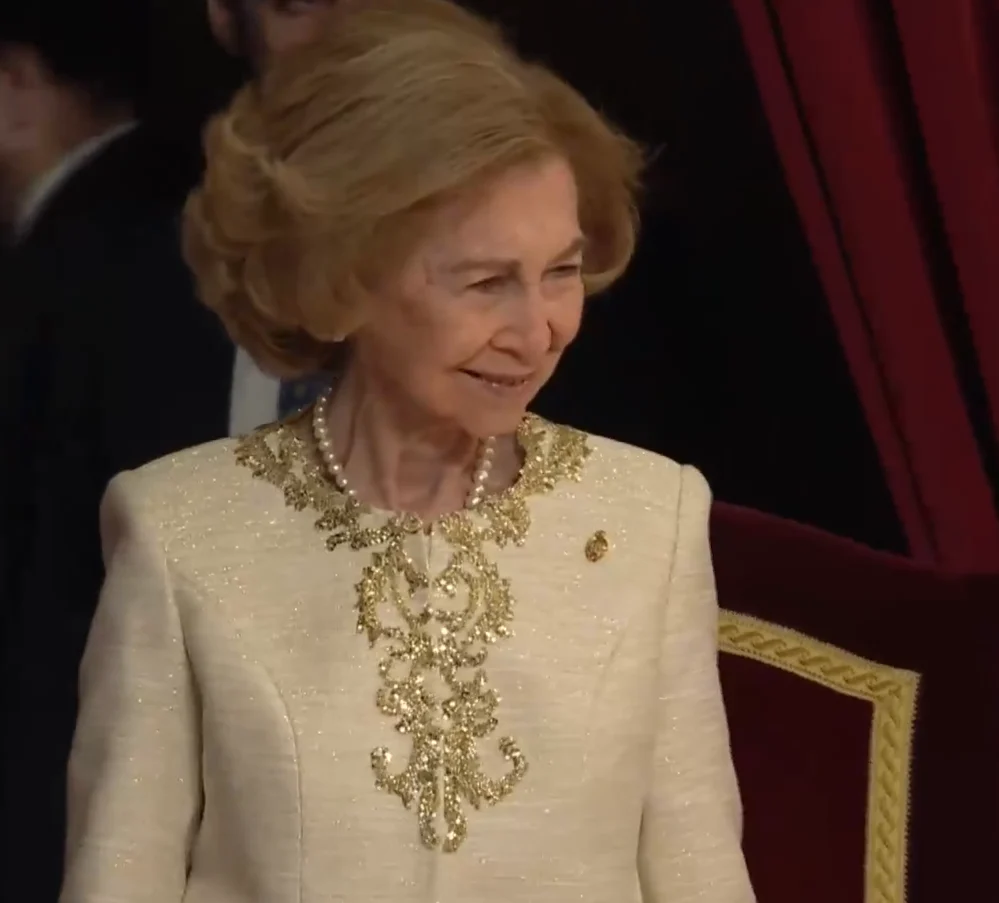
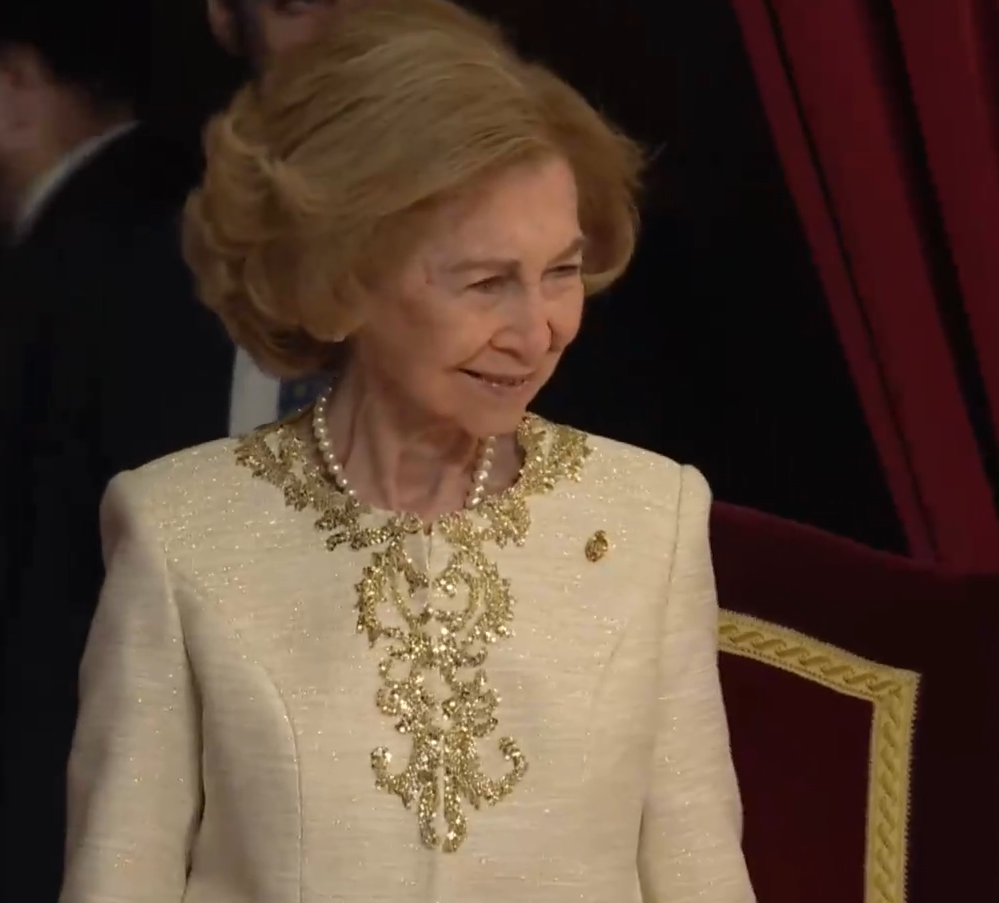
Queen Sofia of Spain, a respected figure in European royalty, is poised to make a significant appearance at what is anticipated to be the most prominent gathering of European monarchs this year. At 87 years of age, Queen Sofia is scheduled to travel to Sweden next week to honour King Carl XVI Gustaf on the occasion of his 80th birthday. This milestone event promises to convene a distinguished assembly of royalty from across the continent and beyond, culminating in a grand gala dinner to be held at the Royal Palace in Stockholm on the King’s actual birthday.
The confirmation of Queen Sofia’s attendance, as reported by Hola, signifies Spain’s representation at this prestigious event by the mother of the current Spanish monarch, King Felipe VI. While it remains unconfirmed whether other members of the Spanish Royal Family will accompany her, her presence in Stockholm was widely anticipated. Queen Sofia shares a long-standing and well-documented friendship with King Carl XVI Gustaf and his consort, Queen Silvia, a bond that underscores the deep-seated connections within European royal houses.
The Swedish King’s 80th birthday falls on April 30th, a date marked by a series of significant events designed to celebrate his long reign and personal milestone. The day’s festivities are set to commence with a solemn church service in the morning, offering a moment of reflection and religious observance. Following this, the King is expected to engage with well-wishers, providing an opportunity for the public to share in his celebrations and express their felicitations directly.
The centerpiece of the birthday celebrations will be the glittering gala dinner scheduled for the evening of April 30th. This opulent affair will see the King of Sweden joined by his immediate family, all of whom are expected to be in attendance. Crown Princess Victoria, the King’s eldest child and heir to the throne, will be present with her husband, Prince Daniel. Also attending will be the King’s son, Prince Carl Philip, and his wife, Princess Sofia. Princess Sofia’s appearance at this high-profile event marks a significant public engagement for her alongside the Swedish royals, particularly in the wake of recent revelations concerning her past acquaintance with the convicted sex offender Jeffrey Epstein. This context adds a layer of scrutiny to her participation, underscoring the delicate balance royals must maintain between personal history and public duty.
The younger generation of the Swedish Royal Family will also be represented. Princess Madeleine, the King and Queen’s youngest child, is expected to attend with her husband, Christopher O’Neill, further cementing the family’s collective presence at this important national celebration.
Beyond the Swedish Royal Family and Queen Sofia of Spain, a formidable contingent of European royalty has already confirmed their attendance. Denmark will be represented by King Frederik and Queen Mary, alongside the esteemed Queen Margrethe, whose presence always lends considerable gravitas to such occasions. From Norway, King Harald and Queen Sonja are also expected, accompanied by their son, Crown Prince Haakon. Notably, Crown Princess Mette-Marit of Norway will not be attending due to her ongoing treatment for pulmonary fibrosis, a serious respiratory condition. Her absence, while medically justified, also follows a period of reduced public profile, which has been linked to discussions surrounding her past connections to Epstein, mirroring the sensitivities surrounding Princess Sofia of Sweden.
The British Royal Family’s attendance presents a more complex picture. King Charles and Queen Camilla will be unable to attend due to their scheduled State Visit to the United States, which coincides precisely with the Swedish King’s birthday celebrations. The possibility of the Prince and Princess of Wales attending in their stead remains open, though not yet confirmed. Meanwhile, the Duke and Duchess of Edinburgh, who are frequent attendees at major European royal events, are reportedly committed to engagements within the United Kingdom on the day of the celebrations, precluding their participation.
Background of the Event and Royal Tradition
King Carl XVI Gustaf’s 80th birthday marks a significant milestone not only for the Swedish monarch but also for the institution of the monarchy itself. In Sweden, the King ascended to the throne in 1973, making him one of Europe’s longest-reigning monarchs. His reign has spanned decades of significant social and political change, and his 80th birthday is an occasion to reflect on his service and the evolution of the Swedish monarchy under his leadership.
The tradition of European royals attending each other’s significant birthday celebrations is a long-standing practice, serving to reinforce familial ties, diplomatic relations, and the shared heritage of monarchical systems. These gatherings offer a unique platform for private discussions and informal diplomacy among heads of state and their families, away from the glare of public scrutiny. The scale of royal attendance anticipated for King Carl XVI Gustaf’s 80th birthday underscores the respect and esteem in which he is held by his European counterparts.
Chronology of Celebrations
The celebrations for King Carl XVI Gustaf’s 80th birthday are meticulously planned to offer a multifaceted experience, blending solemnity with festivity.
- Morning of April 30th: A formal church service will be held, providing a dignified start to the day’s events. This will be followed by an opportunity for the public to meet the King, a gesture of engagement with his subjects and a chance for citizens to personally extend their birthday wishes.
- Evening of April 30th: The grand finale will be the gala dinner at the Royal Palace in Stockholm. This event is expected to be a spectacular affair, attended by the King, Queen Silvia, their children, grandchildren, and a distinguished roster of international royal guests. The dinner will undoubtedly feature formal toasts, musical performances, and a lavish banquet, all set against the backdrop of Stockholm’s historic royal residence.
While specific details about other potential events preceding or following the main birthday on April 30th have not been fully disclosed, it is customary for such significant royal milestones to be marked by a series of engagements over several days, allowing for various levels of interaction and celebration.
Supporting Data and Royal Network
The attendance of Queen Sofia of Spain highlights the intricate web of relationships that connect European royal families. Queen Sofia, born Princess Sophia of Greece and Denmark, has a lineage that connects her to numerous European royal houses. Her marriage to King Juan Carlos I of Spain, who abdicated in 2014 in favour of their son Felipe VI, placed her at the heart of Spanish royal life. Her enduring friendship with Queen Silvia of Sweden, who was born Silvia Sommerlath in Germany, further solidifies these transatlantic royal bonds.
The presence of King Frederik and Queen Mary of Denmark, along with Queen Margrethe, underscores the close ties between the Nordic royal families. The Norwegian Royal Family’s attendance, represented by King Harald, Queen Sonja, and Crown Prince Haakon, further emphasizes the strong relationships within Scandinavia. These connections are not merely symbolic; they represent decades of shared history, intermarriages, and mutual support among these monarchies, many of which have deep roots stretching back centuries.
The absence of King Charles and Queen Camilla due to their US State Visit is a notable point, as the British Royal Family often plays a prominent role in such international royal gatherings. Their commitment underscores the demands on their time and the global scope of their diplomatic responsibilities. The potential attendance of the Prince and Princess of Wales would, however, ensure a significant British presence.
Analysis of Implications and Public Perception
The convergence of so many European royals in Stockholm serves as a powerful visual representation of the enduring relevance of monarchies in the 21st century. In an era often characterized by republican sentiment and democratic ideals, these gatherings reaffirm the historical and cultural significance of royal institutions. They provide a platform for these hereditary heads of state to present a united front, showcasing continuity, tradition, and a sense of shared European identity.
The attendance of Princess Sofia of Sweden alongside other senior royals, particularly in light of the Jeffrey Epstein revelations, highlights the challenges modern royals face in navigating public scrutiny. Her participation, while expected as a member of the Swedish Royal Family, will undoubtedly be observed closely. The Swedish Royal Court, like other royal institutions, must balance the need for transparency with the protection of privacy and the management of past associations. The way this situation is handled publicly can significantly impact public perception and trust in the monarchy.
Similarly, the absence of Crown Princess Mette-Marit of Norway, attributed to her health condition, is understandable. However, the mention of her maintaining a low profile since her Epstein links were revealed suggests that the shadow of such associations can extend even to personal health-related absences, demonstrating the pervasive nature of reputational management in the royal sphere.
The Swedish monarchy, under King Carl XVI Gustaf’s long stewardship, has evolved to adapt to modern democratic values while retaining its ceremonial and symbolic importance. The 80th birthday celebrations are a testament to his enduring reign and the continued support he enjoys from both his nation and the wider European royal community. The event in Stockholm will not only be a celebration of a monarch’s life but also a reaffirmation of the role and resilience of monarchy in contemporary Europe.


 Jia Lissa
 Yuyun Lusiyani
 Joko Widodo

 Pevita Pearce