
 Nila Kartika Wati
The Pittsburgh Steelers, facing a pivotal moment in their quarterback succession plan, drafted Penn State signal-caller Drew Allar with the 76th overall selection in the third round of the NFL Draft on Friday. This strategic move comes as the future of veteran quarterback Aaron Rodgers, who turns 43 in December, remains undecided regarding a potential return for the 2026 season. The selection of Allar, a highly-touted prospect from nearby State College, was met with considerable enthusiasm at the draft venue, signaling a clear intent by the Steelers to invest in the future of their most crucial position.
Allar’s collegiate career at Penn State was marked by a steady progression and impressive statistical output, though it was unfortunately cut short in October of the 2025 season due to a broken left ankle. Prior to his injury, Allar had established himself as a dominant force in the Big Ten Conference, showcasing both his arm talent and his decision-making capabilities. His addition to the Steelers’ quarterback room injects a dynamic young talent into a group that currently includes Mason Rudolph, a veteran with a .500 career record as a starter, and Will Howard, a sixth-round pick from the previous year who has yet to see game action.
The decision to draft a quarterback of Allar’s caliber, especially in the early rounds, underscores the Steelers’ proactive approach to addressing the quarterback position. Rodgers, who started 16 of the Steelers’ 17 games in the 2025 season, leading them to a 10-6 record in those starts, is currently weighing his options between a 22nd NFL season or retirement. His potential departure leaves a significant void, and the Steelers appear to be preparing for that eventuality by bringing in a player with the potential to become a franchise quarterback.
Drew Allar’s Collegiate Trajectory and Statistics
Drew Allar’s journey through Penn State was one of consistent development and escalating performance. In his 2023 season, he demonstrated significant potential, throwing for 2,631 yards on a 59.9% completion rate, accompanied by an impressive 25 touchdown passes against only two interceptions. This performance laid a strong foundation for his junior campaign.
The 2024 season saw Allar elevate his game further. He completed 66.5% of his passes for 3,327 yards, connecting for 24 touchdowns and throwing eight interceptions. This statistical leap was instrumental in guiding the Nittany Lions to the College Football Playoff semifinals, a testament to his leadership and playmaking ability on the collegiate stage. His ability to consistently deliver in high-pressure situations and his improved accuracy were key factors in Penn State’s success.
In his abbreviated 2025 season, Allar continued to showcase his talent despite the injury. He managed a 64.8% completion rate, accumulating 1,100 passing yards, eight touchdowns, and three interceptions in the games he played before his season-ending ankle injury. Even with the limited sample size, his efficiency and ability to move the offense were evident. Over his collegiate career, Allar also demonstrated his dual-threat capabilities, contributing 12 rushing touchdowns, adding another dimension to his game that NFL scouts highly value.
The Aaron Rodgers Factor and Steelers’ Quarterback Room
The specter of Aaron Rodgers’ impending decision looms large over the Steelers’ quarterback situation. At 42 years old, Rodgers has defied age for much of his career, but the physical toll of a 21-year NFL journey is undeniable. His performance in 2025 was solid, and his presence provided a veteran anchor for the team. However, the question of whether he can sustain that level of play and commitment for another season is one that the Steelers organization, and Rodgers himself, are actively contemplating.
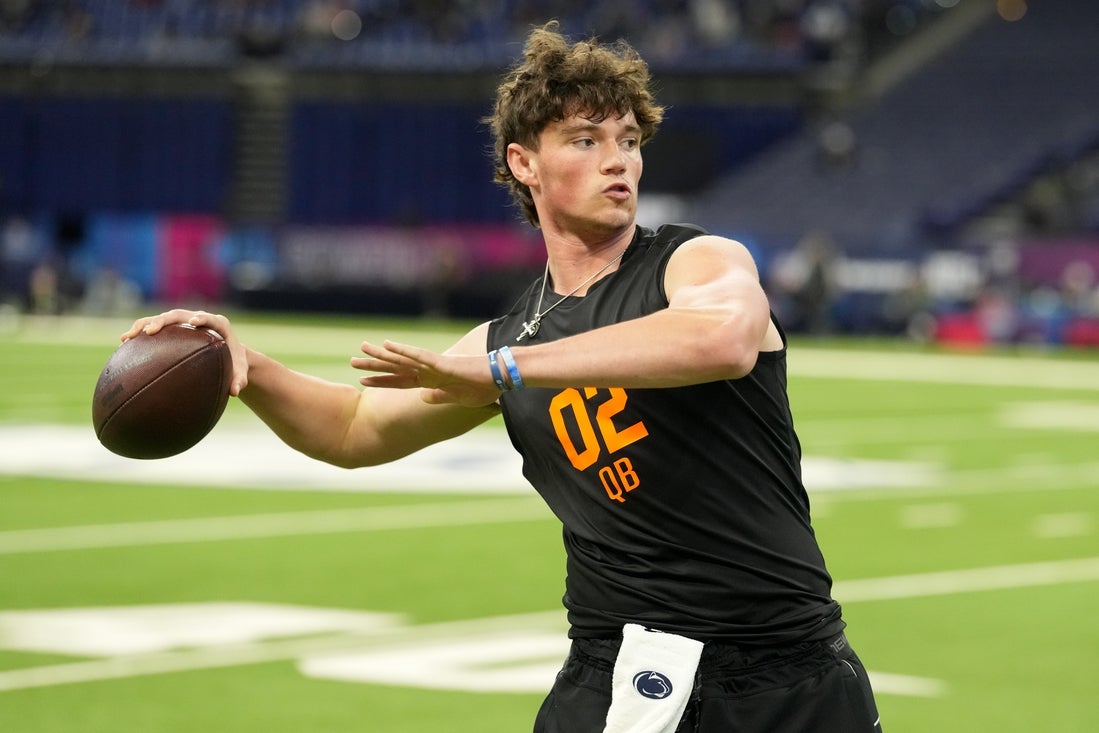
Rodgers’ decision carries significant weight, not just for the Steelers’ immediate outlook but also for the development of any young quarterback they bring in. If Rodgers were to return, he could serve as an invaluable mentor to Allar, offering a wealth of knowledge and experience that few can match. Conversely, if he retires, the mantle of leadership would likely fall more immediately to the drafted player, necessitating a quicker transition.
The Steelers’ current quarterback depth chart, prior to the draft, consisted of Mason Rudolph and Will Howard. Rudolph, a veteran who has had his moments as a starter, possesses a career record of 9-9-1. While he has proven capable of leading the team, his long-term status as a franchise quarterback is generally considered unlikely. Will Howard, a developmental prospect, was acquired with an eye toward the future but has yet to demonstrate his capabilities in a regular-season NFL game. The addition of Allar provides a more definitive option for the future, one with a higher perceived ceiling.
Draft Day Atmosphere and Local Connection
The selection of Drew Allar at pick number 76 resonated deeply within the draft’s host city of Pittsburgh. The audible cheers from the crowd at the draft site underscored the immediate connection and anticipation that Allar’s arrival has generated. His collegiate ties to Penn State, a program with a strong following in Western Pennsylvania, undoubtedly amplified the local excitement. This regional connection can foster a unique bond between a player and the fanbase, potentially creating a strong sense of loyalty and support from day one.
The NFL Draft itself is a significant event for every franchise, representing a crucial period of talent acquisition and future planning. For the Steelers, a team with a storied history and a passionate fanbase, each draft pick is scrutinized and carries considerable expectation. The third round is often considered a sweet spot for drafting impact players, offering a balance between prospect upside and draft capital invested. The Steelers’ willingness to use their third-round pick on a quarterback, especially one with the potential of Allar, signals a commitment to rebuilding and strengthening their offensive core.
Broader Implications for the Steelers and the NFL Landscape
The Steelers’ decision to draft Drew Allar has several implications for the franchise and the broader NFL landscape. Firstly, it signals a clear commitment to a youth movement at the quarterback position, regardless of Aaron Rodgers’ decision. This proactive approach is crucial in an era where strong quarterback play is paramount to sustained success. By securing a player like Allar, the Steelers are investing in a potential long-term solution, allowing for a measured transition when Rodgers eventually departs or retires.
Secondly, the development of Allar will be closely watched. His collegiate statistics suggest a player with the tools to succeed at the professional level. However, the transition from college to the NFL is notoriously challenging, particularly for quarterbacks. The Steelers’ coaching staff will face the task of nurturing his talent, refining his technique, and preparing him for the rigors of the professional game. The success of this development will be a key factor in determining the Steelers’ future competitiveness.
Furthermore, the draft selection adds another layer to the ongoing narrative of quarterback evolution in the NFL. Teams are increasingly seeking quarterbacks who possess not only strong arm talent but also mobility and the ability to extend plays. Allar’s demonstrated ability to run for touchdowns adds this valuable dimension to his skillset. As the league continues to adapt to faster, more dynamic offenses, players like Allar represent the next wave of potential franchise quarterbacks.
The NFL Draft is a dynamic event, and the decisions made by teams like the Steelers ripple through the league. The selection of Allar not only addresses an immediate organizational need but also contributes to the ever-shifting landscape of quarterback talent across the NFL. As the league progresses, the impact of this draft choice will undoubtedly become clearer, shaping the Steelers’ fortunes for years to come.



 Yuyun Lusiyani
 Joko Widodo
 Eva Lovia
 Pevita Pearce
 admin
admin
 Lina Irawan