
 Amara Maple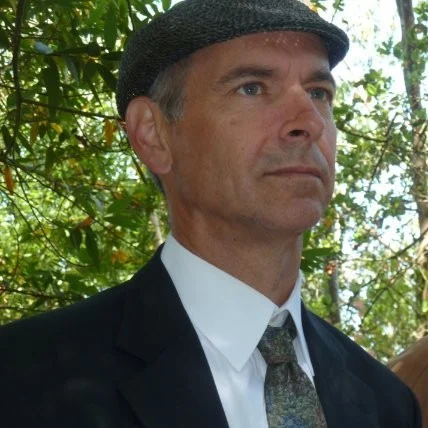
Paul Fenn, often labeled the utility industry’s “number one enemy” by Bloomberg News, stands as a singular figure in the ongoing transformation of energy markets. Far from a conventional activist or industry insider, Fenn approaches energy policy with the rigorous intellect of a political philosopher, drawing connections between disparate fields such as Austrian socialism, neoliberal economics, and the practicalities of electricity distribution. His journey, marked by academic inquiry and legislative battles, has culminated in the widespread adoption of Community Choice Aggregation (CCA), a model empowering local communities to reclaim control over their energy futures.
From Philosophical Inquiry to Energy Revolution
Fenn’s unique perspective on energy policy is deeply rooted in his academic pursuits. During his studies at the University of Chicago in the early 1990s, he delved into the intricacies of political thought, comparing the approaches of Austrian socialists like Otto Bauer with their German counterparts. This period also brought him into a pivotal encounter with Nobel Prize-winning economist Ronald Coase, whose work on transaction costs and property rights had been instrumental in shaping the neoliberal approach to environmental issues, notably through the concept of pollution credit trading, the precursor to modern carbon trading.
Fenn recounts this interaction with Coase in a November 2025 interview with Corporate Crime Reporter, describing his immediate and visceral rejection of carbon trading. He saw it not as a solution, but as a dangerous commodification of the environment, akin to the societal commodification critiqued by figures like Gyorgy Luckas. For Fenn, turning the sky into a market was an "insanity-inducing idea" that masked the fundamental problem: industrial pollution driven by market forces. He argued that instead of questioning markets, neoliberalism sought to use markets to "solve" problems they themselves caused, creating a dynamic he felt resembled the conditions that fostered fascism in Europe.
Remarkably, Fenn claims Coase, by then in his nineties, largely agreed with this critique in their private conversation. Coase, according to Fenn, expressed that he felt "hostage to the Chicago school of economics," which had co-opted and simplified his earlier work into a core platform he no longer fully endorsed. Coase, demonstrating what Fenn describes as the "virtuous scholar" tradition, even offered a crucial piece of advice: the future battleground for these economic ideologies would be the restructuring of the electricity industry. He specifically pointed to Massachusetts and California as the initial fronts, predicting a nationwide spread—a prescient forecast that proved accurate.
The Rise of Deregulation and Fenn’s Counter-Movement
The late 20th century saw a global push towards electricity deregulation, heavily influenced by the free-market policies of leaders like Margaret Thatcher in the UK and Ronald Reagan in the US. This movement aimed to introduce competition into what had traditionally been vertically integrated monopolies, promising lower prices and greater efficiency. However, Fenn viewed this trend with deep suspicion, seeing it as a "conspiracy" driven by corporate interests like Enron and large industrial customers seeking cheaper power, often at the expense of public good and environmental responsibility. The bailout of nuclear power plants, he contends, was a key incentive for utilities to agree to deregulation.
It was against this backdrop that Fenn, after a stint with the 1992 Nader campaign and a self-directed study of electricity regulation, found himself in the heart of the legislative process in Massachusetts. Through connections, including former Governor Michael Dukakis, he landed a role as legislative aide and then director of the Senate Energy Committee. He participated in high-level task force meetings, observing firsthand the brokering of deregulation policy among utility CEOs, government officials, and environmental groups.
His objective, however, was not to facilitate deregulation but to develop a "positive dialectic"—an alternative that would counter the neoliberal tide. Drawing inspiration from Otto Bauer’s approach to social cohesion, Fenn sought to create a model where local democracy, rather than centralized corporate power, would control electricity supply. This vision crystallized into Community Choice Aggregation (CCA).
CCA 1.0: The Massachusetts Experiment and Initial Disappointment
Fenn’s first legislative foray into CCA came in Massachusetts. He drafted a bill proposing that municipalities could aggregate residential and business electricity accounts on an opt-out basis, allowing them to collectively negotiate for power supply. This concept leveraged the bulk purchasing power idea championed by Ralph Nader, but applied it to energy. The aggregated community, after public hearings, would decide how to procure its power.
The bill, initially met with fierce opposition and leading to Fenn’s effective dismissal from his legislative role, eventually passed as part of the Electric Restructuring Act of 1997. The first CCA, the Cape Light Compact, was formed. However, Fenn was deeply disillusioned by its implementation. The local control he envisioned was diluted, and instead of prioritizing decarbonization, the Compact largely focused on securing discounts and purchasing "renewable energy certificates" (RECs). Fenn saw RECs as another neoliberal mechanism, akin to carbon credits, that allowed entities to claim "green" energy without actually investing in new renewable generation, effectively "recreating the old world" within his new framework.
CCA 2.0: California’s Crisis and the Path to True Empowerment
The California energy crisis of 2000-2001, marked by rolling blackouts, price manipulation by companies like Enron, and the subsequent bankruptcy of Pacific Gas and Electric, provided an unexpected opportunity for Fenn. He had been a vocal critic of California’s deregulation package, predicting its failure. When the crisis hit, his warnings lent him credibility, giving him the leverage to push for a refined CCA model in California.
His new bill, passed in 2002, aimed to rectify the shortcomings of the Massachusetts version by granting municipal governments greater control over their energy supply, moving beyond mere supplier selection. It was a hard-won victory, followed by a protracted battle against a utility-backed statewide constitutional amendment referendum (Proposition 16 in 2010) designed to block CCAs. Fenn actively campaigned against it, and the referendum was ultimately defeated, clearing the way for CCA’s expansion.
The Marin Energy Authority (now Marin Clean Energy) launched in 2009, becoming California’s first operational CCA. This marked the beginning of a rapid expansion across the state. Today, approximately 250 municipalities in California serve 15 million people through CCAs. These entities gain open access to transmission infrastructure and can directly negotiate for energy supply, enabling them to prioritize renewable sources.
Crucially, Fenn also introduced the concept of "Green Bonds" in 2001, starting with San Francisco voters. These revenue bonds allow CCAs to finance the construction of renewable energy projects and energy efficiency measures. The success has been phenomenal: California CCAs issued $20 billion in Green Bonds by 2024, surpassing even China’s issuance in that year. This financial innovation provides a critical mechanism for local investment in sustainable infrastructure.
The Impact and Reach of Community Choice Aggregation
The CCA model, particularly its California iteration (CCA 2.0), has proven transformative. It has invigorated the U.S. utility sector, driving the scale and speed of renewables development. Sixty percent of Americans who voluntarily purchase renewable energy are CCA customers. Across the nation, one in ten Americans—approximately 50 million people—in over 1,800 municipalities are now offered service by CCAs, which are authorized in half of the U.S. energy market.
On the ground, CCAs have demonstrated tangible benefits for consumers. They have consistently underpriced traditional utilities while delivering significantly greener power. The long-held assumption that "greener power" meant "paying more" has been debunked; CCAs often offer both. This dual benefit of environmental stewardship and economic savings is a cornerstone of their appeal and success. Virtually every community in the U.S. boasting 100% renewable energy procurement operates under a CCA 2.0 program.
CCA 3.0: The Local Green New Deal and Degrowth Philosophy
Despite the significant achievements of CCA 2.0, Fenn views the model as "incomplete." His overarching goal remains radical climate action, which he believes necessitates not just greening the supply but also reducing overall energy consumption—a concept he explicitly links to the "degrowth agenda." He argues that current environmental movements often err by embracing mechanisms like RECs, which he considers "fraud on the consumer," and by promoting large-scale, distant wind and solar farms that sacrifice rural areas for urban energy needs, leading to local resentment.
This conviction drives his latest vision: CCA 3.0, or "A Local Green New Deal." This model seeks to go beyond municipal administration to directly empower citizens with ownership and control over their energy systems. Instead of simply buying green power from the grid or selling power back via net metering, CCA 3.0 focuses on developing on-site, user-owned energy systems. This means moving away from a model where large financial institutions or third-party companies own renewable assets.
CCA 3.0 leverages the dramatic reduction in solar panel costs (from $5 a watt in 2010 to 20 cents a watt today) and other technological advancements. The model emphasizes "technology convergence," integrating solar panels, electric vehicles, and renewable heating systems (like ground source heat pumps) into interoperable, building-centric systems. These systems are designed to minimize reliance on the central grid, eliminate natural gas pipeline use, and reduce gasoline consumption. By facilitating co-investment among neighbors and addressing the massive marketing and engineering costs that inflate current system prices, CCA 3.0 aims to make true energy independence and deep decarbonization accessible at the local level.
Fenn’s "Localist Manifesto" encapsulates this philosophy, advocating for the state to authorize municipalities to empower people, establishing a standardized energy model for user-controlled, site-specific energy generation and consumption.
Implementing the Future: The Ithaca Project
The ambitious vision of CCA 3.0 is now taking shape in Ithaca, New York. Fenn’s organization, Local Power, has been approved as a program administrator by New York State, and the city of Ithaca has hired him to implement this groundbreaking program. The Ithaca project will comprehensively address power, heating, vehicles, and waste within the built environment.
This initiative envisions a future where rooftops are universally covered with solar panels, electric vehicles are powered by these on-site systems, and communities engage in shared vehicle charging and even vehicle ownership, especially in denser areas. Geothermal loops and ground source heat pumps will become standard for heating. While Fenn estimates implementation could take a decade, the project represents a tangible manifestation of his decades-long quest to empower communities and fundamentally reshape energy systems from the ground up.
Broader Implications and a Challenging Path Forward
Paul Fenn’s work represents a profound challenge to the status quo of the energy industry. By prioritizing local control, direct community investment, and a holistic approach to energy consumption that embraces degrowth principles, he offers a potent alternative to centralized, market-driven models. His critique extends beyond utilities to encompass mainstream environmental organizations, whom he believes have inadvertently perpetuated neoliberal mechanisms like RECs.
The success of CCA models across the U.S., from Marin Clean Energy to the nascent Ithaca project, underscores the viability and public appetite for community-driven energy solutions. However, the path remains fraught with challenges, including entrenched utility interests, bureaucratic inertia within municipalities, and the sheer scale of the energy transition required.
Fenn’s persistent efforts, rooted in a unique blend of philosophical insight and practical legislative action, demonstrate that the fight for energy democracy is not merely an abstract ideal but a concrete, achievable reality. His work continues to inspire communities to take charge of their energy destiny, offering a powerful blueprint for a decentralized, renewable, and truly democratic energy future.



 Yuyun Lusiyani
 Joko Widodo
 Eva Lovia
 Pevita Pearce
 admin
admin
 Lina Irawan