
 Eva Lovia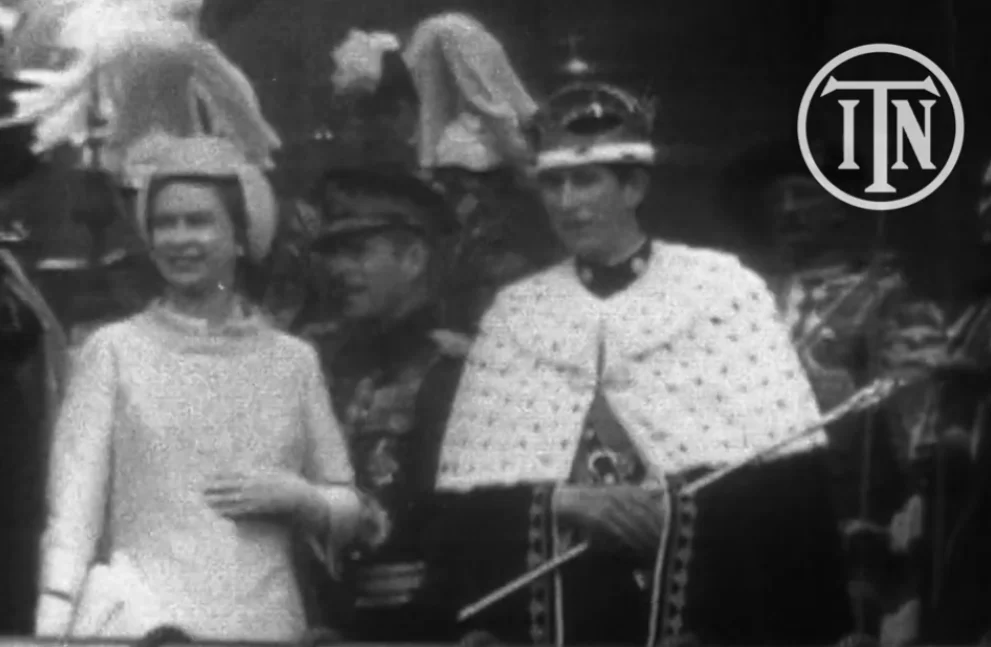
A significant piece of British royal and Welsh history has resurfaced in the quiet coastal town of Saundersfoot, Wales, with the unexpected discovery of a ceremonial gown worn by Owen Lloyd George, the 3rd Earl Lloyd George of Dwyfor, during the 1969 investiture of Prince Charles as the Prince of Wales. Alongside the striking red garment, an original invitation from Queen Elizabeth II, formally requesting the Earl’s participation in the historic ceremony, was also found. This remarkable find, unearthed at an antiques roadshow, offers a tangible link to a pivotal moment in modern British royal history and underscores the enduring importance of preserving familial and national heritage.
The items, brought to a WeBuyVintage valuation event by a member of the public, initially presented as an aged ceremonial robe. However, their true significance was quickly recognised by antiques specialist Neil Church. The presence of a personalised label sewn into an interior pocket definitively identified the gown’s owner. The accompanying paperwork, including the Queen’s personal invitation, solidified the discovery’s importance, connecting it directly to the highly publicised event that saw Prince Charles formally invested with the title of Prince of Wales at Caernarfon Castle on July 1, 1969.
A Glimpse into a Defining Royal Event
The 1969 investiture was a carefully orchestrated event designed to foster a sense of Welsh identity and integrate the Prince of Wales into the Principality. Prince Charles, then 20 years old, undertook a period of study in Wales, learning the Welsh language and immersing himself in Welsh culture, in preparation for his new role. The ceremony itself was a grand affair, broadcast globally and watched by an estimated 500 million people. It aimed to modernise the tradition of investiture while still respecting its historical gravitas.
Owen Lloyd George, the 3rd Earl, played a distinguished role in this ceremony. As the grandson of David Lloyd George, the only Welshman to have served as Prime Minister of the United Kingdom, the Earl carried a legacy of significant public service. His selection to carry the ceremonial sword during the investiture was a deliberate choice, likely intended to weave together threads of historical Welsh leadership with the present-day investiture of the new Prince of Wales. The red gown, a symbol of ceremonial office, would have been a prominent feature of his participation, marking him as a key figure in the proceedings.
The Journey from Ffynone House to Rediscovery
The artefacts’ reappearance after more than fifty years is a testament to the sometimes-unpredictable nature of historical preservation. They were rescued from Ffynone House, the former country residence of the Lloyd George family, located near Boncath in Pembrokeshire. The current owner of the gown and invitation acquired these items in 2021. She learned that a significant number of historic possessions connected to the Lloyd George family were potentially destined for disposal during the sale of the house and its contents.
"I felt I could not let that happen," the owner stated, reflecting on her decision to intervene. "These felt like important pieces of Welsh history and deserved to be preserved." She recognised the immediate historical significance of the gown and the invitation, understanding that such items could easily be lost to time if not actively safeguarded. Her proactive approach ensured that these tangible links to a momentous royal occasion would not be discarded.
Expert Appraisal and Historical Significance
Neil Church, the antiques specialist who evaluated the items, described the find as one of the most historically significant he had encountered in his career. "Every so often something appears that immediately captures your attention," Mr Church remarked. "This was far more than an old ceremonial garment. It is directly connected to one of the defining royal events of the twentieth century in Wales."
The connection to the Lloyd George family, a name synonymous with Welsh political prominence, further elevates the artefacts’ importance. The Earl’s role as a carrier of the ceremonial sword, a visible and symbolic duty, places the gown at the very heart of the investiture’s proceedings. Photographs from the 1969 ceremony clearly depict the Earl wearing the distinctive red gown as he carried the sword, a visual confirmation of the gown’s authenticity and its direct connection to the historic event.
While the items have been valued at approximately £600, Mr Church stressed that their true worth extends far beyond any commercial valuation. Their significance lies in their ability to provide a tangible, personal connection to a nationally and internationally recognised event. They serve as direct evidence of the individuals who participated and the elaborate preparations involved in such a high-profile royal ceremony.
Broader Implications for Heritage and Memory
The discovery of the Earl’s investiture gown and Queen Elizabeth II’s invitation serves as a powerful reminder that historically important artefacts can still emerge from private homes and collections, often decades after the events they commemorate. The dispersal of large estates, renovations, or simply the passage of time can lead to the inadvertent loss of invaluable historical items. This find highlights the critical role of individuals who recognise and choose to preserve such treasures.
For Wales, the discovery is particularly resonant. The investiture was a complex moment in the Principality’s modern history, balancing tradition with national aspirations. Prince Charles’s investiture was a deliberate act to reaffirm the title of Prince of Wales and to foster a stronger relationship between the monarchy and the Welsh people. Artefacts like the Earl’s gown offer a personal, human dimension to this grand historical narrative. They speak to the individuals who were chosen to represent their nation and their heritage within the context of a royal ceremony.
The presence of the Earl, a descendant of a prominent Welsh statesman, was a significant symbolic choice. It alluded to a lineage of Welsh influence and leadership, connecting the modern investiture to a historical legacy. The gown, therefore, is not merely a piece of clothing; it is a symbol of that continuity and the integration of Welsh identity within the fabric of the British monarchy.
The Future of These Historic Treasures
The current owner’s dedication to preservation has ensured that these items will not be lost to obscurity. The potential for these artefacts to be displayed publicly, perhaps in a Welsh museum or heritage centre, is significant. Such a move would allow a wider audience to connect with this piece of history, offering educational opportunities and fostering a deeper appreciation for the 1969 investiture and the individuals who participated.
The rediscovery also prompts reflection on the broader challenges of heritage preservation. Many families possess items of historical importance that may not be widely recognised. Initiatives that encourage the cataloguing and potential donation of such items to appropriate institutions are crucial for safeguarding the collective memory of a nation.
In conclusion, the unearthing of Owen Lloyd George’s ceremonial gown and Queen Elizabeth II’s invitation from the Lloyd George family’s former country home is more than just an interesting find. It is a significant historical discovery that enriches our understanding of a pivotal royal event, underscores the importance of individual custodianship of heritage, and offers a tangible link to a moment when the future Prince of Wales was formally welcomed into his Welsh role, a ceremony steeped in both tradition and the evolving identity of Wales.


 Jia Lissa
 Yuyun Lusiyani
 Joko Widodo

 Pevita Pearce