
 Ana Megawati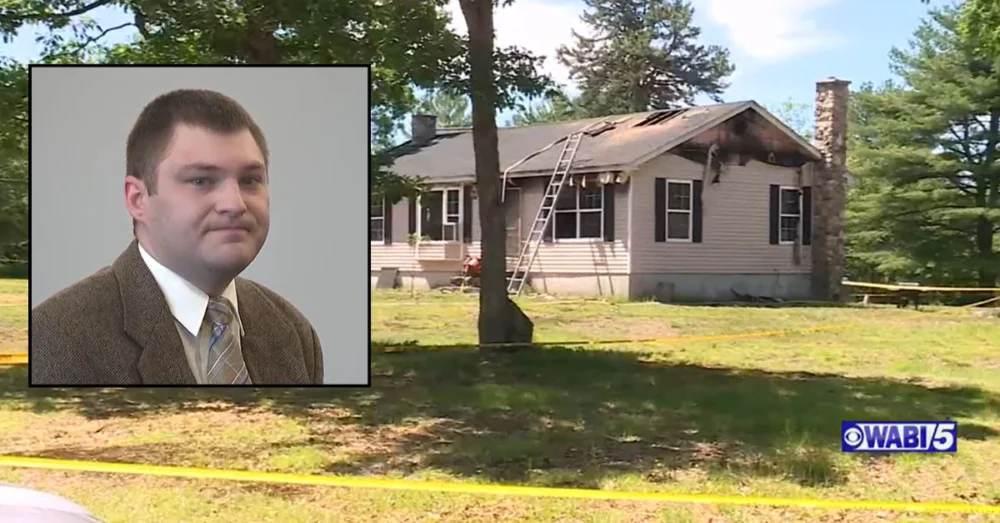
A somber conclusion was reached in a harrowing case that gripped the quiet community of Limington, Maine, as Matthew Cote, 26, was sentenced to spend the remainder of his life in prison for the brutal murders of his mother, Cheryl Cote, 47, and her boyfriend, Daniel Perkins, 45, followed by an attempt to conceal the crime through arson. The verdict, delivered by a jury that found him guilty of two counts of murder and one count of arson, culminated in a judge handing down two life sentences, augmented by an additional 30 years for the arson conviction, on February 27, 2026. The tragic events unfolded on June 17, 2021, leaving a lasting scar on the rural Maine town.
The Horrific Discovery and Immediate Aftermath
The tranquility of Limington was shattered on the morning of June 17, 2021, when first responders were dispatched to a residential property following reports of a house fire. What began as a routine fire call quickly escalated into a major homicide investigation. Inside the charred remains of the home, authorities made the grim discovery of two bodies, later identified as Cheryl Cote and Daniel Perkins. Forensic examinations swiftly determined that the couple had been shot dead before the fire was intentionally set, revealing a sinister plot to destroy evidence and disguise the true nature of their deaths.
The investigation rapidly honed in on Matthew Cote, Cheryl Cote’s son, who was observed driving his mother’s Chevrolet Trailblazer hours after the fire and the discovery of the bodies. Law enforcement officers intercepted Cote, leading to an immediate apprehension that would yield chilling confessions. According to court documents cited by the Portland Press Herald, upon his arrest, Matthew Cote reportedly told police, "I knew this was coming." He further confessed, "Once I snapped, I couldn’t stop and I emptied the whole magazine." These initial statements provided critical insight into the mental state of the accused and the immediate circumstances surrounding the double homicide.
Unraveling the Evidence: Confessions and Forensic Findings
The subsequent investigation meticulously pieced together the sequence of events and the overwhelming evidence against Matthew Cote. While the physical evidence from the crime scene, including the firearm and the bodies, provided a foundation for the prosecution’s case, it was Cote’s own admissions that painted a stark picture of the crime.
Beyond his initial statements to arresting officers, Cote continued to make incriminating remarks while in custody at the York County Jail. During an earlier court hearing, two corrections officers provided compelling testimony regarding statements they overheard Cote making during jailhouse phone calls. One officer recounted Cote referring to his mother as "the nasty [expletive]" and admitting that he "blasted" her. He also explicitly stated his intention behind the fire, telling an unknown caller that he "set a fire to hide the nasty bodies because I didn’t want anyone to see them," adding, "I just lost it." These unfiltered confessions, made in what Cote might have perceived as private conversations, served as powerful corroboration of his direct involvement and an attempt at concealment.
Prosecutor Mark Rucci, in his opening statement to the jury, underscored the calculated nature of Cote’s actions. Rucci argued that Cote acted in a "goal-oriented and purposeful fashion in taking a semiautomatic rifle into the home where he lived, taking the lives of those two people and burning it to the ground, and then leaving to go to the beach." This portrayal by the prosecution aimed to dismantle any potential defense suggesting a spontaneous, uncontrollable outburst, instead presenting a narrative of premeditated and deliberate acts, including the attempt to escape and enjoy leisure time after committing such grave offenses.
The Legal Battle: Insanity Defense and Jury Deliberation
Facing irrefutable evidence and his own admissions, Matthew Cote’s defense attorney, Tom Connolly, conceded early in the trial that "It’s not a whodunit." Instead, the defense strategy hinged on a plea of not guilty by reason of insanity, a legal argument that shifts the focus from whether the defendant committed the acts to their mental state at the time of the offense. Connolly stated, "You’re going to have to decide hard facts," acknowledging the brutal reality of the crime but seeking to present a mitigating context regarding Cote’s mental capacity.
The insanity defense is a rarely successful and often complex legal strategy. In Maine, as in many jurisdictions, to successfully argue insanity, the defense must prove that at the time of the crime, the defendant, as a result of a severe mental disease or defect, lacked the capacity to appreciate the wrongfulness of their conduct or to conform their conduct to the requirements of the law. This is a high legal bar, requiring extensive psychological evaluations and expert testimony to convince a jury that the defendant was not merely experiencing emotional distress or a temporary loss of control, but was legally insane.
Throughout the trial, the jury was tasked with weighing the prosecution’s evidence of purposeful action against the defense’s arguments concerning Cote’s mental state. The prosecutor’s emphasis on Cote’s "goal-oriented" behavior, his attempts to conceal the bodies, and his flight from the scene likely played a significant role in the jury’s decision. Ultimately, the jury rejected the insanity plea, finding Matthew Cote guilty on all counts: two counts of murder and one count of arson.
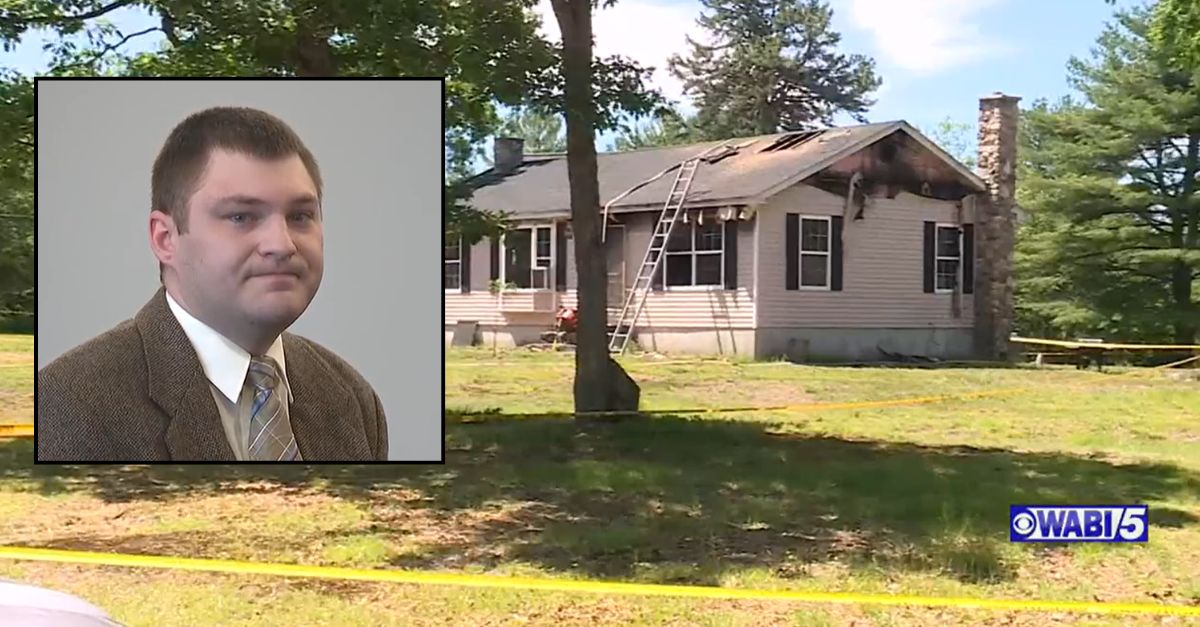
Before his sentence was formally handed down, Matthew Cote addressed the court, offering a brief statement: "I’m just very sorry, and I apologize to everybody." While such statements are often made by defendants, their impact on sentencing can vary, especially in cases of extreme violence where the jury has already rendered a guilty verdict. The judge’s decision to impose two life sentences, plus 30 years, reflected the gravity of the crimes and the jury’s finding of culpability without the mitigating factor of legal insanity.
Limington, Maine: A Community Grappling with Tragedy
Limington, Maine, is a small, rural town in York County, characterized by its natural beauty, close-knit community, and typically low crime rates. With a population of just over 3,000 residents, violent crimes, especially double homicides, are exceedingly rare and deeply unsettling for its inhabitants. The incident involving Matthew Cote sent shockwaves through the community, disrupting the sense of security often associated with living in such an area.
Maine consistently ranks among the safest states in the U.S. for violent crime, often reporting rates significantly lower than the national average. When a heinous act like a double murder occurs within its borders, particularly one involving intrafamilial violence and arson, it leaves a profound impact. Such events not only shatter individual lives but also challenge the collective psyche of a community, forcing residents to confront the reality that such brutality can occur anywhere. The extended legal process, from the initial crime in 2021 to the sentencing in 2026, prolonged the period of anguish and uncertainty for the victims’ loved ones and the wider community seeking closure.
The Insanity Defense: A Deep Dive into Legal Nuances
The attempt by Matthew Cote’s defense to utilize the insanity plea highlights a critical and often misunderstood aspect of the American criminal justice system. Nationally, the insanity defense is raised in less than 1% of felony cases and is successful in only about a quarter of those attempts. This low success rate underscores the difficulty of meeting the legal standard for insanity, which typically requires a severe mental disease or defect that impairs a person’s ability to understand the nature or wrongfulness of their actions.
The public often conflates mental illness with legal insanity. While Matthew Cote may have suffered from underlying mental health issues, as implied by the defense’s strategy and his own statement of "losing it," the legal threshold for insanity is much higher. It is not enough to demonstrate that a person was emotionally disturbed or acted impulsively; rather, the defense must prove a profound cognitive or volitional impairment directly attributable to a severe mental disorder. The prosecutor’s argument that Cote acted "purposefully" and attempted to conceal his actions by arson directly contradicted the notion that he lacked the capacity to appreciate the wrongfulness of his conduct. His efforts to hide the bodies and flee the scene suggested an awareness of wrongdoing, even if accompanied by emotional distress.
Broader Implications and Societal Considerations
The Matthew Cote case, while tragic and specific, touches upon several broader societal issues, including intrafamilial violence, mental health within the criminal justice system, and the effectiveness of deterrents. Matricide, the killing of one’s mother, is a particularly disturbing form of violence that often has complex underlying psychological, familial, and social dynamics. While a specific motive beyond Cote’s statement of "snapping" was not publicly detailed, such cases frequently involve long-standing disputes, substance abuse, or severe mental health crises.
The inclusion of arson as a means to conceal the murders adds another layer of criminality, demonstrating a calculated effort to evade justice. This act not only destroyed valuable evidence but also inflicted further damage and trauma. The fact that Cote then attempted to go "to the beach" after committing these acts further complicates the psychological profile, suggesting a profound detachment or a desperate attempt to escape the consequences of his actions.
The justice system’s response, culminating in two life sentences, reflects society’s condemnation of such extreme violence and its commitment to holding individuals accountable for their actions, even when mental health is a factor. While mental health treatment and support are crucial, the legal system distinguishes between a treatable mental illness and a state of legal insanity that absolves criminal responsibility. The outcome of this trial reaffirms that distinction.
For the surviving family members and friends of Cheryl Cote and Daniel Perkins, the sentencing brings a measure of finality, though no legal resolution can ever truly heal the wounds of such a loss. The case serves as a stark reminder of the devastating consequences of violence and the imperative for communities and authorities to address the underlying factors that can lead to such horrific crimes. The Limington community, having endured the shock and the prolonged legal process, can now begin the difficult journey of healing, knowing that justice, as defined by the law, has been served.




 Yuyun Lusiyani
 Joko Widodo
 Jia Lissa
 Pevita Pearce
 admin
admin
