Amara Maple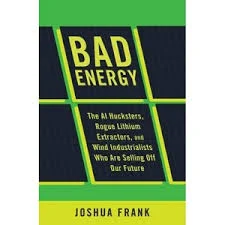
A recent intellectual exchange has ignited a critical conversation within environmental circles, contrasting the prevailing optimism about green energy’s rapid ascent with a stark counter-narrative questioning its underlying motives and systemic impacts. This debate, highlighted by environmentalist Bill McKibben’s appearance on Ezra Klein’s influential podcast, has been further sharpened by the release of Joshua Frank’s provocative new book, Bad Energy: The AI Hucksters, Rogue Lithium Extractors, and Wind Industrialists Who Are Selling Off Our Future. While Klein and McKibben championed the unprecedented progress in renewable technology, Frank’s work dissects the hidden costs and capitalist drivers that, he argues, threaten to undermine genuine climate solutions.
The Narrative of Green Abundance: A Glimmer of Hope
The discussion on Ezra Klein’s podcast, featuring climate luminary Bill McKibben, presented a compelling "good news, bad news" summary of the global climate crisis. The "bad news," as widely acknowledged, is the undeniable acceleration of climate change, with global temperatures continuing to rise and extreme weather events becoming more frequent and intense. Recent scientific reports, including those from the Intergovernmental Panel on Climate Change (IPCC), consistently underscore the urgency of drastic emission reductions to avert the most catastrophic scenarios. Record-breaking heatwaves, unprecedented droughts, and intensified storms across continents serve as a grim reminder of this escalating crisis.
However, the "good news" side of Klein’s summary offered a significant dose of optimism, echoing a growing sentiment within certain environmental and technological sectors. Klein articulated a vision where "green energy is getting better and cheaper, faster than we had ever dared hope." He highlighted a remarkable milestone: in April 2025, the energy think tank Ember reported that all new electricity demand globally was met by green power sources. This development, unimaginable just a few years prior, signifies a pivotal shift in the energy landscape, suggesting a potential decoupling of economic growth from fossil fuel consumption.
This emerging "clean energy abundance," as described by Klein, promises a new form of energetic wealth, potentially enabling a future of "more and better" rather than the often-feared "less and worse" associated with climate action. The narrative posits that the sheer scale and decreasing cost of solar, wind, and other renewable technologies could not only decarbonize the grid but also provide ample, affordable energy for global development. This perspective often emphasizes technological innovation, market forces, and strategic policy interventions (like the Inflation Reduction Act in the U.S. or similar initiatives in Europe and Asia) as the primary drivers of this accelerating transition. Proponents point to the exponential growth curves of solar photovoltaic installations and wind turbine deployment worldwide, alongside significant advancements in battery storage, as tangible evidence that a renewable-powered future is not just feasible but rapidly materializing.
The Counter-Narrative: Bad Energy Exposes the Dark Side of the Green Rush
Yet, this optimistic narrative is not universally embraced. Journalist and Counterpunch editor Joshua Frank offers a sharp critique, arguing that the current trajectory of the green energy transition is deeply flawed and, in many ways, a dangerous continuation of the very capitalist system that caused the climate crisis. His book, Bad Energy: The AI Hucksters, Rogue Lithium Extractors, and Wind Industrialists Who Are Selling Off Our Future, published by Haymarket Books in 2026, challenges the notion that industrial-scale renewables, driven by profit motives, represent a genuine path to planetary salvation.
Frank contends that while the imperative to cease burning fossil fuels is undeniable, the "significant, haphazard expansion of green energy in recent years" has led to unforeseen and unacceptable destruction of communities and ecosystems. He details how massive solar projects and sprawling wind farms, alongside the intensified mining for critical minerals essential to these technologies, are replicating the destructive patterns of traditional extractive industries. This critique extends to the alarming reality that renewables, as currently deployed, may not be able to match the "ever-expanding demand for energy," a demand significantly fueled by the rapid proliferation of data centers in the world’s wealthiest nations, powering everything from artificial intelligence to cryptocurrency mining.
Unpacking Frank’s Arguments: A Systemic Critique
Frank’s investigation in Bad Energy is geographically diverse and meticulously researched, taking readers from the copper mines of Montana and Bolivia to the vast wind farms of Wyoming, and even into the contentious geopolitical arena of deep-sea mining in the South Pacific. His assessment is stark: the rush for renewables, under the guise of climate action, is fundamentally driven by "endless growth" and profit, rather than a holistic ecological vision.
Profit Over Planet: Frank argues that the primary motivation behind the current green energy boom is not environmental stewardship but the creation of new profit centers for corporations. He points to the case of California, a state often lauded for its environmental leadership, where he observes "industrial-sized so-called renewable developments in the Mojave Desert." He contrasts this with the actions of Governor Gavin Newsom, who, according to Frank, has "gutted the residential solar program" in California. Frank alleges that this move was influenced by powerful utilities like PG&E, which prefer centralized control and expansion of the grid, even "under the guise of fighting climate change," rather than a decentralized, community-led energy model. He highlights the "deep ties" and "revolving door" between Newsom’s administration and PG&E, suggesting a conflict of interest that prioritizes corporate profits over genuinely sustainable, localized energy solutions.
Environmental Degradation and Community Impact: The expansion of industrial-scale solar and wind projects often targets vast, seemingly "empty" landscapes, including biologically sensitive areas. Frank challenges the perception of places like the Mojave Desert as mere "wastelands," emphasizing their ecological importance as habitats for endangered species and vital carbon sinks. Developing these deserts for solar energy, he warns, reduces their capacity to absorb atmospheric carbon, thereby exacerbating the very problem they are meant to solve. Similarly, large wind farms require extensive land use and infrastructure, including new transmission lines that traverse pristine valleys and mountains, leading to habitat fragmentation and visual pollution.
The Critical Minerals Conundrum: A cornerstone of Frank’s critique lies in the massive demand for critical minerals—such as copper, lithium, nickel, and cobalt—necessary for electric vehicles, batteries, solar panels, and wind turbines. He predicts the need for "hundreds of new huge mines all over the globe" to meet this demand. This, he argues, represents "a continuation of the extractive industries that came before it," with little fundamental difference in impact. These new mining operations disproportionately affect rural and Indigenous communities globally, often leading to land dispossession, water pollution, and social disruption. Frank criticizes "Big Green groups" for their "blind acceptance" of such projects, overlooking these severe "externalities." He emphasizes that many of these mines are planned for public and Indigenous lands, often sacred sites, with minimal benefit flowing back to the affected communities or the wider public.
The Illusion of Consumption-Led Solutions: Frank directly challenges the prevailing notion that society can "consume our way out of climate chaos." He questions whether electric vehicles, even Chinese-made ones praised by McKibben for their efficiency and affordability, are the ultimate answer to transportation pollution. Instead, he advocates for a radical rethinking of urban landscapes, prioritizing "expanding public transit," "bikeability, walkability," and restricting private vehicles, citing examples from European cities like Copenhagen and Stockholm. For Frank, replacing a gas-guzzling truck with an electric Cybertruck merely shifts the burden of resource extraction and does not address the fundamental issue of overconsumption and car-dependent culture.
The Degrowth Imperative: Frank’s critique culminates in a call for "degrowth"—a radical reimagining of economic systems away from the endless pursuit of GDP expansion. He argues that simply "keeping up with economic growth" through renewables is insufficient; what is needed is the replacement of fossil fuels on a substantial scale, which necessitates a reduction in overall consumption. He points to China, a leader in solar capacity, but also the world’s largest emitter of fossil fuels, still building coal plants and seeing its emissions rise. For Frank, unless global emissions, particularly from major industrial nations, come down significantly, the planet will continue to heat up, regardless of renewable deployment.
Beyond Capitalism: A Vision for a Truly Sustainable Future
Frank’s book is not merely a critique; it outlines a vision for a different path. He posits that a truly sustainable future requires a "rejection of the capitalist interests driving planetary collapse" and a "radical vision for a truly sustainable future."
Democratizing Energy and Resources: Instead of industrial-scale projects controlled by corporations, Frank champions local, decentralized energy production. He advocates for building solar infrastructure in "already disturbed areas, on parking lots, brownfields," and on rooftops, rather than pristine ecosystems. He also calls for "democratized mining," moving away from large-scale, destructive operations on public and Indigenous lands. This could involve smaller-scale mining with less impact and greater community control. He also points to alternatives to lithium batteries, such as sodium-ion batteries, which could potentially have a lower environmental footprint. Frank suggests that public power authorities, akin to the Tennessee Valley Authority (TVA), could be a step in the right direction, ensuring energy production serves public good rather than private profit.
The Degrowth Movement: Frank’s ideas resonate with the "degrowth" movement, drawing inspiration from thinkers like Kohei Saito (Slow Down: The Degrowth Manifesto) and Murray Bookchin (The Ecology of Freedom), as well as the foundational work of E.F. Schumacher (Small is Beautiful: Economics as if People Mattered). Degrowth advocates for a planned reduction of energy and resource consumption to bring the economy into balance with the ecological limits of the planet, while simultaneously improving human well-being and social equity. Frank sees no solution to the climate crisis "without radically changing the economic system that underpins it." He notes that efforts to oppose war or work for affordable housing are, at their core, also "fighting capitalism."
Real-World Examples and Challenges: While acknowledging that no country has fully implemented a degrowth policy by choice, Frank points to examples that offer lessons. Cuba, operating under decades of blockade, was compelled to revamp its food system, energy use, and transportation, offering insights into resilient, localized economies. He also highlights cities like New York, with its low emission rates due to walkability and mass transit, and Nordic cities like Copenhagen and Stockholm, which prioritize local food and reduced car dependence while maintaining robust economies. These examples, though imperfect, demonstrate that alternative models of living and organizing society are possible.
Implications and the Road Ahead
Joshua Frank’s Bad Energy injects a crucial, often uncomfortable, dimension into the climate debate. It forces a critical examination of the "how" of the green transition, moving beyond simple technological fixes to confront the deep-seated economic and political structures driving both the problem and its proposed solutions. His work challenges mainstream environmental organizations to scrutinize the corporate interests behind large-scale renewable projects and to advocate for more equitable, decentralized, and ecologically sound alternatives.
The book’s publication comes at a critical juncture. As global temperatures continue to climb and the urgency of climate action intensifies, the world grapples with balancing immediate emission reductions with long-term ecological and social sustainability. Frank’s arguments highlight an internal tension within the environmental movement itself: between those who believe technological innovation and market-driven solutions within a capitalist framework can solve the crisis, and those who argue for a fundamental paradigm shift away from endless growth and extractive economies.
While Frank acknowledges that his perspective is not widely reflected in mainstream public policy discussions, he sees burgeoning interest within groups like the Democratic Socialists of America (DSA). His work serves as a powerful tool for those seeking to understand the often-overlooked environmental and social costs of the current green energy push, prompting necessary questions about who truly benefits from this transition and at whose expense. Bad Energy ultimately advocates for a more conscious, deliberative, and equitable path to a truly sustainable future—one that prioritizes ecological integrity and social justice over corporate profit and infinite consumption. It’s a call to action that demands not just a change in energy sources, but a profound transformation of our economic and societal values.




 Joko Widodo
 admin
admin
 Nila Kartika Wati
 Pevita Pearce