Ana Megawati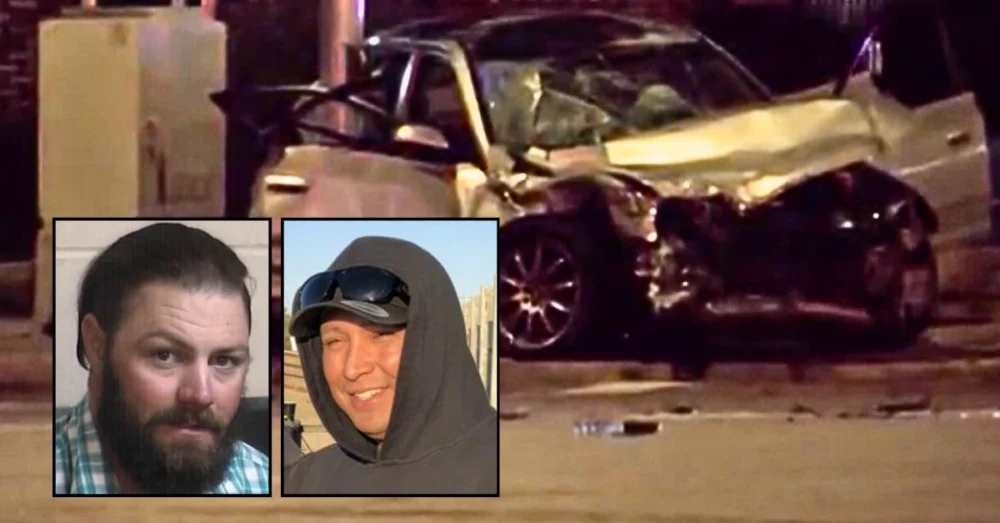
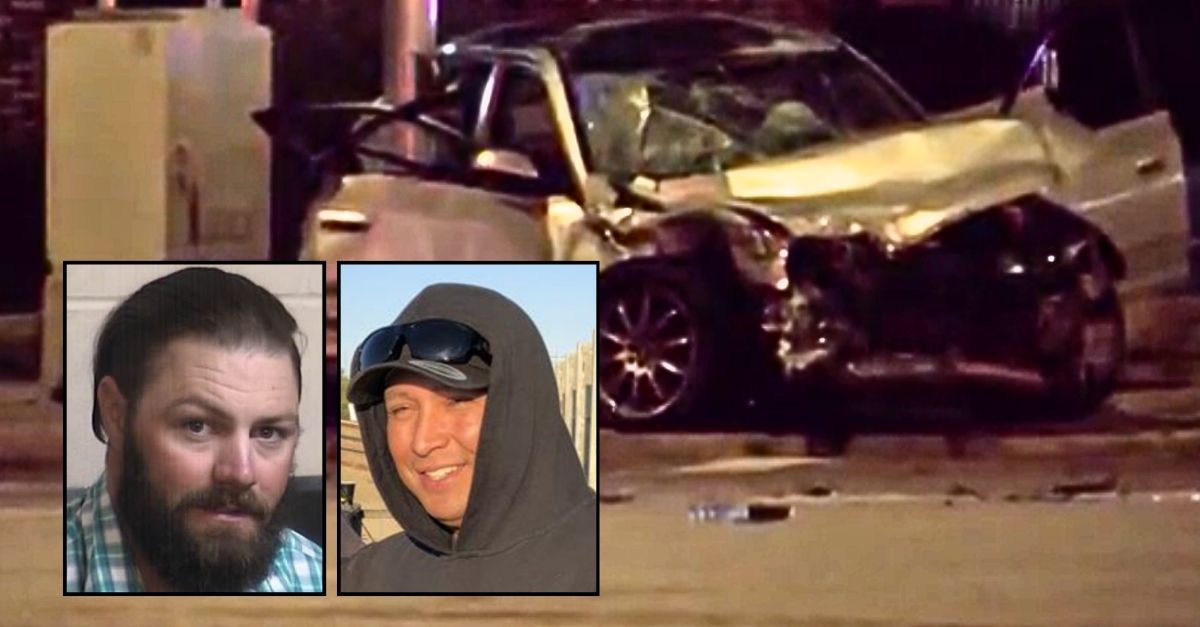
A California man has been sentenced to 19 years to life in state prison for causing a fatal car crash after driving at excessive speeds, disregarding a red light, and subsequently fleeing the scene of the collision. The perpetrator, Shane Shahan, was convicted following a trial where video evidence demonstrated him looking back at the wreckage and the dying passenger before making his escape. The sentencing, handed down on Tuesday, marks the culmination of a legal process that underscored the severe consequences of impaired driving and hit-and-run offenses.
The Tragic Incident: A Detailed Account
The catastrophic event unfolded on a date in 2023, forever altering the lives of multiple families. Shane Shahan, operating a Chevrolet Colorado pickup truck, was traveling at an approximate speed of 80 mph as he approached the intersection of First Street and McKinley Avenue in Fresno. Despite the presence of a clearly illuminated red light, Shahan failed to yield, instead accelerating through the intersection. His vehicle then violently collided with a Hyundai Elantra, which had two occupants inside and was proceeding lawfully through the intersection.
The impact was devastating. The passenger in the Hyundai Elantra was identified as 35-year-old Jesse Espino. Espino sustained numerous critical injuries in the collision and was rushed to a local hospital, where he tragically succumbed to his wounds. The driver of the Elantra also suffered injuries, though their specific condition was not detailed in initial reports.
In the immediate aftermath of the crash, Shahan’s truck, a Chevrolet Colorado, flipped over due to the force of the impact. Miraculously, Shahan himself emerged from the overturned vehicle largely unscathed physically. However, instead of rendering aid, contacting emergency services, or remaining at the scene as required by law, Shahan chose to flee. Evidence presented at his trial, including video footage, depicted him glancing back at the mangled vehicles and the developing tragedy before running away on foot.
Fresno police officers quickly responded to the scene of the crash. A frantic search for the fleeing driver ensued. Officers ultimately located Shahan in a nearby neighborhood a short time later. Upon apprehension, Shahan reportedly uttered, "Sorry. Sorry. Sorry, I got scared. I didn’t know what to do," to the arresting officers. A Fresno police officer testified during the January murder trial, as reported by local ABC affiliate KFSN, that Shahan exhibited clear signs of impairment: "I could smell the odor of alcohol on him. He was sweating profusely. Talking erratically." Subsequent investigations confirmed that Shahan was driving under the influence of alcohol and also had marijuana in his system at the time of the fatal collision.
Legal Proceedings and Conviction
The legal journey for Shane Shahan began with his arrest and subsequent charges that reflected the severity of his actions. Prosecutors moved swiftly, building a case that highlighted not only Shahan’s reckless driving but also his criminal history and blatant disregard for human life. The charges brought against him included second-degree murder, hit-and-run resulting in death, and driving with a suspended license.
The decision to charge Shahan with second-degree murder, rather than vehicular manslaughter, is significant and speaks to the prosecution’s interpretation of his intent and awareness. In California, a conviction for second-degree murder in a DUI case often hinges on the concept of "implied malice." This legal doctrine asserts that even without a direct intent to kill, a defendant can be found guilty of murder if they act with a conscious disregard for human life, knowing that their actions are dangerous to others. Shahan’s prior DUI convictions played a crucial role in establishing this implied malice, as they demonstrated a pattern of behavior and a presumed understanding of the extreme risks associated with impaired driving. Each prior conviction served as a warning, making his subsequent actions appear to be a knowing and willful disregard for public safety.
The trial itself, which took place in January, featured compelling evidence. Beyond the police testimony and Shahan’s admissions, the aforementioned video footage was particularly impactful. Jurors witnessed Shahan’s callous actions post-collision, solidifying the prosecution’s argument that his flight was not merely an act of panic but an attempt to evade responsibility for his life-threatening conduct. The jury, after deliberating for less than an hour, returned a verdict of guilty on all counts: second-degree murder, hit-and-run resulting in death, and driving with a suspended license. This swift decision underscored the overwhelming nature of the evidence presented against him.
Shahan’s Criminal History: A Pattern of Impaired Driving
A critical factor in the prosecution’s case and the subsequent sentencing was Shane Shahan’s extensive history of alcohol-related driving offenses. Prosecutors revealed that Shahan had two previous alcohol-related driving convictions on his record prior to the fatal 2023 crash. These convictions dated back to 2016 and 2017.
Crucially, at the time of the fatal collision, Shahan was still on probation for his 2017 DUI conviction. This meant he was operating under specific court orders and restrictions related to his driving privileges and alcohol consumption. His decision to drive while impaired, at excessive speeds, and then flee the scene, represented a direct violation of these probationary terms and a profound disregard for judicial directives and public safety. This pattern of behavior painted a clear picture of a repeat offender who had failed to learn from previous legal consequences, escalating the severity of his current charges and impacting the judge’s sentencing decision.
Victim Impact Statements: The Enduring Pain of Loss
The sentencing hearing provided a solemn platform for Jesse Espino’s family to convey the immeasurable grief and profound impact of his loss. Their statements underscored the human cost of Shane Shahan’s reckless actions, moving beyond the legal technicalities to articulate the raw emotional devastation left in the wake of the tragedy.
Crystal Espino, Jesse’s sister, addressed the court, articulating the irreversible alteration of their family’s life. "We are not the same people we were before that day," she stated, her words resonating with the weight of profound loss. "My parents have suffered the ultimate tragedy and I have lost my only sibling, the person I was supposed to grow old with." Her testimony highlighted the shattered future, the absence of shared milestones, and the permanent void left by her brother’s untimely death.
Edward Espino, Jesse’s father, delivered an equally poignant statement, recalling the harrowing moments at the hospital. "Seeing Jesse laying motionless on the hospital table, it’s an image I live with every day," he recounted. "I kissed his forehead and said my last goodbye, knowing nothing will ever bring him back." His words painted a vivid and heartbreaking picture of a parent’s ultimate nightmare, a memory that will forever haunt him. The family’s collective statements served as a powerful reminder that beyond the courtroom proceedings and legal definitions, there is an enduring legacy of pain, sorrow, and shattered dreams.
Sentencing and Judicial Rationale
On Tuesday, the Fresno County judge delivered the maximum sentence allowed by law, condemning Shane Shahan to 19 years to life in state prison. This severe penalty reflected not only the gravity of the crimes but also the judge’s clear condemnation of Shahan’s choices.
During the sentencing, the judge emphasized the premeditated nature of Shahan’s negligence and subsequent evasion. "There was no phone call to 911, even though he had a cellphone," the judge noted, as reported by KFSN. "This is not just one bad decision. It was multiple bad decisions and selfish decisions." This judicial commentary highlighted the judge’s view that Shahan’s actions were not merely an accidental misjudgment but a series of conscious, irresponsible choices that culminated in a preventable death. The judge’s words underscored the responsibility that comes with operating a vehicle and the profound betrayal of that responsibility by driving while impaired and then abandoning a victim.
The maximum sentence imposed sends a clear message about the legal system’s commitment to holding repeat DUI offenders accountable, particularly when their actions lead to fatalities. The combination of second-degree murder, hit-and-run, and driving on a suspended license presented a confluence of serious offenses that warranted the most stringent punishment available under California law.
Broader Context: DUI and Hit-and-Run in California
The tragic case of Shane Shahan and Jesse Espino is a stark reminder of the persistent and devastating impact of impaired driving and hit-and-run incidents across California and the nation. According to the California Office of Traffic Safety (OTS) and the National Highway Traffic Safety Administration (NHTSA), impaired driving remains a leading cause of traffic fatalities. Thousands of lives are lost annually on California roadways, with a significant percentage directly attributable to alcohol and drug impairment.
In California, law enforcement agencies, including the Fresno Police Department, actively combat impaired driving through various initiatives, including sobriety checkpoints, saturation patrols, and public awareness campaigns. Despite these efforts, the problem persists, often exacerbated by repeat offenders like Shahan, who demonstrate a consistent disregard for traffic laws and the safety of others.
Hit-and-run incidents also represent a significant public safety concern. Data from the California Highway Patrol (CHP) indicates thousands of hit-and-run collisions occur each year, many resulting in serious injuries or fatalities. The act of fleeing a crash scene is not only illegal but also profoundly unethical, denying victims immediate aid and delaying justice. It is a desperate act often undertaken by those who are impaired, unlicensed, or fearing other legal repercussions, further compounding their criminal liability. The prevalence of such incidents highlights a societal challenge that requires continuous enforcement, education, and community vigilance.
Fresno, like many growing urban centers, faces its own set of challenges related to traffic safety. The intersection of First Street and McKinley Avenue, where the crash occurred, is a busy thoroughfare, underscoring the dangers posed by reckless driving in high-traffic areas. Local authorities often emphasize the importance of adhering to speed limits, obeying traffic signals, and never driving under the influence to prevent such tragedies.
Community and Policy Implications
The sentencing of Shane Shahan carries significant implications for the community and for ongoing policy discussions surrounding traffic safety. For the community of Fresno, it delivers a measure of justice for Jesse Espino and his family, reinforcing the principle that severe negligence and criminal disregard for life will be met with stringent penalties. Such high-profile cases often serve as a deterrent, sending a clear message to potential offenders about the consequences of impaired driving and fleeing a crash scene.
From a policy perspective, this case underscores the efficacy of California’s "implied malice" statute in prosecuting repeat DUI offenders for murder. It validates the legal framework that allows prosecutors to elevate charges when a defendant’s history demonstrates a conscious awareness of the risks involved. Furthermore, it highlights the need for continued vigilance in monitoring individuals on probation for DUI offenses, exploring whether existing oversight mechanisms are sufficient to prevent recidivism.
Advocacy groups focused on victim rights and impaired driving prevention, such as Mothers Against Drunk Driving (MADD), often leverage cases like this to push for stronger legislation, increased funding for law enforcement, and more comprehensive rehabilitation programs for offenders. They argue that while incarceration is a form of justice, prevention through education and stricter early interventions remains paramount.
Conclusion
The life sentence handed down to Shane Shahan closes a painful chapter for the Espino family and sends a resounding message across California. Jesse Espino’s life was tragically cut short by a series of reckless and selfish decisions, fueled by impaired driving and a blatant disregard for the law and human life. While no judicial outcome can ever fully restore what was lost, the conviction and maximum sentence serve as a testament to the legal system’s commitment to accountability. This case stands as a sobering reminder of the devastating consequences of impaired driving and the critical importance of responsible choices behind the wheel, echoing the calls for greater public safety and unwavering vigilance on our roadways.


 admin
admin
 Yuyun Lusiyani
 Joko Widodo
 Eva Lovia
 Pevita Pearce