
 Joko Widodo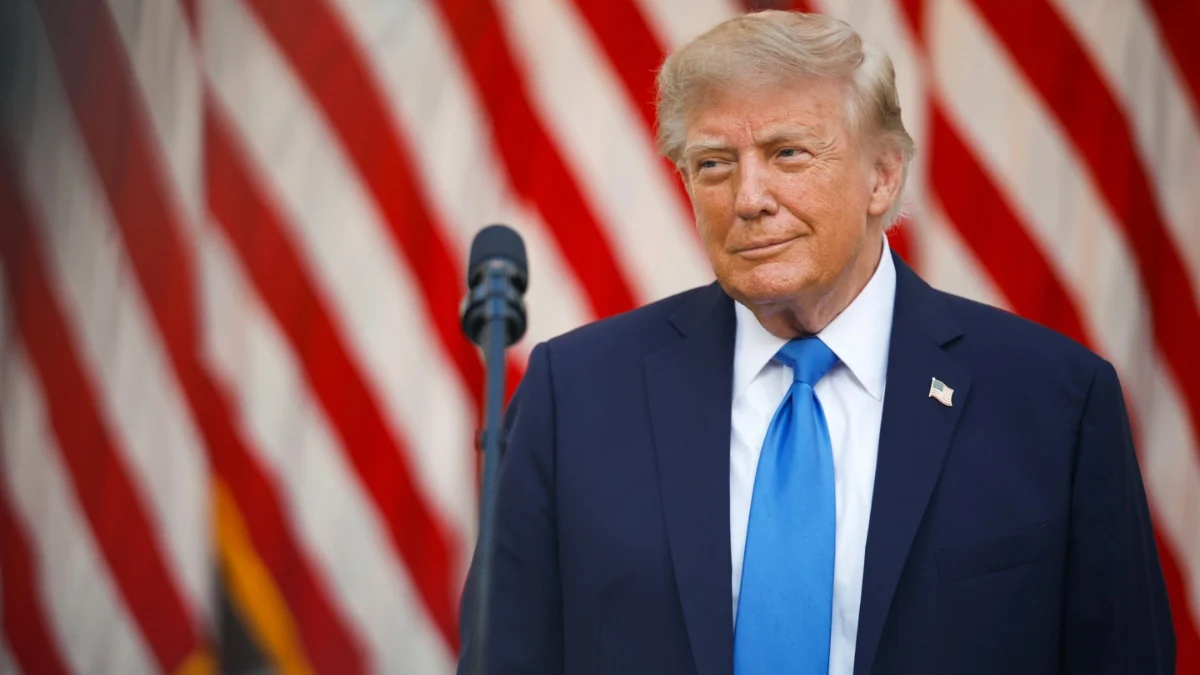
In a move that has reignited debates over presidential authority and the manipulation of public discourse, former President Donald Trump has suggested renaming the U.S. state of New Mexico to "New America." The proposal, disseminated through a doctored map shared on his Truth Social platform on Sunday, depicted the word "Mexico" being crossed out and replaced with "America." This action amplified a satirical hoax that had already been debunked by fact-checking organizations, consequently drawing sharp rebukes from state leaders and Democratic lawmakers. The episode underscores a pattern of Trump leveraging social media to promote unconventional ideas, often blurring the lines between jest, policy suggestion, and disinformation.
The Genesis of the "New America" Proposal
The visual catalyst for the controversy was an image posted by Trump on Truth Social, a social media platform he co-founded. The graphic prominently featured a large red "X" superimposed over the word "Mexico" within the state’s name, with "America" written directly beneath it. This image was subsequently reposted by the official White House account on X (formerly Twitter), though neither post explicitly clarified whether the concept represented a formal policy initiative or a casual suggestion.
The origins of the "New America" idea can be traced back to a satirical social media account. Fact-checking website Snopes reported that the claim of a "New America" executive order first surfaced from a satirical source on September 1, before rapidly gaining traction online. Trump himself later commented on the matter via Truth Social, writing, "many people suggested changing the name of New Mexico to ‘NEW AMERICA,’ calling it ‘so much more prestigious and beautiful.’" This statement, while attributing the idea to public suggestion, also revealed his personal endorsement of the moniker.
A Pattern of Geographic Renaming
This latest suggestion is not an isolated incident in Trump’s public career. It follows a series of instances where he has proposed or implemented renaming of geographic features, often with nationalistic undertones. Most recently, in the context of trade disputes with Canada, Trump issued an order to rename Lake Ontario to "Lake America." The previous year, the Gulf of Mexico was similarly redesignated as the "Gulf of America" for federal use. These actions, while seemingly symbolic, have raised questions about the extent of presidential power in altering established geographic nomenclature and the underlying motivations behind such directives.
The renaming of established geographic features, particularly those with deep historical and cultural significance, often sparks public debate. Lake Ontario, one of the five Great Lakes, has been known by its Indigenous and later international name for centuries. The Gulf of Mexico, a vast body of water crucial to regional economies and ecosystems, also carries a name with a long historical provenance. The repetitive nature of these renaming efforts by Trump suggests a deliberate strategy to imbue national identity into the very landscape of the United States and its surrounding waters.
Official Rebuttals and Legal Realities
The proposition to rename New Mexico was met with swift and unequivocal opposition from New Mexico’s state leadership. Governor Michelle Lujan Grisham, a Democrat, firmly rejected the notion, stating in an interview with Fox News Digital, "New Mexico’s name isn’t up for debate — it’s been ours since before the United States existed." She further criticized the focus on such proposals, adding that the White House was "wasting time coloring on maps" while citizens grappled with rising costs of living.
Her statement highlights a critical distinction between renaming states and renaming other geographic features. Unlike lakes, rivers, or gulfs, U.S. states possess established legal identities and are governed by their own constitutions and legislative bodies. A president cannot unilaterally rename a state. The name "New Mexico" itself has a rich historical lineage, dating back to the Spanish explorers who used the term "Nuevo México" in the late 16th century. The territory retained this name after becoming part of the United States in 1848 and was officially admitted to the Union as a state in 1912. Any alteration to its name would require a complex legislative process involving both the state legislature and the U.S. Congress, a hurdle that makes Trump’s suggestion practically unfeasible through executive action alone.
Democratic Opposition and Legislative Action
The Democratic Party has largely condemned Trump’s suggestion, viewing it as consistent with his broader pattern of nationalistic rhetoric and, in their view, an attempt to sow division or distract from substantive issues. House Democrats, in particular, have been vocal in their opposition to Trump’s renaming initiatives. Last week, they introduced legislation aimed at blocking the "Lake America" order and preventing any further attempts to rename the Great Lakes. This legislative effort underscores a broader political battle over the symbolic use of presidential power and the preservation of established geographical and historical identities.
The timing of these renaming proposals has also drawn criticism, with opponents suggesting they are designed to capture attention and generate controversy rather than address pressing national concerns. In a period marked by economic challenges, including inflation and cost of living increases, the focus on renaming geographical entities is seen by some as a diversionary tactic. The argument is that official resources and political capital would be better allocated to addressing tangible issues affecting American citizens.
The Power of Social Media and Disinformation
The "New America" episode serves as a potent example of how social media platforms can be used to rapidly disseminate and amplify information, regardless of its factual accuracy. The rapid virality of a satirical post, coupled with its endorsement by a prominent political figure, highlights the challenges in distinguishing between genuine policy proposals and fabricated content in the digital age. This dynamic raises concerns about the potential for disinformation to influence public opinion and shape political discourse.
The amplification of a debunked hoax by a former president, even if presented as a suggestion or endorsement of a popular idea, carries significant weight. It demonstrates the power of a presidential platform to lend credibility to unverified claims, potentially sowing confusion and contributing to a landscape where objective truth is increasingly contested. Fact-checking organizations play a crucial role in this environment, but their efforts can sometimes struggle to keep pace with the speed at which misinformation spreads online.
Broader Implications and Historical Context
The debate surrounding the potential renaming of New Mexico extends beyond a simple matter of nomenclature. It touches upon issues of national identity, historical legacy, and the symbolic representation of the United States. The name "New Mexico" is intrinsically linked to the state’s Spanish colonial past and its subsequent integration into the American fabric. Changing it to "New America" could be interpreted as an attempt to overwrite this history with a more overtly nationalistic narrative.
Historically, renaming has been a tool used by various powers to assert control or signify a new era. In post-colonial contexts, the renaming of places has often been a means of decolonization and reclaiming indigenous or national identities. In the context of Trump’s proposals, the renaming appears to be driven by a desire to imbue a sense of American exceptionalism and dominance into the very geography of the nation.
The legal and constitutional limitations on a president’s ability to unilaterally rename a state are clear. However, the persistence of such suggestions through official channels and on presidential platforms raises questions about the norms of political discourse and the responsible use of public office. The ongoing dialogue around these renaming efforts reflects a broader societal conversation about how history is remembered, how national identity is constructed, and the role of symbolic gestures in shaping collective consciousness. As these debates continue, the capacity of established facts and historical context to hold sway against politically motivated narratives remains a critical concern for democratic societies.




 admin
admin
 Lina Irawan
 Pevita Pearce
 Eva Lovia
 Nana Wu