
 Ana Megawati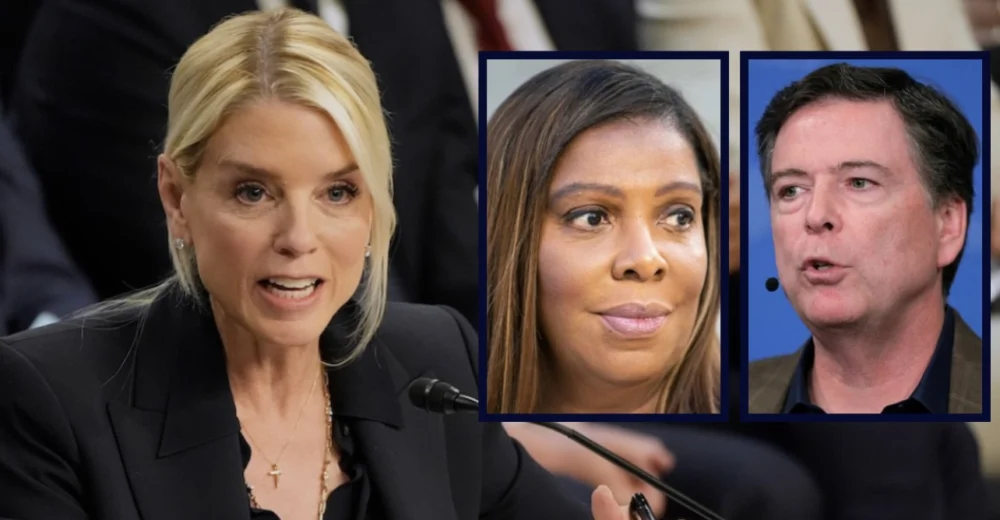
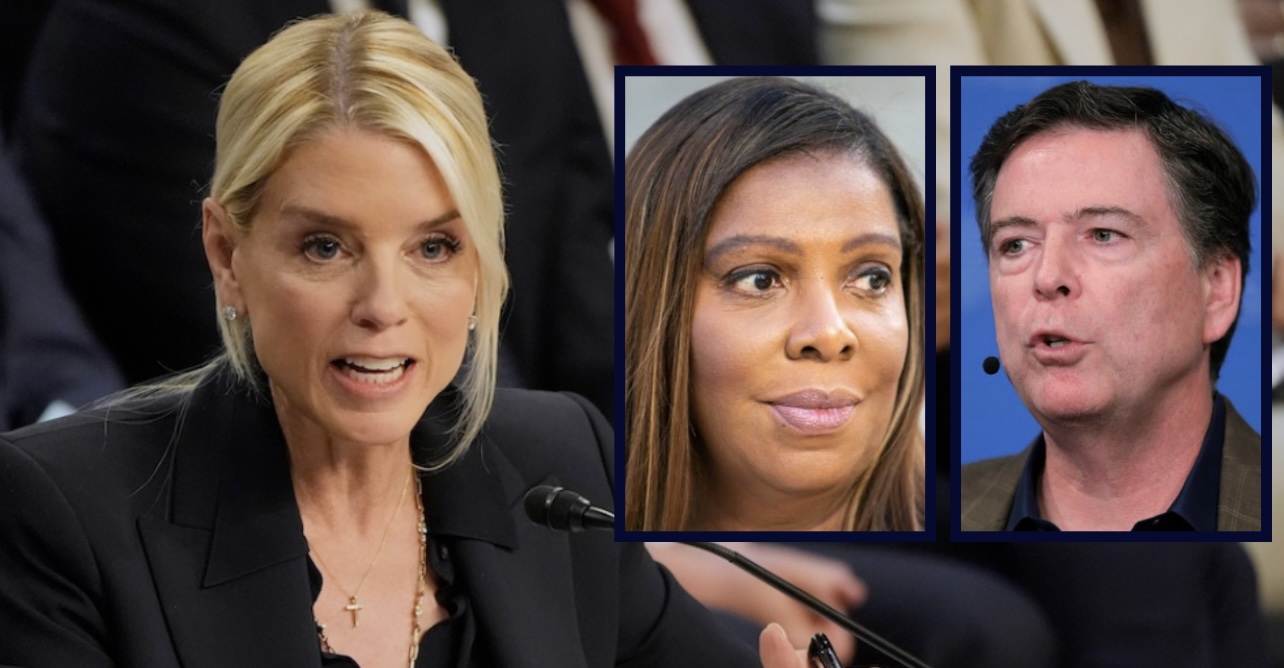
In a high-stakes legal confrontation unfolding before the 4th U.S. Circuit Court of Appeals, former FBI Director James Comey on Tuesday launched a scathing accusation of hypocrisy against the Department of Justice (DOJ). Comey’s legal team argued vehemently that the government’s efforts to resurrect his "fatally flawed" indictment for false statements and obstruction of justice are unconstitutional and should not succeed, citing a critical defect in the initial appointment of the interim U.S. Attorney who secured the charges. This legal battle represents a significant challenge to the authority and procedural integrity of the nation’s top law enforcement agency, with implications reaching far beyond the immediate cases of Comey and New York Attorney General Letitia James, whose similar indictment was also dismissed on identical grounds.
The core of Comey’s argument, presented in a comprehensive brief to the three-judge panel, asserts that the "purported indictment" against him is fundamentally compromised because U.S. Attorney General Pam Bondi unlawfully appointed Lindsey Halligan as the interim U.S. attorney for the Eastern District of Virginia (EDVA). According to Comey, Halligan "could not validly exercise any governmental power" at the time she secured the indictment, rendering her actions void from the outset. This, he contends, means the DOJ should not be afforded a second opportunity to imperil his freedom through a flawed process.
"The government seeks to excuse its unlawful actions on the ground that it perhaps could have appointed Ms. Halligan differently," Comey’s brief stated, directly challenging the DOJ’s position. "But that argument lacks force where, as here, fundamental constitutional protections and individual liberty are at stake. In short, the United States cannot charge and prosecute a case through a person who is not entitled to exercise governmental authority. This Court should affirm."
The Constitutional Underpinnings of Appointments
At the heart of this dispute lies the Appointments Clause of the U.S. Constitution, Article II, Section 2, Clause 2, which dictates how "Officers of the United States" are to be appointed. This clause is a foundational element of the separation of powers, designed to ensure accountability and prevent the Executive Branch from unilaterally establishing positions of significant power without congressional oversight or Senate confirmation. U.S. Attorneys, as principal officers responsible for federal prosecutions within their respective districts, fall squarely under the purview of this clause.
While the President, with Senate consent, appoints U.S. Attorneys, federal law also provides mechanisms for interim appointments in the event of a vacancy. Specifically, 28 U.S.C. § 546 outlines how the Attorney General can make temporary appointments for up to 120 days. However, these statutory provisions are not limitless and must adhere to constitutional principles. The power of the Attorney General to appoint "special attorneys" to assist in grand jury proceedings, as outlined in 28 U.S.C. § 515, is also relevant, but this power does not override the fundamental requirements of a lawful appointment to the office of U.S. Attorney itself. Comey’s team argues that Bondi’s actions circumvented these established procedures and constitutional safeguards, rendering Halligan’s authority to act as an interim U.S. Attorney illegitimate.
The Genesis of Controversy: Lindsey Halligan’s Appointment
The controversy surrounding Lindsey Halligan’s appointment as interim U.S. Attorney for the Eastern District of Virginia began in September, approximately two months before Judge Currie’s dismissal order. Reports at the time highlighted Halligan’s perceived lack of prosecutorial experience, a significant deviation from the typical profile for such a critical role. Compounding these concerns was the revelation that her appointment came with the express endorsement of then-President Donald Trump. This detail immediately raised red flags for many legal observers and political commentators, fueling suspicions that the appointment was politically motivated, particularly given the high-profile nature of the individuals targeted for indictment, including Comey and James.
Furthermore, it was reported that career prosecutors within the EDVA office had sided against bringing charges against Comey, suggesting that the cases lacked sufficient merit in the eyes of experienced, non-political legal professionals. The timing of Halligan’s installation was also critical, as the statute of limitations for the potential charges against Comey was reportedly nearing expiration. This confluence of factors – a seemingly underqualified appointee, presidential endorsement, reported internal dissent, and a looming deadline – painted a picture of a process driven by external pressures rather than impartial legal judgment. Judge Currie’s subsequent finding of an unlawful appointment appeared to validate many of these initial concerns about the procedural integrity of the indictments.
A Chronology of Dismissals and Appeals
The legal saga has unfolded through a series of significant events:
- September (implied 2025): Lindsey Halligan is installed as interim U.S. Attorney for the Eastern District of Virginia. Her appointment raises immediate questions due to her lack of prosecutorial experience and President Donald Trump’s reported endorsement, particularly as the statute of limitations for charges against James Comey approaches and career prosecutors reportedly advise against indictments.
- Halloween (implied 2025): Recognizing a potential flaw in Halligan’s initial appointment, Attorney General Pam Bondi attempts a "Halloween maneuver" to retroactively ratify Halligan’s actions. This involved issuing a special attorney title to Halligan, arguing it "cured any arguable flaw" and empowered her to supervise the office and conduct prosecutions, even if her interim U.S. Attorney title was problematic.
- November (implied 2025): Senior U.S. District Judge Cameron Currie delivers a significant blow to the DOJ, ordering the dismissal of the criminal cases against both James Comey and New York Attorney General Letitia James. Judge Currie explicitly found that Bondi had unlawfully appointed Halligan as interim U.S. Attorney and rejected the DOJ’s "too late in the day" attempt to retroactively validate Halligan’s actions. The court’s ruling underscored the gravity of the constitutional defect.
- Post-Dismissals (November onwards): Following the dismissals, the DOJ faced further setbacks. Renewed efforts to indict Letitia James "struck out," and the department had to contend with a "separate quagmire" in its continued pursuit of Comey. Despite Judge Currie’s clear orders, Halligan continued to identify herself on court documents as interim U.S. Attorney, a move that sparked the "ire" of a federal judge who viewed it as "direct defiance" of binding court orders.
- January 20 (implied 2026): Halligan eventually steps aside from her role. Judges in the Eastern U.S. District of Virginia then initiate a formal process, including soliciting newspaper ads, to find a suitable replacement for the interim position, indicating the severity of the vacancy and the need for a properly constituted authority.
- Subsequent Events (January onwards): The court-appointed replacement for Halligan is swiftly fired by the DOJ, further highlighting the instability and political tensions surrounding the leadership of the EDVA office.
- Ongoing (Current): The challenges to the dismissals persist at the 4th U.S. Circuit Court of Appeals, with the DOJ refusing to concede the fundamental flaw in Halligan’s appointment.
- January 23 (implied 2026): In a separate but highly relevant development, a filing on the Mar-a-Lago docket by Miami U.S. Attorney Jason Reding Quiñones provides critical context for Comey’s claims of DOJ hypocrisy, as it outlines the department’s position on Special Counsel Jack Smith’s allegedly unlawful appointment in the Trump classified documents case.
- Tuesday (Current Day of Article): James Comey’s legal team presents its arguments to the 4th Circuit, directly accusing the DOJ of hypocrisy and asserting the irreparable nature of the initial constitutional violation.
The Heart of the Legal Battle: "Fatally Flawed" vs. "Paperwork Mistake"
The opposing arguments at the 4th Circuit present a stark contrast in legal interpretation regarding the severity of the appointment defect.
Comey’s Argument: Void Ab Initio
Comey’s legal team maintains that if Lindsey Halligan was unlawfully appointed, her actions, particularly securing grand jury indictments, are "void" from the very moment they occurred – legally termed void ab initio. This principle asserts that an act performed without proper authority or in violation of fundamental legal requirements has no legal effect whatsoever, as if it never happened. Comey’s brief emphasizes that belated attempts by Attorney General Bondi to retroactively appoint Halligan to a lesser office or to ratify her actions through different statutes cannot salvage a constitutionally defective process, especially when "fundamental constitutional protections and individual liberty are at stake."
The brief further noted that the Supreme Court has "repeatedly held that actions taken by someone who lacks a valid appointment are void." This position aligns with the view that the Appointments Clause is not merely a procedural formality but a substantive safeguard against the exercise of governmental power by unauthorized individuals. To allow retroactive fixes, Comey’s lawyers argue, would undermine the very purpose of the clause and could set a dangerous precedent for future executive appointments, effectively allowing the Executive Branch to bypass constitutional requirements and then cure the defects after the fact.
The DOJ’s Counter-Argument: A "Paperwork Mistake"
Conversely, the Department of Justice, represented by Attorney General Bondi’s team, continues to assert that Halligan’s appointment error was, at most, a "paperwork mistake." The DOJ’s brief to the appeals court contended that the Attorney General merely "cited the wrong statute in authorizing Halligan to seek and obtain the indictments." This error, they argue, was not one that "prejudiced defendants" and has "in any event been cured several times over by Attorney General orders ratifying Halligan’s actions before the grand juries and her signature on the indictments." The government’s position is that the indictments, despite any initial technical flaw, were "nonetheless valid" and should be reinstated.
The DOJ’s argument leans on the idea that the underlying authority to prosecute existed within the Attorney General’s office, and any misstep was merely a procedural misidentification of the specific legal basis for Halligan’s role. They likely invoke concepts such as the de facto officer doctrine, which sometimes validates the actions of an official who, though improperly appointed, performs duties under color of authority to prevent chaos and ensure continuity of government functions. However, Comey’s team and Judge Currie have evidently found this doctrine insufficient to overcome a fundamental Appointments Clause violation in the context of criminal prosecution, where individual liberty is directly at stake.
The Trump v. United States Precedent: A Charge of Hypocrisy
Perhaps the most potent aspect of Comey’s current legal strategy is his direct accusation of hypocrisy against the DOJ, leveraging the department’s own arguments in the high-profile Trump v. United States case concerning the Mar-a-Lago classified documents indictment. Comey’s legal team highlighted the "sharply contrasting" positions taken by the government in these two significant cases, both involving challenges to prosecutorial authority based on alleged Appointments Clause violations.
In the Mar-a-Lago case, U.S. District Judge Aileen Cannon had previously thrown out Donald Trump’s indictment, finding that Special Counsel Jack Smith was unlawfully appointed by Attorney General Merrick Garland under the Appointments Clause. Following this dismissal, the DOJ’s stance was articulated in a January 23 filing on the Mar-a-Lago docket, where Miami U.S. Attorney Jason Reding Quiñones, backing Trump and his ex-co-defendants, represented that it was the DOJ’s position that special counsel Smith’s Volume II report was an "illicit product of an unlawful investigation and prosecution" that "belongs in the dustbin of history." Judge Cannon subsequently "scolded Smith" for producing the report, construing it as a "breach" of her dismissal order.
The critical parallel drawn by Comey’s team is that both the Trump case and his own involve challenges to prosecutorial appointments, with specific reference to 28 U.S. Code § 515, a statute that both Jack Smith cited to support his appointment and Attorney General Bondi invoked to retroactively name Halligan as a special attorney. The DOJ’s argument in Trump – that an unlawful appointment renders subsequent actions "illicit" and void – stands in stark contrast to its argument in Comey’s case, where it claims Halligan’s flawed appointment was merely a "paperwork mistake" that could be retroactively cured.
Comey’s brief explicitly states that "The government’s claim that the defective appointment of Ms. Halligan is a ‘paperwork error’ rendered inconsequential by the retroactive invocation of Section 515 sharply contrasts with the government’s position in United States v. Trump." By approvingly citing Justice Thomas and Judge Cannon’s reasoning in the Trump case, Comey’s team argues that Halligan’s actions were "void" from the get-go, and subsequent attempts to legitimize her role through a different title or retroactive orders could not change that fundamental constitutional flaw. "The government cannot now escape the consequences of its decisions by retroactively appointing Ms. Halligan to a lesser office than the one she purported to occupy when she presented the case to the grand jury," Comey’s brief concluded, reiterating the long-standing Supreme Court principle that actions by someone lacking valid appointment are void.
Broader Impact and Implications
The outcome of this appeal at the 4th Circuit holds significant ramifications, extending far beyond the immediate fates of James Comey and Letitia James.
Firstly, it will profoundly impact the integrity of federal prosecutions and the rule of law. A ruling affirming Comey’s position would send a powerful message about the judiciary’s commitment to upholding constitutional principles, particularly the Appointments Clause. It would reinforce the notion that procedural integrity and constitutional adherence are not mere technicalities but fundamental safeguards against the abuse of executive power. Conversely, if the DOJ’s "paperwork mistake" argument prevails, it could be perceived as weakening these safeguards, potentially opening the door for future administrations to circumvent established appointment processes with the expectation that any defects can be retroactively remedied.
Secondly, the case touches upon the politicization of justice. The circumstances surrounding Halligan’s appointment – her reported lack of experience, President Trump’s endorsement, and the alleged reluctance of career prosecutors to pursue the charges – have fueled concerns about federal law enforcement being used for political ends. The 4th Circuit’s decision will either validate these concerns by upholding the dismissal or, if it sides with the DOJ, potentially exacerbate perceptions of political influence in prosecutorial decisions. This dynamic is particularly sensitive in a highly charged political environment, where public trust in impartial justice is paramount.
Thirdly, the stark contrast in the DOJ’s legal positions between the Comey and Trump cases raises serious questions about the consistency and credibility of the Department of Justice’s legal arguments. Constitutional scholars and legal observers are closely watching how the DOJ navigates these contradictory stances. Should the appeals court find the DOJ’s arguments inconsistent or disingenuous, it could significantly erode public confidence in the department’s impartiality and its commitment to applying legal principles uniformly, regardless of the defendant’s political affiliations or the administration in power.
Finally, the 4th Circuit’s decision will establish an important precedent for future appointments and challenges to prosecutorial authority. It will provide clearer guidance on the limits of interim appointments, the permissible scope of retroactive ratification, and the enforceability of the Appointments Clause in criminal cases. This could influence how future administrations approach staffing critical positions within the U.S. Attorney’s offices and how courts scrutinize those appointments, ultimately shaping the landscape of federal law enforcement for years to come. The stakes are undeniably high, not just for the individuals involved, but for the fundamental principles of constitutional governance and the public’s faith in a fair and impartial justice system.




 admin
admin
 Yuyun Lusiyani
 Joko Widodo
 Eva Lovia
 Pevita Pearce
