
 Pevita Pearce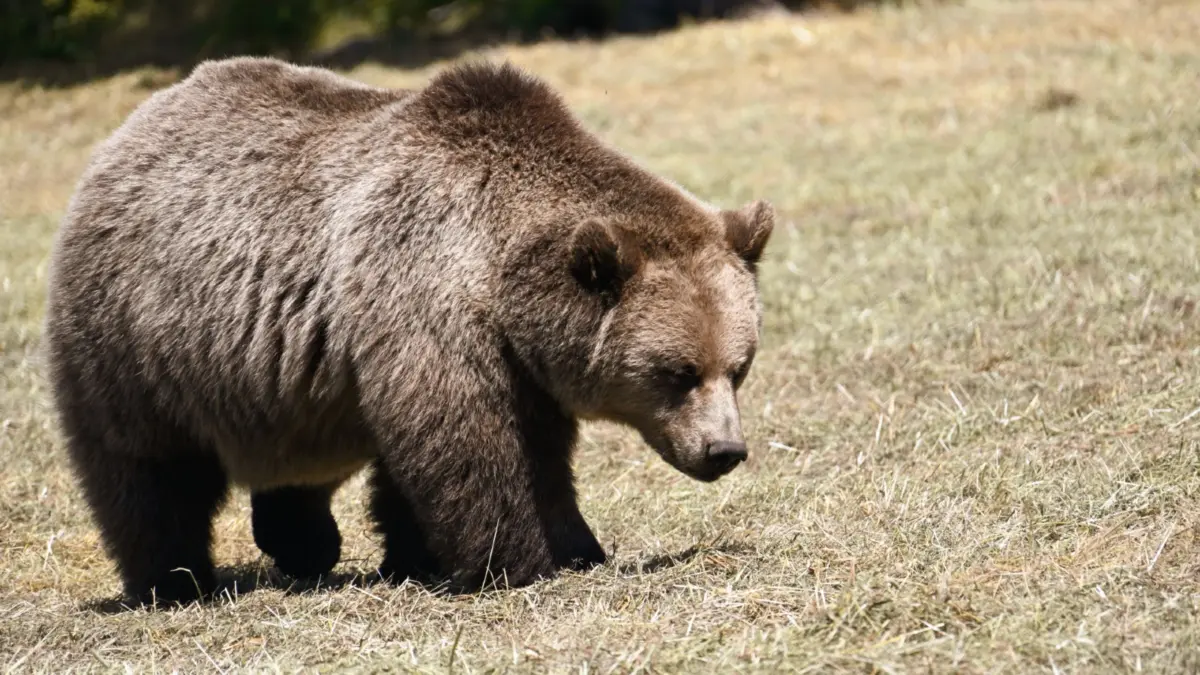
Authorities in the Amur region of the Russian Far East have imposed an administrative fine on a local resident after an artificial intelligence-generated image of a brown bear sparked widespread public alarm and triggered a localized emergency response. The incident, which took place in the settlement of Magdagachi, underscores the growing challenges law enforcement agencies face as generative AI technology becomes more accessible, particularly when such tools are used to exacerbate existing public anxieties regarding public safety and wildlife management.
The Amur courts’ press service confirmed that the woman, whose identity has been withheld in accordance with privacy protocols, used ChatGPT to create a hyper-realistic image depicting a large brown bear roaming a residential street. While the creator initially intended the image to be a private prank shared with a friend via a messaging app, the photograph rapidly transitioned from a private exchange to a viral public concern. Within hours, the image had been disseminated across multiple social media platforms and community chat groups, leading to a surge of emergency calls from terrified residents who believed a predatory animal was actively stalking their neighborhood.
The legal repercussions for the woman were swift. Following her admission to the authorities that the image was a digital fabrication, the court ordered her to pay a fine of 15,000 roubles (approximately $178). This case follows a similar incident last month in which another individual was fined 30,000 roubles for a comparable hoax, suggesting a tightening of judicial responses toward digital misinformation that threatens public order.
A Chronology of the Digital Panic
The incident began on a weekday afternoon when the resident of Magdagachi generated the image using a mobile version of an AI chatbot. The prompt reportedly requested a "brown bear on a Russian street," a request the AI fulfilled with enough realism to bypass the immediate scrutiny of casual viewers. After sending the image to a contact, the recipient—unaware of its artificial nature—shared it further, citing it as a warning to others in the settlement.
As the image gained traction on platforms like Telegram and WhatsApp, the narrative surrounding the bear evolved. False reports began to circulate that the animal had been spotted near local schools and grocery stores. Consequently, the local police department and wildlife control officers were forced to mobilize, diverting resources from other duties to patrol the streets of Magdagachi in search of a non-existent predator.
Realizing the scale of the disruption her "joke" had caused, the woman contacted the police herself to confess. By that time, however, the administrative machinery of the state had already been engaged. The court’s statement noted that the prank "quickly got out of control," emphasizing that in the current climate of heightened wildlife activity, such actions cannot be dismissed as harmless humor.
The Context of the Crisis: A Deadly Year for Bear Encounters
To understand why a single fake image could cause such a profound reaction, one must look at the broader context of human-wildlife conflict in Russia throughout 2026. The country is currently grappling with one of the most severe seasons of bear attacks in recent memory. Since the spring of 2026, when bears emerged from their winter hibernation, at least 26 people have been killed in fatal encounters across various regions.
The Amur region, along with Siberia and the Kamchatka Peninsula, has been particularly hard-hit. The rise in attacks is attributed to a "perfect storm" of ecological factors. Primarily, a poor harvest of pine nuts and wild berries—the caloric staples of the brown bear’s diet—has forced animals to venture further from their natural habitats in search of sustenance. This search often leads them to human settlements, where unsecured trash, livestock, and even garden crops provide an alternative, albeit dangerous, food source.
Furthermore, the brown bear population in Russia has more than doubled over the last three decades. Estimates suggest that milder, shorter winters—driven by shifting global climate patterns—have increased cub survival rates and reduced the duration of hibernation, keeping bears active and hungry for longer periods each year. In 2026 alone, the Russian government reported that over 3,440 bears had to be culled after being deemed a direct threat to human life.

The Intersection of Generative AI and Public Safety
The Magdagachi incident highlights a significant evolution in the spread of misinformation. Unlike traditional "fake news," which often relies on manipulated text or out-of-context older photos, generative AI allows for the creation of bespoke, location-specific imagery that can be tailored to exploit local fears.
Law enforcement experts suggest that the realism of AI-generated content poses a unique threat to emergency services. When a community is already on high alert due to legitimate reports of wildlife danger, the threshold for skepticism is lowered. The "confirmation bias" of seeing a photo that aligns with a feared reality—such as a bear on a local street—leads to rapid sharing without verification.
This phenomenon is not limited to Russia. Similar issues have been observed globally, where AI-generated images of floods, fires, or civil unrest have led to localized panics. However, the Russian government has been particularly aggressive in its legislative approach to "fake news." Laws enacted in recent years provide a framework for punishing the dissemination of "unreliable socially significant information" that threatens to disrupt public order or safety. The fines levied against the women in the Amur region serve as a deterrent, signaling that the digital origin of a threat does not absolve the creator of its real-world consequences.
Government Strategy and Population Management
In response to the surge in both real and fabricated bear threats, the Russian government announced in September 2026 that it was drafting comprehensive new plans to control the brown bear population. These plans involve more than just culling; they include better waste management protocols in rural settlements, the installation of electric fencing in high-risk agricultural zones, and the deployment of advanced monitoring systems.
Some regions have looked toward international examples for solutions. For instance, Japan has famously deployed "robot wolves"—mechanical deterrents equipped with flashing lights and howling speakers—to scare bears away from residential areas. While Russia has yet to adopt such high-tech scarecrows on a large scale, there is growing pressure on the Ministry of Natural Resources and the Environment to find non-lethal ways to mitigate the frequency of human-bear encounters.
The 3,440 bears killed so far in 2026 represent a significant increase from previous years, sparking a debate between public safety advocates and conservationists. While the government maintains that culling is a necessary measure to protect citizens, some ecologists argue that the focus should be on restoring natural food sources and protecting the integrity of the bears’ wilderness habitats to discourage them from entering urban zones.
Legal and Social Implications for the Future
The fine of 15,000 roubles imposed on the Magdagachi resident is seen by many as a relatively lenient sentence, given the potential for the prank to have caused a more serious incident, such as a panicked traffic accident or a mistaken shooting by a resident attempting to protect their property. However, the legal precedent is clear: the misuse of AI to simulate public danger will be treated as a violation of administrative law.
As AI tools become more sophisticated, distinguishing between reality and fabrication will require more than just a keen eye; it will require public education and a robust verification process by authorities. The Amur court’s decision serves as a case study in the modern challenges of governance. In an era where a few keystrokes can summon a virtual predator into a crowded digital space, the responsibility of the individual user is being redefined by the courts.
For the residents of the Amur region, the threat of bears remains a daily reality. While the bear in the photo was a digital phantom, the 26 lives lost this year are a somber reminder that the line between a digital prank and a real-world tragedy is dangerously thin. Moving forward, authorities are urging citizens to verify any sightings through official channels before sharing them online, hoping to prevent the next AI-generated panic from overwhelming the systems designed to keep the public safe from actual threats.




 Yuyun Lusiyani
 Joko Widodo
 Eva Lovia
 Jia Lissa
 admin
admin