
 Jia Lissa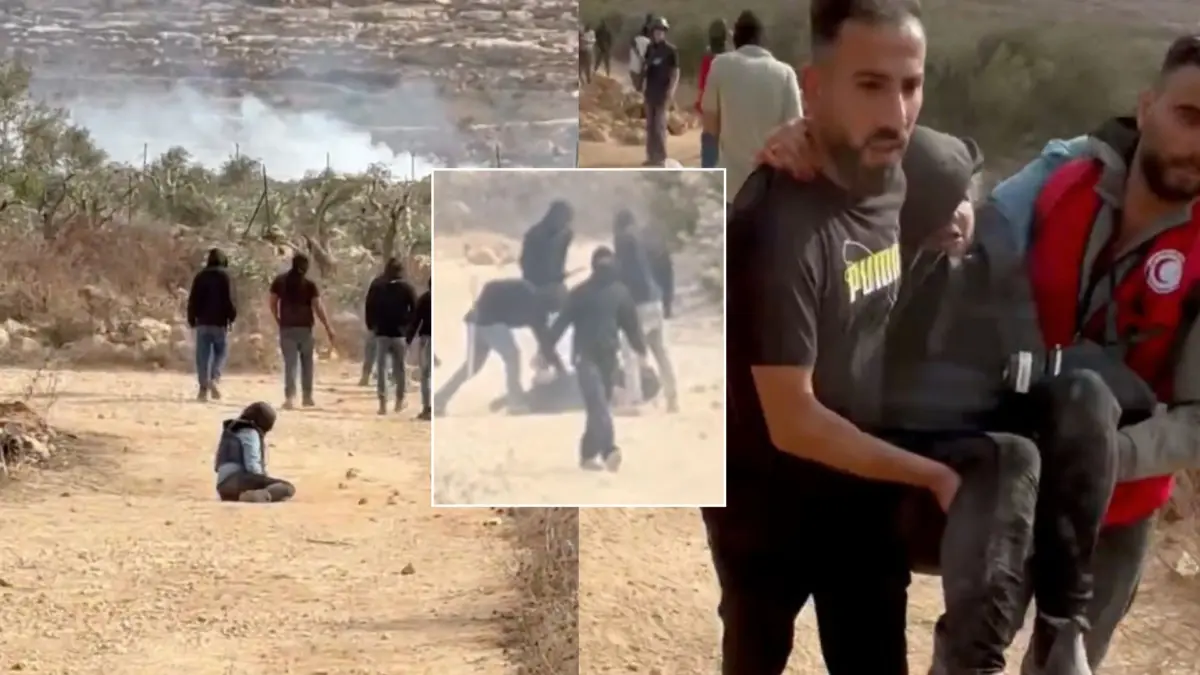
A veteran photojournalist for the Washington Post was hospitalized with severe injuries following a violent assault by Israeli settlers in the West Bank on Friday, marking a significant escalation in hostilities during the region’s annual olive harvest. Heidi Levine, an award-winning photographer known for her extensive coverage of conflict zones, underwent emergency surgery after her finger was nearly severed during the attack. The violence continued into Saturday as a group of European diplomats, including representatives from France, Belgium, and Poland, were targeted by masked individuals while visiting a Palestinian village to observe the harvest and provide a protective presence for local farmers.
The assault on Levine occurred in the village of Abu Falah, located northeast of Ramallah. According to eyewitness accounts and video footage captured during the incident, Levine was documenting the harvest—a period of critical economic and cultural importance for Palestinians—when a group of settlers descended upon the area. The footage shows a chaotic scene in which Levine is surrounded and beaten. Her daughter, Ashley Milner, later confirmed to the Associated Press that the injuries were extensive. Levine suffered a severed finger on her left hand, where the bone was exposed and a tendon was severely damaged. In addition to the hand injury, medical evaluations revealed a broken rib and several fractured vertebrae.
In the immediate aftermath of the beating, Levine was recorded sitting on the ground in a state of shock, repeatedly stating, “I’m going to die.” She informed those coming to her aid that the attackers had stolen all her professional equipment, including her cameras and memory cards. Despite the urgency of the situation, the video shows Levine initially unable to move as bystanders urged her to flee the area. She was eventually carried to safety by a group of men before being transported to a hospital for surgery and specialized care.
A Weekend of Escalating Hostilities
The violence directed at the press on Friday was followed by a brazen confrontation involving international diplomatic personnel on Saturday. In the village of Taybeh, a convoy of European diplomats was intercepted by masked settlers operating all-terrain vehicles (ATVs). Reports from Army Radio and the Times of Israel indicate that the settlers surrounded the diplomatic vehicles, blocking their path and demanding to see the identification of the occupants.
The situation turned physical when the attackers began throwing stones at the vehicles. At least one diplomatic car had its windows smashed during the encounter. Witnesses reported seeing diplomats lying on the ground as they sought cover from the projectiles. The presence of foreign officials, who often attend the olive harvest to monitor human rights and discourage friction between settlers and Palestinian farmers, did not appear to deter the attackers. The Israeli police have since confirmed that an investigation has been launched into the Saturday incident, and the Foreign Ministry has been notified to assist in locating victims and collecting formal testimony.
Chronology of the Recent Attacks
The events of this weekend are part of a documented timeline of friction that intensifies annually during the autumn months.
- Friday Morning: Heidi Levine and other observers arrive in Abu Falah to document the beginning of the olive harvest.
- Friday Midday: A group of settlers enters the olive groves. A physical confrontation ensues. Levine is targeted, beaten, and her equipment is seized.
- Friday Afternoon: Levine is hospitalized and undergoes surgery for a near-amputation of her finger and spinal fractures.
- Saturday Morning: Diplomats from France, Belgium, and Poland travel to Taybeh to support local farmers.
- Saturday Midday: Masked settlers on ATVs ambush the diplomatic convoy, leading to property damage and physical threats to the international officials.
- Saturday Evening: Israeli police issue a statement vowing to bring the perpetrators to justice after reviewing video evidence of the assaults.
The Significance of the Olive Harvest
The olive harvest is a cornerstone of the Palestinian economy, supporting the livelihoods of approximately 100,000 families. According to data from the United Nations Office for the Coordination of Humanitarian Affairs (OCHA), the industry contributes significantly to the local GDP, but it is also one of the most volatile periods in the West Bank. The harvest requires farmers to access lands that are often adjacent to or enclosed within the boundaries of Israeli settlements, particularly in "Area C," which is under full Israeli military and administrative control.
In 2024, the harvest has been overshadowed by a sharp increase in settler-related violence. Statistics from human rights organizations indicate that hundreds of olive trees have been vandalized, burned, or uprooted since the start of the season. The presence of international observers and journalists like Levine is often intended to serve as a deterrent against such acts; however, the recent attacks suggest a diminishing respect for the immunity traditionally granted to the press and diplomatic corps.

Security Context and Settler Violence Trends
The attack on Levine and the European diplomats occurs against a backdrop of rising tensions across the West Bank since October 2023. OCHA has recorded an average of four settler-related incidents per day over the past year, ranging from property damage to lethal violence. Between October 7, 2023, and the present, the UN has documented over 1,400 attacks by Israeli settlers against Palestinians, resulting in numerous fatalities and significant displacement of herding communities.
Journalists have increasingly found themselves in the crosshairs of this conflict. According to the Committee to Protect Journalists (CPJ), the region has become one of the most dangerous places in the world for media workers. The assault on a high-profile photojournalist from a major American publication like the Washington Post is likely to draw significant international scrutiny toward the Israeli government’s ability to maintain order and protect non-combatants in the occupied territories.
Official Responses and International Reaction
The Israeli police have publicly committed to a thorough investigation. A spokesperson for the police stated, “Upon receiving the footage, police opened an investigation, and the Foreign Ministry was also notified to locate the victims, collect testimony, and identify the suspects so they can be brought to justice.” The police emphasized that they would pursue these investigations to ensure that all those involved are held accountable.
Historically, however, the prosecution rate for settler violence remains low. Data from the Israeli human rights organization Yesh Din suggests that only a small percentage of complaints filed by Palestinians against settlers lead to an indictment. The inclusion of international diplomats and a prominent American journalist as victims in this weekend’s events may alter the political pressure on Israeli law enforcement to produce results.
The European countries involved—France, Belgium, and Poland—have frequently called for the protection of civilians and the cessation of settlement expansion. While formal diplomatic protests regarding the Saturday incident are expected, the immediate focus remains on the safety of personnel on the ground. The Washington Post has yet to issue an exhaustive statement regarding the long-term prognosis for Levine’s career, though the severity of her hand injuries raises concerns for a professional whose livelihood depends on manual dexterity.
Analysis of Implications for Press Freedom and Diplomacy
The targeting of Heidi Levine represents a concerning threshold in the erosion of press protections. When journalists are physically incapacitated and their tools of trade—cameras and storage media—are confiscated by non-state actors, it creates a "chilling effect" that hampers the flow of information from conflict zones. The theft of Levine’s equipment is particularly notable, as it suggests a deliberate attempt to suppress the visual record of the events occurring in Abu Falah.
Furthermore, the assault on the European diplomatic convoy challenges the fundamental norms of international relations. Diplomats typically operate with a degree of recognized safety even in volatile regions. By smashing windows and forcing officials to the ground, the attackers have signaled a disregard for the international community’s role in monitoring the West Bank. This could lead to a re-evaluation of how foreign governments engage with the region, potentially resulting in increased demands for Israeli security forces to provide direct escorts or for the implementation of stricter sanctions against extremist settler groups.
As the olive harvest continues through November, the risk of further clashes remains high. The international community will be watching closely to see if the Israeli authorities follow through on their promise of justice, or if the events of this weekend become another chapter in the ongoing cycle of unpunished violence in the West Bank. For Heidi Levine, the road to recovery will be long, involving both physical rehabilitation for her spine and hand, and the psychological processing of an attack that nearly claimed her life while she was simply doing her job.


 Yuyun Lusiyani
 Joko Widodo
 Eva Lovia
 Pevita Pearce
 admin
admin