
 Pevita Pearce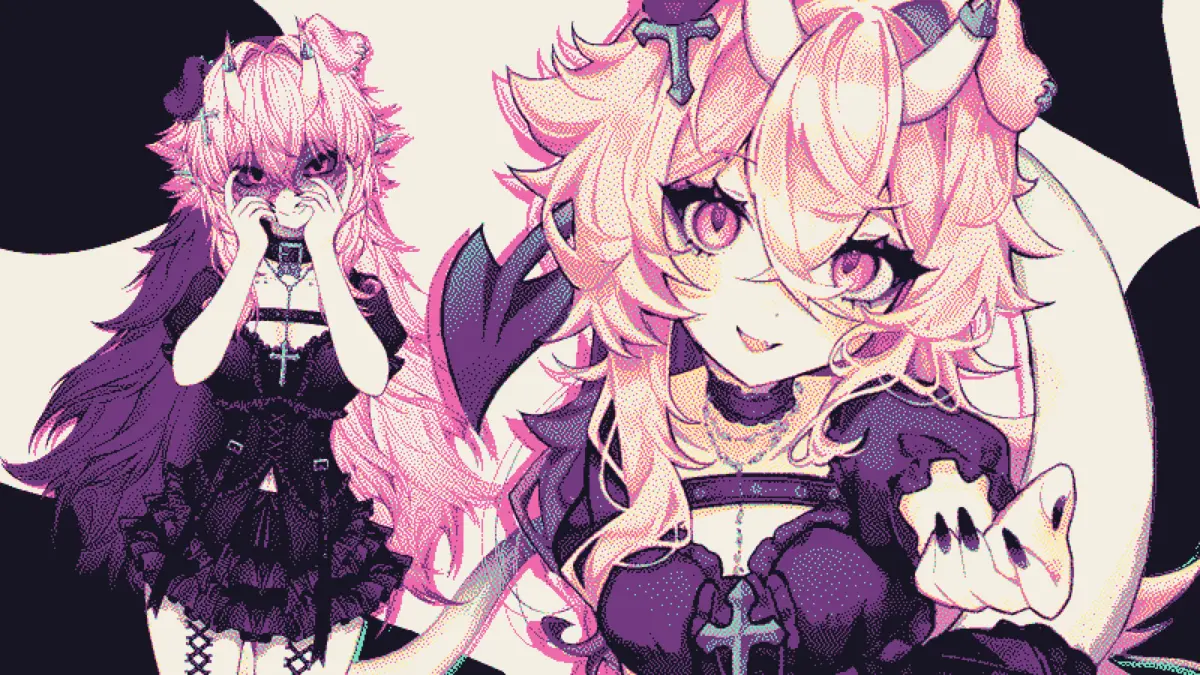
The digital landscape of content creation reached a new milestone of financial and technical transparency as the VTuber known as Nuki revealed the extensive history and $27,000 price tag associated with her latest 2D avatar. This revelation, which followed a high-profile debut, has sparked a broader conversation regarding the economics of the "Virtual YouTuber" (VTuber) industry, the technical labor required for high-fidelity digital puppetry, and the strategic pivot of creators from niche adult platforms to mainstream streaming environments. Nuki, who established her career through VRChat and mature content platforms, detailed a multi-year journey of self-taught technical skill and financial planning that culminated in a commission from one of the industry’s most sought-after artists.
The Financial and Creative Path to a High-End Model
Nuki’s entry into the high-end VTubing space was not an overnight occurrence but rather the result of a two-year period of professional growth and self-education. Before investing in a professional 2D model, she operated as a 3D VTuber, utilizing an avatar she built and refined herself. This period was defined by a rigorous learning curve involving software such as Blender, a 3D computer graphics suite, and Unity, a cross-platform game engine. By utilizing "booth assets"—pre-made digital components—and modifying them through countless hours of "tinkering," Nuki was able to establish a brand without the initial overhead of a custom commission.
During this developmental phase, Nuki achieved significant commercial success. According to her own account, she reached the rank of No. 32 on the highest-earner leaderboard for Fansly, a subscription-based social media platform, and was recognized as the No. 2 VRChat streamer on the site. However, the physical demands of VR streaming, which often requires wearing heavy headsets and full-body tracking equipment for extended periods, prompted a desire for a more sustainable medium. The transition to 2D VTubing, which typically utilizes a webcam and specialized software like Live2D, offered a way to expand her content into areas such as horror gaming and casual "Just Chatting" streams while reducing the physical strain of production.
The "A-List" Pedigree: Commissioning Kamo
The decision to invest $27,000 into a single digital asset was driven by Nuki’s specific aesthetic vision and the reputation of the artist known as Kamo. In the VTuber industry, artists and "riggers" (the technicians who animate the art) often have tiered reputations similar to traditional fashion designers or high-end architects. Kamo is widely regarded as an "A-list" artist within the community, having designed the avatars for industry icons such as Ironmouse, the most-subscribed female streamer on Twitch, and Cottontail.
Nuki recalled that the initial cost of Kamo’s work appeared insurmountable. Upon first viewing the artist’s price sheet, she felt "gutted" by the realization that such a model was outside her financial reach at the time. However, as her career on Fansly and VRChat progressed, the financial reality of her business changed. The eventual purchase was not a lump-sum transaction but a structured financial commitment, paid in installments as her concept was approved and developed. This highlights a growing trend among top-tier creators who view their avatars not merely as digital "skins," but as essential business infrastructure and long-term intellectual property.
Technical Specifications: The 2,000-Layer Rig
The complexity of a $27,000 model extends far beyond the surface-level illustration. To bring the static art to life, Nuki enlisted the services of a professional rigger known as Cypurrpunk. In an interview with Dexerto, Cypurrpunk detailed the staggering technical requirements of the project. The artwork provided by Kamo consisted of over 2,000 individual layers. In the context of Live2D rigging, layers represent every movable part of the character, from individual strands of hair and segments of the iris to folds in clothing and accessories.

Cypurrpunk emphasized that this volume of layers was not "bloat" but a necessity for the level of expressive fidelity Nuki required. The rigging process involves mapping these thousands of layers to a skeletal structure that responds to the creator’s real-world movements. The cost breakdown provided by Cypurrpunk offers a rare glimpse into the professional pricing of the VTuber industry:
- Base Rigging and Physics: Approximately $1,500, which included a "rush fee" for expedited delivery, complex hair and outfit physics, and enhanced tracking features.
- Specialized Animations and Toggles: An additional $1,500 was charged for specialized "mature content" toggles and custom animations.
The total cost increases as features interact. For example, if a model has multiple arm poses (e.g., holding a controller vs. waving), the rigger must ensure that the physics for the shoulders and clothing remain consistent across all possible configurations and "Z-axis" movements (leaning toward or away from the camera). This exponential increase in complexity is a primary driver behind the high costs associated with top-tier VTuber models.
Addressing the Debut Backlash and Technical Issues
Despite the high investment, Nuki’s debut was met with a degree of criticism from the community. Much of the backlash centered on two areas: the perceived lack of originality—given the model’s stylistic similarities to Ironmouse—and technical "stiffness" in the model’s mouth movements.
Nuki and Cypurrpunk were quick to clarify that the tracking issues were not a reflection of the model’s quality or the rig’s construction. Instead, the "stiff mouth" was attributed to Nuki’s personal tracking configuration. VTubing requires a delicate calibration between the webcam, the tracking software (such as VTube Studio), and the avatar’s rig. Nuki admitted that in her excitement to debut, she had not yet optimized her settings, leading to a disconnect between her speech and the avatar’s visual response.
Regarding the aesthetic similarities to other creators, the use of the same artist (Kamo) naturally results in a shared "house style." This is a common phenomenon in the industry, where fans of a particular artist’s "DNA"—such as Kamo’s signature expressive eyes and sharp line work—will seek out that specific look. Nuki’s response to the criticism was one of gratitude for the feedback, noting that many viewers reached out with tutorials and advice to help her improve her technical setup.
The Strategic Shift: Separating Brand Identities
A significant aspect of Nuki’s investment is her desire to diversify her brand. While she remains a prominent figure in the mature content space, she has been vocal about her intention to keep her Twitch channel as a separate environment. Her goal is to create a space where she can be "comfortable and friendly" without the constant pressure to maintain a "sexy" persona.
This strategic separation of content is increasingly common among creators who operate across multiple platforms with varying Terms of Service (ToS). By investing in a high-quality 2D model that is suitable for general audiences (SFW), Nuki is positioning herself to collaborate with mainstream creators and participate in gaming events that might otherwise be closed to creators associated solely with adult platforms. This move represents a "professionalization" of her digital identity, treating the Twitch channel as a distinct branch of her overall media business.

The Economics of VTubing: Is a $27,000 Model Necessary?
The high price tag of Nuki’s model has led to questions about the "barrier to entry" for aspiring VTubers. Both Nuki and Cypurrpunk have been adamant that such a high investment is not a requirement for success. The VTuber market is diverse, ranging from "PNGtubers" (who use static images that change based on audio input) to mid-range 2D models and high-end 3D avatars.
Cypurrpunk pointed to his work for the popular creator Chibidoki as an example of cost-effective alternatives. He created a "Mii-inspired" avatar for her using a "Your Character Here" (YCH) template—a reusable rig that can be customized with different art. While the base commission for such a project was around $100, Chibidoki paid $300 for a faster turnaround. This highlights that while the "ceiling" for VTuber costs is high, the "floor" remains accessible for hobbyists and emerging creators.
Nuki’s decision to be transparent about the $27,000 cost was an intentional move to foster a conversation about creator earnings and reinvestment. She argued that when a community supports a creator, that support is often funneled back into the production value of the content. "I don’t think it’s a bad thing to say, ‘You all supported me, and I’m using that support to grow my content toward my dreams,’" Nuki stated. She expressed a desire for such financial transparency to become "normalized" in the industry, despite the potential for negative reactions from those unfamiliar with the internal economics of digital content creation.
Industry Implications and the Future of Virtual Personas
The story of Nuki’s $27,000 avatar serves as a case study for the maturing VTuber industry. What was once a niche subculture has evolved into a high-stakes sector of the creator economy, involving professional-grade software, specialized labor, and significant capital investment. As the technology behind facial tracking and real-time rendering continues to advance, the distinction between "virtual" and "traditional" influencers continues to blur.
Nuki’s journey—from a self-taught 3D modeler to the owner of a top-tier Kamo-designed 2D avatar—reflects the entrepreneurial spirit of the modern creator. It also underscores the importance of the technical "middlemen"—the artists and riggers—whose work forms the backbone of the industry. As Nuki continues to refine her tracking and expand her Twitch presence, her experience remains a testament to the fact that in the world of VTubing, the avatar is more than just a mask; it is a meticulously crafted, multi-thousand-dollar engine for digital storytelling and business expansion.



 Yuyun Lusiyani
 Joko Widodo
 Eva Lovia
 Jia Lissa
 admin
admin