Ana Megawati
The current Trump administration is vigorously imploring the U.S. Supreme Court to intervene and halt a district court order that has preserved vital special immigration protections for hundreds of thousands of Haitian refugees. This high-stakes legal battle centers on the administration’s efforts to terminate Temporary Protected Status (TPS) for Haiti, a move blocked by a lower court judge who found it likely motivated by "hostility to nonwhite immigrants," leading to accusations of racial animus. The Department of Justice (DOJ), representing the administration, has filed a 40-page application for a stay, arguing that the lower court’s ruling is jurisdictionally flawed, factually baseless, and sets a dangerous precedent that could undermine the executive branch’s authority over immigration policy.
Understanding Temporary Protected Status (TPS)
Temporary Protected Status (TPS) is a humanitarian immigration program established by the Immigration Act of 1990. It allows foreign nationals from designated countries who are already in the United States to live and work legally for a temporary period if their home country is deemed unsafe for their return. Conditions warranting TPS designation typically include ongoing armed conflict, environmental disasters (like earthquakes or hurricanes), or other extraordinary and temporary conditions. Beneficiaries receive work authorization and protection from deportation, providing a crucial lifeline for individuals and families unable to safely return to their homelands. The program is reviewed periodically, and designations can be extended, re-designated, or terminated based on evolving conditions in the home country.
Historically, TPS has been a critical tool for humanitarian response. For instance, countries like El Salvador, Honduras, Nicaragua, and Sudan have had long-standing TPS designations due to civil wars, natural disasters, and widespread instability. The number of beneficiaries nationwide can fluctuate, but it often involves hundreds of thousands of individuals who have established lives, built families, and contributed significantly to the U.S. economy for years, often decades. Terminating TPS for a large group can have profound social and economic consequences, both for the individuals facing potential deportation and for the communities they reside in.
The Case of Haitian TPS and Administration Policy
Haiti was initially designated for TPS in January 2010 following a catastrophic earthquake that devastated the nation, killing an estimated 200,000 to 300,000 people and displacing millions. The designation provided relief to Haitians already in the U.S. who could not safely return to a country grappling with immense reconstruction challenges, widespread poverty, political instability, and subsequent natural disasters. The status has been extended multiple times since then. Most recently, in 2021, the Biden administration extended and re-designated Haiti for TPS, citing ongoing security concerns, human rights abuses, and severe socioeconomic conditions exacerbated by political turmoil and natural disasters. This specific designation covers Haitians who have been continuously residing in the U.S. since July 29, 2021. The current Trump administration’s efforts seek to terminate this status, impacting hundreds of thousands of individuals who have relied on these protections.
The current Trump administration, consistent with its broader restrictionist immigration policies, has made efforts to curtail various immigration programs. During its previous term, the administration sought to end TPS for several countries, including El Salvador, Nicaragua, Sudan, and Honduras, arguing that the conditions warranting their initial designation no longer existed. These actions often triggered intense legal challenges from immigrant advocacy groups and led to protracted court battles, some of which are still ongoing. The current move to terminate Haitian TPS aligns with this established pattern, signaling a continued commitment to reducing the number of individuals under protected status categories.
Chronology of the Legal Challenge
The legal dispute over Haitian TPS began to escalate in early February [2026] when U.S. District Judge Ana C. Reyes, a Biden appointee, issued a decisive ruling. Judge Reyes blocked the Department of Homeland Security (DHS), led by Secretary Kristi Noem, from terminating Temporary Protected Status for Haitians who have been in the country since 2021. Her ruling was a significant victory for the plaintiffs, who argued that the administration’s decision was unlawful.
Judge Reyes’s findings were particularly sharp. She concluded that it was "likely" that DHS Secretary Kristi Noem had "preordained her termination decision and did so because of hostility to nonwhite immigrants." The judge explicitly stated that these attempts to end TPS violated both the Administrative Procedure Act (APA) – which governs how federal agencies develop and issue regulations – and the Fifth Amendment right to equal protection, which prohibits the government from denying equal protection under the law. The court’s finding of racial animus was a critical component of her decision, suggesting that the policy was driven by discriminatory intent rather than legitimate policy considerations.
Following this district court setback, the Trump administration promptly appealed to the D.C. Circuit Court of Appeals, requesting a stay of Judge Reyes’s ruling. However, a majority on a three-judge panel of the appellate court declined to grant the stay, allowing the district court’s block on the TPS termination to remain in effect. This refusal further intensified the administration’s determination to seek relief from the nation’s highest court.
On March 11, 2026, the U.S. Department of Justice filed a comprehensive 40-page application for a stay with the Supreme Court. This application represents the administration’s last immediate legal recourse to implement its policy while the full merits of the case are litigated. The filing lays out the government’s arguments in detail, challenging both the jurisdictional basis and the factual findings of the lower courts.
The Administration’s Legal Arguments to the Supreme Court
In its application to the Supreme Court, the Department of Justice presented a multi-pronged legal attack on Judge Reyes’s ruling. Central to their argument is the assertion that the APA claims, which challenge the procedural regularity of the DHS decision, "are clearly not reviewable and are in all events meritless." The DOJ contends that federal courts lack jurisdiction to second-guess the Secretary’s determinations regarding TPS designations and terminations, citing specific statutory language.
The government heavily relies on 8 U.S.C. § 1254a, the TPS statute itself, which explicitly states: "There is no judicial review of any determination of the Attorney General with respect to the designation, or termination or extension of a designation, of a foreign state under this subsection." The DOJ argues that this "unambiguous" language creates a jurisdictional bar that encompasses the types of APA claims raised by the plaintiffs in this case. To bolster this point, the administration referenced prior instances where the Supreme Court had granted the government’s requests for stays based on this same judicial-review bar, specifically mentioning cases involving challenges to the revocation of TPS status for Venezuelans. These previous "shadow docket" rulings, the DOJ argued, underscore the validity of their jurisdictional challenge.
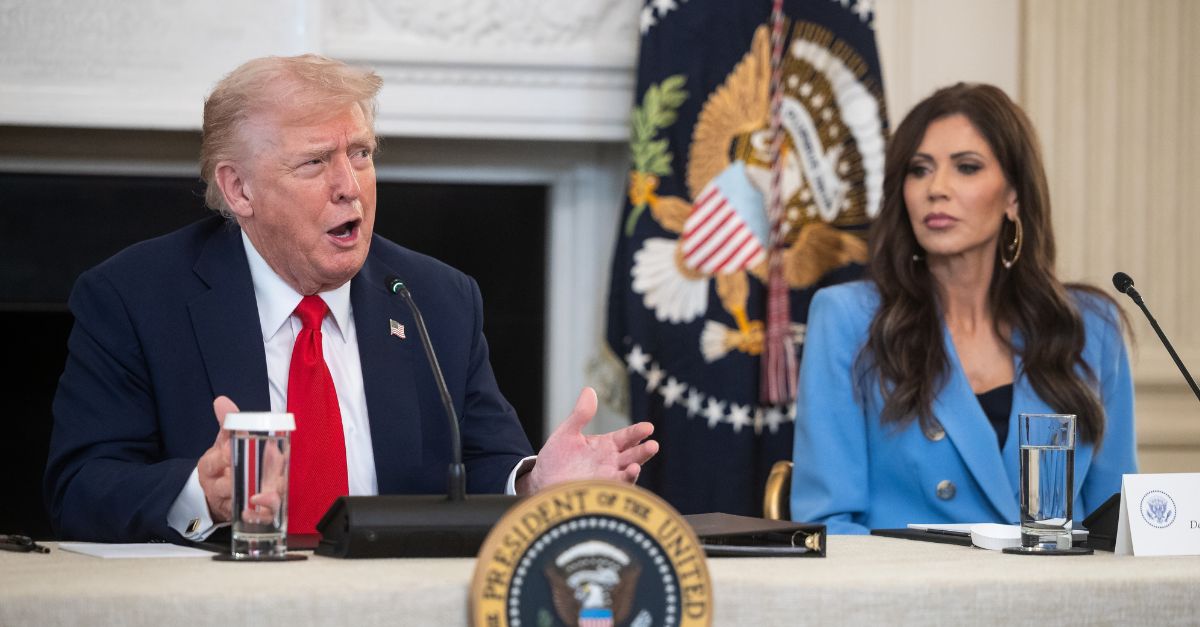
However, the most contentious aspect of the district court’s ruling, and consequently the DOJ’s appeal, concerns the equal protection claim based on alleged racial animus. The DOJ vehemently argued that the "precedent-defying equal-protection challenge would apparently invalidate every" similar action taken by DHS since President Donald Trump’s second term began. The administration expressed strong umbrage at the lower court’s finding of racial bias, framing it as the product of an "imaginative district court judge gone rogue."
The stay motion specifically targeted the evidence cited by Judge Reyes for the racial bias claims. The judge had referenced an "X post" by Secretary Noem and other statements evidencing her supposed "animus towards nonwhite foreigners," alongside statements from President Trump dating back to 2018. The DOJ dismissed these as "cherry-picked" statements made by Noem and Trump "on the campaign trail." They contended that such statements were "remote in time and made in unrelated contexts" and therefore "do not qualify as ‘contemporary statements’ probative of the decision at issue." This legal argument directly echoes the Supreme Court’s reasoning in Trump v. Hawaii (2018), the case that allowed the first Trump administration to enforce its controversial travel ban, which critics had dubbed a "Muslim ban." In that case, the Supreme Court largely disregarded President Trump’s campaign trail rhetoric as evidence of discriminatory intent, focusing instead on the neutral text and stated national security justifications of the policy itself.
The DOJ further complained that the district court’s references to race were merely "editorializing labels of ‘nonwhite foreigners’ and ‘predominantly nonwhite’ countries." The government maintained that the statements made by Trump and Noem were "advocating for policies that curb immigration and decrease crime," and not indicative of discriminatory intent. They argued that these statements "raise no plausible inference of discriminatory intent" and were used by the lower court as a "pretext" to block the TPS termination.
Furthermore, the DOJ criticized Judge Reyes for using anything uttered by the President as evidence of animus by the Secretary. "Moreover, the district court’s recitation of President Trump’s prior statements—which, again, raise no plausible inference of animus—certainly could not show animus by the Secretary. Otherwise, courts could invalidate any agency official’s actions based on mere allegations that a more senior government official harbored some discriminatory motive," the DOJ stated, highlighting concerns about the scope of judicial review over executive branch actions.
Broader Legal Landscape and Implications
The administration’s application to the Supreme Court highlights a "disconnect" in lower court rulings regarding TPS terminations. While some courts have allowed TPS terminations to proceed, others, like Judge Reyes’s court, have been more circumspect, blocking them based on similar allegations of preordained and pretextual decision-making or failure to consult with appropriate agencies. The DOJ argues that all these cases involve "overlapping legal issues" over APA claims that "second-guess the underpinnings of Secretary Noem’s decisions" and "similar irreparable-harm and balance-of-equities disputes."
The administration’s filing explicitly calls for the Supreme Court to provide "guidance to lower courts" and turn some of its "shadow docket jurisprudence into formal holdings with the force of precedent." The "shadow docket" refers to the Supreme Court’s emergency orders and summary decisions, which are often issued without full briefing or oral arguments and can have significant policy implications, but lack the detailed reasoning of full opinions. The DOJ’s request underscores a desire to unify the disparate rulings across the country and establish clear legal principles for future challenges to executive immigration decisions.
If the Supreme Court grants the stay, it would allow the administration to proceed with terminating Haitian TPS, potentially exposing hundreds of thousands of individuals to deportation. This would align with the administration’s stated goals of reducing the number of individuals with protected status. Conversely, if the Supreme Court denies the stay, it would leave Judge Reyes’s order in place, providing continued protection for Haitian TPS holders while the case proceeds through the appellate process, potentially to a full hearing at the Supreme Court.
The implications of this case extend beyond Haitian TPS. A Supreme Court ruling could significantly impact the standard for judicial review of executive immigration decisions, particularly regarding claims of discriminatory intent. It could clarify the weight courts should give to public statements by high-ranking officials versus the official, neutral justifications for policy decisions, drawing on the precedent set by Trump v. Hawaii. Such a ruling would define the boundaries of executive power in immigration and the extent to which federal courts can scrutinize the motives behind policy changes.
Reactions and Humanitarian Concerns
Pro-immigrant advocacy groups and human rights organizations have consistently condemned the administration’s attempts to terminate TPS for Haiti and other nations. They argue that such actions disregard the dire conditions in these countries, which often include extreme poverty, political instability, rampant violence, and a lack of basic infrastructure. The termination of TPS would force individuals to return to life-threatening situations, separating families and disrupting communities that have been established in the U.S. for years.
These groups have lauded Judge Reyes’s ruling, emphasizing the importance of protecting vulnerable populations from policies they view as discriminatory. They highlight the significant economic contributions of TPS holders to the U.S. economy, many of whom work in essential sectors, pay taxes, and own businesses. Deportation, they argue, would not only be a humanitarian crisis but also an economic loss for the United States.
The ongoing political instability and humanitarian crises in Haiti, exacerbated by gang violence, natural disasters, and a collapsing state, further underscore the arguments against termination. International organizations have repeatedly warned against forced returns to Haiti, citing the extreme dangers faced by returnees.
Conclusion
The Trump administration’s appeal to the Supreme Court represents a critical juncture in the ongoing legal and humanitarian saga surrounding Temporary Protected Status. The case pits the executive branch’s asserted authority over immigration policy against judicial oversight, particularly concerning allegations of discriminatory intent. The Supreme Court’s decision on the stay application, and ultimately on the merits of the case, will not only determine the fate of hundreds of thousands of Haitian TPS holders but will also cast a long shadow over the future of humanitarian immigration programs and the balance of power between the branches of government in shaping U.S. immigration policy. The arguments presented by the DOJ underscore the administration’s commitment to its immigration agenda and its challenge to what it perceives as judicial overreach, setting the stage for a potentially landmark decision from the nation’s highest court.



 Yuyun Lusiyani
 Joko Widodo
 Jia Lissa
 Pevita Pearce
 admin
admin