
 Eva Lovia
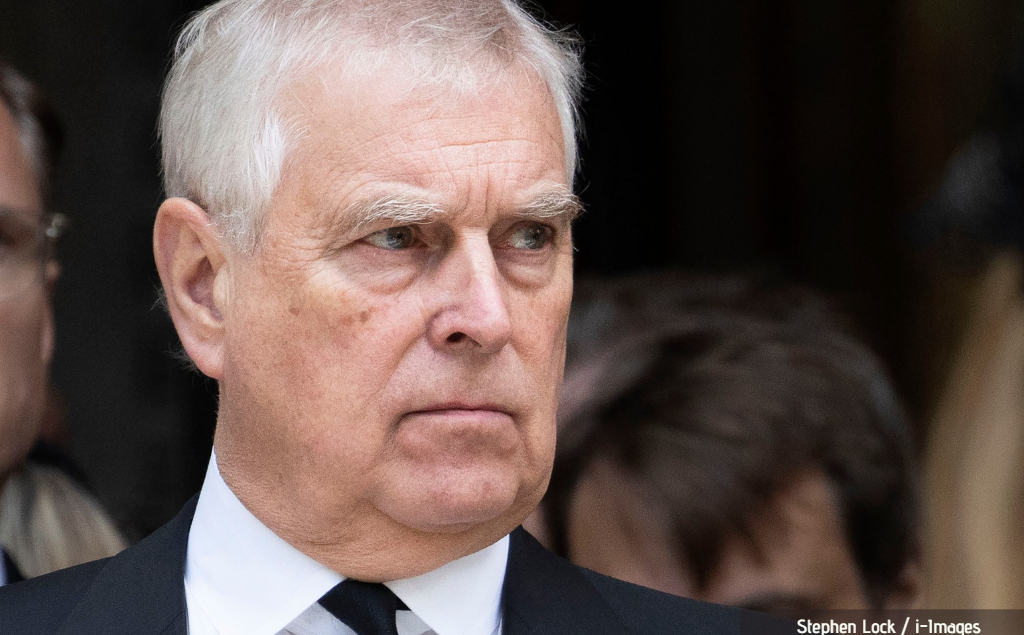
The potential for Prince Andrew Mountbatten-Windsor to be formally removed from the line of succession to the British throne has gained significant momentum following the explicit endorsement of the idea by the Prime Minister of Australia, Anthony Albanese. This development marks a crucial step forward in a complex process that requires the consensus of all Commonwealth realms where King Charles III serves as Sovereign. The Australian government’s stated position, conveyed in a formal letter, suggests a growing international alignment on the matter, placing further pressure on other Commonwealth nations to consider their own legislative frameworks and stances.
The reports circulating over the weekend indicated that the government in London was actively exploring options to exclude the former prince from the line of succession. This consideration is reportedly linked to the ongoing police investigation into Prince Andrew. While the exact timeline remains contingent on the conclusion of these investigations, the principle of removing him from his hereditary position now appears to be gaining traction beyond the United Kingdom’s borders. For any such change to be enacted, each of the fourteen Commonwealth realms where King Charles III is the Head of State would need to amend their respective constitutional laws. The clear backing from Australia significantly increases the likelihood of achieving this necessary multilateral agreement.
A Letter of Intent: Australia’s Position Articulated
Prime Minister Anthony Albanese of Australia formally communicated his government’s stance in a letter addressed to Sir Keir Starmer, the Leader of the Opposition in the UK. This correspondence unequivocally stated his and his administration’s support for removing Prince Andrew from the royal line of succession. The letter, a testament to the seriousness with which Australia views the allegations, read: "In light of recent events concerning Andrew Mountbatten-Windsor, I am writing to confirm my Government would agree to any proposal to remove him from the royal line of succession. I agree with His Majesty that the law must now take its full course and there must be a full, fair and proper investigation. These are grave allegations and Australians take them seriously."
This direct intervention from the Australian Prime Minister is of considerable consequence. As a prominent Commonwealth realm, Australia’s position carries weight and could influence the decisions of other member states. The focus now shifts to other key realms, including Canada and New Zealand, to gauge their potential support for such a constitutional adjustment. The unified approach across the Commonwealth is essential for any alteration to the succession laws, underscoring the unique nature of the British monarchy’s constitutional relationship with its former Dominions.
The Resurgence of a Succession Debate: A Chronology of Events
The question of Prince Andrew’s position in the line of succession re-entered the political spotlight following his arrest in connection with allegations of misconduct in a public office. On February 19, 2026, the former prince was detained by police officers at his residence on the Sandringham estate. He was subsequently released approximately eleven hours later, pending further investigation. This event reignited discussions that had been simmering for some time.
The controversy surrounding Prince Andrew escalated significantly in the autumn of 2025, leading to the stripping of his royal titles. This action was a direct consequence of further details emerging about his association with convicted sex offender Jeffrey Epstein. Despite the forfeiture of his titles and military affiliations, Prince Andrew has remained in the line of succession. Currently, he holds the eighth position, a place that carries not only symbolic importance but also potential constitutional responsibilities.
Constitutional Implications: Counsellors of State and Regency
Prince Andrew’s continued presence in the line of succession has implications beyond ceremonial considerations. Under the provisions of the Regency Act of 1937, he is designated as one of the Counsellors of State. These individuals are empowered to carry out most of the Monarch’s public duties in the event of the Sovereign’s absence or illness. However, it is worth noting that King Charles III expanded the pool of Counsellors of State early in his reign, thereby reducing the immediate likelihood of Prince Andrew being called upon to act in this capacity.
A more significant constitutional role arises in scenarios involving permanent incapacitation of the Monarch or a monarch being too young to reign. In such circumstances, a regent is appointed. The Regency Act stipulates that the regent is the next adult in line of succession who is resident in the United Kingdom. Currently, should Prince William or his children require a regent, Prince Harry would be the primary candidate. However, if Prince Harry were not resident in the UK, the next adult in the line of succession is Prince Andrew. This means that, under specific, albeit unlikely, circumstances, Prince Andrew could still be called upon to serve as regent for his nephew or nieces, or even for King Charles III if the conditions of the Act were met. The prospect of Prince Andrew holding such a significant constitutional office, especially in light of the ongoing investigations, has been a point of concern for many.
Broader Context and International Legal Frameworks
The British monarchy, as an institution, operates within a complex web of constitutional arrangements that extend beyond the United Kingdom. The concept of Commonwealth realms signifies a shared Head of State, where the reigning monarch of the United Kingdom also serves as the monarch of other independent countries. This shared sovereignty necessitates a degree of consultation and agreement on matters that affect the succession and the broader constitutional fabric.
The Regency Act of 1937, a cornerstone of the British constitutional law concerning succession, is applicable across these realms. Any amendment or interpretation of this act, particularly concerning who is eligible to serve as Regent or Counsellor of State, would require the legislative consent of each individual realm. This principle of parliamentary sovereignty within each realm means that no unilateral decision can be imposed; rather, a consensus-building process is paramount.
The current situation highlights the interconnectedness of these constitutional frameworks. The allegations against Prince Andrew, and the subsequent calls for his removal from the succession, have transcended national boundaries, prompting international diplomatic engagement. Australia’s proactive stance underscores the evolving nature of the Commonwealth’s relationship with its monarchical heritage.
Reactions and Future Outlook
While Buckingham Palace has maintained a policy of no public comment on the ongoing discussions surrounding Prince Andrew’s position in the succession, the political landscape is undeniably shifting. The statements from Australian government officials, coupled with the reported considerations within the UK government, suggest a concerted effort to address the constitutional ramifications of the allegations.
The next steps will likely involve diplomatic exchanges between the United Kingdom and other Commonwealth realms. The reactions from Canada and New Zealand, in particular, will be closely watched. Should a significant number of these realms express support for the proposed change, it would create considerable momentum for legislative action. Conversely, a lack of consensus could lead to a prolonged period of constitutional uncertainty.
The process of amending succession laws in multiple sovereign nations is inherently intricate and can be protracted. Each parliament would need to debate and pass its own legislation, reflecting the distinct constitutional procedures of each country. However, the clear articulation of Australia’s position serves as a powerful precedent, potentially simplifying the path towards a unified approach. The ultimate outcome will depend on the political will and the legal processes within each of the Commonwealth realms, but the recent developments signal a significant turning point in the long-standing debate surrounding Prince Andrew’s place in the royal line of succession.


 Nila Kartika Wati
 Jia Lissa
 Ana Megawati
 Pevita Pearce
 Joko Widodo
 admin
admin