
 Yuyun Lusiyani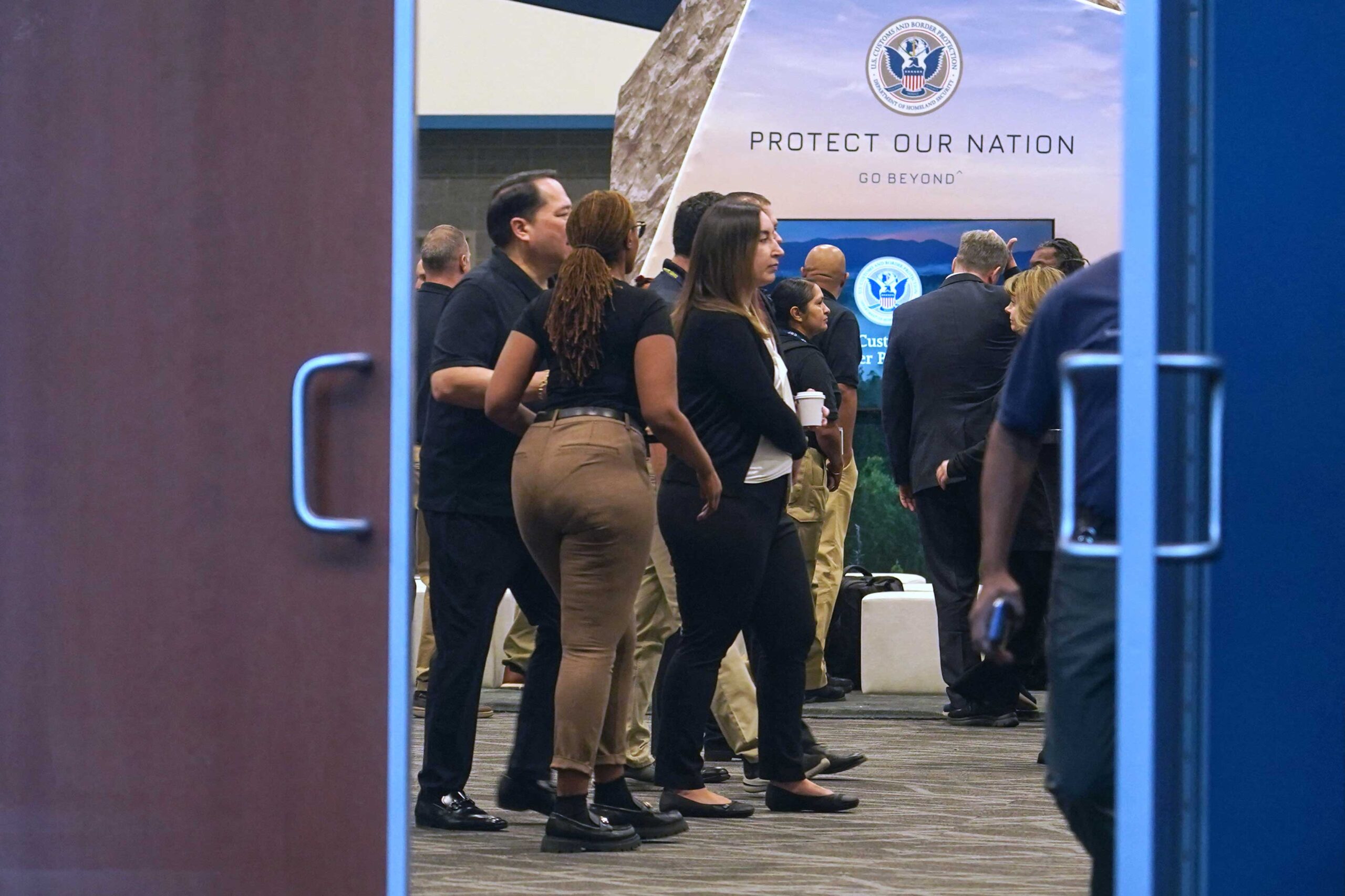
In a detailed six-page letter dispatched on Friday, Representatives Jamie Raskin of Maryland, Lucy McBath of Georgia, Jasmine Crockett of Texas, and Joe Neguse of Colorado underscored their profound concerns regarding the current state of federal prisons. Their inquiry follows a damning investigation by ProPublica, which revealed that federal correctional facilities, stretching from Florida to California, are losing experienced personnel who are being actively recruited by Immigration and Customs Enforcement (ICE). ICE’s aggressive recruitment campaign, notably during the Trump administration, offered enticing incentives, including a substantial $50,000 starting bonus and higher base salaries, leading to a more than twofold increase in its officer and agent workforce last year. In stark contrast, the BOP experienced a net loss of over 1,800 employees during the same period, intensifying an already dire staffing crisis.
Deepening Crisis: The Exodus and Its Ramifications
The lawmakers articulated their alarm, stating, “We are deeply concerned that these developments compromise the safety and security of both inmates and staff.” They further elaborated on the cascading effects of the diminishing workforce, noting that "the shrinking existing workforce has been left to contend with an ever-growing use of overtime, which leads to fatigue, burnout, and increased attrition." This unsustainable cycle not only jeopardizes the well-being of the correctional officers but also creates a volatile environment within the prisons.
The consequences of this severe understaffing are multifaceted and far-reaching. The representatives highlighted that chronic staff shortages have directly contributed to an increase in facility lockdowns, a surge in inmate violence, and a significant reduction in access to crucial recidivism-reducing programs designed to prepare prisoners for successful reintegration into society. These programs, which range from educational courses to vocational training and therapeutic interventions, are often the first to be cut or scaled back when staff are diverted to essential security functions. The long-term implications of this erosion of rehabilitative opportunities could lead to higher rates of reoffending, undermining public safety efforts.
Beyond the immediate staffing crunch, the Democrats’ letter also raised pointed questions about the controversial cancellation of the union contract for federal prison workers. Critics have widely described this move as "retaliatory," further exacerbating tensions between the BOP administration and its beleaguered workforce. Additionally, the lawmakers scrutinized the bureau’s persistent reliance on "augmentation," a practice where non-correctional staff—such as nurses, teachers, and even plumbers—are forcibly reassigned to fill critical corrections officer roles. This strategy, while ostensibly addressing staffing gaps, diverts essential personnel from their primary duties, compromising the delivery of health care, education, and maintenance services, and potentially placing these untrained staff members in dangerous situations.
"We believe these deeply troubling issues require concrete answers," the lawmakers asserted, setting a firm 30-day deadline for the Bureau of Prisons to submit a written response outlining its plans and corrective actions. The urgency of their demand reflects the growing apprehension within Congress about the stability and effectiveness of the federal prison system.
A History of Struggle and Systemic Vulnerabilities
The current crisis is not an isolated incident but rather the latest manifestation of the BOP’s long-standing struggles with recruitment and retention. For years, the agency has grappled with maintaining adequate staffing levels across its 122 facilities, which house approximately 138,000 prisoners and are managed by roughly 34,700 employees. The challenge is particularly acute for corrections officer positions, with union officials reporting a staggering 40% vacancy rate as recently as 2023. This persistent understaffing led to the federal prison system being placed on a government list of "high-risk agencies" with "serious vulnerabilities" by the Government Accountability Office (GAO) in 2023, a designation typically reserved for agencies facing significant management or operational challenges.
In an effort to counter these trends, the BOP initiated a series of aggressive hiring pushes. These included offering signing bonuses, providing retention pay to discourage departures, and implementing a fast-tracked hiring process. These initiatives showed some promise, leading to a net gain of over 1,200 employees in 2024—the largest workforce increase for the bureau in a decade. However, these gains proved precarious. The financial incentives, coupled with salary raises, increased overtime expenses, and inflationary pressures, placed immense strain on an already stagnant budget.
Early last year, the agency made the difficult decision to pause its hiring and retention incentives in a bid to conserve funds. This move, however, immediately threatened to undermine the hard-won staffing improvements from the previous year. The financial strain continued unabated, and by the fall, ProPublica’s investigation uncovered widespread reports from dozens of staff and prisoners detailing "unusual scarcities" in facilities nationwide. These shortages extended beyond personnel, impacting basic operational needs. Some prisons reportedly fell behind on utility and trash bills, while others experienced critical shortages of staple food items, including eggs and beef. In one particularly alarming instance, a federal prison in Louisiana was reportedly days away from running out of food for its inmates before union officials intervened to press agency leaders for a resolution.
The lawmakers explicitly referenced these financial shortfalls and the worsening staffing figures in their recent letter, expressing profound alarm. They noted that the bureau’s net loss of employees last year surpassed any year since 2017, according to data obtained by ProPublica through an open records request, underscoring the accelerating nature of the crisis.
The Human Cost: Overtime, Fatigue, and Cover-Up Allegations
With a dwindling workforce, the financial burden on the BOP has shifted significantly towards overtime costs. A recent report by the Congressional Research Service (CRS) revealed that in 2025, the federal prison system spent more than $387 million on overtime, a figure that has been surpassed only once in the past decade. This exorbitant spending is a direct consequence of officers being forced to work excessive hours to cover staffing gaps.
Several prison officials, speaking anonymously to ProPublica, described a grim reality where officers in some facilities are routinely compelled to work two to four double shifts per week. The strain is so severe that even inmates have reportedly expressed concern for the well-being of their fatigued guards. "The only ones who like it are the predatory inmates," one corrections officer candidly told ProPublica. "Inmates don’t like super cops, but they at least want to feel like if they are attacked, someone will see it and stop it as quickly as they can. You ain’t getting that with a CO on a double who can barely keep his eyes open." This sentiment highlights the profound impact of officer fatigue on both personal safety and institutional security, creating an environment ripe for exploitation and violence.
Adding another layer of concern, the lawmakers expressed "grave concern" over alleged attempts by BOP leaders to save money and minimize overtime usage through questionable means, including locking down facilities and intentionally skimping on staff. More alarmingly, they accused the bureau of actively attempting to cover up these practices. The letter cited an instance where, during a visit by the Office of Inspector General (OIG) last year, a particular facility appeared to be well-staffed across all housing units. The lawmakers alleged that this was a "trick," achieved only through an extreme and temporary use of augmentation. "Reportedly, after the visit, the facility immediately resumed short-staffing units," the lawmakers wrote, adding a serious claim: "Committee staff have reviewed housing unit staffing and augmentation rosters documenting this apparent effort to mislead the OIG." If proven true, these allegations would represent a serious breach of trust and a deliberate attempt to obscure systemic problems from federal oversight.
The reliance on augmentation, in particular, has reached unprecedented levels. The CRS report indicated that federal prison employees worked over 700,000 augmentation hours last year, the highest annual total in at least a decade. This practice not only stretches the existing workforce thin but also compromises the quality of services provided by staff forced into roles for which they are not trained. One former prison official recounted to ProPublica his decision to retire rather than be forced to abandon his primary duties of resolving discrimination complaints to work as an officer on a housing unit two days a week. "That’s why I left," he stated, illustrating the personal toll and professional compromise inherent in the augmentation strategy.
Official Responses and Broader Implications
In response to the growing scrutiny, the prison agency declined to answer specific questions from ProPublica regarding the lawmakers’ letter, stating that it would respond directly to Congress. This deferential stance is typical in such high-profile governmental inquiries. In a general statement, a BOP spokesperson affirmed that the agency "continues to prioritize efforts" to increase staffing. The spokesperson also acknowledged that some staff would always be required to step in as corrections officers "for the safety and security of staff, inmates and the public," framing augmentation as a necessary measure rather than a symptom of systemic failure.
The escalating crisis within the Federal Bureau of Prisons carries significant broader implications. First and foremost, the compromised safety and security of federal facilities pose a direct threat to both inmates and staff, potentially leading to increased violence, escapes, and a breakdown of order. Such conditions can also fuel radicalization and organized criminal activities within correctional institutions, impacting national security.
Secondly, the erosion of rehabilitative programming due to staffing shortages directly undermines the core mission of corrections to reduce recidivism. When prisoners are denied access to education, therapy, and job training, their chances of successful reintegration into society upon release diminish considerably, creating a revolving door of incarceration that burdens taxpayers and compromises public safety.
Finally, the allegations of financial mismanagement, coupled with the alleged attempts to mislead oversight bodies, raise serious questions about accountability and transparency within the BOP leadership. Congressional oversight, supported by investigative journalism and union advocacy, is critical to addressing these systemic vulnerabilities. The 30-day deadline set by the House Democrats signals a clear intent to push for concrete reforms and ensure that the nation’s federal prisons operate safely, securely, and effectively. The coming weeks will be crucial in determining whether the BOP can present a credible plan to address these deeply entrenched problems, or if further intervention from Congress will be necessary to safeguard the integrity of the federal correctional system.


 Nila Kartika Wati
 Jia Lissa
 Ana Megawati
 Pevita Pearce
 Joko Widodo
 admin
admin