
 Joko Widodo
The escalating conflict between the United States, in conjunction with Israel, and Iran has ignited a complex geopolitical situation, drawing international attention and sparking varied public reactions. Amidst the heightened tensions and the launch of what has been dubbed "Operation Epic Fury," a peculiar and somewhat satirical movement has emerged online, focusing on Barron Trump, the sole son of former President Donald Trump and former First Lady Melania Trump. This unexpected development has seen Barron Trump become a trending topic across social media platforms, largely driven by the efforts of Toby Morton, a writer and creative force behind the long-running animated satirical series "South Park."
The genesis of this online phenomenon can be traced to the recent U.S.-led strikes targeting Iran. Reports indicate that these strikes resulted in significant casualties, including the reported death of Supreme Leader Ayatollah Ali Khamenei. In the immediate aftermath of these developments, a website named DraftBarronTrump.com was established. This website, spearheaded by Toby Morton, a figure known for his involvement in the satirical and often politically charged content of "South Park," explicitly calls for Barron Trump to enlist in the ongoing war efforts. The hashtag #SendBarron quickly gained traction, reflecting a growing, albeit unconventional, public discourse surrounding the young Trump’s potential involvement.
Barron Trump, now a young adult, has largely remained out of the intense public spotlight that characterized his father’s presidency. However, his presence has intermittently surfaced in public discussions and online trends. Prior to the current military actions, Barron was a subject of social media attention in early January, linked to discussions surrounding his father’s purported interest in acquiring Greenland. At that time, social media users suggested, with a blend of humor and speculation, that Barron might be a suitable candidate to marry Isabella, the Princess of Denmark, the nation currently governing Greenland, in a hypothetical scenario designed to facilitate such a territorial acquisition. This earlier trend highlights a recurring pattern of Barron Trump becoming an unexpected focal point in online conversations, often tied to his family’s political activities.
The website launched by Toby Morton presents a clear satirical intent, leveraging the established comedic and often provocative style of "South Park." The site’s messaging, including phrases like "Service is honor. Strength is inherited," and concluding with "Dog Bless Barron," directly echoes the satirical tone characteristic of Morton’s previous work. Morton himself is recognized for operating a portfolio of approximately 50 political parody websites, many of which have targeted prominent political figures and institutions. Notable among his past projects are websites dedicated to controversial figures such as Marjorie Taylor Greene and satirical takes on the Trump-Kennedy Center. This extensive background in political satire provides context for the current campaign advocating for Barron Trump’s enlistment.
The context of "Operation Epic Fury" and its potential implications cannot be understated. The strikes against Iran represent a significant escalation in regional tensions, which have been simmering for an extended period. Iran’s nuclear program, its support for regional proxy groups, and its strategic importance in the Middle East have been ongoing concerns for the international community, particularly the United States and its allies. The recent military actions, ostensibly in response to perceived provocations, have reintroduced the specter of broader regional conflict. The U.S. administration, while framing its actions as necessary for national security and regional stability, has faced scrutiny regarding the potential consequences and long-term strategy.
Donald Trump, throughout his presidency and in subsequent public statements, has often positioned himself as a proponent of peace and de-escalation, despite a foreign policy record that included significant military interventions and a more assertive stance on international relations. The current military actions, particularly if they are indeed part of a sustained offensive, have prompted questions about the consistency of such claims and the underlying strategic objectives. The satirical call for Barron Trump’s enlistment, therefore, can be interpreted as a pointed commentary on the seriousness of the situation and a subtle critique of the political rhetoric surrounding it. If the stated cause is indeed a noble one, the argument suggests, then even the son of a former president should be prepared to contribute.
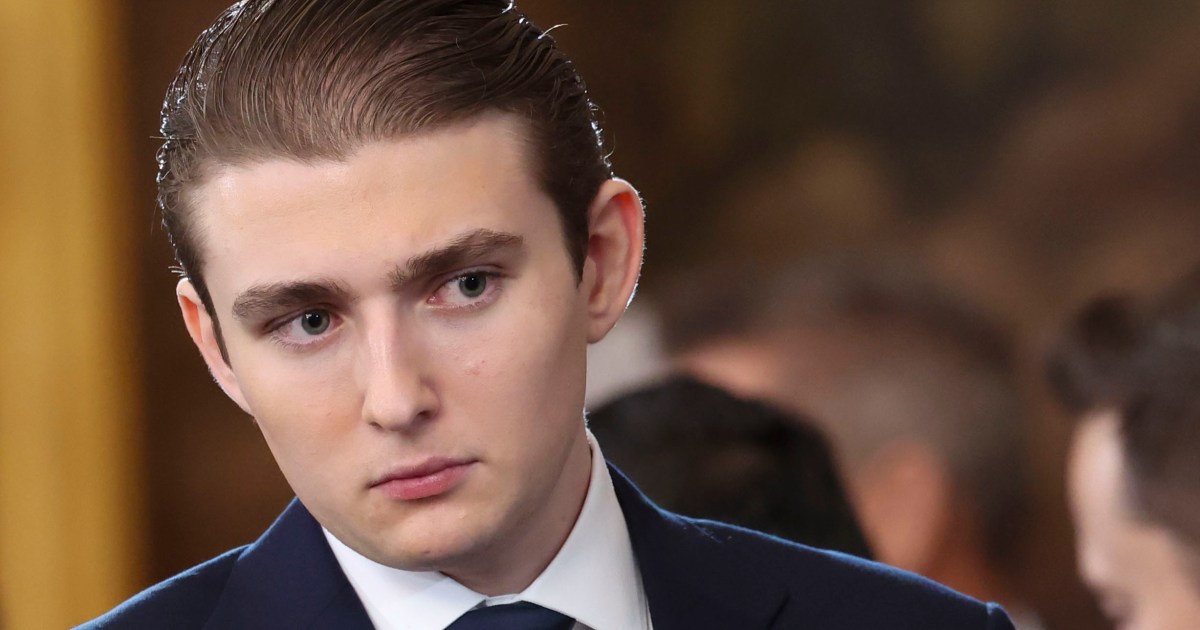
The establishment of DraftBarronTrump.com and the subsequent trending of #SendBarron represent a unique intersection of geopolitical events, online culture, and political satire. While the likelihood of Barron Trump actually enlisting in military service is exceedingly remote, the phenomenon itself serves as a barometer of public sentiment and the ways in which major global events are processed and commented upon in the digital age. The campaign’s playful yet pointed nature invites a broader discussion about the responsibilities of citizens, the nature of patriotism, and the role of public figures, even those from politically prominent families, in times of national and international crisis.
The broader implications of such online movements are multifaceted. They demonstrate the power of social media to quickly amplify narratives, however unconventional. They also underscore the public’s engagement with complex geopolitical issues, often expressed through humor and satire as a coping mechanism or a form of commentary. For a figure like Barron Trump, who has been shielded from much of the political fray, his sudden emergence as a trending topic in relation to a serious military conflict is a testament to the pervasive nature of public interest in the Trump family and the ways in which their lives continue to be intertwined with political discourse.
While official responses from the Trump family or representatives regarding the #SendBarron movement are not publicly available, it is reasonable to infer that such attention, particularly when linked to serious matters like military engagement, would be closely monitored. The creators of "South Park" and figures like Toby Morton have a long history of using satire to provoke thought and challenge conventions. Their involvement in this particular campaign suggests a deliberate effort to inject a dose of dark humor into the ongoing geopolitical narrative, perhaps aiming to highlight perceived ironies or inconsistencies in the public discourse surrounding the conflict.
The current geopolitical landscape remains fluid, with ongoing developments in the Middle East continuing to command international attention. The economic impact of such conflicts, including fluctuations in oil prices and global trade, is a significant concern. Furthermore, the human cost of war, both in terms of military personnel and civilian populations, is a stark reminder of the real-world consequences of geopolitical tensions. The satirical online movements, while seemingly lighthearted, emerge from and comment upon these very serious underlying realities. The question of whether Barron Trump would ever enlist in war efforts, while posed directly by the satirical website, ultimately serves as a proxy for broader discussions about civic duty, sacrifice, and the complex relationship between public service and private life in the modern era.
The chronological unfolding of events leading to the current situation is important for understanding the context. Years of strained relations between the U.S. and Iran, punctuated by incidents such as the withdrawal of the U.S. from the Iran nuclear deal in 2018, the imposition of stringent sanctions, and retaliatory actions by Iran, have created a volatile environment. The period leading up to "Operation Epic Fury" likely involved a series of escalating provocations and responses, culminating in the recent strikes. The subsequent online reaction, including the emergence of the #SendBarron hashtag and the creation of the satirical website, can be seen as a rapid response from a segment of the online community, reflecting their immediate engagement with the unfolding news.
In conclusion, the trending of Barron Trump’s name in relation to the U.S. strikes on Iran, fueled by the satirical efforts of former "South Park" creative Toby Morton, illustrates the dynamic and often unpredictable nature of public discourse in the digital age. While the campaign itself is rooted in satire, it draws attention to significant geopolitical events and prompts reflection on themes of civic responsibility and the public’s perception of prominent figures. The broader implications extend beyond mere online chatter, touching upon the ways in which society processes complex international crises and the diverse forms of commentary that emerge in response.



 admin
admin
 Nila Kartika Wati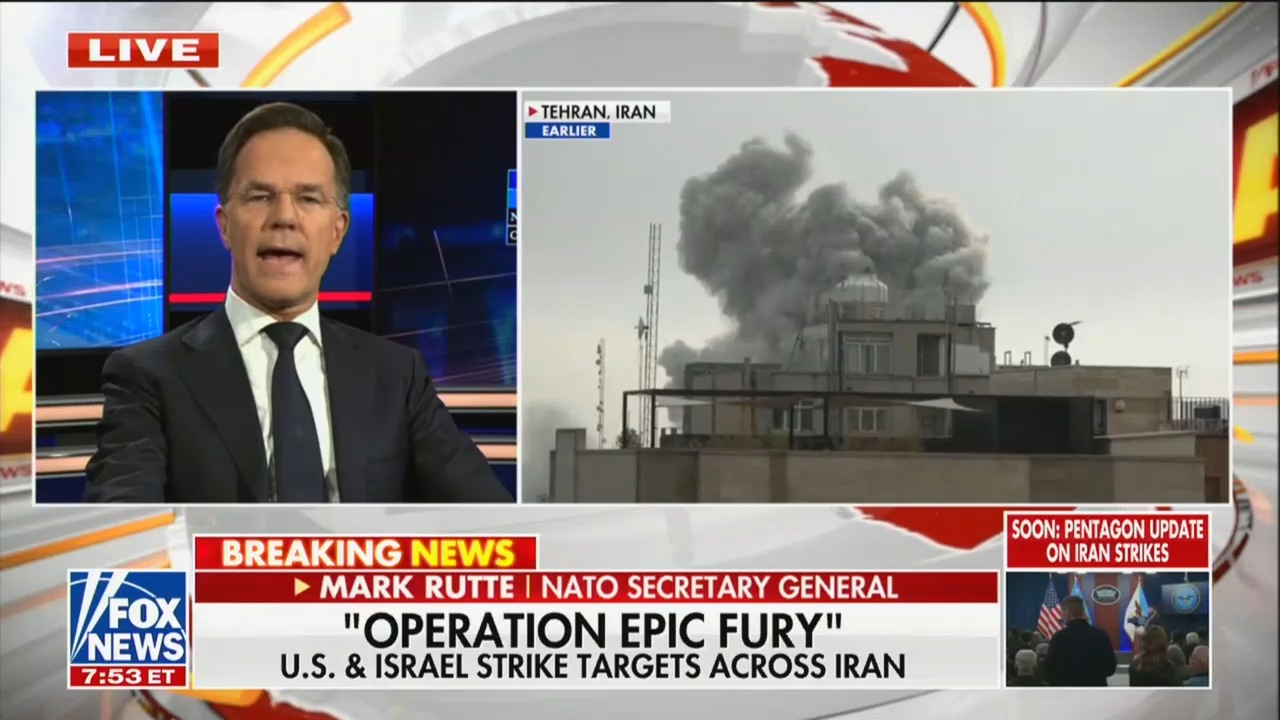
 Jia Lissa
 Yuyun Lusiyani
 Ana Megawati