
 Jia Lissa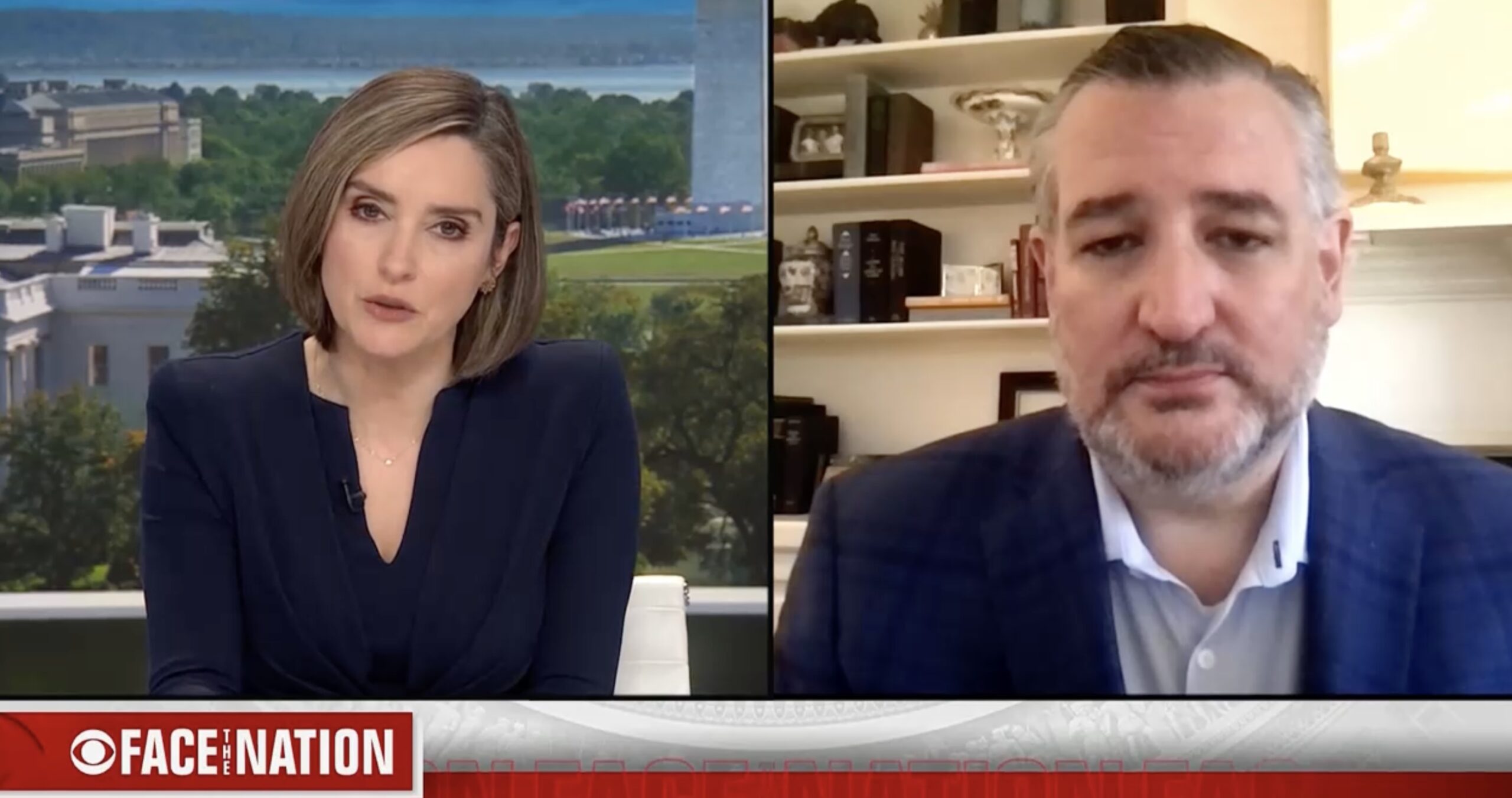
In a high-stakes exchange on CBS News’s Face the Nation this Sunday, Senator Ted Cruz (R-TX) provided a definitive, albeit disputed, assessment of the Islamic Republic of Iran’s nuclear trajectory following the military engagement known as the 12-Day War. Speaking with moderator Margaret Brennan, Cruz contended that the Iranian regime is no longer "anywhere close" to achieving nuclear breakout capacity, citing the overwhelming success of "Operation Midnight Hammer," a series of targeted strikes launched last June against the country’s most fortified nuclear installations.
The Senator’s remarks offer a rare glimpse into the perceived effectiveness of U.S. kinetic actions against Tehran’s nuclear infrastructure. According to Cruz, the strategic bombing campaign specifically targeted the "vast majority" of Iran’s active nuclear program, utilizing specialized munitions that the Senator claimed are unique to the United States arsenal. However, the interview also highlighted a significant discrepancy between the public’s understanding of the conflict’s outcome and the intelligence briefings purportedly shared with members of the Senate Foreign Relations Committee.
The 12-Day War and Operation Midnight Hammer
The military actions referenced by Senator Cruz represent a significant escalation in the long-standing shadow war between Washington and Tehran. Operation Midnight Hammer, which reportedly reached its zenith in June 2025, was described by the Senator as a decisive blow to Iranian ambitions. This operation was the centerpiece of what has become known as the 12-Day War, a brief but intense period of high-intensity conflict characterized by precision airstrikes, cyber warfare, and naval skirmishes in the Persian Gulf.
"There is no doubt that a year ago, Iran had an active and ongoing nuclear program," Cruz told Brennan. "We took out the vast majority of that at the end of the 12-Day War."
The Senator detailed the use of "bunker buster" technology, specifically designed to penetrate the heavily reinforced underground facilities that Iran has spent decades constructing. Among the primary targets mentioned was the Fordow Fuel Enrichment Plant. Located near the city of Qom and buried deep within a mountain to shield it from conventional aerial bombardment, Fordow has long been considered the "crown jewel" of Iran’s enrichment efforts.
Cruz emphasized that the munitions used in these strikes—likely the GBU-57A/B Massive Ordnance Penetrator (MOP)—are a capability possessed exclusively by the United States. "The bunker buster bombs we used, Israel doesn’t have those bombs, no other country has those bombs," Cruz stated. "We took them out last year."
Discrepancies in Intelligence Assessments
The interview took a sharp turn when Brennan challenged the Senator on the transparency of these intelligence findings. She noted that the specific assessment Cruz was referencing—that Iran’s nuclear program had been effectively neutralized—had not been made available to the public.
"That intelligence assessment was not made public if that is what was briefed to you," Brennan interjected, highlighting the gap between official administration rhetoric and the classified briefings provided to lawmakers.
This lack of public data has led to a fractured understanding of Iran’s current status. While Cruz expressed confidence in the devastation caused by the bombings, he admitted to a lack of "present-day intelligence" regarding Tehran’s efforts to reconstruct what was lost. He acknowledged that the Iranian leadership remained "hellbent on rebuilding" their capabilities, even if their current progress is hampered by the destruction of critical machinery and specialized facilities.
When pressed by Brennan on who is currently monitoring Iranian nuclear materials—given the absence of international inspectors or Western "boots on the ground"—Cruz pivoted. He clarified that his assessment was based on the physical destruction of the facilities rather than a precise inventory of nuclear isotopes. "What I said is, they were building nuclear weapons a year ago and our bombing took that out," Cruz said. "I have no indication that they were anywhere close to getting nuclear weapons because our bombing was devastating."
President Trump’s "Two-Week" Warning
Adding another layer of complexity to the narrative, President Donald Trump provided his own justification for the strikes in a series of weekend communications. In an eight-minute video statement released early Saturday, the President adopted a characteristically aggressive tone, vowing that Tehran "can never have a nuclear weapon."
"We are going to destroy their missiles and raze their missile industry to the ground. It will be totally, again, obliterated," Trump declared in the video.
On Sunday morning, during an interview with Fox News’s Jacqui Heinrich, President Trump escalated the rhetoric by providing a specific timeline for what he claimed was an imminent Iranian threat. According to the President, if the United States and Israel had not initiated the missile strikes when they did, Iran "would have had a nuclear weapon within two weeks."
This "two-week" claim has sparked intense debate among non-proliferation experts. Historically, "breakout time"—the time required to produce enough weapons-grade uranium for a single nuclear device—has been estimated by organizations like the International Atomic Energy Agency (IAEA) and the Institute for Science and International Security. While Iran has reached high levels of enrichment (60% and higher), the transition to 90% (weapons-grade) and the subsequent "weaponization" process (creating a deliverable warhead) are generally thought to take longer than a fortnight, even under ideal conditions.
Technical Analysis of the Strikes: The GBU-57 and Fordow
To understand the weight of Senator Cruz’s claims, one must look at the technical requirements of neutralizing a facility like Fordow. The GBU-57 Massive Ordnance Penetrator is a 30,000-pound precision-guided bomb designed to penetrate up to 200 feet of reinforced concrete or rock before detonating. Because of its immense weight, the MOP can only be deployed by heavy bombers like the B-2 Spirit or the B-21 Raider.
As Cruz noted, this is a capability that even close allies like Israel lack. Israel’s most powerful bunker busters, the GBU-28, are significantly smaller (5,000 pounds) and are often considered insufficient to reach the deepest chambers of the Fordow complex. By highlighting this, Cruz suggested that the 12-Day War represented a uniquely American intervention that achieved results beyond the reach of regional actors.
The strategic goal of Operation Midnight Hammer was not merely to destroy stockpiles of enriched uranium, which can be moved, but to destroy the "infrastructure of enrichment"—the cascades of sophisticated IR-6 centrifuges and the power systems required to run them. If the facilities were indeed "razed," as the President suggested, the timeline for Iran to return to its pre-war enrichment capacity would likely be measured in years rather than months.
Broader Geopolitical Implications and Global Reactions
The revelation of the scale of Operation Midnight Hammer has sent ripples through the international community. While the U.S. maintains that the strikes were a necessary preventative measure, the lack of a clear post-strike monitoring framework remains a point of contention for global powers and international watchdogs.
- The IAEA and Monitoring Gaps: Since the escalation of hostilities, the IAEA’s ability to conduct "complementary access" visits has been virtually non-existent. Without verified data from the ground, the international community is forced to rely on satellite imagery and signals intelligence, which may not capture the full extent of underground reconstruction.
- Regional Stability: Allies in the Persian Gulf, including Saudi Arabia and the United Arab Emirates, have reportedly expressed private support for the degradation of Iran’s nuclear program but remain wary of retaliatory strikes on their own energy infrastructure. The "missile industry" destruction mentioned by Trump suggests a broader scope of conflict that could impact regional security for the foreseeable future.
- Global Energy Markets: The 12-Day War saw a brief but sharp spike in oil prices, as the Strait of Hormuz became a flashpoint for naval activity. While prices have stabilized, the threat of renewed conflict keeps a "risk premium" on global crude.
- Domestic Political Fallout: In Washington, the debate over the strikes is increasingly split along partisan lines. While Republicans like Cruz argue the strikes were a decisive victory for global safety, some Democrats have raised concerns about the lack of a long-term diplomatic strategy and the risk of driving the Iranian program further into "black sites" that are even harder to detect.
Conclusion: A Precarious Peace
As of March 2026, the situation regarding Iran’s nuclear program remains one of the most volatile issues on the global stage. Senator Ted Cruz’s assertions suggest a level of tactical success that has significantly set back Tehran’s ambitions. However, the President’s claim of a "two-week" window highlights the perceived urgency that drove the U.S. to kinetic action.
The central question remains whether the destruction of physical facilities is enough to kill a program that possesses the underlying scientific knowledge and the political will to persist. While Operation Midnight Hammer may have "taken out" the infrastructure of a year ago, the absence of a permanent diplomatic resolution or a robust inspection regime means the specter of a nuclear-armed Iran continues to loom over the Middle East.
As the 2026 election cycle approaches, the efficacy of the 12-Day War will undoubtedly become a focal point of political debate. For now, the American public is left to reconcile the confident assertions of leaders like Cruz with the warnings of an imminent threat from the Oval Office, all while the true state of Iran’s nuclear capabilities remains shrouded in classified intelligence.


 Nila Kartika Wati
 Ana Megawati
 Pevita Pearce
 Joko Widodo
 admin
admin