
 Eva Lovia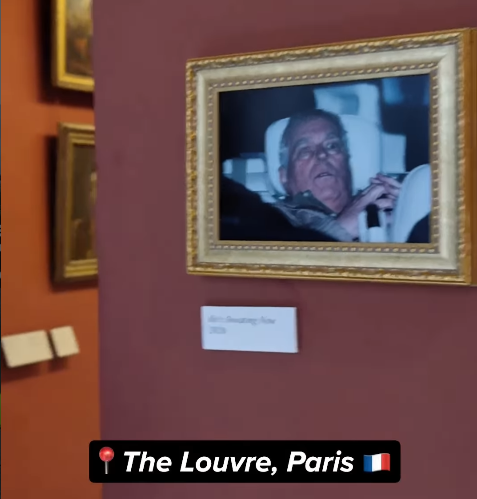
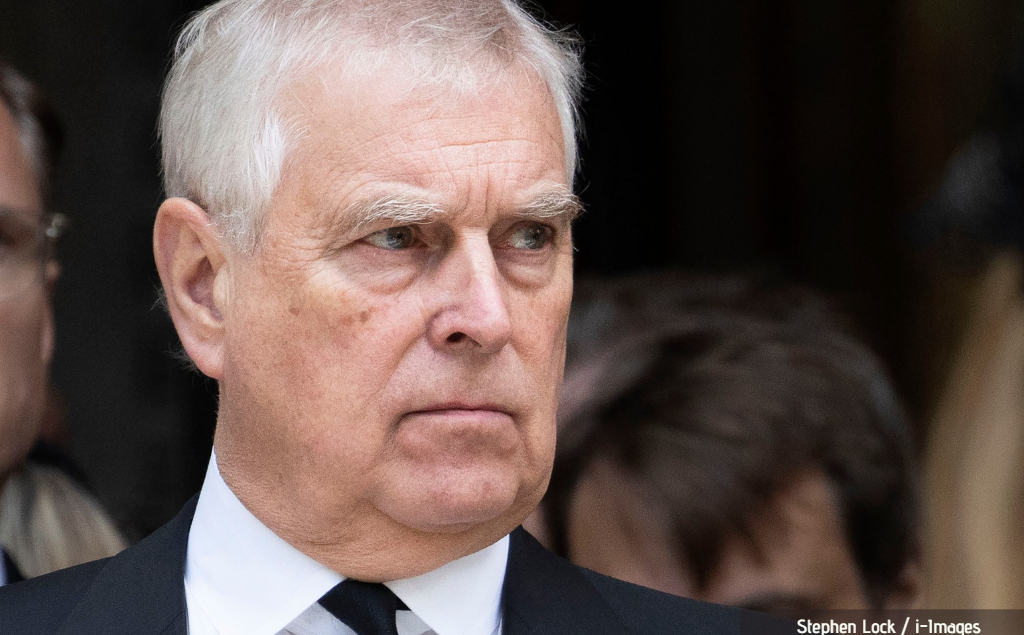
Activists from the group "Everyone Hates Elon" have taken their protest against Prince Andrew to an unprecedented level, hanging a photograph of the disgraced royal following his release from police detention at the prestigious Louvre Museum in Paris. The provocative act, documented and shared on the group’s Instagram account, aimed to highlight public sentiment and draw parallels to the widely circulated image of Andrew after his arrest earlier this week. The display, though short-lived, has ignited further discussion surrounding the former Duke of York’s ongoing legal entanglements and his place in public perception.
The Arrest and Release: A Day Under Scrutiny
The events leading to the activist demonstration began with Prince Andrew’s arrest at a police detention center in Norfolk. He was taken into custody on suspicion of misconduct in public office. Following a detention period of nearly 12 hours, he was released pending further investigation. This arrest marked a significant and deeply concerning development in a series of allegations that have plagued the royal for years, primarily linked to his past association with convicted sex offender Jeffrey Epstein.
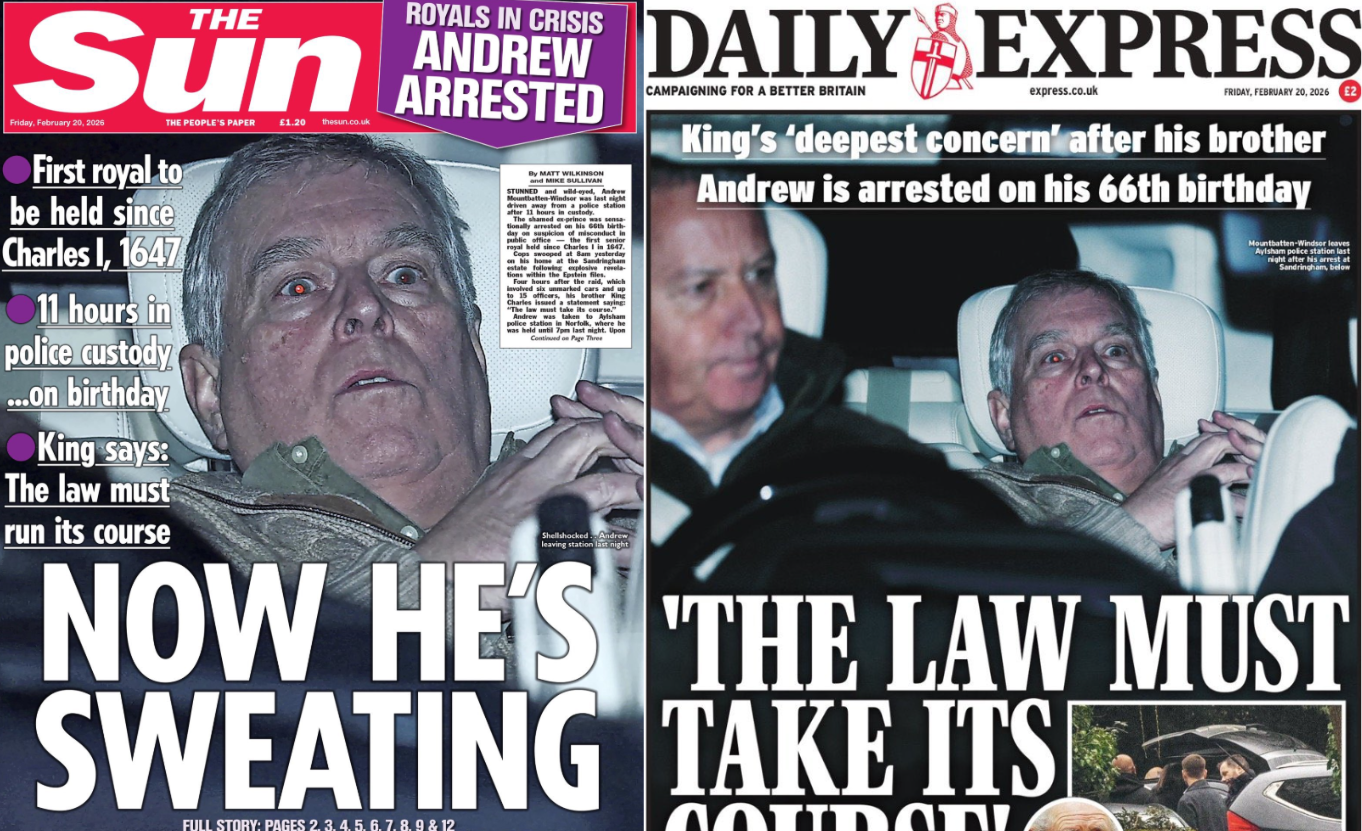
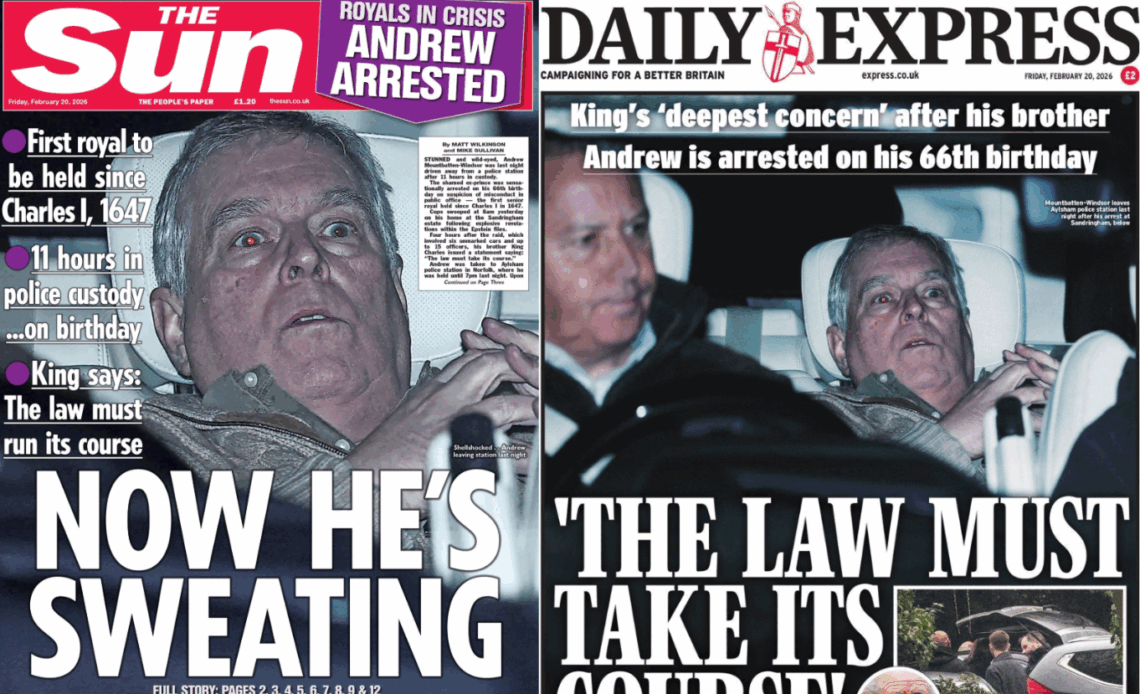
The immediate aftermath of his release saw a photograph of Prince Andrew emerge, capturing a moment of apparent vulnerability and public scrutiny. This image quickly became a focal point of media coverage, symbolizing the dramatic fall from grace for a man once considered a prominent figure within the British monarchy. It was this specific photograph that the "Everyone Hates Elon" group chose as the centerpiece of their protest.
The Louvre Intervention: A Bold Statement
The "Everyone Hates Elon" group, known for its outspoken criticism of public figures, executed its plan with a video shared on their Instagram page. The footage shows an activist meticulously hanging the photograph of Prince Andrew, accompanied by a caption that directly referenced the headline from The Sun newspaper’s Thursday evening edition: "He’s sweating now." This choice of wording and imagery was clearly intended to underscore the pressure and public shame associated with the royal’s current predicament.
In a statement accompanying the post, the group articulated their motivations: "They say ‘hang it in the Louvre’. So we did. We thought we’d show the former Prince Andrew how the world will remember him by putting up this iconic arrest photo at the Louvre. Let’s hope this is just the start. Justice for all Epstein survivors." The reference to the Louvre, a world-renowned institution housing some of history’s most celebrated artworks, served as a deliberate and audacious statement, positioning the image as a historical document of a significant public downfall.
The activists’ claim that they "hung it in the Louvre" is a metaphorical, albeit literal, interpretation of the common idiom used to describe something of great significance or artistic merit. While the actual placement of the photograph within the museum’s hallowed halls is unlikely to have been sanctioned, the act itself served to provoke a reaction and draw global attention. Reports indicate the photograph and its accompanying caption remained displayed for approximately 15 minutes before museum staff intervened and removed it.
Context and Chronology of Prince Andrew’s Downfall
To fully appreciate the impact of this protest, it is crucial to understand the preceding events that have led to Prince Andrew’s current isolated position.
- Early 2000s onwards: Prince Andrew’s association with Jeffrey Epstein began to draw scrutiny, particularly following Epstein’s arrest and subsequent conviction for sex offenses involving minors.
- 2019: Virginia Giuffre, one of Epstein’s alleged victims, filed a civil lawsuit against Prince Andrew, accusing him of sexual abuse when she was a minor, claims the Prince has consistently denied.
- November 2019: Prince Andrew conducted a disastrous interview with BBC Newsnight, attempting to explain his relationship with Epstein. The interview was widely perceived as insensitive and further damaged his reputation, leading to widespread public outcry.
- January 2020: Buckingham Palace announced that Prince Andrew would "step back from public duties for the foreseeable future" following the fallout from the Newsnight interview and the ongoing allegations.
- January 2022: A US judge ruled that Prince Andrew would face trial in the civil lawsuit filed by Virginia Giuffre.
- February 2022: Prince Andrew reached an out-of-court settlement with Virginia Giuffre. While the terms were not disclosed, it was widely reported that a substantial sum was paid.
- February 2022: Buckingham Palace confirmed that Prince Andrew had been stripped of his honorary military affiliations and Royal patronages and would no longer use the style "His Royal Highness" in any capacity. This effectively removed him from public royal life.
- September 2022: Following the death of Queen Elizabeth II, King Charles III ascended to the throne. Reports emerged that King Charles had made the decision to strip Prince Andrew of his titles and styles, a move that was formalized.
- Early 2026 (as per article context): Prince Andrew was arrested on suspicion of misconduct in public office and subsequently released under investigation. This arrest, the catalyst for the Louvre protest, signifies a potential escalation of legal proceedings against him.
Analysis of Implications and Broader Impact
The "Everyone Hates Elon" group’s stunt at the Louvre, while perhaps fleeting, carries significant symbolic weight. It taps into a broader public sentiment that has been building for years, fueled by the serious allegations and the perceived lack of accountability from the royal family.
Public Perception and Historical Record: The group’s statement, "We thought we’d show the former Prince Andrew how the world will remember him," speaks to the power of imagery in shaping historical narratives. The photograph of his arrest, now juxtaposed with the iconic setting of the Louvre, is intended to be an indelible marker of his public decline. This act underscores the public’s desire for a definitive reckoning and remembrance of the events surrounding Prince Andrew’s association with Jeffrey Epstein and the subsequent allegations.
Justice for Survivors: The explicit mention of "Justice for all Epstein survivors" by the activists highlights the continued relevance of the Jeffrey Epstein scandal. The protest serves as a reminder that for many, Prince Andrew’s legal and personal travails are intrinsically linked to the suffering of Epstein’s victims. The activists are using their platform to amplify the calls for justice and accountability for those who have been harmed.
Royal Family’s Stance: The article notes that King Charles has expressed a commitment to a "full, fair and proper process" and that "the law must take its course." This indicates a clear directive from the current monarch to distance the Crown from Prince Andrew’s legal issues and to allow official channels to handle the matter. The King’s statement emphasizes the importance of due process, while also signaling a firm stance against any perceived interference or special treatment for his brother.
Potential for Parliamentary Action: The article also mentions the prospect of an "act of Parliament to remove him from the line of succession." This is a significant development, as it would require a level of consensus and legislative action not previously seen in modern royal history. The fact that this is being considered underscores the gravity of the current situation and the desire within certain circles to formally sever Prince Andrew’s ties to the future of the monarchy. The requirement for agreement from all Commonwealth realms where King Charles is head of state presents a complex diplomatic and legal hurdle, but its consideration highlights the profound impact of the ongoing allegations.
The Enduring Image and the Future
The photograph that prompted this audacious protest is undeniably powerful. It captures a moment where the once untouchable royal is brought face-to-face with the consequences of his alleged actions. As Royal Central’s editor-in-chief, Lydia Starbuck, previously noted, the image is "already one of the most famous pictures of royalty ever taken and it has a place in the history books of the 21st century, for all the wrong reasons." She further elaborated, "For this one image captured the fall from lofty heights of a former prince who some have claimed was always rather assured of his royal importance."
The current circumstances for Prince Andrew are dire. He has been forced to vacate Royal Lodge, his long-time Windsor residence, and is now residing in more modest accommodation on the Sandringham estate. While police continue their investigations at his former home, searches at Sandringham have concluded. The ongoing legal investigations, coupled with the intense public scrutiny and the potential for legislative action, paint a grim picture for the former Duke of York.
The Louvre intervention, while temporary, serves as a stark reminder of the enduring public fascination and condemnation surrounding Prince Andrew’s story. It is a narrative that continues to unfold, with each development adding another layer to the complex and controversial legacy of a royal who has fallen from grace. The image of his arrest, now symbolically placed within the context of artistic and historical significance, ensures that his story, for better or for worse, will be remembered.


 Nila Kartika Wati
 Jia Lissa
 Ana Megawati
 Pevita Pearce
 Joko Widodo
 admin
admin