
 Pevita Pearce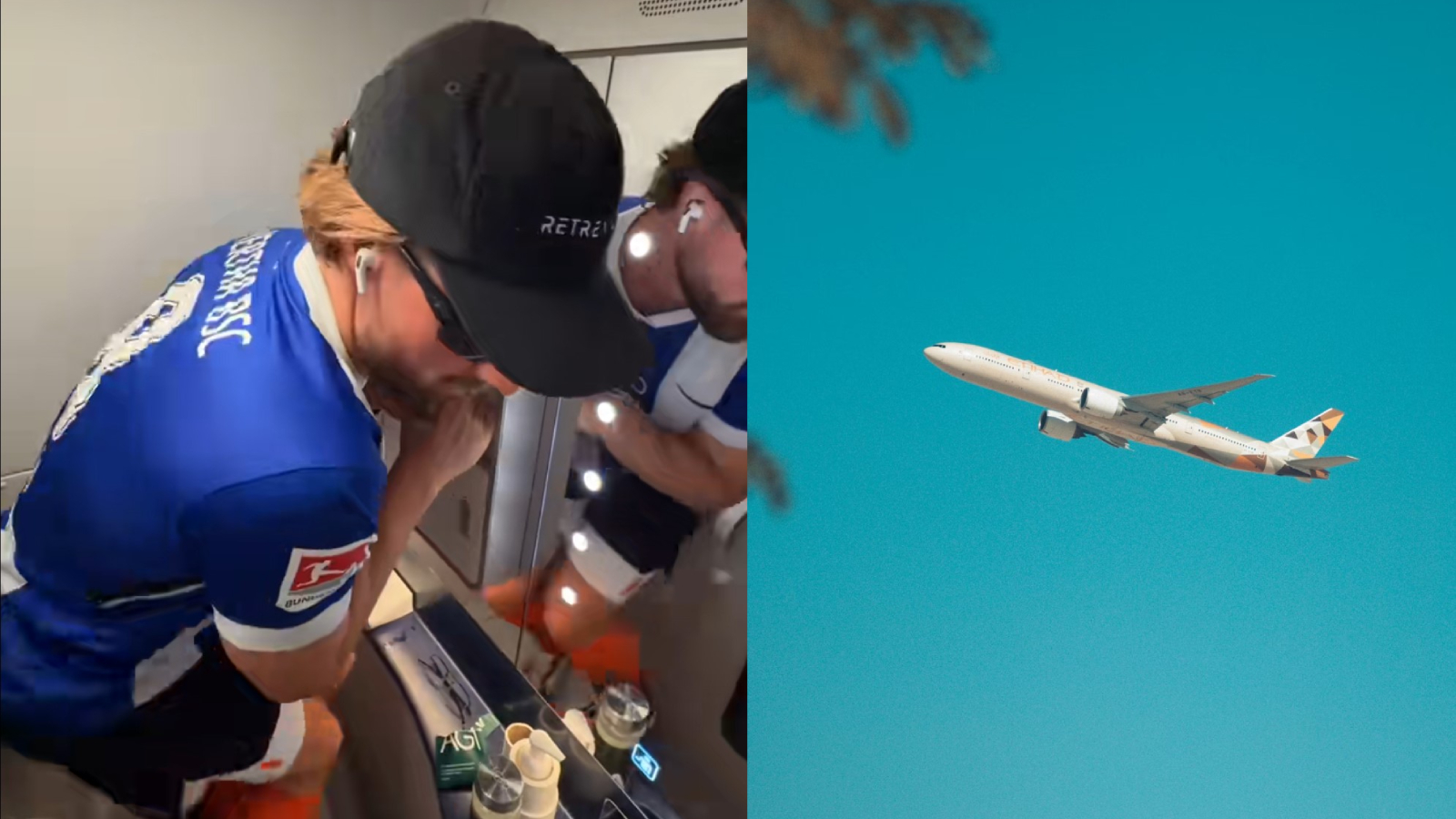
In an era where social media visibility often intersects with extreme personal discipline, a fitness influencer has sparked a significant international debate regarding passenger etiquette and aviation safety. A TikTok user identified as Dom Stroh recently uploaded a video documenting a self-imposed "5K run" conducted entirely within the confines of an aircraft lavatory during an 11-hour long-haul flight. The video, which has since garnered millions of views across multiple platforms, depicts the individual engaging in repetitive physical movements for nearly an hour, leading to a polarized reaction from the traveling public, aviation experts, and the fitness community.
The incident highlights a growing trend of "extreme fitness" content, where individuals attempt to maintain rigorous training schedules in unconventional and often controversial settings. While the athlete framed the endeavor as a testament to his dedication to marathon training, the public response has centered on the ethical implications of occupying a critical shared resource on a crowded international flight.
Detailed Chronology of the In-Flight Exercise
The event took place during an unidentified 11-hour flight, a duration typical of transcontinental or transoceanic travel. According to the timeline established by the video and associated metadata, the passenger entered the aircraft lavatory with the intent of completing a 5,000-meter (5K) distance. Using a mobile device to record the session, the individual utilized the Strava fitness tracking app to log his movements within the approximately 3-by-3-foot space.
The "run" lasted exactly 59 minutes and 32 seconds. Given the spatial constraints of a standard aircraft lavatory, traditional running mechanics were impossible. Instead, the footage shows the passenger performing a combination of high-intensity movements, including stepping up and down on the closed toilet lid, jogging in place, and moving in tight circles. By the conclusion of the session, the tracking app recorded a total distance of 5.53 kilometers (approximately 3.44 miles).
Upon exiting the lavatory, the passenger returned to his seat, later editing the footage for social media. The video was first uploaded to TikTok under the handle @dom.stroh before being shared widely on X (formerly Twitter), where it catalyzed a broader conversation about "Main Character Syndrome"—a colloquial term used to describe individuals who prioritize their own narrative and content creation over the comfort and needs of those around them.
Statistical Impact and Social Media Metrics
The digital footprint of the incident is substantial, reflecting the high engagement levels typical of controversial travel content. On X, a repost of the video reached over 4.4 million views within the first 48 hours. On the original TikTok platform, the video surpassed 1.4 million views, accompanied by tens of thousands of comments and shares.
Data from the Strava log indicates a sustained heart rate and continuous movement for the duration of the hour. However, the accuracy of GPS-based or accelerometer-based tracking inside a pressurized metal tube moving at 500 miles per hour remains a point of technical contention among data analysts. Most fitness trackers rely on internal accelerometers to estimate steps and distance when a GPS signal is unavailable, meaning the 5.53km figure is an estimate based on the intensity of the passenger’s rhythmic movements rather than actual linear distance covered relative to the earth’s surface.
Public Reaction and Passenger Etiquette
The reception of the video has been overwhelmingly critical, focusing primarily on the monopolization of the aircraft’s facilities. On a long-haul flight, the ratio of passengers to lavatories is often high, with some wide-body aircraft carrying upwards of 300 passengers served by only 8 to 10 restrooms. By occupying a lavatory for a full hour, the individual effectively removed approximately 10% to 12% of the available facilities from service for the duration of his workout.
Public comments ranged from humorous observations to genuine frustration. One user on X noted the physical discomfort caused to other passengers, stating, "The toilet is probably not designed to be a stair master." Others pointed out the potential for medical emergencies, noting that a passenger remaining in a locked lavatory for an hour without response could trigger a security protocol or a medical intervention by the cabin crew.
The fitness community also weighed in, with many experienced marathoners suggesting that the physiological benefits of such a "run" were outweighed by the risks of dehydration, poor air quality in the confined space, and the lack of proper recovery environment on a plane. The consensus among many athletes was that a single day of rest would have been more beneficial to a training regimen than a high-intensity workout in a cramped, unhygienic environment.
Safety and Technical Considerations
From an aviation safety perspective, the incident raises several technical concerns. Aircraft lavatories are designed for specific weight tolerances and functional uses. The interior fixtures, including the toilet assembly and the floor pan, are engineered to withstand standard use but are not necessarily rated for the repetitive, high-impact force of a person "running" or jumping.
- Structural Integrity: Repeatedly stepping or jumping on the toilet shroud can lead to cracks in the plastic or fiberglass housing, potentially damaging the vacuum waste system or the electronic sensors integrated into the unit.
- Hygiene and Biohazards: Lavatories are high-traffic areas prone to bacterial contamination. Engaging in heavy aerobic exercise—which involves deep breathing and perspiration—in such a small, enclosed space increases the individual’s exposure to pathogens and contributes to the degradation of the air quality for subsequent users.
- Emergency Access: Airline cabin crews are trained to monitor lavatory occupancy. An individual remaining in a locked lavatory for an hour typically warrants a "knock-and-check" to ensure the passenger has not lost consciousness or suffered a medical episode, such as a heart attack or a stroke, which are statistically more common on long flights due to pressure changes and dehydration.
- Weight and Balance: While a single passenger’s movement is unlikely to affect the trim of a large commercial jet, unauthorized activity in confined spaces can lead to accidental activation of smoke detectors or damage to the delicate oxygen deployment systems hidden behind the wall panels.
Legal and Regulatory Framework
While there is no specific Federal Aviation Administration (FAA) regulation that explicitly forbids "running" in a lavatory, several broader mandates apply. Under 49 U.S.C. § 46504, it is a federal offense to interfere with a flight crew member’s duties. If a flight attendant were required to divert their attention from safety duties to investigate a passenger who refused to vacate a lavatory, the passenger could potentially face significant fines or be met by law enforcement upon landing.
Furthermore, most airlines include "Conditions of Carriage" that prohibit behavior that causes discomfort or inconvenience to other passengers. Monopolizing a restroom for non-essential purposes during a period of high demand (such as the hours following a meal service) falls under the category of disruptive behavior.
Broader Implications for Travel and Social Media
The "airplane 5K" incident is emblematic of a broader shift in how public spaces are utilized in the age of the "influencer economy." The pressure to produce unique, high-engagement content has led many creators to push the boundaries of social norms. In the context of air travel, this has manifested in various "travel hacks" and stunts that often compromise the collective experience of the cabin.
Sociologists and travel industry analysts suggest that such incidents contribute to "travel friction," where the enclosed nature of the aircraft cabin exacerbates tensions between passengers. As airlines continue to densify seating and reduce personal space, the importance of shared etiquette becomes paramount. When one individual unilaterally decides to repurpose a shared utility for personal gain—whether that gain is physical fitness or social media "clout"—it disrupts the delicate social contract required for civil air travel.
Conclusion and Future Outlook
As the video continues to circulate, it serves as a cautionary tale regarding the intersection of personal goals and public responsibility. While the TikToker successfully logged his 5K, the resulting backlash suggests that the public is increasingly intolerant of "performative" acts that inconvenienced others.
Airlines may respond to such viral incidents by updating their passenger briefings or internal policies. Some international carriers have already begun implementing stricter monitoring of lavatory dwell times to prevent both security threats and the misuse of facilities for social media stunts. For the fitness community, the event reinforces the idea that true discipline includes the wisdom to adapt one’s schedule to the environment, recognizing that on an 11-hour flight, the most respectful "marathon" one can run is the marathon of patience and consideration for fellow travelers.




 Nila Kartika Wati
 Jia Lissa
 Ana Megawati
 Joko Widodo
 admin
admin