
 Jia Lissa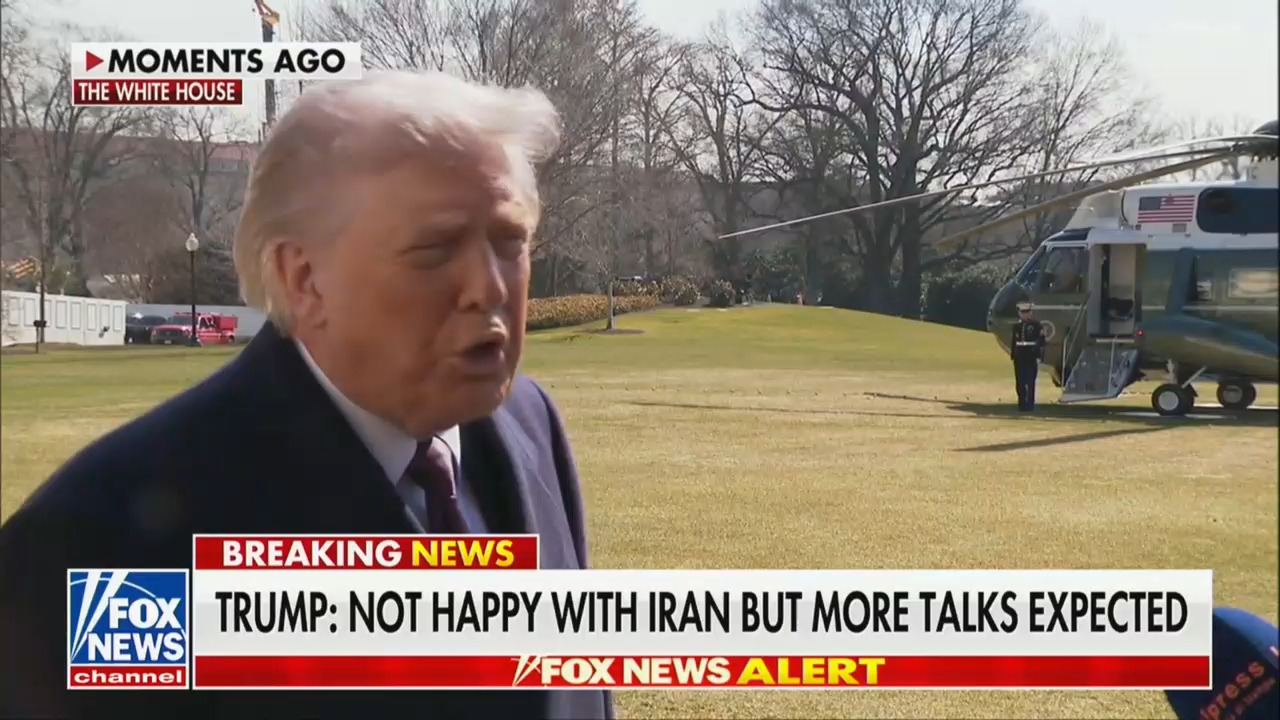
President Donald Trump sparked significant international debate on Friday afternoon when he suggested that the United States might soon engage in a "friendly takeover" of Cuba. Speaking to a group of reporters on the South Lawn of the White House before departing for Marine One, the President characterized the island nation as being in a state of terminal economic distress, suggesting that decades of diplomatic and economic friction could be nearing a definitive resolution. The remarks, delivered in the President’s signature improvisational style, came during a rapid-fire press gaggle where he also touched upon nuclear negotiations with Iran and his lack of involvement with the recently unsealed Jeffrey Epstein files.
The President’s comments regarding Cuba followed a question about the escalating humanitarian and energy crisis on the island. For several months, the U.S. has maintained a de facto naval blockade, specifically targeting fuel shipments destined for Cuban ports. This strategy, aimed at severing the island’s energy lifeline, has resulted in widespread blackouts, a near-total collapse of the industrial sector, and a deepening shortage of basic necessities.
"The Cuban government is talking with us. They’re in a big scale of trouble, as you know. They have no money," President Trump stated. He elaborated on the dire conditions, noting that the current administration’s pressure campaign has left the Cuban leadership with few remaining options. "They don’t have anything right now, but they’re talking with us, and maybe we’ll have a friendly takeover of Cuba. We could very well end up having a friendly takeover of Cuba after many, many years."
The Economic Collapse of Cuba and the Role of the U.S. Blockade
To understand the weight of the President’s "friendly takeover" comment, it is necessary to examine the current economic state of the Republic of Cuba. By early 2026, the island’s economy had reached a breaking point, exacerbated by the U.S. policy of "maximum pressure" which evolved into a targeted blockade of petroleum products.
Cuba remains almost entirely dependent on imported fuel to power its electrical grid and transport systems. Historically, Havana relied on subsidized oil from Venezuela and shipments from Russia. However, intensified U.S. sanctions on shipping companies and the physical presence of U.S. naval assets in key corridors have effectively throttled these imports. Reports from late February 2026 indicate that the island’s power grid is operational for less than four hours a day in many provinces, and the agricultural sector has been paralyzed by a lack of diesel for machinery.
Data from international monitoring agencies suggest that Cuba’s GDP has contracted by double digits for three consecutive years. Inflation has rendered the local currency nearly worthless, leading to a resurgence of the black market and a mass exodus of the working-age population. President Trump’s assertion that "they have no money" reflects a reality where the Cuban Central Bank’s foreign reserves have been depleted, making it impossible for the government to purchase fuel on the open market at commercial rates.
A Chronology of Escalating Tensions: 2024–2026
The path to the current crisis and the President’s recent remarks can be traced through a series of specific policy escalations over the last twenty-four months:
- Late 2024: Following a period of relative stagnation in bilateral relations, the U.S. administration announced a total ban on remittances sent through government-controlled entities in Cuba, cutting off a primary source of hard currency for the island.
- Early 2025: The U.S. Treasury Department expanded the "Cuba Restricted List," prohibiting any financial transactions with entities linked to the Cuban military, which controls the majority of the island’s tourism and retail infrastructure.
- June 2025: Citing "national security concerns" regarding Russian and Chinese influence in the Caribbean, the White House authorized the deployment of Coast Guard and Naval vessels to monitor and intercept "unauthorized" fuel transfers in international waters near the Florida Straits.
- January 2026: The de facto blockade intensified. Major shipping conglomerates, fearing secondary sanctions, ceased all deliveries to Cuban ports. Havana reported a 90% drop in fuel arrivals compared to the previous year.
- February 20, 2026: Reports surfaced in the New York Times indicating that secret back-channel negotiations were occurring between mid-level State Department officials and representatives of the Cuban Ministry of Foreign Affairs.
- February 27, 2026: President Trump makes his "friendly takeover" comments, publicly confirming that dialogue is ongoing despite the aggressive economic stance of the U.S.
Defining the "Friendly Takeover": Geopolitical and Business Implications
The term "friendly takeover" is more commonly associated with corporate mergers and acquisitions than with international diplomacy. In a business context, a friendly takeover occurs when a target company’s management and board of directors agree to be acquired by another entity. By applying this terminology to a sovereign nation, President Trump has suggested a model of regime change or territorial transition that relies on economic necessity rather than kinetic military conflict.
Analysts suggest that such a "takeover" could take several forms. It might involve a negotiated transition where the current Cuban leadership steps down in exchange for immunity and financial guarantees, followed by a period of U.S.-led reconstruction. Alternatively, it could imply a return to a pre-1959 relationship where the U.S. exercises significant administrative or economic oversight over the island in exchange for lifting the blockade and providing a massive infusion of capital.
The President’s mention of the Cuban-American community was central to his argument. "I think very positive for the people that were expelled, or worse, from Cuba, that live here," Trump said. "You know, we have people living here that want to go back to Cuba, and they’re very happy with what’s going on." This statement aligns with the administration’s long-standing goal of appealing to the influential voting bloc in South Florida, many of whom seek the restitution of property seized during the Cuban Revolution and a total transition to a market-based democracy on the island.
Official Responses and International Reaction
While the White House Press Office has yet to release a formal policy paper defining the parameters of a "friendly takeover," the President’s remarks have already prompted reactions across the globe.
In Miami, the reaction among the Cuban-American community was largely one of cautious optimism tempered by skepticism. Leaders of various exile organizations issued statements suggesting that any "takeover" must be predicated on the total dismantling of the Communist Party and the holding of free, multi-party elections. Conversely, critics of the administration argue that the term "takeover" ignores Cuban sovereignty and risks inflaming nationalist sentiment on the island, potentially making the current leadership more resistant to change.
In Havana, state media initially remained silent on the President’s specific wording, though previous broadcasts have characterized the U.S. blockade as an "act of genocide" and "economic warfare." However, the admission by President Trump that "they’re talking with us" confirms that the humanitarian crisis has forced the Cuban government to the negotiating table, despite their public rhetoric of defiance.
International observers, particularly in the European Union and Canada—both of which have significant investments in Cuba—have expressed concern over the potential for regional instability. A spokesperson for the EU Foreign Affairs office stated that "any transition in Cuba must be peaceful, democratic, and respect the principles of international law and national self-determination."
Broader Foreign Policy Context: Iran and the Epstein Files
The President’s comments on Cuba did not exist in a vacuum. His interaction with the press also highlighted the broader "Maximum Pressure" framework of his foreign policy. Before addressing Cuba, Trump spoke on the status of negotiations with Iran regarding their nuclear program.
"They cannot have nuclear weapons, and we’re not thrilled with the way they’re negotiating. So we’ll see how it all works," Trump remarked. The juxtaposition of the Iran and Cuba issues suggests a consistent strategy of using economic leverage to force concessions from adversarial nations. In both cases, the administration has utilized sanctions and isolation as primary tools of statecraft, betting that internal economic pressure will eventually lead to external policy shifts.
As the President moved toward Marine One, he was also asked about the ongoing legal and social fallout from the Jeffrey Epstein files. Recently unsealed documents have brought the decades-old scandal back into the public eye. Trump dismissed the inquiries, stating, "I don’t know anything about the Epstein files, you know. I’ve been fully exonerated." This pivot from high-stakes geopolitics to personal legal matters is a common feature of the President’s media engagements, often resulting in a mix of headlines that dominate the news cycle for days.
Analysis of Potential Outcomes and Implications
The prospect of a "friendly takeover" of Cuba presents a myriad of legal, economic, and social challenges. If the administration intends to pursue a model of economic integration or administrative oversight, several key factors must be addressed:
- The Helms-Burton Act: Current U.S. law (the LIBERTAD Act of 1996) restricts the President’s ability to lift the embargo until a transition government is in place that does not include the Castro brothers (both now deceased or out of power) and has made progress toward a market economy. A "friendly takeover" would likely require significant legislative cooperation from Congress to amend or repeal existing statutes.
- Property Claims: There are billions of dollars in outstanding certified claims by U.S. citizens and corporations for property seized during the 1959 revolution. Any "friendly" agreement would need to settle these claims to allow for future investment.
- Infrastructure Reconstruction: After decades of decay and recent energy collapses, Cuba’s infrastructure would require hundreds of billions of dollars in investment. A "takeover" would essentially make the U.S. responsible for the welfare of 11 million people and the modernization of a failing state.
- Geopolitical Vacuum: A U.S. move to take a more direct role in Cuba would likely be viewed as a reassertion of the Monroe Doctrine. This could lead to increased tensions with China and Russia, both of which have sought to establish a strategic foothold in the Caribbean through military and economic partnerships with Havana.
President Trump’s remarks on February 27, 2026, may be remembered as a turning point in Western Hemispheric relations or as a rhetorical flourish in a long-standing stalemate. However, the reality of the fuel blockade and the ongoing secret negotiations suggest that the status quo in Cuba is no longer sustainable. Whether "friendly" or otherwise, a significant shift in the governance and economic structure of the island nation appears increasingly likely as the humanitarian crisis reaches its zenith. As the President boarded Marine One, the world was left to contemplate the logistics and the legality of a superpower "taking over" its neighbor not through the force of arms, but through the weight of economic collapse.


 Nila Kartika Wati
 Ana Megawati
 Pevita Pearce
 Joko Widodo
 admin
admin