
 Yuyun Lusiyani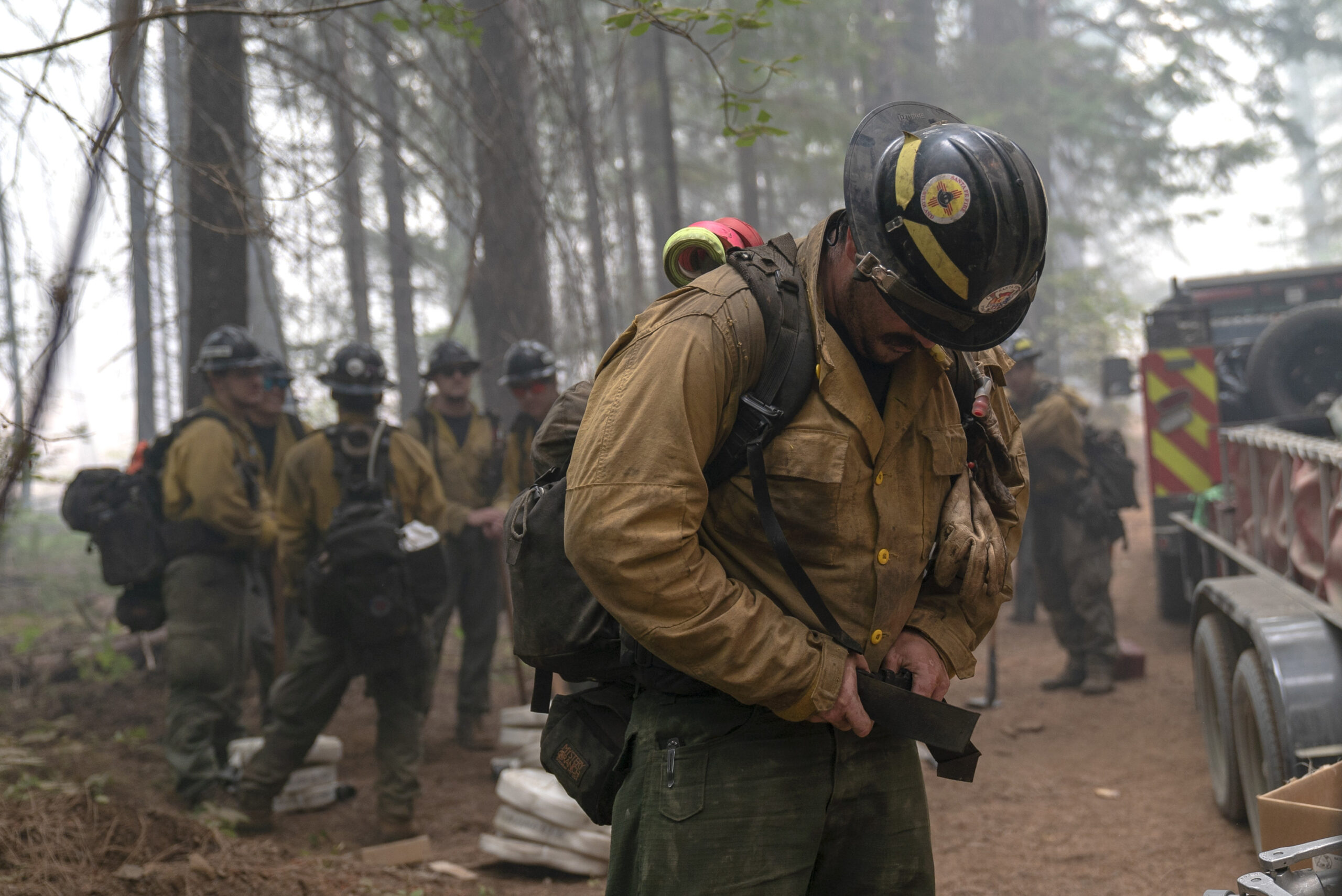
In a significant policy shift, the U.S. Forest Service has ceased the distribution of wildland firefighter garments that were found to contain per- and polyfluoroalkyl substances (PFAS), commonly known as "forever chemicals." This decisive action comes in the wake of a detailed investigative report by ProPublica, which revealed that the agency had for years provided protective clothing to its firefighters despite knowing these garments incorporated potentially hazardous PFAS compounds. Furthermore, the Forest Service has announced its intention to direct equipment manufacturers to eliminate PFAS from future product specifications, signaling a broader commitment to firefighter safety and environmental responsibility.
The Revelation of "Forever Chemicals" in Firefighter Gear
The issue came to light through ProPublica’s reporting, which documented that at least until 2023, one of the Forest Service’s primary suppliers, TenCate, had utilized finishing products containing PFAS compounds on a specific Kevlar-blend pant fabric. These finishes, according to emails from the supplier, were applied to enhance the material’s ability to repel gasoline and water—properties historically deemed essential for the rigorous demands of wildland firefighting. Crucially, the investigation highlighted a concerning lack of transparency: Forest Service officials were aware of the PFAS use but had not proactively informed the thousands of wildland firefighters who wore this gear in the line of duty.
PFAS are a class of synthetic chemicals known for their exceptional resistance to heat, water, and oil, making them valuable in a wide array of industrial and consumer products, including non-stick cookware, water-repellent fabrics, and firefighting foams. However, their pervasive nature and extreme persistence in the environment and human body have earned them the moniker "forever chemicals." Over recent years, a growing body of scientific research has linked exposure to certain PFAS to a range of adverse health effects, including various cancers, developmental issues, liver damage, immune system dysfunction, and hormonal disruptions. This mounting evidence has led to increasing public health concern, regulatory scrutiny, and a concerted global effort to phase out their use.
A Swift, Though Initially Unclear, Response
The Forest Service’s initial response to the ProPublica article was swift but lacked immediate clarity, causing some confusion among personnel. On February 11, just one day after the investigation’s publication, a Forest Service cache manager—an official responsible for overseeing a gear repository—disseminated an email instructing colleagues to "place a hold on issuing" the problematic pants. This directive, intended for wide distribution, marked the first tangible step by the agency to address the issue. However, the initial communication provided little additional guidance or explanation, leaving incident management teams and individual firefighters without clear instructions on how to proceed with existing gear or what the long-term implications might be. An anonymous wildland firefighter, speaking to ProPublica under the condition of anonymity to protect their employment, articulated the prevailing uncertainty: "As of right now, our logistics folks haven’t gotten any guidance at all from higher-ups," indicating a gap between the initial directive and comprehensive agency-wide communication.
Official Clarification and Policy Shift
Several days later, on Friday, the Forest Service issued a more comprehensive statement to ProPublica, addressing the concerns directly. The agency acknowledged the complexity of the situation, stating, "PFAS in protective gear is a complex, industry-wide issue and any suggestion that the agency has sought to obscure information does not reflect the extensive work to expand testing and improve long-term occupational health protections for firefighters." The statement confirmed that "Firefighter pants manufactured with PFAS water repellent fabric treatments have been removed from available stock in the National Interagency Support Caches," solidifying the halt on distribution.
Further elaborating on its commitment to change, the Forest Service sent an email to its staff on the same Friday, providing crucial updates and directives. This internal communication confirmed that its supplier, TenCate, had switched to a PFAS-free finish as early as January 2023. More importantly, the agency explicitly advised anyone in possession of the older, PFAS-containing pants to "discontinue use and replace" them. This instruction represented a critical step towards mitigating ongoing exposure risks for current firefighters. Looking ahead, the Forest Service also stated its intention to update its procurement requirements "to specify that fabric treatments and fabrics will not contain PFAS," establishing a clear future standard for its protective equipment.
The Broader Landscape: Firefighting Industry’s PFAS Challenge
The Forest Service’s decision underscores a broader, industry-wide reckoning with PFAS in protective gear. For decades, these chemicals were lauded for their ability to provide superior repellency, a vital attribute in hazardous environments. However, as scientific understanding of PFAS health risks has evolved, many municipal fire departments across the United States have proactively moved away from gear containing these substances. This transition has often been spurred by extensive research into the occupational health of firefighters, revealing higher incidences of certain cancers and other diseases, which are increasingly being linked to chemical exposures from their equipment and the environments they work in. In several states, firefighters have initiated class-action lawsuits against manufacturers, alleging harm caused by PFAS present in their gear, highlighting the legal and health ramifications of continued use.
In contrast, research specifically focused on the health impacts of PFAS on wildland firefighters has historically lagged behind that for their municipal counterparts. This disparity is partly due to the unique operational environment of wildland firefighting, which often involves remote locations and highly mobile crews, making long-term health studies more challenging. Consequently, wildland firefighting agencies have been slower to publicly address the issue of PFAS in their equipment, contributing to a perceived gap in awareness and proactive measures.
Evolving Safety Standards: The Role of NFPA
Safety standards for firefighting equipment are typically set by the National Fire Protection Association (NFPA), a non-profit organization that synthesizes input from expert committees comprising firefighters, industry representatives, and other specialists. While the NFPA itself is not a certifying body, its comprehensive standards are widely adopted by governmental agencies, including the U.S. Forest Service, and serve as benchmarks for equipment design and safety protocols.
Last year, in a significant development, an NFPA technical committee updated its standards for municipal firefighters, introducing restrictions on the levels of certain PFAS chemicals permitted in their protective gear. This revision reflected the growing scientific consensus on PFAS risks and the industry’s shift towards safer alternatives. However, a parallel update to the NFPA standard specifically for wildland firefighters has not yet been implemented.
Rick Swan, a member of an NFPA committee, acknowledged this lag, attributing it to the inherently long and deliberative process involved in developing and revising such critical safety standards. Despite the delay, Swan expressed strong confidence that a restriction on PFAS chemicals in wildland gear is "all but inevitable," calling it "a no-brainer." This sentiment was echoed by an NFPA spokesperson, who, in an email, indicated that the committee overseeing the wildland firefighting standard "will likely consider this issue again," suggesting that changes are on the horizon. The slow pace highlights the bureaucratic challenges in rapidly adapting safety protocols to evolving scientific understanding, particularly across diverse firefighting disciplines.
Health Implications and the Need for Dedicated Research
While the move to discontinue PFAS-containing gear is a positive step, experts caution that the precise risks posed by PFAS in equipment to the health of wildland firefighters remain an area requiring significantly more research. Jeff Burgess, a professor and researcher at the University of Arizona who leads long-term studies on firefighter health, emphasizes that smoke inhalation and the accumulation of soot on gear are currently understood as primary pathways through which wildland firefighters encounter carcinogens. The complex chemical cocktail present in wildfire smoke, including benzene, formaldehyde, and polycyclic aromatic hydrocarbons (PAHs), is a well-established and immediate threat.
However, the understanding of wildland firefighters’ exposures to PFAS has indeed lagged behind that of municipal fire departments. Historically, researchers have faced greater difficulties in gaining consistent access to wildland crews for long-term health monitoring and sampling. Furthermore, in recent years, the urgency of addressing the immediate and visible dangers of smoke exposure, particularly with the increasing intensity and frequency of wildfires, has led researchers to prioritize studies on smoke-related risks. This focus, while critical, has inadvertently left a gap in the comprehensive assessment of other potential chemical exposures, including PFAS.
Moving forward, dedicated studies are essential to quantify PFAS exposure levels in wildland firefighters, understand the specific pathways of absorption (e.g., skin contact, inhalation of off-gassed chemicals), and correlate these exposures with potential long-term health outcomes. Such research would provide invaluable data to inform future gear specifications, develop better decontamination protocols, and ensure robust occupational health protections tailored to the unique challenges faced by wildland firefighters.
Broader Impact and Future Implications
The Forest Service’s decision carries significant implications beyond the immediate removal of specific pants. It is likely to fuel heightened concerns among wildland firefighters regarding past exposures and could potentially lead to calls for comprehensive health monitoring programs. The revelations may also erode trust in agency procurement processes, necessitating greater transparency and proactive communication moving forward.
Financially, the replacement of thousands of garments represents a substantial cost for the Forest Service, underscoring the economic consequences of using potentially hazardous materials. This situation also places increased pressure on manufacturers in the protective gear industry to accelerate the development and widespread adoption of effective, PFAS-free alternatives that meet the stringent performance requirements of wildland firefighting. Innovation in material science will be crucial to ensure firefighters are protected without being exposed to harmful chemicals.
From a regulatory standpoint, this incident could serve as a catalyst for the NFPA to expedite the update of its wildland firefighting standards to explicitly restrict PFAS. It might also prompt other federal and state wildland agencies to review their own gear procurement policies and implement similar bans. The broader trend indicates a growing global movement towards the elimination of PFAS from various products, driven by public health concerns and environmental stewardship.
Ultimately, the Forest Service’s move marks a pivotal moment in ensuring the long-term occupational health and safety of wildland firefighters. While the immediate action addresses a critical safety gap, the incident highlights the ongoing need for rigorous scientific research, transparent communication, and proactive policy development to protect those who bravely battle wildfires on the front lines, ensuring their gear is a shield, not a hidden source of harm.




 Nila Kartika Wati
 Jia Lissa
 Ana Megawati
 Pevita Pearce
 Joko Widodo
 admin
admin