
 Pevita Pearce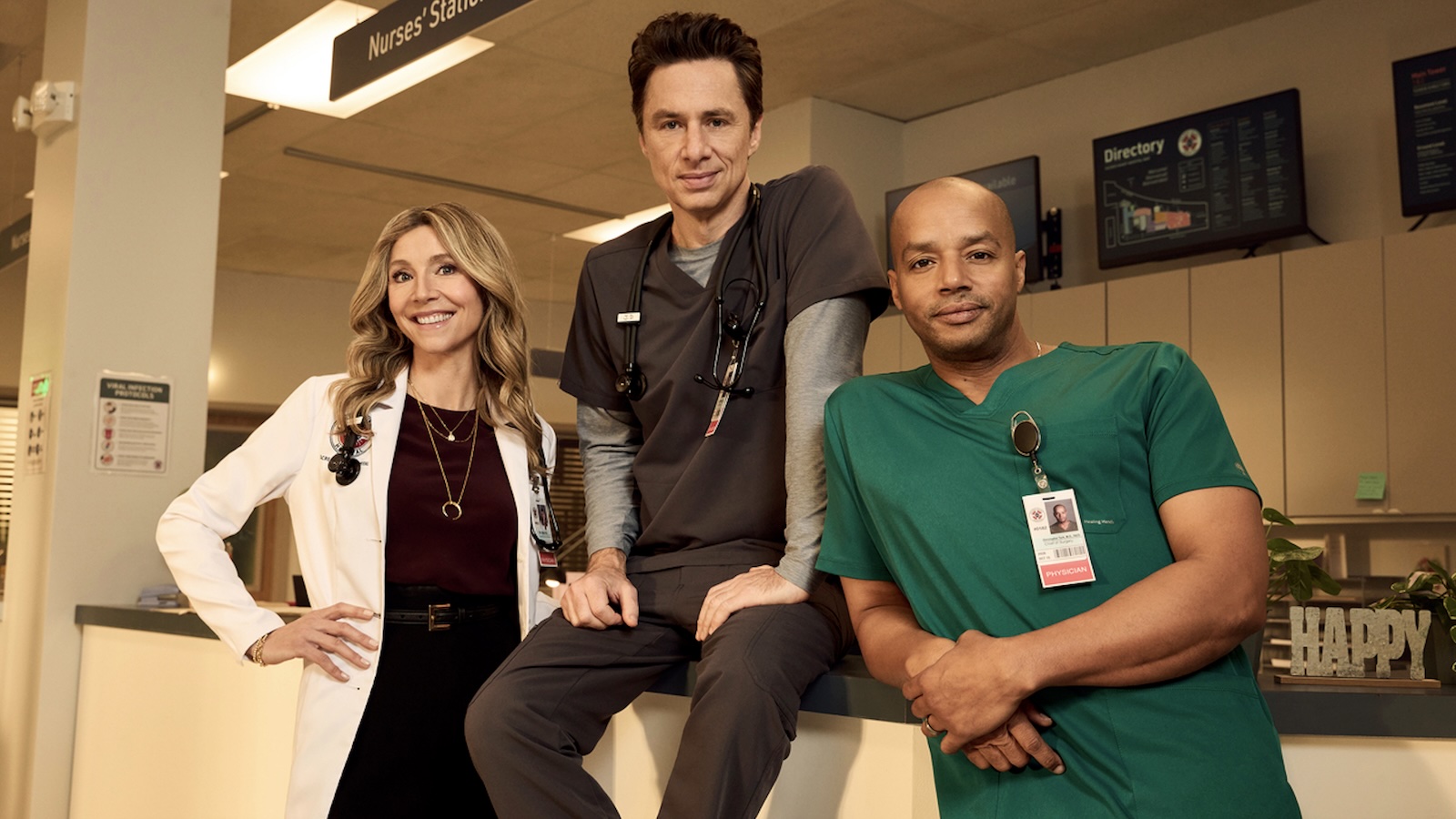
The return of the long-running medical comedy Scrubs to the streaming landscape via Hulu has been met with significant viewership and intense critical discourse, primarily centered on the unexpected dissolution of the central romantic relationship between John “JD” Dorian and Elliot Reid. While the revival seeks to modernize the halls of Sacred Heart Hospital for a 2026 audience, actor and executive producer Zach Braff has revealed that the emotional weight of the characters’ new reality was originally intended to be even more pronounced. In a recent disclosure, Braff detailed a specific, poignant scene excised from the pilot episode that would have provided a deeper look into JD’s psychological state following his divorce from Elliot.
The Scrubs revival arrives sixteen years after the conclusion of the original series’ ninth season, a run often contested by fans who view the Season 8 finale as the definitive conclusion to the narrative. The new iteration, which sees the return of core cast members Donald Faison, Sarah Chalke, Judy Reyes, and Neil Flynn, introduces a stark departure from the "happily ever after" montage that concluded the show’s eighth year. In the current timeline, JD and Elliot are no longer a couple, instead navigating the complexities of co-parenting and professional proximity as divorcees.
The Scrapped Pilot Sequence and JD’s Internal Struggle
According to Zach Braff, the production team filmed a sequence for the revival’s first episode designed to illustrate the profound loneliness JD experiences in his post-marital life. The scene was intended to contrast JD’s internal despondency with the whimsical, upbeat persona he typically projects to the world.
“There was a beat that was actually cut out of the pilot where you saw a flash of Elliot dropping off their son for the joint custody, for his turn,” Braff stated during an interview with Collider. “She sees him through the window and she sees how sad he is, sitting there alone, and she really clocks it. And then, when he answers the door, he switches to a smile to act like he’s fine. It was very telling. We had to cut for time, but it was a very telling moment.”
The decision to remove this scene was reportedly driven by the rigorous pacing requirements of the pilot episode, yet its existence highlights the creative team’s intent to ground the revival in a more mature, albeit somber, reality. The "masking" behavior described by Braff—switching from visible sadness to a forced smile—serves as a callback to the character’s long-standing use of humor and daydreaming as defense mechanisms against the harsh realities of medical practice and personal failure.
Analyzing the Narrative Shift: Why the Marriage Failed
The revelation of the divorce has necessitated a retrospective analysis of the JD and Elliot dynamic, which spanned nearly a decade of "will-they-won’t-they" tension during the show’s original run on NBC and ABC. Braff explained that the writers felt it was more realistic for the couple’s historical volatility to persist into their marriage rather than vanish behind a facade of domestic bliss.
The actor noted that the "off-again bickering" that characterized their early relationship ultimately became the undoing of their legal union. Braff clarified that while JD remained committed to the relationship—advocating for couples counseling and active reconciliation—Elliot eventually reached a breaking point. “I think Elliot just pulled the ripcord and called it,” Braff explained. “I think JD understands but is dealing with it.”
This narrative choice places JD in a vulnerable position within the workplace. As both characters remain senior staff members at Sacred Heart, JD is forced to witness Elliot’s personal evolution in real-time. Braff hinted that future episodes would explore the "tricky" nature of this proximity, specifically JD’s reaction to seeing his former wife pursue new romantic interests within the hospital corridors.
A Chronology of the Scrubs Franchise and the Revival’s Context
The path to the 2026 revival has been marked by several distinct eras of production and fan reception. To understand the current backlash, it is necessary to examine the series’ timeline:
- The Golden Era (2001–2008): Scrubs premiered on NBC, gaining a cult following for its unique blend of slapstick comedy, surrealist cutaway gags, and heavy emotional stakes.
- The Transition (2008–2009): After NBC canceled the series, ABC picked it up for an eighth season. This season concluded with "My Finale," an hour-long episode widely regarded as one of the best series finales in television history, featuring a projection of JD’s future marriage to Elliot.
- The Experimental Year (2009–2010): Season 9, rebranded as Scrubs: Med School, attempted to transition the show to a new cast with the original stars in supporting roles. It was canceled after 13 episodes due to low ratings and fan disconnect.
- The Podcast Renaissance (2020–2025): Braff and Faison launched the Fake Doctors, Real Friends podcast, which revitalized interest in the IP and demonstrated the enduring marketability of the cast’s chemistry.
- The Hulu Revival (2026): Leveraging the nostalgia-driven streaming market, Hulu greenlit a revival that brings the focus back to the original ensemble while introducing a new generation of interns.
The revival’s decision to undo the Season 8 finale’s "Book of Love" montage—set to the Peter Gabriel song—is the primary source of contention among long-term viewers. That sequence had provided a definitive sense of closure, showing the couple raising children and growing old together. By pivoting to divorce, the revival creators have prioritized conflict-driven storytelling over fan-service sentimentality.

Fan Reaction and Official Responses
Social media platforms have been flooded with reactions from viewers who feel the divorce undermines the emotional investment of the original eight seasons. On X (formerly Twitter), the hashtag #ScrubsRevival became a trending topic shortly after the first two episodes dropped, with many users expressing a preference for the Season 8 ending as their "personal canon."
One viewer articulated a common sentiment, stating, “Now why would they ruin JD and Elliot like that? After the long and crazy road to get that endgame? They better get back together eventually.” Another echoed this, claiming that the Season 8 finale remains the "only canon" in their eyes.
In response to the brewing controversy, series creator Bill Lawrence took to social media to address the audience. Lawrence, who has a history of engaging directly with his fanbase, acknowledged the disappointment but defended the creative direction. “Thanks for watching (if you did),” Lawrence wrote. “Cryptic talk: Yes, he will be in a bunch more eps. Yes, they will both also make appearances. And sorry if anything disappointed you, but not all JD’s dreams can come true…”
Lawrence’s statement suggests a commitment to a "bittersweet" tone, a hallmark of the original series which often reminded viewers that life rarely follows the clean trajectories of a traditional sitcom.
The Return of Supporting Icons and Modern Sacred Heart
Despite the central romantic upheaval, the revival has been praised for its successful reintegration of the broader ensemble. Neil Flynn’s return as the Janitor remains a highlight, with early episodes leaning into fan theories regarding his whereabouts. One popular theory, which gained traction after the trailer’s release, suggested the Janitor had been "hiding in plain sight" as a member of the hospital’s administrative staff, continuing his lifelong mission to torment JD.
Donald Faison (Turk) and Judy Reyes (Carla) provide the necessary emotional anchor for the show, representing a stable counterpoint to the JD-Elliot drama. The revival also introduces a new cohort of medical students, mirroring the structure of the original pilot while centering the narrative on the legacy characters as mentors.
Broader Impact and Industry Implications
The Scrubs revival is part of a broader trend in the 2020s where streaming platforms utilize established "comfort" intellectual properties to drive subscription retention. Much like the Frasier revival on Paramount+ or Night Court on NBC/Peacock, Scrubs relies on the audience’s existing emotional shorthand with the characters.
However, the choice to introduce significant trauma—such as a divorce between the leads—is a risky strategy that deviates from the "reboot-as-pure-nostalgia" model. Industry analysts suggest that this move is an attempt to give the show longevity; by resetting the JD and Elliot dynamic, the writers create a new "will-they-won’t-they" engine that could power multiple seasons.
From a critical perspective, the removal of the "depressed JD" scene mentioned by Braff may have been a missed opportunity to bridge the gap between the old JD and this new, more weathered version. While the revival maintains the series’ signature zaniness, the absence of that specific moment of vulnerability leaves some of JD’s current motivations feeling slightly opaque to the audience.
As the season progresses on Hulu, the central question remains whether JD and Elliot will find a path back to reconciliation or if the show will remain committed to portraying the realities of moving on. For a series that built its legacy on the "Book of Love," the current chapter is proving to be its most challenging and divisive yet. For now, fans are left to reconcile the JD they remember with the one currently navigating the lonely hallways of a very different Sacred Heart.


 Yuyun Lusiyani
 Ana Megawati
 Eva Lovia
 Nila Kartika Wati
 Jia Lissa