
 Ana Megawati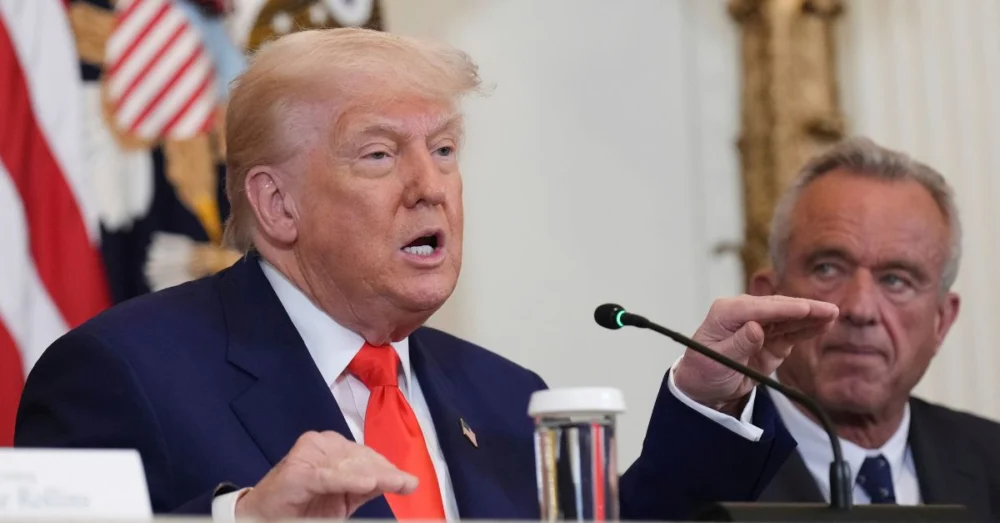
A federal judge on Thursday issued a strongly worded order barring the Trump administration from withholding approximately $600 million in public health grants from four states, finding the government’s explanation for the defunding plan "contrived" and likely unlawful. The ruling by U.S. District Judge Manish S. Shah, an appointee of former President Barack Obama, marks a significant judicial check on executive power, specifically challenging the administration’s attempts to tie federal funding to state immigration policies.
The case, led by Illinois alongside California, Colorado, and Minnesota, challenged the administration’s recent efforts to defund states whose policies it deemed "disfavored." The 26-page lawsuit, filed in early February, argued that the cuts were not based on public health criteria but were rather a punitive measure against so-called "sanctuary" jurisdictions. The judge’s preliminary injunction ensures that these critical federal funds will continue to flow to the plaintiff states throughout the ongoing litigation at the district court level, maintaining the status quo and preventing immediate disruption to vital public health programs.
The Genesis of the Dispute: Immigration Policy and Funding Threats
The roots of this legal battle trace back to early January, when President Donald Trump publicly announced that "states having sanctuary cities" would cease receiving federal funding starting in February. This declaration was consistent with the Trump administration’s broader policy agenda, which frequently sought to leverage federal resources to compel state and local cooperation with its immigration enforcement priorities. "Sanctuary" policies, adopted by various states and municipalities, generally involve limiting cooperation with federal immigration authorities to focus local law enforcement resources on local crime, build trust within immigrant communities, and avoid potential civil rights violations. These policies often prohibit local police from asking about immigration status or holding individuals solely based on federal immigration detainer requests without a judicial warrant.
The administration has repeatedly criticized these policies, arguing they undermine national security and public safety by hindering the deportation of undocumented immigrants. Conversely, proponents of sanctuary policies argue they foster trust between immigrant communities and local law enforcement, making communities safer by encouraging reporting of crimes without fear of deportation. This ideological chasm has been a consistent point of friction between the federal government and several states and cities throughout the administration.
Following President Trump’s January announcement, the Office of Management and Budget (OMB) and the Department of Health and Human Services (HHS) reportedly began efforts to implement the defunding plan. Judge Shah’s order meticulously details a timeline suggesting a coordinated, if hastily executed, plan to cut funding. Three days after the President’s threat, OMB allegedly engaged in discussions with HHS, subsequently requesting a list of awards and acknowledging an "effort to support the President’s priorities."
Between January 22 and 23, the Centers for Disease Control (CDC), a sub-agency within HHS, compiled a list of active awards specifically for Colorado, California, Minnesota, and Illinois. The court noted the absence of any explanation in the record for why these four states were uniquely grouped for data collection, but inferred a direct link to the President’s January 13 announcement. On February 1, the planned cuts were formally announced. Curiously, it was not until February 5, after the cuts were publicized, that the Trump administration reportedly "used an artificial intelligence model to generate language supporting grant terminations based on misalignment with agency priorities," according to the judge’s findings. This revelation of a post-hoc, AI-generated justification became a central point of contention in the court’s analysis.
The Judge’s Scrutiny: "Contrived" Explanations and APA Violations
The lawsuit filed by the four states primarily alleged violations of the Administrative Procedure Act (APA), a federal law that governs the way administrative agencies of the federal government may propose and establish regulations and provides for judicial review of agency actions. A key tenet of the APA is the requirement for agencies to make reasoned decisions, providing a clear and non-arbitrary basis for their actions. Judge Shah found that the administration’s actions likely failed this fundamental legal test.
In his seven-page order, Judge Shah observed that while the government offered "stated explanations for grant terminations," it notably "has not explained why or how plaintiffs were selected" for the specific cuts. He found the disconnect between the administration’s expressed hostility towards the plaintiff states’ immigration policies and the later grant-specific explanations to be highly suspicious. "[W]here an explanation appears contrived or incongruent with what the record reveals about the process, then the agency violated the reasoned explanation requirement of administrative law," the judge mused. "That is likely the case here, where there is a disconnect between the government’s expressed hostility to the plaintiffs as states with certain immigration-related policies…and later grant-specific explanations."
The court heavily criticized the February 5 "machine-generated" explanation, labeling it a "post hoc effort" to rationalize decisions already made. While the plaintiffs had not produced a direct "targeting directive," the chronological sequence of events, coupled with the OMB’s lack of affirmative denials regarding their involvement, strongly suggested that the states were indeed targeted due to their sanctuary policies. "The sequence of events does not suggest mere inconsequential coordination. Instead, the reasonable inference is that the Office of Management and Budget directed HHS to cut funding for plaintiffs by February because plaintiffs were on a list of states with sanctuary jurisdictions," the order stated.
Judge Shah further elaborated on the dynamic between OMB and HHS, concluding, "There was an OMB ‘project’ to be implemented. Both OMB and HHS missed the target date by a few days, but the most plausible inference is that OMB drove HHS’s decision. Coordination and influence are not surprising, and it is not improper to work with other agencies to substantiate the legal basis for a preferred policy. But this looks instead like a final decision by OMB with a different motive than what HHS used to explain its grant-termination decision." He concluded that the plaintiffs were "likely to succeed on their claim that OMB’s targeting of them for HHS cuts must be set aside under the Administrative Procedure Act," which mandates courts to invalidate agency actions that are "arbitrary, capricious, contrary to constitutional right, or in excess of statutory authority or limitations."

The Impact of $600 Million: Critical Public Health Programs at Risk
The $600 million in public health grants at stake represent a substantial sum vital for a wide array of programs in Illinois, California, Colorado, and Minnesota. These funds are typically allocated to support crucial initiatives like disease prevention and control (including responses to infectious disease outbreaks), maternal and child health services, substance abuse prevention and treatment (particularly for the opioid crisis), mental health support, health equity programs, and emergency preparedness.
For instance, CDC grants often fund state health departments for vaccine programs, HIV/AIDS prevention, tuberculosis control, and chronic disease management for conditions like diabetes and heart disease. Cuts of this magnitude could have severe repercussions, potentially leading to reductions in staffing, closures of clinics, cessation of outreach programs, and a diminished capacity to respond to public health emergencies. In Illinois alone, a significant portion of its annual federal health funding supports programs ranging from lead poisoning prevention to cancer screening initiatives. California, with its large and diverse population, relies heavily on federal funds for public health infrastructure, including addressing homelessness and providing healthcare access to underserved communities. Colorado and Minnesota also utilize these grants for essential services, from rural health initiatives to combating local public health challenges.
Public health advocates and state officials across the country have consistently warned that such cuts are not merely administrative adjustments but direct threats to the well-being of millions of residents. The federal government is a major funder of public health activities, and reductions can create substantial gaps that states, often facing their own budgetary constraints, struggle to fill.
Reactions and Broader Implications
While the Trump administration has not yet formally responded to this specific ruling, its past reactions to similar judicial setbacks have often involved appeals and strong condemnations of judicial overreach. The administration has frequently asserted its right to set policy priorities and allocate federal funds accordingly, viewing judicial intervention as an impediment to executive authority. It is highly probable that the Department of Justice, representing the federal defendants, will appeal Judge Shah’s decision.
Attorneys for the plaintiff states, however, are likely to express satisfaction with the ruling, emphasizing the importance of judicial review in safeguarding constitutional principles and ensuring that federal agencies operate within the bounds of the law. They will undoubtedly highlight the court’s finding that the administration’s actions were arbitrary and politically motivated rather than based on legitimate public health concerns.
Legal experts view this ruling as a significant affirmation of the APA’s role in holding federal agencies accountable. It reinforces the principle that even presidential directives must be implemented through lawful administrative processes that include reasoned explanations, not just political expediency. The use of an "AI model" to generate post-hoc justifications also introduces a novel element to administrative law, potentially setting a precedent for how courts will scrutinize algorithmically-generated rationales for government actions in the future. It raises questions about transparency, accountability, and the potential for technology to be misused in circumventing legal requirements for reasoned decision-making.
Furthermore, this case underscores the ongoing tension between federal and state powers, particularly concerning immigration policy. The federal government’s attempts to coerce states into aligning with its immigration agenda by withholding funds have been a recurring theme, leading to numerous legal challenges. This ruling serves as a reminder that such attempts face significant hurdles in the courts when they appear to bypass established legal procedures and statutory authorities.
While the injunction prevents the immediate cessation of the $600 million in grants, Judge Shah’s order did stop short of granting the full relief requested by the plaintiffs. The judge declined, at this preliminary stage, to issue a broader "programmatic challenge" that would have implied a targeting directive operative at all federal agencies. This suggests that while the court found specific actions regarding public health grants unlawful, it is not yet prepared to rule on a wider pattern of behavior across the entire federal government without further discovery and evidence.
Looking Ahead: Continued Legal Battles and Federal-State Relations
The preliminary injunction is a critical victory for the plaintiff states, but it does not represent the final resolution of the case. The litigation will continue, likely involving further arguments, discovery, and potentially appeals to higher courts. The immediate effect is to protect vulnerable public health programs and ensure their continuity.
Beyond the courtroom, this case highlights the increasingly strained relationship between the federal government and states on issues ranging from immigration to healthcare funding. The judicial branch continues to play a pivotal role in mediating these disputes, ensuring that executive actions adhere to legal frameworks established by Congress and interpreted by the courts. The outcome of this and similar cases will undoubtedly shape the future of federal-state cooperation and the limits of executive power in the years to come.



 Yuyun Lusiyani
 Joko Widodo
 Jia Lissa
 Pevita Pearce
 admin
admin
