
 Yuyun Lusiyani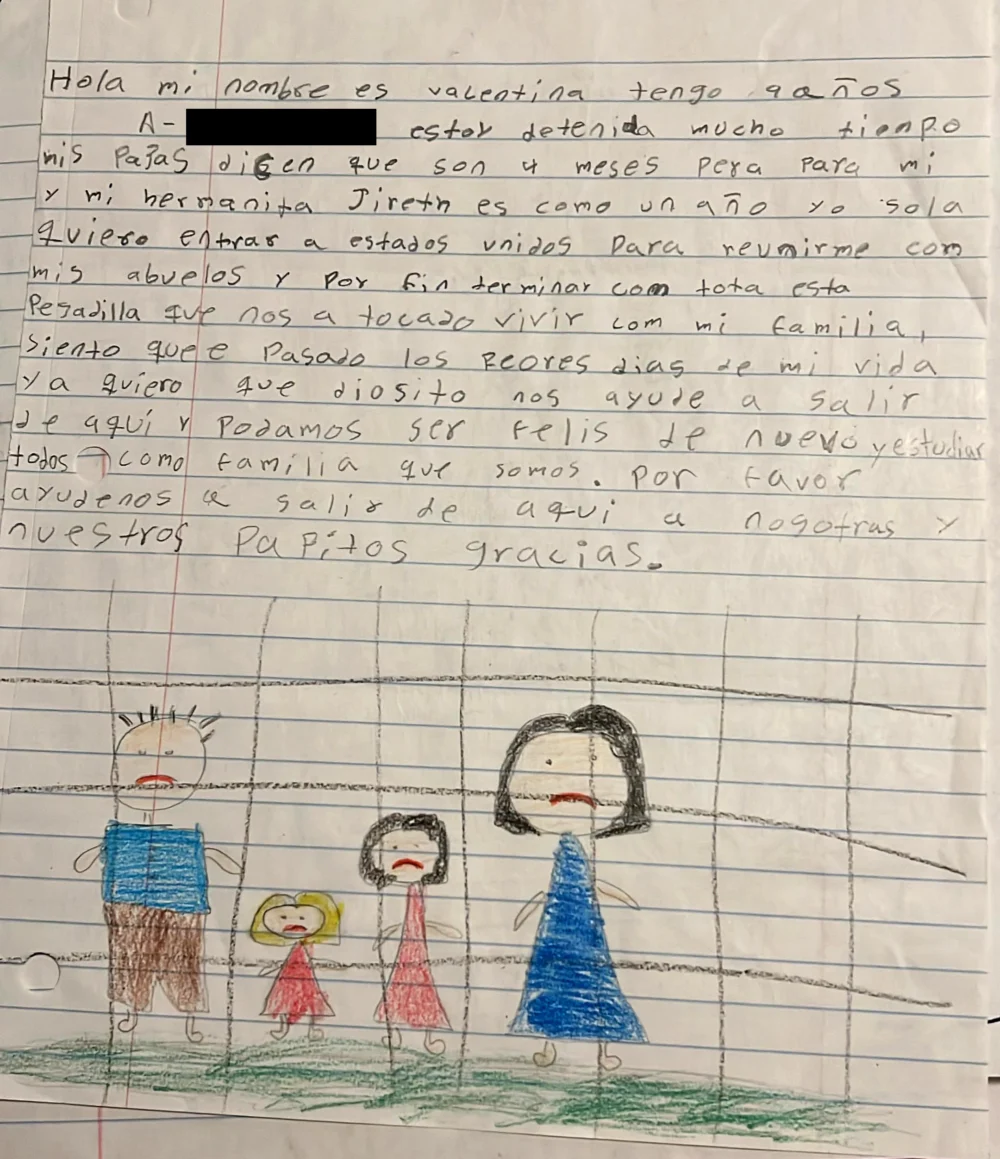
In a stark illustration of the ongoing challenges faced by immigrant families held in detention, accounts from former detainees, legal advocates, and a U.S. Congressman reveal an escalating pattern of restrictions on communication and expression at the South Texas Family Residential Center in Dilley, Texas. These measures, allegedly implemented by facility guards, include the confiscation of children’s artwork and writing materials, the blocking of digital communication channels, and overt surveillance of family calls, painting a concerning picture of an environment increasingly hostile to transparency and detainee voices. Christian Hinojosa, a mother recently released from Dilley, epitomizes the desperate efforts of detainees to ensure their stories reach the outside world, having discreetly safeguarded a collection of children’s letters and drawings by concealing them within her winter jacket during her final days at the facility. "Thank God the weather was cool," Hinojosa recounted, noting that the jacket did not raise suspicions as she moved through the sprawling compound.
The Dilley facility, operated by private prison company CoreCivic under contract with U.S. Immigration and Customs Enforcement (ICE), has long been a flashpoint in the national debate over family detention. Situated in the arid brush country south of San Antonio, it comprises a series of trailers and dormitories designed to house immigrant families. While the Obama administration initially utilized such centers for families who had recently crossed the border, and the Biden administration briefly ended the practice of family detention in 2021, the Trump administration controversially reinstated and expanded it. The current cohort of detainees at Dilley often includes families who have resided in the United States for years, swept up in a broader campaign of intensified immigration arrests across the country, a departure from the president’s initial promise to focus deportation efforts solely on criminals. Since the Trump administration recommenced sending families to Dilley last spring, over 3,500 individuals have cycled through its gates, living behind metal fences in rooms furnished with six bunk beds and a communal area.
A Surge in Suppression: The Aftermath of Public Outcry
The alleged tightening of controls at Dilley appears to be a direct response to a surge in public attention and advocacy efforts that began in late January. The arrival of Liam Conejo Ramos, a 5-year-old boy from Ecuador, who was detained along with his father in Minnesota and subsequently transferred to Dilley, proved to be a pivotal moment. Liam’s detention, widely reported in national media, ignited a wave of protests and prompted visits from congressional representatives.

Prior to Liam’s arrival, a reporter from ProPublica had already initiated contact with families inside Dilley, encouraging children to document their experiences through writing and drawing. By January 22, a packet of these raw, emotional expressions – vibrant drawings and handwritten letters – had been successfully conveyed to the reporter by a recently released detainee. These initial dispatches, later published, offered a rare and unfiltered glimpse into the lives of children behind bars.
The rising visibility of conditions inside Dilley reached a peak on January 24, when dozens of detainees staged a mass protest in the facility yard. Captured by aerial photography, the images showed individuals shouting "libertad" (freedom) and holding up signs crafted from art supplies available within the detention center. This act of collective defiance further amplified media coverage and spurred more intense scrutiny. On January 28, U.S. Representative Joaquin Castro, a Democrat from Texas, visited the facility, coinciding with external demonstrations where supporters clashed with state troopers outside Dilley’s perimeter.
In early February, Liam Conejo Ramos and his father were released, a development widely seen as a victory for advocates. Following this, ProPublica published the initial collection of children’s letters. This cascade of events—the protests, the congressional visit, the media attention, and the subsequent release of Liam—made it clear to the detainees that their voices, particularly those of the children, were resonating with the broader public. Motivated by this glimmer of hope, they continued to write and draw, clinging to the belief that their stories could effect change. "We were looking for help," Hinojosa affirmed, "We were looking to be heard."
Specific Allegations of Communication Blackouts and Surveillance
The increased scrutiny, however, seemingly triggered a punitive response from the facility administration. According to Hinojosa and three other former detainees, as well as lawyers and advocates in direct contact with families still inside, the period following the public outcry saw a marked escalation in room searches and restrictions on communication.

Guards allegedly began confiscating crayons, colored pencils, and drawing paper during these searches. Artwork, too, was reportedly seized, including one child’s drawing of Bratz fashion dolls, highlighting the indiscriminate nature of the confiscations. The sheer banality of such an item underscores the arbitrary and potentially chilling intent behind its removal, suggesting a desire to suppress any form of self-expression.
Beyond physical materials, digital communication channels also faced unprecedented restrictions. Detainees reported losing access to Gmail and other Google services in the Dilley library. This curtailment of internet access significantly hampered their ability to contact legal counsel and advocacy groups, essential lifelines for individuals navigating complex immigration cases. For many, these digital platforms are the only means to secure legal representation, gather evidence, and communicate with external support networks. The denial of such access raises serious questions about due process and the right to legal counsel for vulnerable populations.
Furthermore, several detainees and their family members reported that guards would frequently hover within earshot during video calls to relatives and reporters. Edison, a 13-year-old seventh grader from Chicago, born in Guatemala and detained at Dilley, conveyed his distress during a video call with his father, saying, "Dad, there’s an agent here and he’s watching us." His father, who shared the recording with ProPublica, described his son as sounding panicked. Another anonymous mother recounted that after the January protest, as many as half a dozen guards were consistently stationed in the call room, "practically stood behind you" every time someone attempted to make a call. Such overt surveillance creates a profound chilling effect, discouraging open communication and limiting the detainees’ ability to truthfully convey their experiences.
The Voices of Detained Children: "We Are Kidnapped Help!"
The poignant voices of the children themselves underscore the profound impact of their confinement and the attempts to silence them. The letters and drawings collected by Christian Hinojosa and shared with ProPublica paint a vivid, often heartbreaking, picture of their daily struggles and desperate pleas.

Seven-year-old Mathias Bermeo penned a letter stating, "I’m writing this letter so that you can hear my story. I need you to help us I have been detained for 23 days with my mom and my 3-year-old sister. I cry a lot I want to get out of here go back to my school they don’t treat us Well here there are many children we are kidnapped help!" The raw plea, "we are kidnapped help!" etched onto paper, serves as a powerful testament to the children’s perception of their reality.
Another detainee articulated a deep sense of loss and boredom: "I feel bad being here! Bad because I can’t because I can’t see my pet Willi and I can’t eat what I want and I can’t see my friends from school and at home." The simple desires of childhood – a pet, favorite foods, friends, and school – are starkly contrasted with the grim reality of detention.
A nine-year-old, Valentina, wrote of the agonizing passage of time: "My parents say it’s been 4 months but for me and my little sister Jireth it feels like a year I just want to go to the United States to be with my grandparents and finally end this nightmare that my family has had to live through, I feel like I’ve had the worst days of my life I want God to help us get out of here so we can be happy again and study together as a family. Please help us and our parents get out of here thank you." Her words highlight the psychological toll of prolonged detention, transforming months into an eternity.
Edison, the 13-year-old, articulated a common sentiment among detainees: "I see how they treat us like criminals, and we’re not." This observation speaks to the profound injustice felt by families who have committed no crime but are held in conditions akin to incarceration. Seven-year-old Diana echoed this, writing, "I lived in Oregon We were detained in a hospital parking lot I feel bad because I miss my stuffed animals I don’t want to be here and I miss my friends and also miss my teacher and my house and my bed. we are not criminals I’m a very pretty girl." Her self-affirmation, "I’m a very pretty girl," stands out as a heartbreaking assertion of identity against dehumanizing circumstances.
For children with limited access to formal schooling within Dilley and with cold weather preventing outdoor play, drawing had become a primary outlet for expression and a crucial diversion. One anonymous mother, whose room was swept in late January, described watching through a window as guards removed drawings from the walls and bagged up colored pencils and crayons. "What were they going to do now?" she asked, reflecting on her children’s subsequent despair. "They were so bored." After the inspection, her children "cried and cried and cried." Another mother corroborated this, stating, "There were many, many families whose children had their pencils and paper thrown away." Even items purchased at the commissary, like colored pencils, were reportedly confiscated.

Official Denials and Unanswered Questions
In response to these grave allegations, both CoreCivic and the Department of Homeland Security (DHS), which oversees ICE, issued statements. CoreCivic "vehemently den[ied] any claims that our staff have confiscated or destroyed children’s personal artwork or their related supplies," asserting that routine inspections are common practice and that detainees are informed of permissible items. The company also claimed that examples of children’s artwork are "proudly displayed" throughout the facility.
DHS similarly stated that "ICE is not destroying children’s letters." However, the agency acknowledged that "in one case all the written items in the cell were seized as part of an investigation of a mother who DHS said refused to comply with a search and pushed a detention center employee." CoreCivic deferred questions about this specific incident to DHS. The implicated mother could not be reached for comment.
DHS further attempted to "correct the record" regarding Dilley through press releases, asserting that "adults with children are housed in facilities that provide for their safety, security, and medical needs." Crucially, neither DHS nor CoreCivic addressed the specific allegations regarding the blocking of Google services or whether guards actively listen in on detainees’ calls. Their silence on these points leaves a significant gap in their defense, lending credence to the detainees’ accounts.
The veracity of the detainees’ claims was bolstered by Rep. Joaquin Castro. After his second visit to Dilley last week, he was asked about reports of children’s letters and drawings being suppressed. "I believe those stories, because I’ve heard similar stories myself," Castro stated. He also revealed that he had been "repeatedly told that guards had warned detainees not to talk to him," concluding, "Yes, I think there’s a lot of secrecy there." DHS did not comment on Castro’s assertion about the guards, while a CoreCivic spokesperson claimed, "We are not aware of any staff member warning residents not to speak with Rep. Castro." The conflicting statements underscore the lack of transparency surrounding operations within the facility.

Broader Implications: Rights, Transparency, and Child Welfare
The alleged actions at Dilley raise profound concerns regarding fundamental human rights, government transparency, and the welfare of vulnerable children. The confiscation of artwork and writing materials, far from being a minor administrative issue, constitutes a direct suppression of freedom of expression. For children, art is not merely a pastime but a vital means of processing trauma, communicating emotions, and maintaining a sense of self in challenging environments. Depriving them of this outlet can exacerbate psychological distress and compound the trauma of detention.
The restrictions on digital communication and the alleged surveillance of calls directly impede detainees’ access to legal counsel and their ability to advocate for themselves. This undermines due process rights, making it more difficult for families to pursue their immigration cases effectively. The chilling effect created by such surveillance can lead to self-censorship, further isolating detainees from external support and oversight.
The history of family detention in the U.S. has been fraught with legal challenges, particularly concerning the 1997 Flores Settlement Agreement, which generally stipulates that children should not be detained for more than 20 days. While DHS has argued for the termination of this settlement, claiming new regulations address the needs of child detainees, the extended detention of families like Hinojosa’s (four months) and Valentina’s (four months, feeling like a year) highlights a persistent tension between policy and practice. These extended stays, coupled with restrictive environments, undoubtedly take a heavy toll on children’s development and mental health.
The consistent denials from CoreCivic and DHS, especially in light of specific, detailed accounts from multiple former detainees and a sitting Congressman, underscore a critical lack of accountability. The official response, often generic or selectively addressing allegations, fails to instill confidence that the welfare of children and families is the paramount concern. The discrepancy between official narratives and firsthand testimonies necessitates independent investigation and greater oversight.

The Enduring Power of Expression
Christian Hinojosa and her 13-year-old son, Gustavo, both originally from Mexico, were released in early February after four months at Dilley, returning to San Antonio. Their release, however, did not diminish Hinojosa’s commitment to her fellow detainees. She knew the value of the letters and drawings she carried. Every time she left her room, she wore her CoreCivic-issued puffy gray jacket, tucking the precious documents inside. "I carried them around with me all day to prevent anyone from taking them," she told ProPublica. "I knew they were valuable."
The 34 pages of drawings and letters Hinojosa successfully brought out of Dilley offer a stark visual and textual record of life inside. Many pieces were rendered in plain pencil or on the backs of old artworks, reflecting the scarcity of supplies following the alleged confiscations. These raw expressions capture the names and lives of dozens of people, illustrating simple desires and profound despair: a teddy bear, a bus going home, a pet cat named Willi, and repeatedly, stick figures trapped behind wire fences – three, six, or even a single small figure. Most faces in these drawings wear frowns, a silent but powerful commentary on their plight.
These artifacts serve as a poignant reminder that even in the most restrictive environments, the human spirit yearns for expression. As families held at Dilley continue to navigate their uncertain futures, the determination of individuals like Christian Hinojosa to ensure their voices are heard remains a critical force for transparency and advocacy. The ongoing struggle for the right to express oneself, particularly for children caught in the machinery of immigration detention, stands as a testament to the enduring power of art and storytelling in the face of adversity.

 Jia Lissa
 Joko Widodo
 Eva Lovia

 Pevita Pearce