
 Jia Lissa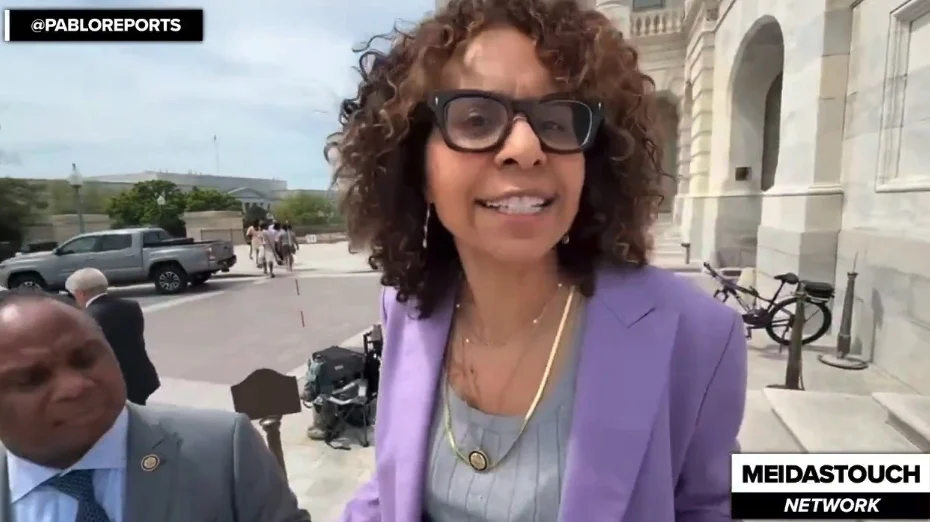
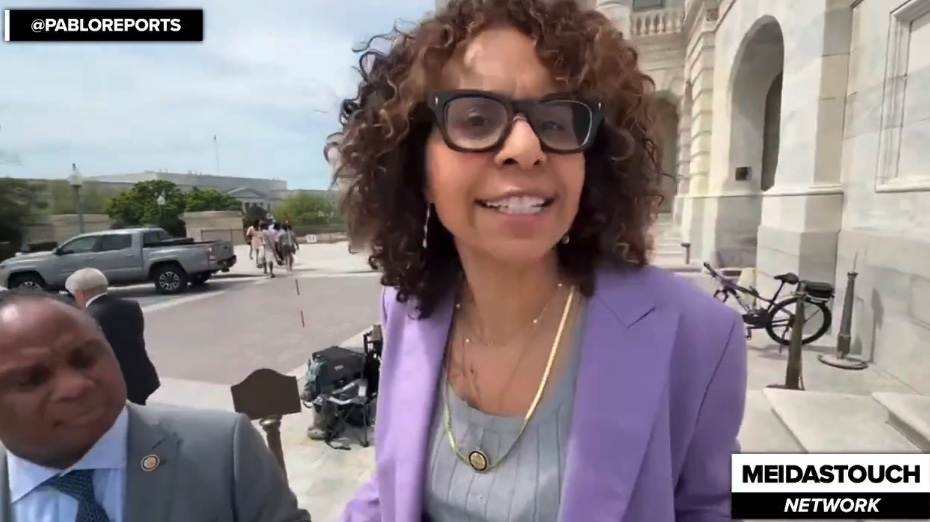
In a sharp rebuke of the current administration’s foreign and domestic priorities, Representative Sydney Kamlager-Dove (D-CA) delivered a series of pointed criticisms on Thursday regarding President Donald Trump’s handling of the conflict in Iran and his recent social media activity. Speaking on the steps of the United States Capitol, the California congresswoman addressed the escalating financial burden of the war, its impact on the American consumer, and a recent controversy involving a religious-themed image shared by the President. The exchange, captured by Pablo Manríquez of Migrant Insider and the MeidasTouch Network, highlights the deepening rift in Washington as the nation grapples with the economic fallout of a major military engagement and the unconventional communication style of the Commander-in-Chief.
The Capitol Steps Encounter: Economic Anxieties and Public Rhetoric
The confrontation began when Manríquez questioned the congresswoman about the long-term fiscal implications of the ongoing conflict in Iran, which has dominated the legislative agenda since its inception earlier this year. When asked if she harbored concerns regarding the war’s impact on the national debt, Kamlager-Dove’s response was immediate and visceral. She argued that the financial strain is evident to all observers, referencing the visible economic markers affecting her constituents in California and the nation at large.
"Stevie Wonder can even see how much this war is costing us," Kamlager-Dove remarked, utilizing a metaphor to emphasize the transparency of the crisis. She specifically cited the dramatic rise in energy costs, noting that gasoline prices in parts of California have surged toward the $10-per-gallon mark. Beyond the pump, she pointed to the rising costs of agricultural inputs, such as fertilizer, which have direct implications for food security and inflation.
The congresswoman’s most scathing remarks, however, were directed at the President’s fiscal priorities. She alleged that the administration is seeking to allocate approximately $2 billion daily toward military operations, a figure she contrasted with the lack of progress on domestic initiatives such as universal healthcare. Her commentary culminated in a blunt assessment of the President’s leadership, reflecting the heightened tensions currently characterizing the 119th Congress.
Chronology of the 2026 Iran Conflict
To understand the gravity of Representative Kamlager-Dove’s criticisms, it is necessary to examine the timeline of the military engagement. The conflict, which President Trump launched on February 28, 2026, represented a significant escalation in Middle Eastern geopolitics. Following months of deteriorating diplomatic relations and disputes over nuclear enrichment protocols, the United States initiated a series of kinetic operations that quickly transitioned into a full-scale military theater.
While a fragile ceasefire is currently in place, the initial phase of the war was characterized by intense financial expenditure. According to a Pentagon briefing delivered to Congress in mid-April, the first six days of the conflict alone incurred a cost of $11.3 billion to the American taxpayer. This rapid burn rate of capital has raised alarms among fiscal hawks and progressive lawmakers alike, as the national debt continues its upward trajectory.
Economic analysts from Harvard University, in a report recently cited by CNBC, suggested that the total cost of the engagement could eventually exceed several trillion dollars when accounting for long-term veteran care, equipment replacement, and regional stabilization efforts. This projection aligns with Kamlager-Dove’s assertion that the daily operational costs are placing an unsustainable burden on the federal budget.
The "Dr. Jesus" Controversy: Religious Imagery and Public Backlash
Parallel to the debates over war funding is a surreal controversy involving the President’s use of social media. On the Sunday preceding the congresswoman’s remarks, President Trump shared an image on his social media platforms that depicted him in a stylized, Jesus-like pose, apparently performing a healing miracle on an ailing individual. The post appeared shortly after the President had engaged in a public disagreement with religious leaders, including Pope Leo, leading many observers to interpret the image as a provocative statement on his own perceived importance.
The reaction to the post was swift and bipartisan. Religious organizations condemned the use of sacred iconography for political branding, while political opponents characterized the post as further evidence of an "unfiltered" and "messianic" approach to the presidency. Even within the President’s own "Make America Great Again" (MAGA) base, the imagery proved divisive, with some supporters expressing discomfort at the blurring of lines between political leadership and religious divinity.
By Monday, the post had been deleted. However, the President’s subsequent explanation only served to fuel further discussion. In a public statement, Trump denied that the image was intended to be religious. Instead, he claimed he believed the image depicted him as a medical professional.
"I did post it, and I thought it was me as a doctor—and, had to do with Red Cross, as a Red Cross worker there, which we support," Trump stated during a press briefing. He dismissed the religious interpretations as "fake news," asserting that the image was meant to symbolize his ability to "make people better." Representative Kamlager-Dove’s use of the moniker "Dr. Jesus" was a direct reference to this incident, mocking what she viewed as a nonsensical defense of a controversial action.
Supporting Data: The Economic Toll of $10 Gasoline and Global Inflation
The congresswoman’s mention of $10 gasoline in California is supported by recent data from energy monitoring agencies. The disruption of oil transit routes in the Strait of Hormuz, a direct consequence of the Iran conflict, has led to a global supply crunch. For California, a state with high environmental standards and specific fuel blends, the impact has been magnified.
The rise in fertilizer prices, another point raised by Kamlager-Dove, is a byproduct of the high natural gas prices required for the Haber-Bosch process, which creates nitrogen-based fertilizers. As energy prices spike due to war-related instability, the cost of agricultural production follows, leading to what economists call "agriflation." For the average American household, this translates to higher grocery bills, compounding the pressure of high fuel costs.
The Pentagon’s report of $11.3 billion in six days suggests an average daily spend of nearly $1.9 billion during peak operations, lending credence to the $2 billion-per-day figure cited by critics of the administration. When contrasted with domestic needs, the numbers are stark. For context, the entire annual budget for the Centers for Disease Control and Prevention (CDC) is often less than what the Iran war cost in its first week.
Official Responses and Political Repercussions
The White House has consistently defended the military action as a necessary step for national security, arguing that the long-term costs of a nuclear-armed Iran would far outweigh the current military expenditures. Press Secretary responses have emphasized the "precision" of the strikes and the President’s commitment to "ending the war quickly" through the current ceasefire negotiations.
However, the Republican party appears somewhat fractured on the issue. While traditional hawks support the intervention, a growing populist wing of the party has expressed concern over the "endless war" narrative that Trump himself campaigned against in previous cycles. The "Dr. Jesus" incident has further complicated the administration’s standing with evangelical voters, a core constituency that has historically provided the President with a robust moral mandate.
On the Democratic side, Kamlager-Dove’s tirade reflects a broader strategy to link the war’s costs directly to the daily struggles of American citizens. By highlighting the trade-off between military spending and healthcare, Democrats hope to frame the 2026 midterms as a referendum on the administration’s fiscal responsibility and its focus on domestic welfare.
Broader Impact and Geopolitical Implications
The situation described by Representative Kamlager-Dove underscores a pivotal moment in American history. The intersection of high-stakes military conflict, extreme domestic inflation, and a highly unconventional executive branch has created a volatile political environment.
The "Dr. Jesus" episode, while perhaps appearing trivial in the context of a war, illustrates the ongoing challenges of presidential communication in the digital age. It highlights how quickly a single social media post can distract from policy debates and alienate key demographics. For Representative Kamlager-Dove and her colleagues in the House, these incidents are not mere distractions but are symptomatic of a leadership style they argue prioritizes personal branding over disciplined governance.
As the ceasefire in Iran holds—however tenuously—the focus of the American public is likely to remain on the economy. If gas prices remain at historic highs and the national debt continues to balloon at a rate of billions per day, the rhetoric seen on the Capitol steps on Thursday may become the standard for the upcoming election season. The ability of the administration to pivot from a war footing to an economic recovery plan will be the defining challenge of the remainder of the term.
For now, the image of a congresswoman expressing raw frustration on the steps of the Capitol serves as a potent symbol of a nation at a crossroads, where the costs of global intervention are being weighed against the immediate needs of the people at home. The debate over whether the United States can afford to be both a global policeman and a provider of domestic stability has rarely been as heated or as visible as it is in the spring of 2026.


 Yuyun Lusiyani
 Joko Widodo
 Eva Lovia
 Pevita Pearce
 admin
admin
 Lina Irawan