
 Pevita Pearce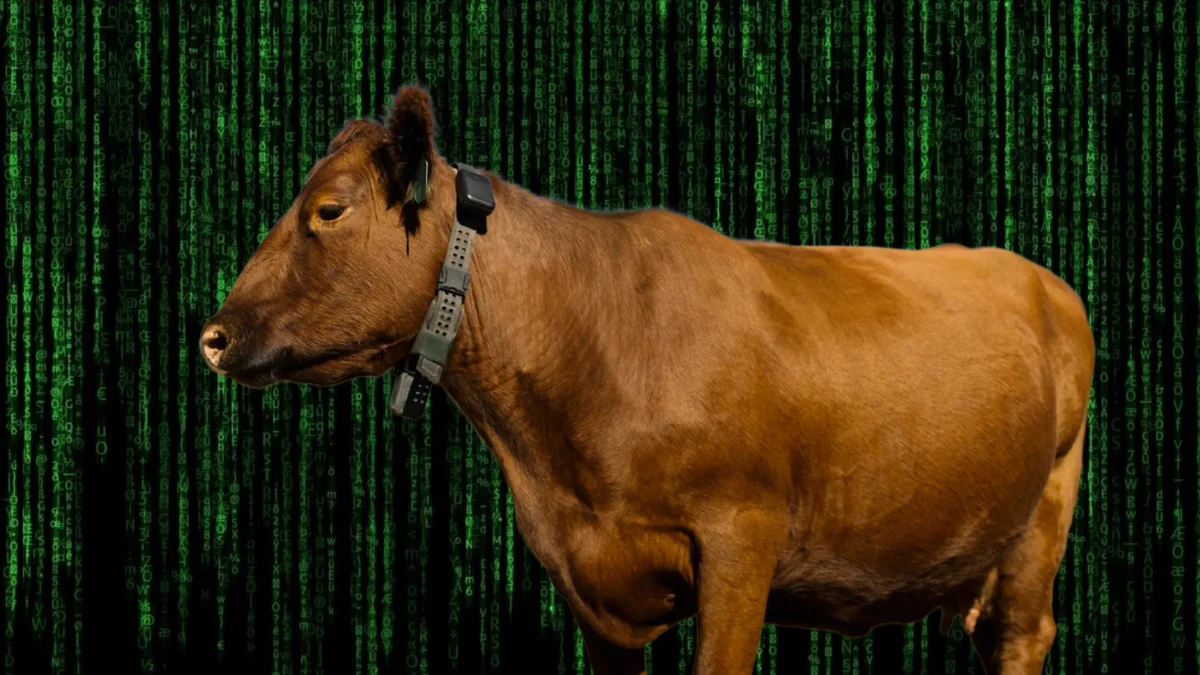
The intersection of Silicon Valley venture capital and traditional pastoral agriculture has reached a significant milestone as Halter, a New Zealand-based agtech startup, secures a new valuation of approximately $2 billion. This surge in market capitalization follows a fresh funding round led by Peter Thiel’s Founders Fund, signaling a robust appetite for artificial intelligence applications within the primary industry sector. Halter, which specializes in solar-powered wearable technology for livestock, has become a central figure in the movement toward precision agriculture, leveraging a proprietary machine-learning system colloquially and commercially known as the Cowgorithm.
The latest investment, first reported by Bloomberg, marks a pivotal moment for the company as it seeks to scale its operations across North America and Australia. By doubling its previous valuation, Halter joins an elite group of agtech unicorns that are redefining how food systems operate through remote sensing and autonomous management. The core of Halter’s value proposition lies in its ability to replace physical infrastructure and manual labor with a digital-first approach to herd management, providing farmers with granular control over their livestock via a smartphone interface.
The Mechanics of the Cowgorithm and Virtual Fencing
At the heart of Halter’s success is a sophisticated solar-powered collar that functions as both a GPS tracker and a behavioral modification tool. These collars are equipped with sensors that monitor an animal’s every movement, including its location, speed, and even biological markers such as rumination patterns and fertility cycles. The data collected by these devices is processed by the Cowgorithm, an AI-driven engine trained on hundreds of millions of data points gathered from herds across various climates and topographies.
The system’s most transformative feature is "virtual fencing." Traditionally, managing cattle requires the installation and maintenance of thousands of miles of physical wire fencing, which is both capital-intensive and labor-heavy. Halter’s technology allows farmers to draw boundaries on a digital map within their mobile application. When a cow approaches these invisible lines, the collar emits a specific sound cue. If the animal continues toward the boundary, it receives a gentle vibration. Through a process of associative learning, cattle quickly learn to respond to these cues, allowing farmers to shift entire herds between pastures without the need for farm dogs, motorcycles, or manual gate-opening.
This capability facilitates "rotational grazing," a practice where cattle are moved frequently to different sections of a farm to prevent overgrazing and promote soil health. By automating this process, Halter enables farmers to optimize pasture utilization, which can lead to higher milk yields in dairy cows and faster weight gain in beef cattle, all while reducing the environmental footprint of the operation.
A Chronology of Innovation: From Rocket Lab to the Paddock
The genesis of Halter is rooted in the high-stakes world of aerospace engineering. The company was founded in 2016 by Craig Piggott, a former engineer at Rocket Lab. Piggott, who grew up on a dairy farm in New Zealand, recognized the immense physical and mental strain placed on farmers by the 24/7 demands of livestock management. He sought to apply the same level of precision and automation used in rocket launches to the management of biological assets.
The company’s growth trajectory has been marked by several successful funding milestones:
- 2016–2018: Initial prototyping and development of the first-generation collar, focusing on animal behavior and Pavlovian response training.
- 2019–2021: Series A and B rounds allowed for the first commercial deployments in New Zealand’s Waikato region, a global hub for dairy production. During this period, the company refined its AI models to distinguish between different types of animal behavior, such as grazing, walking, and resting.
- 2022–2024: Halter expanded into the Australian and United States markets. In the US, the technology found a significant niche among large-scale ranchers dealing with vast tracts of land where physical fencing is often impractical or prohibitively expensive.
- 2025–2026: The current $2 billion valuation reflects the successful integration of the system on hundreds of thousands of cows globally and the trademarking of the "Cowgorithm" as a cornerstone of the brand’s identity.
Economic Implications and Labor Solutions
The primary driver for the adoption of Halter’s technology is the global labor shortage currently plaguing the agricultural sector. In many developed nations, finding skilled farm laborers who are willing to work the irregular and demanding hours required for livestock management has become increasingly difficult. Halter’s automated system acts as a "digital farmhand," performing tasks that would otherwise require multiple full-time employees.
According to industry data, the cost of installing and maintaining traditional fencing can range from $10,000 to $25,000 per mile, depending on the terrain and materials. For a large-scale ranch in the American West, infrastructure costs can run into the millions. Halter’s subscription-based model allows farmers to trade these massive capital expenditures for a predictable operational cost. Furthermore, the system’s health-monitoring capabilities provide an early warning system for diseases and metabolic issues. By detecting a drop in rumination or a change in movement patterns days before physical symptoms appear, farmers can intervene early, reducing veterinary costs and livestock mortality rates.
In the United States, ranchers have already utilized Halter to create thousands of miles of virtual fencing. This has proven particularly beneficial in areas where public lands are leased for grazing, as it allows for precise control over where cattle roam without interfering with wildlife corridors or requiring permanent structures on government-owned land.
Supporting Data and Market Trends
The investment from Founders Fund comes at a time when the broader agtech market has seen a cooling of venture capital interest. However, companies that offer tangible efficiency gains and clear ROI (Return on Investment) continue to attract premium valuations. Data from the 2025 Precision Agriculture Report suggests that the global market for smart farming is expected to grow at a CAGR (Compound Annual Growth Rate) of 12.5% over the next decade.
Halter’s specific segment—livestock monitoring and management—is projected to be one of the fastest-growing niches. The ability to integrate fertility tracking into a movement-management tool is a significant differentiator. Traditional methods of heat detection in dairy cows involve visual observation or chemical markers, both of which are prone to human error. Halter’s AI identifies the subtle behavioral changes associated with estrus with over 90% accuracy, significantly improving the reproductive efficiency of the herd.
Statements and Industry Reactions
While Halter has maintained a focused media strategy, the involvement of Peter Thiel’s Founders Fund has drawn comments from across the tech and agricultural sectors. Analysts suggest that Thiel’s interest is rooted in the concept of "hard tech"—the application of software and AI to the physical world to solve fundamental human needs like food production.
"Halter isn’t just a gadget; it’s an operating system for the farm," noted one Silicon Valley analyst following the funding news. "By digitizing the cow, they are bringing the same level of data-driven optimization to ranching that we’ve seen in manufacturing and logistics over the last twenty years."
Within the farming community, the reaction has been largely positive, though tempered by the traditional pragmatism of the industry. Farmers using the system have praised the "freedom" it provides, allowing them to manage their operations from a distance, which improves work-life balance—a rare commodity in the agricultural world. Some critics, however, have raised questions regarding the long-term durability of the hardware in extreme weather conditions and the reliance on cellular or satellite connectivity in remote "dead zones." Halter has addressed these concerns by developing a mesh network capability that allows collars to relay data to one another, ensuring connectivity even in isolated regions.
Environmental Impact and Animal Welfare Analysis
From an environmental perspective, the "Cowgorithm" offers a sophisticated tool for land conservation. Virtual fencing allows for "exclusion zones" to be set up instantly around waterways, sensitive riparian zones, or areas undergoing reforestation. This prevents livestock from damaging fragile ecosystems without the need for invasive physical barriers.
Regarding animal welfare, the system is designed to be low-stress. Behavioral studies conducted during the development of the collar suggest that cattle respond more calmly to the consistent, predictable audio cues of the collar than to the unpredictable movements of humans or dogs. The "pressure and release" methodology used by the AI mimics natural herd dynamics, where animals move away from a stimulus toward a desired location.
Future Outlook and Scaling Challenges
As Halter moves toward its next phase of growth, the challenge will be to maintain the reliability of its AI models as it enters diverse new environments. Managing a dairy herd in the temperate climate of New Zealand is vastly different from managing beef cattle in the arid expanses of Texas or the tropical regions of Northern Australia. Each environment requires the Cowgorithm to adapt to different grazing behaviors, heat stress levels, and terrain-specific movement patterns.
The $2 billion valuation places Halter under significant pressure to deliver continued innovation. Future developments are expected to include deeper integrations with soil moisture sensors and satellite imagery, creating a closed-loop system where the AI can automatically move cattle based on the actual growth rate of the grass in real-time.
By bridging the gap between high-level algorithmic processing and the grounded reality of pastoral farming, Halter is positioning itself as a cornerstone of the future food supply chain. The support from Peter Thiel and Founders Fund suggests that the "Cowgorithm" is no longer a niche experimental tool but a central component of the global push toward a more efficient, data-driven agricultural industry. As the world’s population continues to grow and the demand for protein increases, the ability to manage vast herds with the tap of a screen may become the new standard for the modern farmer.




 Yuyun Lusiyani
 Joko Widodo
 Eva Lovia
 admin
admin
 Lina Irawan