
 Yuyun Lusiyani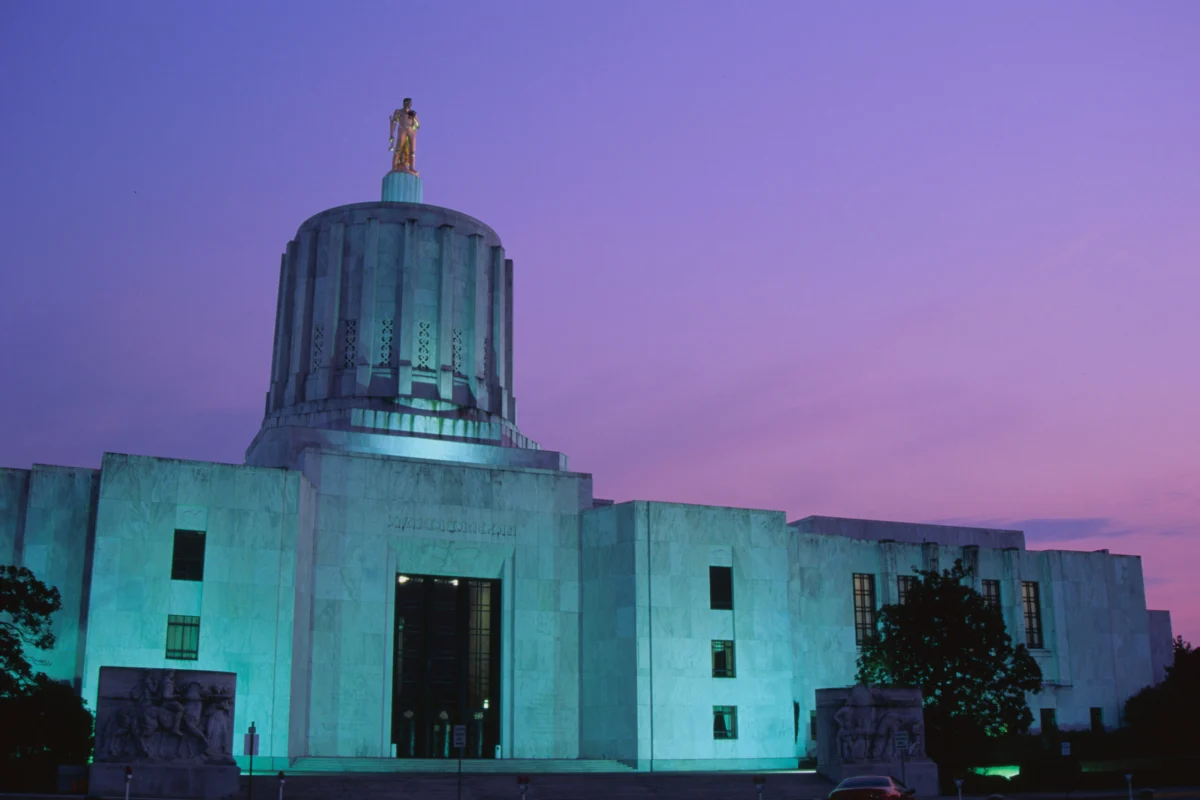
Oregon, long an outlier among U.S. states for its virtually limitless campaign finance system, finds itself once again at a critical juncture regarding the influence of money in its political landscape. Despite overwhelming voter support for reform just four years ago, the state’s Democratic-controlled Legislature recently approved a bill that, according to critics, threatens to undermine nascent efforts to rein in political donations, potentially re-entrenching the very system voters sought to change. The controversial measure now awaits Governor Tina Kotek’s decision, casting a shadow over the future of campaign finance in the Pacific Northwest state.
A History of Unlimited Influence: The Oregon Outlier Status
For decades, Oregon stood as one of a handful of states without any meaningful limits on campaign contributions. This unusual status was largely cemented by a series of Oregon Supreme Court rulings, which interpreted campaign donations as a form of protected free speech under the state’s constitution. This judicial precedent created a unique barrier, requiring a constitutional amendment before any legislative limits could be imposed. This environment fostered a political system where large sums of money, particularly from corporate interests, flowed freely into political campaigns, often at levels unmatched per capita elsewhere in the nation.
The ramifications of this unchecked spending were starkly brought to light in 2019 by an investigative series titled "Polluted by Money," published by The Oregonian/OregonLive. The series, authored by a journalist now contributing to this report, meticulously documented how the absence of donation limits allowed corporate America to disproportionately fund lawmakers, leading to what critics argued were some of the weakest environmental protections on the West Coast. The investigation presented compelling evidence that significant campaign contributions correlated with legislative inaction or weakening of policies related to climate change, logging practices, industrial air pollution, herbicide spraying, and oil spill preparedness. One retired regulator famously recounted how a single phone call from a well-connected lobbyist could effectively derail a clean air initiative, illustrating the profound, often hidden, influence of money.
Beyond policy outcomes, the investigation also revealed instances of campaign funds being used by politicians for personal expenses, including luxury hotel rooms, dry cleaning, car washes, and even tabs at sports bars. One lawmaker reportedly purchased a new computer weeks before leaving office, while another used campaign money for an Amazon Prime membership days before resigning. Such practices, while not necessarily illegal under the then-existing lax regulations, fueled public perception of a system ripe for abuse and disconnected from the interests of everyday citizens.
The Will of the Voters: A Mandate for Change
The findings of the "Polluted by Money" series, coupled with years of advocacy from good-government groups, finally prompted legislative action in 2019. Lawmakers, acknowledging the growing public discontent, opted for a direct appeal to the electorate. They asked Oregonians to amend the state constitution to explicitly allow for campaign contribution limits, a move designed to bypass the restrictive Supreme Court precedents.
In November 2020, voters responded decisively. Measure 107, which allowed for the legislative establishment of campaign finance limits, passed with an overwhelming 78% of the vote. This margin was one of the widest for any ballot measure in decades, signaling a clear and unequivocal mandate from the electorate for reform. The path was now open for the Legislature to draft and enact specific laws to cap donations, bringing Oregon in line with the vast majority of other states. The expectation among reform advocates and the public was that concrete, robust limits would swiftly follow.
Legislative Delay and Incremental Steps (2020-2024)
However, the clear directive from voters did not immediately translate into decisive legislative action. For the next four years, despite the constitutional green light, Oregon lawmakers repeatedly failed to adopt comprehensive campaign finance limits. Bills introduced in 2020 (HB4124), 2021 (HB3343), 2022 (SB1526), and 2023 (HB2003) all stalled or failed to advance, leaving the state’s campaign finance system largely unchanged. This period of legislative inertia frustrated reform advocates, who viewed it as a direct defiance of the voters’ will.
Tired of waiting, good-government groups took matters into their own hands, launching an initiative to place a measure with tight campaign finance constraints on the 2024 ballot. This grassroots effort, which successfully gathered tens of thousands of signatures, finally forced the Legislature’s hand. The prospect of a competing ballot measure, particularly one championed by labor unions — a significant source of donations to Democratic campaigns — created a complex political calculus. Labor unions responded with their own initiative, which, according to a backer, would have focused on grassroots participation through small donor committees and included public financing for candidates, though critics like Dan Meek described it as creating "far looser limits, with less disclosure and major loopholes."
Facing potential division and a confusing array of ballot measures, lawmakers stepped in to broker a deal. This negotiation, involving labor unions, campaign reform advocates, and big business, was hailed as a historic breakthrough. It resulted in a bill that established initial caps on individual donations at $3,300 per election. While this figure was considerably higher than the $1,000 to $2,000 range advocated by many good-government groups, it was presented as a starting point for controlling Oregon’s political money. However, the compromise also contained significant concessions: corporate donations, banned in many other states, were allowed to continue, and critically, the limits would not take effect until 2027, well after the current race for governor concludes. Despite these shortcomings, advocates like Dan Meek viewed it as an imperfect but necessary first step. Kate Titus, Oregon director of Common Cause, an advocacy group involved in the negotiations, affirmed that all parties agreed some technical fixes would be needed, but that substantive changes would require unanimous consent.
The March 2024 Bill: "Technical Fixes" or "Destroying Reform"?
The fragile consensus forged in 2024 was shattered during the state’s short, month-long legislative session in February-March 2024. What was promised as a series of minor, technical adjustments to the campaign finance framework quickly escalated into a full-blown controversy. Kate Titus of Common Cause recounted a hallway encounter with House Speaker Julie Fahey in early February, where Fahey’s "pure panic" and refusal to discuss campaign finance signaled impending changes. Hours later, an 85-page bill bearing Fahey’s name was introduced, with a public hearing scheduled for the very next morning, leaving little time for review or public input.
This new bill, far from being a simple clean-up, proposed several substantive alterations that reform advocates argue constitute major loopholes, effectively "ratcheting the spigot open further," as one observer put it. Key provisions of the March 2024 bill include:
- Delaying Transparency: The deadline for launching a new website to track campaign money, originally set for 2028, would be pushed back to 2032. This four-year delay significantly hinders public access to vital information about political donations.
- Doubling Committee Limits: The bill changes the $5,000 limit on donations to certain types of political committees from "per two-year election cycle" to "per year," effectively doubling the allowable contribution to $10,000 over a typical two-year cycle. While a spokesperson for Speaker Fahey described the original 2024 provision as a "typo" inconsistent with other donation types, critics view it as a deliberate loosening of restrictions.
- Corporate Affiliate Loophole: The 2024 law had prohibited multiple businesses controlled by the same person from each giving the maximum allowable amount, aiming to prevent wealthy individuals from circumventing limits through various entities. The new bill would allow this practice, provided the businesses were not created solely to evade limits. Fahey’s spokesperson argued this was necessary to avoid a "chilling effect on community-based organizations’ participation in elections." However, the Campaign Legal Center, a nonpartisan Washington, D.C.-based watchdog group, strongly condemned this change, labeling it a loophole that renders Oregon’s contribution limits "illusory." This provision is particularly concerning given the original investigation’s focus on corporate influence.
- Removing Coordinated Spending Definition: Perhaps the most alarming change for advocates is the removal of a long-standing state law provision that explicitly defines money spent in coordination with a candidate as a campaign contribution. A spokesperson for Secretary of State Tobias Read stated the provision was "redundant" because the law also includes "any other thing of value" as a contribution. However, the Campaign Legal Center warned that this change could leave Oregon "functionally with no contribution limits," as it creates a significant avenue for unlimited spending if coordination can no longer be directly counted against a candidate’s contribution cap.
Reactions from Stakeholders and Advocates
The swift passage of this 85-page bill, described by supporters as merely technical fixes, was met with outrage and a profound sense of betrayal by campaign finance reform advocates. Dan Meek, an attorney who has dedicated years to curtailing money’s influence in Oregon politics, starkly labeled it "the bill to destroy campaign finance reform in Oregon."
Phil Keisling, a former Secretary of State who advocated for brief contribution caps in the 1990s only to see them overturned, characterized the Legislature’s track record on campaign finance as "one of the most profound public policy failures" in Oregon’s recent history. He lamented, "Limits should have been in place decades ago," and attributed the ongoing struggle to "powerful forces within both political parties who prefer the system as it is."
The League of Women Voters of Oregon, a key participant in the 2024 negotiations, called the new bill "a complete betrayal," asserting that the agreed-upon principle of unanimous consent for substantive changes had been disregarded. Kate Titus of Common Cause echoed this sentiment, highlighting the abruptness of the bill’s introduction and the perceived lack of transparency. Jill Bakken, Fahey’s spokesperson, countered by stating that groups like the league "have been part of this conversation for many years" and would have future opportunities for input.
Legislative Justifications and Counterarguments
Legislative leaders, primarily Democrats who control both chambers, defended their actions. House Majority Leader Ben Bowman, in a floor speech, maintained that the contribution limits adopted in 2024 were indeed a step towards "elections where the voices of everyday people are not drowned out by wealthy and powerful interests making unlimited political contributions." He insisted that this year’s changes were "necessary for the new system to work," implying that the original 2024 bill contained unworkable elements.
The arguments put forth by Fahey’s spokesperson, Jill Bakken, provided further insight into the legislative rationale. The "typo" explanation for doubling the committee limits suggests an attempt to portray the change as an unintentional error correction rather than a policy shift. The "chilling effect" argument for allowing corporate affiliates to give separately aims to protect smaller, community-based organizations, though critics contend it primarily benefits large corporations seeking to bypass limits. The "redundancy" argument for removing the coordinated spending definition, while technically plausible, is widely seen by watchdogs as opening a massive loophole.
Perhaps the most revealing defense offered by Bakken was the concern that constraining donors too greatly could push them to divert cash from direct campaign donations into "independent expenditures" — advertisements and mailers supporting candidates that are not legally controlled by the candidates themselves. These independent expenditures, under federal law, have no dollar limit, and lawmakers may fear that overly strict contribution limits would simply shift the influence of money from regulated channels to unregulated ones, potentially making it harder for candidates to control their own messages and campaigns. However, this argument does not address the fundamental issue of ensuring transparency and accountability in political funding.
Broader Implications and Future Outlook
The passage of this controversial bill, sailing through the Oregon House by a 39-19 vote and the Senate 20-9, underscores the persistent challenges of campaign finance reform, particularly when the reformers themselves have benefited from the existing system. Sen. Jeff Golden, a Southern Oregon Democrat who opposed the bill, expressed profound disappointment, stating that its passage was the biggest surprise of his eight-year tenure, as he believed his colleagues would not approve such potentially expansive loopholes.
The immediate implications are significant. The delay in implementing the transparency website means Oregonians will wait longer to track political money effectively. The expanded limits and potential loopholes could allow major donors, particularly corporate interests, to maintain a substantial, if somewhat reconfigured, influence over elections and policy. The delay in the effective date of limits until 2027 means that the crucial 2026 gubernatorial race will likely proceed under the new, looser framework, rather than the more stringent limits initially envisioned by reform advocates.
This legislative maneuver also risks further eroding public trust in the political process. Voters overwhelmingly supported campaign finance reform, and the perception that lawmakers are actively undermining that mandate could lead to increased cynicism and disengagement. It also sets the stage for potential future battles, as reform advocates may once again turn to ballot initiatives to push for tighter restrictions if legislative efforts continue to fall short of public expectations. The original investigation’s findings on the link between unlimited money and weakened environmental policies could resurface as a major concern, as the potential re-opening of loopholes might perpetuate a system that prioritizes donor interests over public welfare.
The Governor’s Decision: A Pivotal Moment
All eyes are now on Governor Tina Kotek, a Portland Democrat, who has until April 17 to decide the fate of the bill. Her options include signing it into law, vetoing it, or allowing it to become law without her signature. The decision places her in a difficult position, balancing the will of the Legislature, the concerns of her party’s major donors, and the overwhelming mandate for reform expressed by Oregon voters. Her choice will signal whether Oregon is truly committed to reining in the influence of money in politics or if it will continue to grapple with a system that many believe undermines democratic integrity. The outcome will be a defining moment for campaign finance in Oregon, determining whether the state takes a genuine step towards greater transparency and accountability, or if it reverts to a system that has long been criticized for its susceptibility to undue influence.



 Joko Widodo
 Jia Lissa
 Pevita Pearce
 admin
admin