
 Yuyun Lusiyani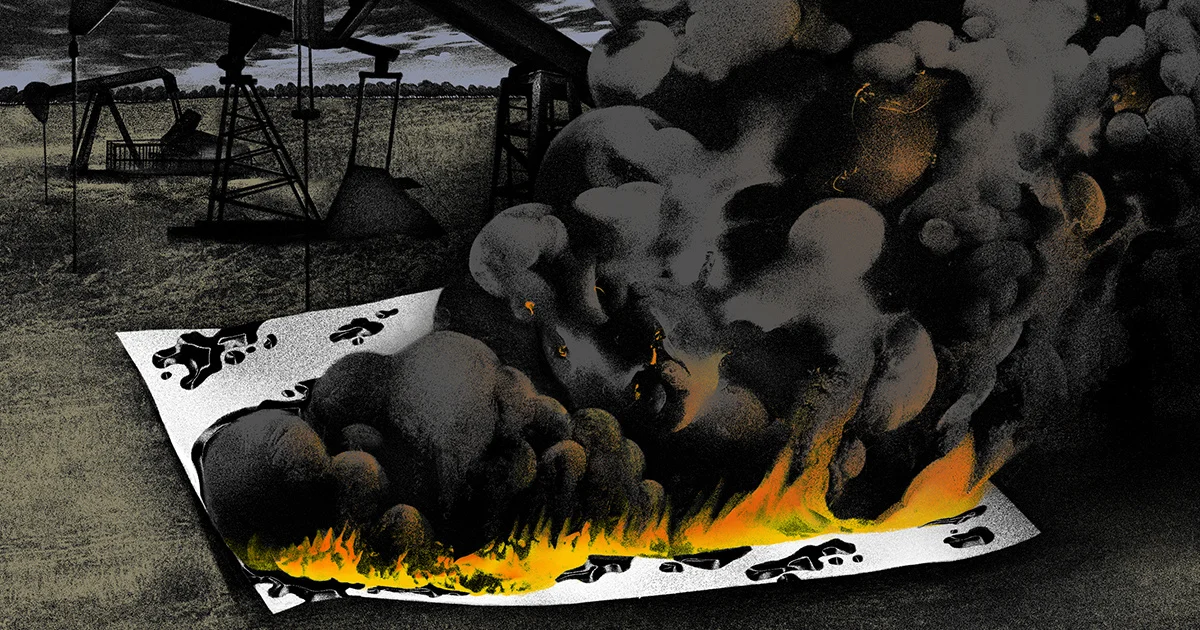
Five years ago, the Oklahoma Corporation Commission (OCC), the state’s primary oil and gas regulatory body, embarked on an ambitious initiative dubbed the "Source of Truth." This project aimed to create a comprehensive digital database for over 11,000 wells across Oklahoma responsible for injecting toxic oil production byproducts, primarily wastewater, back underground. Designed to consolidate and rectify critical data deficiencies, the project was intended to bring clarity to an opaque and often contradictory record-keeping system that had accumulated decades of paper-based information. However, a recent revelation indicates that despite uncovering a disturbing pattern of rule violations and systemic regulatory failures, the findings of this critical report were largely ignored by state officials, leading to escalating environmental consequences, including a surge in toxic wastewater "purges" and potential groundwater contamination.
The existence of the "Source of Truth" project had circulated within journalistic circles and agency communications for over 18 months, piquing the interest of reporters investigating a growing number of incidents where oilfield wastewater erupted from old wells after being injected at high pressures. These incidents, known as purges, had become increasingly frequent, signaling a deeper systemic issue within the state’s oil and gas infrastructure. Internal communications, obtained through numerous public records requests filed with the OCC, occasionally referenced the project, hinting at its potential significance. The full report, however, remained elusive until it unexpectedly surfaced in response to an unrelated records request just before the new year. Its contents proved explosive, detailing widespread non-compliance by oil and gas companies that state regulators had seemingly allowed to persist unchecked.
The Troubling Discoveries of the "Source of Truth"
The primary objective of the "Source of Truth" was to modernize and rectify the OCC’s notoriously messy data regarding wastewater injection volumes and pressures. Agency databases, many built upon aging paper records, were riddled with inconsistencies, missing entries, and un-updated information. The project successfully identified over 1,300 discrete data errors, confirming the dire need for a comprehensive overhaul. Yet, its findings extended far beyond mere data hygiene.
The report also allowed regulators to precisely identify nearly 600 injection wells operating in direct violation of state rules. These wells were injecting wastewater at pressures or volumes exceeding their permitted limits – a practice known to significantly increase the risk of purges and groundwater contamination. Elevated injection pressures can fracture the geological formations surrounding a well, creating pathways for wastewater to migrate unexpectedly, potentially reaching shallow aquifers used for drinking water or forcing its way to the surface through abandoned, unsealed wells.
Even more alarming was the discovery that the "Source of Truth" revealed more than 1,400 other older injection wells had been allowed to operate for decades without any limits whatsoever on injection pressures or volumes. These wells, representing a significant portion of the state’s active injection infrastructure, were "grandfathered in" under an earlier, more permissive era of regulatory oversight. This historical anomaly meant that a substantial number of wells, some still actively injecting millions of gallons of wastewater annually, were essentially operating in a regulatory vacuum, their potential environmental impact unmonitored and unconstrained by modern safety standards.
A Missed Opportunity: Regulatory Inaction and Escalating Purges
The completion of the "Source of Truth" in 2021 presented the Oklahoma Corporation Commission with a critical "fork-in-the-road" moment. Armed with an extensive list of potentially problematic wells – nearly a fifth of the active injection wells in the state – regulators had a clear mandate for action. Agency sources indicated that these wells warranted immediate scrutiny. However, despite the comprehensive nature of the report, OCC regulators reportedly failed to act on its findings. They did not compel oil and gas operators to adhere to their permitted injection limits, nor did they move to establish essential pressure and volume limits for the thousands of older, grandfathered wells to bring them up to modern safety standards. Furthermore, internal documents and agency sources confirm that the report was never made accessible to the wider agency staff, effectively burying its crucial insights.
The consequences of this inaction became starkly evident. In the period following the report’s completion, the number of oilfield purges across Oklahoma escalated dramatically. An analysis of pollution complaints submitted to the agency by The Frontier and ProPublica revealed a staggering increase from approximately a dozen purges in 2020 to over 150 incidents over the subsequent five years. These events saw toxic wastewater gushing to the surface, contaminating farmlands, polluting water sources, and posing significant environmental and public health risks.
As agency employees investigated these mounting pollution events, they frequently identified problematic wells whose details, unbeknownst to many of them, had already been flagged within the uncirculated "Source of Truth" report. The lack of internal communication and accessibility to the report meant that front-line investigators were repeatedly encountering issues that had already been systematically documented and analyzed by their own agency.
When questioned about the agency’s failure to act, Jack Money, an OCC spokesperson, offered a terse response: "The Oklahoma Corporation Commission looked into using the Source of Truth database in the past and elected not to use this form of data collection." He provided no explanation for this decision, nor did he address why regulators failed to enforce existing permit limits, establish new limits for older wells, or share the report internally. Follow-up questions went unanswered.
Historical Roots of Underregulation: The 1981 EPA Handover
The core problem identified by the "Source of Truth" – specifically the existence of thousands of injection wells operating without modern limits – traces its origins back to 1981. In that year, Oklahoma sought and received approval from the U.S. Environmental Protection Agency (EPA) to take over the primary regulatory authority for oil and gas injection operations within the state. This transfer of authority was contingent upon Oklahoma demonstrating that its proposed regulations would adequately protect groundwater, as mandated by the federal Safe Drinking Water Act of 1974. This landmark legislation had established fundamental standards for underground injection practices nationwide.
Prior to 1981, Oklahoma’s regulatory approach was significantly different. The state routinely approved large parcels of land for drilling, along with groups of associated injection wells, often used for "waterflooding" – a technique where wastewater, separated from crude oil, is injected underground to push more petroleum to the surface. To meet EPA requirements, Oklahoma proposed a new system: approving each injection well individually, and critically, setting a maximum pressure and volume for each to "prevent contamination of freshwater." These limits were designed to ensure that injected wastewater would not fracture surrounding rock formations and compromise groundwater integrity.
Oklahoma successfully gained EPA approval, becoming one of the pioneering states to assume direct control over underground oil and gas injection. Today, over 30 states exercise similar authority. However, a critical loophole emerged: Oklahoma did not retroactively apply its new, stricter standards to existing wells. Thousands of wells already in operation were allowed to continue injecting without any volume or pressure limits. The EPA, in turn, never compelled the state to apply these new standards retroactively.
Joseph Robledo, a spokesperson for the EPA regional office overseeing Oklahoma, explained that federal regulators’ hands appear to be tied by the language of the Safe Drinking Water Act itself. The act permits injection without limits to continue for "the life of the well," effectively grandfathering in older operations. Robledo acknowledged, "EPA acknowledges that because oil and gas activity began in Oklahoma long before the establishment of federal [underground injection] regulations, many wells in Oklahoma do not meet modern standards." He added that Oklahoma periodically submits reports to the EPA on its efforts to modernize its oil and gas inventory. However, investigations by this reporter consistently show that state regulators have not directly confronted the fundamental issue of these unregulated wells.
Expert Consensus on the Critical Need for Limits
Interviews with over half a dozen experts in oil and gas injection, including legal scholars and environmental advocates, revealed a shared astonishment at the sheer number of Oklahoma’s injection wells operating without volume and pressure limits. None of these experts had been aware of the scale of this grandfathering phenomenon. While some noted the federal law’s ambiguity regarding what states were permitted or required to do – the Safe Drinking Water Act explicitly prohibited states from interfering with pre-existing oil and gas operations unless they demonstrably endangered drinking water – the consensus was clear: responsible regulation demands such limits.
Because the state has never systematically investigated these wells, there is no definitive answer as to whether they currently threaten drinking water supplies. However, extensive reporting has already established a direct link between excessively high injection pressures and volumes and widespread pollution incidents across Oklahoma. The most recent state data indicates that a staggering 88% of the 1,400 wells identified by the "Source of Truth" as lacking pressure or volume limits are still listed as active, collectively injecting over a hundred million gallons of wastewater beneath the ground in the past year alone.
Establishing new pressure and volume limits for each of these wells would undoubtedly be a monumental undertaking, requiring the OCC to approve new permits for every single one. Yet, experts maintain that this is a non-negotiable aspect of responsible underground injection regulation. Adam Peltz, an attorney and director of the energy office for the Environmental Defense Fund, an advocacy nonprofit, emphasized, "Pressure and volume limits are key to ensure that injection wells aren’t, first and foremost, endangering groundwater, but also to prevent bad outcomes like earthquakes and purges." The absence of such fundamental controls represents a significant regulatory blind spot, leaving both the environment and public health vulnerable.
Problematic Wells and the Carter County Purges
The direct correlation between the unaddressed findings of the "Source of Truth" and real-world pollution became painfully clear in the years following its completion. A particularly severe series of purges ravaged a rural area of Carter County in south-central Oklahoma. Starting in 2021, massive volumes of toxic wastewater erupted from the ground, persisting for months and causing extensive environmental damage.
An internal email chain from August 2022, discussing the agency’s response to these ongoing wastewater eruptions, highlighted the profound impact of the "Source of Truth" being withheld. One environmental supervisor lamented that the report "could have been a tremendous help" to his team as they struggled to evaluate the injection wells near the purges – but they simply did not have access to it. This anecdote underscores the tangible cost of the OCC’s decision to sideline its own comprehensive findings.
Subsequent analysis, conducted by this reporter after obtaining the "Source of Truth" documents, cross-referenced the problematic wells identified in the report with locations of recent purges. This revealed at least 30 matches, indicating that wells flagged as potentially dangerous by the "Source of Truth" were indeed located near subsequent wastewater eruptions. Had the agency proactively investigated these identified problem wells to assess the subsurface spread of wastewater, it might have been able to pinpoint and mitigate risks in several oilfields where over-pressurized injection later led to catastrophic purges.
Broader Implications and Future Outlook
In theory, the EPA retains the authority to compel Oklahoma to improve its regulation of oil and gas injection, especially if federal officials determine that the state’s wells are systematically threatening groundwater. While such interventions are rare, there is precedent. In California, for instance, federal officials collaborated on an audit of the state’s oilfield wastewater injection policies in 2011, which found significant failures in aquifer protection. This led to a joint state and federal plan to overhaul California’s underground injection regulations. However, no state has ever had its oversight of oil and gas injection revoked entirely.
Under the current political climate, particularly under an administration that has shown a tendency to loosen environmental regulations, similar scrutiny in Oklahoma from the EPA appears unlikely. Robledo, the EPA spokesperson, did note that certain circumstances would legally require Oklahoma to impose limits on these old wells, specifically when they are contaminating drinking water or violating other state rules. Yet, the fundamental dilemma remains: state regulators cannot ascertain if these wells are contaminating drinking water if they do not conduct the necessary investigations.
When confronted with questions about whether state regulators would finally address the multitude of wells still injecting under outdated regulations – a situation created four decades ago and glaringly highlighted by their own "Source of Truth" report – the Oklahoma Corporation Commission offered no response. The silence from state regulators leaves thousands of wells operating under a cloud of uncertainty, while the environmental and public health risks continue to mount across Oklahoma’s oilfields. The buried "Source of Truth" report stands as a stark testament to a profound regulatory failure, leaving the state vulnerable to ongoing and preventable pollution.



 Joko Widodo
 Jia Lissa
 Pevita Pearce
 admin
admin