
 Yuyun Lusiyani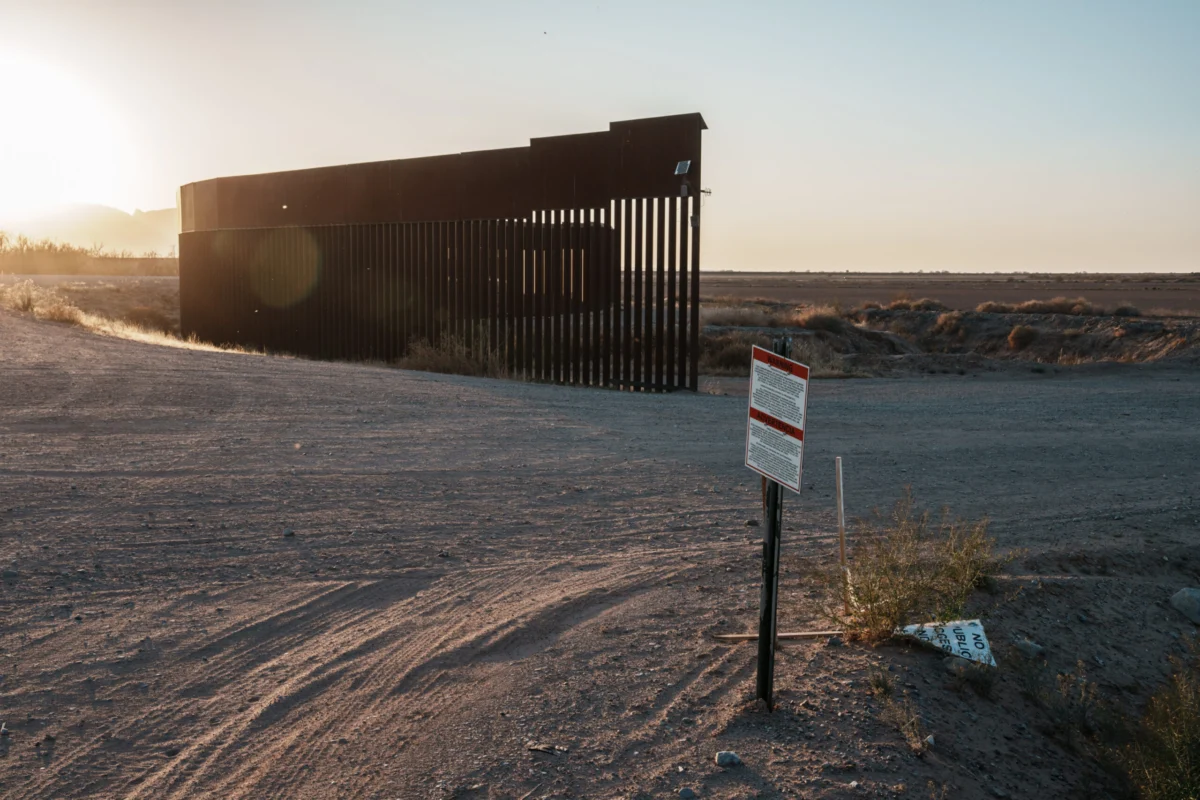
Federal courts across the U.S.-Mexico border are facing an unprecedented surge in immigration-related litigation, particularly misdemeanor charges accusing migrants of trespassing on military property. This controversial legal strategy, initiated during the Trump administration, has drawn sharp criticism from judges, legal scholars, and former prosecutors, who decry it as a strain on the judicial system and a fundamental challenge to established principles of criminal law, including the requirement of proving criminal intent.
The human cost of this policy is starkly illustrated by cases like that of Jose Omar Flores-Penaloza. In the spring of 2025, Flores-Penaloza, having entered the United States without authorization, was prepared for deportation, an outcome his attorneys confirmed he was willing to accept. However, federal prosecutors in New Mexico refused to allow his swift removal. Instead, they levied an additional, unexpected charge against him: trespassing on military property – a crime he claimed he had never heard of, let alone intentionally committed. This new charge stemmed from a presidential order issued weeks earlier by then-President Donald Trump, who, citing a "national emergency" at the border, had transferred significant stretches of borderland to military control. These areas were then designated "national defense areas," and anyone crossing them, prosecutors argued, was subject to a statute enacted in 1909 originally intended to deter spies from military arsenals.

The added misdemeanor counts, typically resulting in time served and deportation, were unlikely to significantly extend Flores-Penaloza’s overall sentence. Yet, the allegation carried a graver implication, potentially casting him as a national security threat. Maintaining his innocence against this unexpected charge, Flores-Penaloza was compelled to await trial, languishing for over a month in a New Mexico jail. This jail, notorious for its conditions, had faced accusations of guards threatening inmates with Tasers and deploying flash-bangs in sleeping areas, allegations the county has partially disputed while acknowledging the use of "specialized equipment."
The Genesis of a Controversial Policy
The policy to designate parts of the border as "national defense areas" emerged from a broader push by the Trump administration to militarize the southern border and enhance enforcement against unauthorized migration. In April 2025, under President Trump’s directive, federal agencies, including the Department of the Interior, transferred over 200 miles of diverse terrain – from riverbanks to desert scrub – in West Texas and New Mexico to the armed forces. This conversion effectively extended existing Army installations, aiming to provide a "workaround" to the Posse Comitatus Act, a federal law generally prohibiting the use of the military for domestic law enforcement purposes. By reclassifying these areas as military bases, troops could, in theory, apprehend "intruders" on their own property.

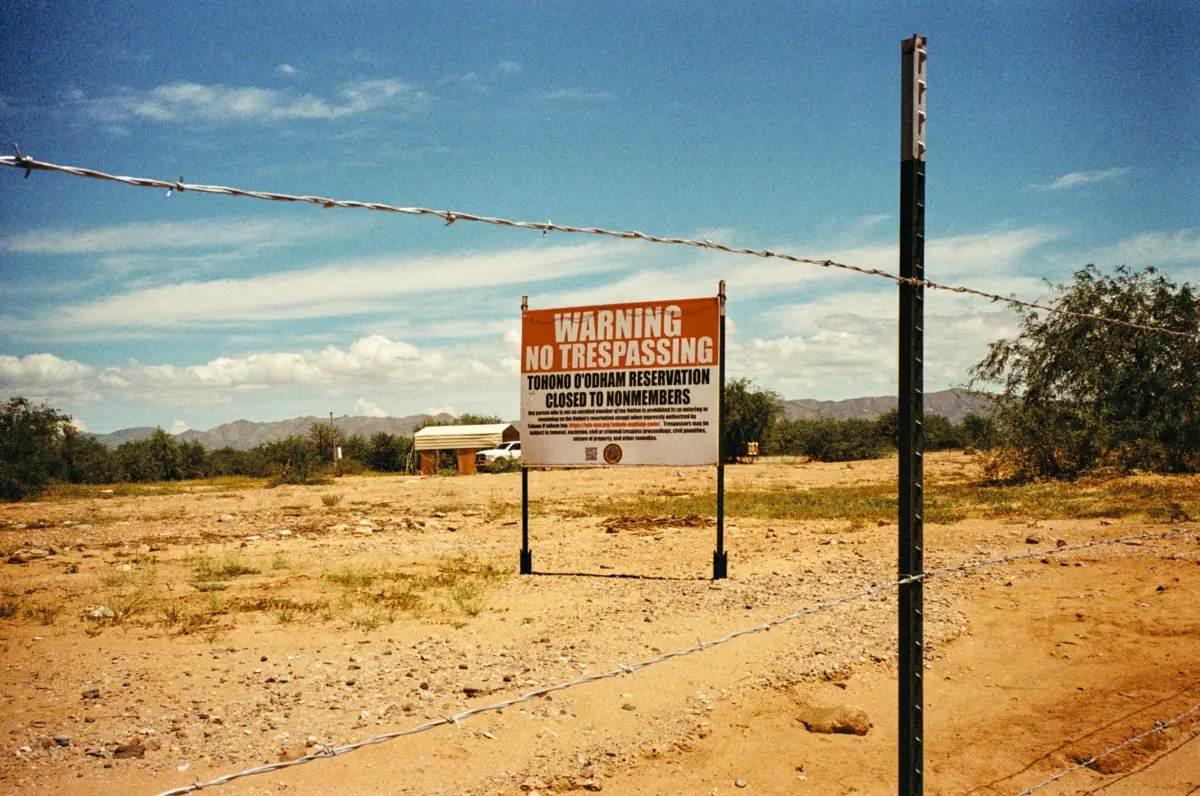
Defense Secretary Pete Hegseth, addressing troops deployed to one of these newly created national defense areas, suggested that clear signage would provide sufficient notice to anyone entering. He stated that signs were posted "all across the border wall facing into Mexico — clear English, clear Spanish." This assertion, however, would soon be challenged repeatedly in courtrooms.
Judicial Resistance and the Challenge of Mens Rea
The "clarity" touted by the administration evaporated rapidly once these cases entered federal courts. Migrants consistently testified that they had not seen any signs and had no knowledge that they were crossing military land. Prosecutors frequently struggled to present counter-evidence. An investigation by ProPublica and The Texas Tribune, spanning four months and reviewing extensive court records, revealed critical evidentiary gaps. For instance, out of 1,300 New Mexico district court records detailing apprehension locations relative to signs, the news organizations found that some migrants were arrested more than 20 miles away from any posted warning. A significant majority did not come within 1,000 feet of a sign, and in at least one Texas case, defense attorneys demonstrated the illegibility of the 12-by-18-inch signs even from a mere 10 feet away.

The core legal contention revolved around the principle of mens rea, Latin for "guilty mind," which requires proof of criminal intent for most offenses. Federal judges, particularly in West Texas and New Mexico, repeatedly ruled that without evidence that migrants knew they were trespassing on military land, a conviction for military trespass was legally deficient. Nine judges, at minimum, in these border districts found the prosecutions lacking.
In a pivotal moment during Flores-Penaloza’s bench trial on June 17, 2025, Chief Magistrate Judge Gregory Wormuth confronted prosecutors with their inability to pinpoint the exact crossing location or provide a clear map of the military zone. Assistant U.S. Attorney Randy Castellano ultimately conceded, "I also don’t dispute that we don’t meet the mens rea requirement the court has indicated in a prior opinion." Judge Wormuth, who had already dismissed dozens of similar charges, expressed his frustration, noting Flores-Penaloza’s 40-day detention primarily due to the unproven allegation. "The United States has come in here and put not a single bit of evidence that would allow me to find that he even entered the national defense area," Wormuth declared, finding it "very, very disturbing." He acquitted Flores-Penaloza of the trespass counts but found him guilty of illegal entry, leading to his deportation.
Despite these judicial setbacks, federal prosecutors continued to file these charges and appeal adverse rulings. They argued that simply knowing one was crossing the border illegally was sufficient to prove criminal intent for military trespass, a legal interpretation that has been widely contested. More than 20 legal scholars and former prosecutors consulted by ProPublica and The Texas Tribune stated they could not identify any conventional law-enforcement or military objective that would justify such persistent and legally tenuous prosecutions.

The Strain on the Justice System
The relentless pursuit of these charges has placed an immense strain on the federal judicial system in border regions. Federal courts, already dealing with a record number of immigration-related habeas petitions from detainees challenging their lawful custody, found their dockets increasingly overwhelmed.
In June 2025, West Texas District Judge Leon Schydlower questioned a prosecutor about the practicality of the policy during a hearing. "We would do jury selection and trial on a misdemeanor case that would have no bearing on the sentence whatsoever?" he asked, pointing out that his docket contained approximately 40 similar cases. When asked what would happen if all trials were scheduled on the same day, Assistant U.S. Attorney Patricia "Patti" Aguayo, prefacing her remark by stating she had "no choice in the matter," replied, "We would have to be prepared to move to go forward on all 40, Your Honor. We have not been allowed to do anything but move forward."

This unwavering prosecutorial stance was attributed to a directive issued in February 2025 by Attorney General Pam Bondi, mandating "zealous advocacy" of the administration’s priorities. The directive reportedly warned attorneys that declining to advance these priorities could lead to discipline or termination.
Senior officials in the U.S. attorney’s offices involved in these trespass cases largely declined interview requests, with one spokesperson even asking reporters to cease direct contact with prosecutors. A Justice Department spokesperson, while acknowledging that one of the trespass charges carries a longer potential sentence, claimed the prosecutions had "proven to be a significant deterrent to both illegal crossings and cartel activity along the border." However, the department provided no supporting documentation for this claim.
An Unprecedented Tactic: Reviving Dismissed Cases

In New Mexico, judges began dismissing trespass charges for lack of probable cause shortly after their initial filing. In response, prosecutors employed an unusual maneuver: they refiled these cases using an "information," a charging document typically used for misdemeanors but, according to legal experts, rarely deployed to revive cases that judges had already deemed unsupported by probable cause. ProPublica and The Texas Tribune found that prosecutors used this tactic to resurrect over 1,600 military trespass cases.
Meghan Skelton, a former assistant federal public defender and prosecutor, called this practice unprecedented. "If there is no probable cause, the case is supposed to end," she stated. "They are trying to circumvent that in a way that has not been done in the 30 years I’ve been practicing law."
This led to what one defense attorney described as a "ridiculous dance." Judges would bifurcate the immigration and trespass charges, accept guilty pleas for illegal entry, and reiterate that no probable cause existed for the military counts. With deportation imminent, prosecutors would then move to dismiss the trespass charges themselves, having effectively prolonged the detention and judicial process without securing a conviction on the military charge.

Voices of Dissent and Broader Implications
The aggressive pursuit of these cases alarmed many, including former federal prosecutors. Marisa Ong, a former assistant U.S. attorney in Las Cruces, voiced concerns about the erosion of trust. "You’re just losing credibility with the court, and on a bigger picture, credibility with the public," she remarked. Matilda "Tilli" Villalobos, a decorated former sex crimes prosecutor, left her position in the U.S. attorney’s office in Las Cruces in February 2025, precisely to avoid advocating for policies she considered legally dubious. "I don’t want to be the one standing up in court in front of a judge advocating for something that I don’t believe is even legal," she explained, now working in immigrant defense.
Alex Uballez, who served as U.S. attorney in New Mexico before his termination by the Trump administration in 2025, characterized the prosecutions as a "flustering attempt to create fear and chaos by whatever means necessary." He added, "It would be laughable if it wasn’t so cruel and chaotic and dangerous, both for the people involved and for the justice system as a whole."

Despite the significant judicial pushback and high dismissal rates – court records show that over 90% of the 4,700 cases have been resolved, with about 60% of the trespass charges dropped or dismissed – the administration continued to expand these zones from California to Texas. In January 2026, prosecutors began filing military trespass charges in South Texas, starting with a man caught crossing the Rio Grande in an area now designated an extension of Joint Base San Antonio. Along this stretch of the river, warnings of prosecution are broadcast in Spanish from loudspeakers audible in Mexico and displayed on floating buoys.
Border Patrol agents, such as then-interim El Paso Sector Chief Walter Slosar, indicated in June 2025 that migrants detained in national defense areas are asked to sign forms acknowledging unauthorized entry, to be placed in their immigration files. This, he stated, would eliminate any "issue" regarding notice should they re-enter. In New Mexico, prosecutors have leveraged these signed acknowledgments and previous trespass charges to secure 20 guilty pleas from defendants who re-entered the country. However, the overall analysis of court records confirms that nearly every initial trespassing charge in the state has been dismissed or dropped.
The Justice Department remains unyielding in its legal theory, consistently pressing appeals. In May 2025, prosecutors filed trespass charges against Komiljon Toirov, an Uzbek national detained in New Mexico who understood neither English nor Spanish, rendering posted warnings entirely ineffective. Prosecutors insisted that his lack of comprehension was irrelevant and sought his detention for trial, but a judge ordered his release. For months, prosecutors have fought this decision, with the case bouncing between the district court and the 10th U.S. Circuit Court of Appeals. Judges have openly bristled at the government’s persistence. U.S. District Judge Sarah Davenport wrote in October 2025, "The defense bar and every judge in the Las Cruces district courthouse disagrees with the government." A three-judge appellate panel in December 2025 noted that prosecutors had produced "little to no evidence" to support their case for jailing Toirov. Undeterred, the government has announced plans to appeal again, seeking a higher court ruling to affirm its argument that knowledge of the military zone is not required for a trespass conviction. "We remain confident that our interpretation is consistent with the law and U.S. Supreme Court precedent," a Justice Department spokesperson affirmed.

Ryan Goodman, a national security law professor at New York University, characterized the government’s persistence as "jaw-dropping." He stated in an email, "It appears to be prosecutorial abuse by continuing to bring fatally flawed cases. This kind of abuse of the Justice Department’s powers has very significant repercussions for the ability of our democracy to survive."
Meanwhile, the El Paso courthouse has settled into a new, disquieting routine. Many mornings see shackled migrants pleading guilty to military trespass charges, often choosing this path rather than enduring prolonged jail time awaiting trials that are likely to be dismissed anyway. Occasionally, this routine is disrupted. On November 3, 2025, Brandon David Munoz-Luna, a young man, spoke up during his plea hearing, stating through an interpreter, "In my case, I did not know that I was entering a military reservation." Federal Magistrate Judge Robert Castañeda turned to Assistant U.S. Attorney Adrian Gallegos, asking, "Does the government insist on making this a charge you’re pursuing?" Gallegos replied simply, "Yes, Judge. Pursuant to DOJ policy." Minutes later, Munoz-Luna entered a plea of no contest, and the court moved on, another testament to the enduring, contentious legal battle at the U.S.-Mexico border.



 Joko Widodo
 Eva Lovia
 Pevita Pearce
 admin
admin
 Lina Irawan