Nana Wu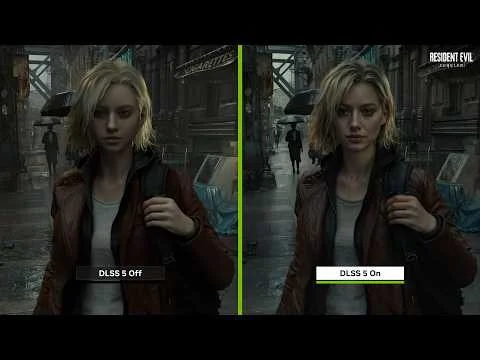
The recent unveiling of NVIDIA’s forthcoming DLSS 5 technology has ignited a fervent and polarized discussion across the video game industry and its surrounding communities. While AI and machine learning have been integral to previous iterations of NVIDIA’s Deep Learning Super Sampling (DLSS) technology, the introduction of "neural rendering" in DLSS 5, which utilizes machine learning to dynamically alter lighting, environmental details, and character rendering on top of 2D image output, has pushed these debates to a new intensity. This advanced technique, demonstrated in a widely circulated video, has prompted widespread criticism concerning artistic intent, potential job displacement, and the very nature of visual fidelity in digital entertainment.
The Genesis of the Controversy: A Technological Leap and its Reception
NVIDIA’s DLSS technology has long aimed to enhance gaming performance and visual quality by intelligently upscaling lower-resolution images to higher resolutions. DLSS 2 and DLSS 3, released prior to DLSS 5, already incorporated AI for tasks such as pixel reconstruction and frame generation. However, DLSS 5 represents a significant evolution, introducing neural rendering capabilities. This new feature leverages machine learning models to analyze and modify visual elements in real-time, aiming to produce more realistic and dynamic lighting, richer environmental detail, and improved character models.
The demonstration video, showcasing DLSS 5’s capabilities by enhancing visuals in existing game environments, was met with an immediate and often impassioned backlash. Critics quickly voiced concerns that this AI-driven reinterpretation of game visuals could fundamentally alter the artistic vision of game developers. The debate quickly escalated, encompassing fears of job losses for artists and technical personnel within the game development pipeline, and even, regrettably, extending to reports of death threats directed at NVIDIA employees – a sentiment widely condemned as unacceptable and counterproductive to constructive discourse.
Deconstructing the Backlash: Key Arguments and Counterpoints
The criticisms leveled against DLSS 5 can be broadly categorized into several key themes, each deserving of careful examination.
The "Get AI Out of My Games" Stance
A prominent, though arguably less nuanced, argument posits a complete rejection of AI in video games. This perspective often stems from a desire to preserve what is perceived as a purer form of digital art, free from algorithmic intervention. However, as noted by industry observers and the author of the original analysis, this stance overlooks the fact that AI and machine learning are not novel introductions to DLSS. Their application in pixel reconstruction and frame generation has been a reality for several years.
The core of the debate, therefore, shifts from the presence of AI to its application. Proponents of this viewpoint argue that while AI has been a tool, DLSS 5’s neural rendering represents a more profound level of algorithmic influence, potentially stepping beyond enhancement into reinterpretation. This raises questions about the long-term trajectory of game development and the role of human creativity in a landscape increasingly shaped by artificial intelligence.
Conversely, a more pragmatic perspective, echoed by industry analysts, suggests that AI is an inevitable and potent tool in the evolution of technology, including gaming. The conversation, from this viewpoint, should not be about whether AI should be used, but rather how it can be integrated ethically and beneficially. The potential for AI to lower barriers to entry for independent game developers, fostering a more diverse and vibrant indie scene, is often cited as a significant upside. This perspective contends that dogmatic opposition to AI is ultimately untenable, as the technology’s integration is already well underway.
The "Overriding Artistic Intent" Concern
A central pillar of the backlash revolves around the perceived threat to artistic intent. Critics argue that DLSS 5’s AI-driven modifications could distort or overwrite the original creative vision of game developers and artists. This concern is amplified by the fact that AI models, trained on vast datasets, may develop their own interpretations of aesthetics, potentially diverging from the precise intentions of human creators.
NVIDIA has emphasized that DLSS 5 is designed with customizable options and sliders for developers, allowing them to control and integrate the technology according to their artistic goals. This suggests a level of developer agency, implying that the implementation of DLSS 5 is a conscious choice, not an imposition. The approval of DLSS 5 integrations by studios for demonstrative purposes, as reported by outlets like Digital Foundry, underscores that the showcased enhancements were vetted and sanctioned by the game’s owners.
However, the ethical implications extend beyond explicit developer approval. The question arises whether the consent of the entire development team, including individual artists, is adequately addressed when a GPU reinterprets game visuals through a neural model. Furthermore, the timing of DLSS 5’s introduction, amidst significant pressure and cost-cutting within the triple-A gaming sector, has fueled anxieties that such technologies could exacerbate job insecurities.
From a legal and contractual standpoint, game developers and publishers typically hold ownership of their intellectual property. This grants them the latitude to implement technologies like DLSS 5, provided it does not breach specific work-for-hire agreements or contractual stipulations with individual artists. The argument is made that while artists may have valid concerns about their work being reinterpreted, these issues are best addressed through robust contract negotiations and language. The broader implication is that video games, as a medium of art, are subject to evolving technological interpretations, and optional enhancements like DLSS 5, when implemented with developer buy-in, do not inherently equate to an overriding of artistic intent.
Aesthetic Criticisms: "Yassification" and the Uncanny Valley
A significant portion of the public reaction focused on the visual output of DLSS 5, with some critics describing the rendered faces as "yassified" (a term often associated with AI-generated images that enhance features to an idealized, sometimes artificial, degree) or falling into the "uncanny valley." This phenomenon, where artificial representations of humans are nearly, but not perfectly, realistic, can evoke feelings of unease or revulsion.
This critique, however, is largely subjective and open to debate. While some viewers experienced negative aesthetic reactions, others, including the original author, reported a positive or neutral response to the demo’s visual enhancements. The inherent limitations of a technology demonstration, which typically showcases optimized scenarios and carefully selected visuals, must also be considered. The true test of DLSS 5’s aesthetic performance will lie in its consistent application across diverse gameplay scenarios and its ability to avoid visual artifacts or inconsistencies.
Furthermore, the comparison to visual mods in games like Starfield and Skyrim highlights a precedent for player-driven aesthetic alterations. If players are generally accepting of mods that modify character models and environments to enhance their personal connection with a game, then the introduction of an optional, developer-sanctioned enhancement like DLSS 5, which aims for similar improvements, should perhaps be viewed within a similar context. The expectation is that players and developers will have agency in deciding how these technologies are implemented and perceived.
Hardware Demands: A Barrier to Entry?
Concerns have also been raised regarding the potential hardware demands of DLSS 5. The advanced nature of neural rendering could necessitate significantly more powerful GPUs, potentially limiting its accessibility to a wider audience. NVIDIA, as a hardware manufacturer, has a vested interest in ensuring its technologies are compatible with its product ecosystem. The development and release strategy for DLSS 5 will likely aim to strike a balance between pushing the boundaries of visual fidelity and maintaining a reasonable level of accessibility for gamers. It is improbable that NVIDIA would invest heavily in a technology that is fundamentally unusable by its target market.
Towards a Balanced Conversation: Implications and Future Outlook
The polarization surrounding DLSS 5 underscores a broader societal and industry-wide reckoning with the accelerating capabilities of artificial intelligence. While fears of job displacement and the erosion of artistic integrity are valid and warrant serious consideration, a purely dogmatic rejection of AI in gaming overlooks its potential to democratize game development, enhance player experiences, and push the boundaries of digital art.
As the technical details of DLSS 5 continue to emerge, including clarifications on its 2D rendering input and motion vector utilization, a more informed and nuanced discussion can take place. The technology is still in its nascent stages of public demonstration, and feedback from developers and the gaming community will be crucial in shaping its final implementation.
The implications of DLSS 5, and AI in gaming more broadly, are far-reaching. It raises fundamental questions about the definition of authorship in a co-creative process involving humans and machines, the economic structures of the gaming industry, and the evolving aesthetics of digital entertainment. Whether DLSS 5 ultimately proves to be a transformative advancement or a flawed experiment remains to be seen. However, a constructive dialogue, grounded in fact and respectful of diverse perspectives, is essential for navigating this complex technological frontier. The gaming market itself will ultimately decide the success or failure of such technologies, but the current hand-wringing, while understandable, appears largely speculative at this juncture.




 Lina Irawan
 Jia Lissa
 Yuyun Lusiyani
 Joko Widodo
 Eva Lovia