Pevita Pearce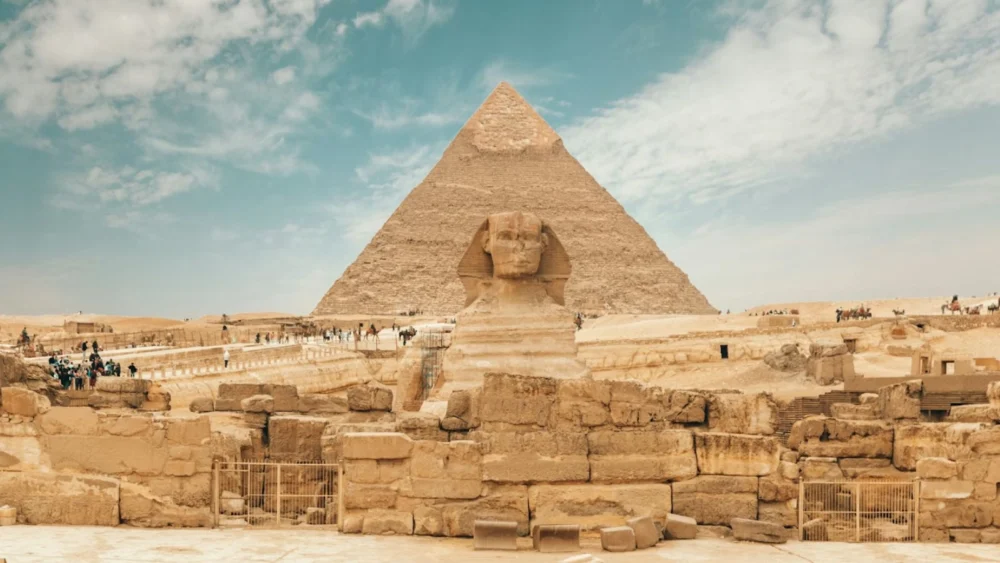
The Egyptian Ministry of Interior confirmed the arrest of a licensed tour guide following a widely circulated video that showed the individual scratching drawings into the ancient masonry of the Giza Plateau. The incident, which has sparked significant public outcry and a swift response from heritage officials, underscores the ongoing challenges of balancing tourism access with the preservation of the world’s most iconic archaeological site. According to official statements, the guide was observed using a sharp object to etch diagrams onto the outer casing stones of one of the pyramids—the last remaining Wonder of the Ancient World—as a visual aid for his tour group. When the guide realized he was being filmed or perhaps recognized the impropriety of his actions, he reportedly attempted to rub the markings off, potentially causing further abrasion to the millennial-old limestone.
Details of the Incident and Official Response
The controversy began when a bystander captured footage of the guide’s actions and uploaded the clip to various social media platforms. The video quickly went viral, drawing the attention of both the Egyptian public and international heritage advocates. In the footage, the guide is seen gesturing toward the base of the pyramid while applying a marking tool to the stone surface. The Egyptian Ministry of Interior subsequently released a statement on the social media platform X (formerly Twitter), confirming that the individual had been apprehended.
"The accused person was successfully apprehended, and when confronted, he confessed to committing the incident as described," the Ministry’s statement read. The report further noted that the "competent authorities" had already moved to remediate the site, successfully removing the drawings under the supervision of an antiquities inspector. While the physical marks were removed, the Ministry emphasized that the act constituted a "damage" to the historical site, leading to immediate legal measures. Under Egyptian law, the protection of antiquities is a matter of national security and cultural pride, and the legal framework provides for stringent penalties for those who deface or endanger historical monuments.
Chronology of the Event and Subsequent Legal Action
The timeline of the incident reflects the speed with which digital evidence now influences law enforcement in heritage zones. The act occurred during a standard daytime tour session at the Giza Plateau. Within hours of the video’s publication, the Ministry of Tourism and Antiquities received a formal report from a local antiquities inspector who had been alerted to the digital evidence.
Following the report, the Ministry of Interior’s specialized tourism police launched an investigation to identify the guide. By the following day, the individual was in custody. During interrogation, the guide reportedly claimed that his intentions were educational rather than malicious, asserting that he was attempting to explain the structural engineering or historical context of the pyramid to his clients. However, the Egyptian government maintains a zero-tolerance policy toward any physical contact that alters the state of the monuments, regardless of intent.
The guide now faces potential revocation of his professional license by the Syndicate of Tourist Guides, in addition to criminal charges. The Syndicate, which governs the conduct of thousands of professionals in Egypt’s vital tourism sector, has historically been proactive in distancing itself from members who violate the ethical and legal codes designed to protect Egypt’s "soft power" assets.
The Legal Framework: Law No. 117 of 1983
Egypt’s commitment to preserving its ancient heritage is codified in Law No. 117 of 1983, also known as the Law on the Protection of Antiquities. This legislation, which has been amended several times to increase penalties, classifies all antiquities as public property. According to the law, anyone who "intentionally defaces, damages, or destroys an antiquity" can face rigorous imprisonment and substantial fines.
Recent amendments have significantly increased the stakes for such behavior. In some cases, unauthorized excavation or the smuggling of artifacts can lead to life imprisonment. While defacing a monument with a drawing may result in a less severe sentence, the precedent set by the Ministry in this case suggests that they intend to use the incident as a deterrent. The law also stipulates that any person working within the tourism industry, such as guides or site guards, is held to a higher standard of accountability due to their role as custodians of the sites.
The Fragility of Limestone and Restoration Efforts
The Great Pyramid of Giza was originally encased in smooth, white Tura limestone, which would have reflected the sun’s rays with brilliant intensity. Over millennia, much of this casing was stripped away for use in other building projects, leaving the core steps exposed. The remaining casing stones at the base are particularly vulnerable to environmental degradation and human interference.
Archaeological experts point out that limestone is a porous and relatively soft sedimentary rock. Scratching the surface not only removes the "patina"—the protective layer that forms over centuries of exposure—but also creates micro-fissures where moisture and pollutants can collect, accelerating the erosion process. The act of "rubbing off" the markings, as the guide attempted to do, can be equally damaging, as the friction can wear down the stone and alter its original texture.
The restoration team dispatched by the Ministry used specialized chemical and mechanical cleaning methods to ensure the markings were removed without further compromising the stone’s integrity. This process involves identifying the substance used (chalk, stone-on-stone, or ink) and applying the least invasive solvent or micro-abrasion technique possible.
Tourism Statistics and the Economic Importance of Heritage
Egypt’s economy is deeply intertwined with its archaeological treasures. In 2023, Egypt welcomed approximately 14.7 million tourists, a record-breaking figure that generated billions of dollars in revenue. The Giza Plateau remains the primary draw for international visitors. The Egyptian government has invested heavily in the "Great Gem" project, which includes the construction of the Grand Egyptian Museum (GEM) and the revitalization of the Giza Plateau infrastructure.
Incidents of vandalism or disrespect toward these sites are viewed not just as cultural crimes, but as threats to the national economy. A tarnished reputation for site management can deter high-value tourism and complicate Egypt’s relationship with international bodies like UNESCO, which designates the Giza Necropolis as a World Heritage Site.
High-Profile Access and the Contrast in Regulation
The arrest of the tour guide stands in stark contrast to the highly regulated and often expensive access granted to celebrities and media figures. Recently, YouTube personality MrBeast was granted permission to film at the Pyramids of Giza for 100 hours in early 2025. Such projects involve extensive permitting, the payment of significant fees to the Ministry of Tourism and Antiquities, and constant supervision by government monitors to ensure no damage occurs.
MrBeast also revealed that he had explored the possibility of recording a podcast with Joe Rogan atop the Great Pyramid. However, due to the strict prohibition against climbing the monuments—a rule enacted to prevent erosion and ensure visitor safety—the plan would have required helicopter transport and extraordinary logistical permissions that ultimately did not materialize. "You can’t climb there," MrBeast noted in a subsequent interview, highlighting the rigid boundaries that even the world’s most famous creators must navigate.
These high-profile cases emphasize that while the pyramids are open to the world, they are not "public space" in the traditional sense. They are managed assets where every action is subject to state oversight. The guide’s decision to treat the pyramid as a chalkboard suggests a lapse in professional judgment that the Ministry is eager to correct through legal action.
Broader Implications: Digital Surveillance and Heritage Management
The role of social media in this incident cannot be overstated. In the past, minor acts of vandalism might have gone unnoticed by central authorities. Today, every tourist is a potential monitor. The proliferation of smartphones has created a global, real-time surveillance network that holds both tourists and professionals accountable.
This incident is likely to lead to several changes in how the Giza Plateau is managed:
- Enhanced Training: The Syndicate of Tourist Guides may implement mandatory "heritage ethics" workshops to reinforce the "no-touch" policy.
- Increased Surveillance: The Ministry has been steadily increasing the number of CCTV cameras and plainclothes security officers across the plateau.
- Public Awareness Campaigns: New signage and digital briefings for tourists may be introduced to emphasize the penalties for defacing monuments.
Conclusion: A Lesson in Stewardship
The arrest of the tour guide serves as a sobering reminder of the responsibilities that come with interacting with ancient history. As Egypt continues to modernize its tourism infrastructure, the tension between accessibility and preservation remains at the forefront of the national agenda. The Great Pyramids have survived for over 4,500 years, enduring war, weather, and the rise and fall of empires. The Egyptian government’s swift action in this case signals a commitment to ensuring that they are not undone by the casual negligence of the modern era.
For the international community, the message is clear: the monuments of Giza are not mere backdrops for photography or educational props, but irreplaceable fragments of human history that require the highest level of reverence. As legal proceedings against the guide move forward, the case will likely be cited as a definitive example of Egypt’s resolve to protect its past for the sake of its future.




 Jia Lissa
 Yuyun Lusiyani
 Joko Widodo
 Eva Lovia