
 Yuyun Lusiyani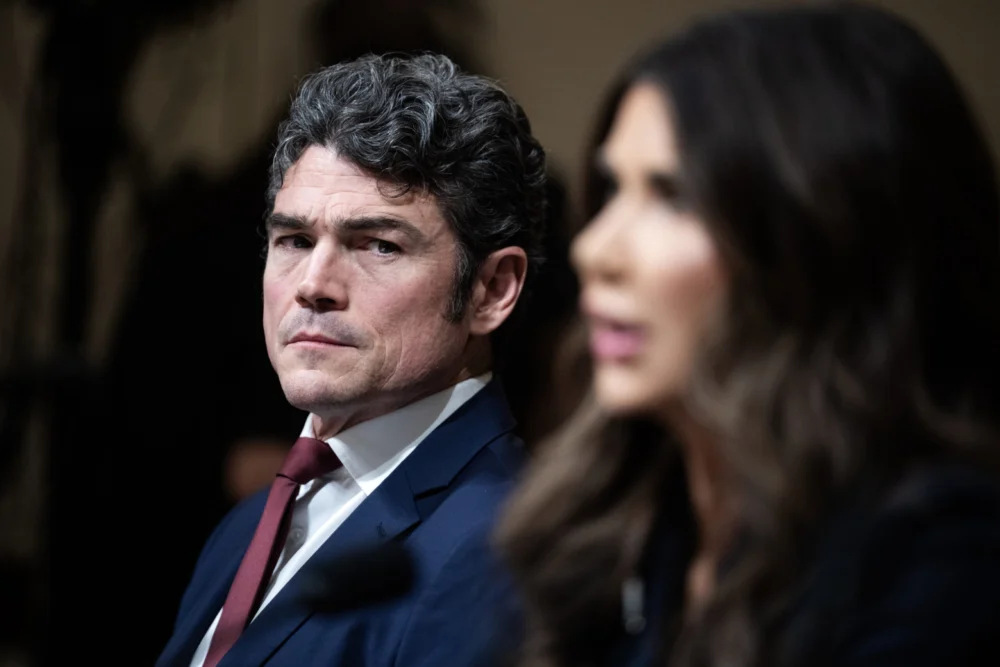
The Trump administration has quietly initiated a significant overhaul of long-standing federal protocols, loosening restrictions on the sharing of sensitive law enforcement information with the Central Intelligence Agency (CIA) and other intelligence agencies. This move, executed with minimal public acknowledgment or congressional notification, overrides controls that have been in place for decades, specifically designed to safeguard the privacy of U.S. citizens. Government officials familiar with the changes warn that they could grant intelligence agencies unprecedented access to a vast database containing hundreds of millions of documents, ranging from FBI case files and banking records to criminal investigations of labor unions, many of which touch upon the activities of law-abiding Americans.
A Sweeping Shift in Information Sharing
The core of this policy shift centers on providing intelligence agencies with enhanced access to investigations conducted by the Federal Bureau of Investigation (FBI), the Drug Enforcement Administration (DEA), and other federal agencies. Administration officials justify these changes as critical to combating drug gangs and other transnational criminal groups, which the administration has controversially classified as terrorist organizations. However, critics inside and outside the government argue that the process has been marked by a stark lack of transparency, with scant high-level discussion and little debate among government lawyers.
"None of this has been thought through very carefully — which is shocking," an intelligence official commented, expressing deep concern over the expanded information sharing. "There are a lot of privacy concerns out there, and nobody really wants to deal with them."
Olivia Coleman, a spokesperson for the Office of the Director of National Intelligence (ODNI), declined to address specific questions regarding the expanded information sharing or its legal underpinnings. Instead, she referred to recent public statements by senior administration officials, including one by the National Intelligence Director, Tulsi Gabbard. Gabbard had emphasized the importance of "making sure that we have seamless two-way push communications with our law enforcement partners to facilitate that bi-directional sharing of information," framing the initiative as an enhancement of national security capabilities.
Historical Context: A Legacy of Privacy Protections
The current restrictions on intelligence agencies gathering information about the domestic activities of U.S. citizens are a direct result of the post-Watergate era. Revelations in the 1970s that Presidents Lyndon Johnson and Richard Nixon had used the CIA to spy on American anti-war and civil rights activists triggered widespread outrage and fears of a secret police. This public outcry led to significant congressional reforms, including the establishment of the Church Committee and Pike Committee investigations, which ultimately reinforced a stringent ban on intelligence agencies operating domestically against American citizens.
Compared with the FBI and other federal law enforcement organizations, intelligence agencies traditionally operate with far greater secrecy and less scrutiny from Congress and the courts. They are generally permitted to collect information on Americans only as an ancillary part of foreign intelligence investigations, with exemptions requiring explicit approval from the U.S. Attorney General and the Director of National Intelligence. For instance, the National Security Agency (NSA) can intercept communications between individuals inside the United States and terror suspects abroad without the probable cause or judicial warrants typically required of law enforcement agencies.
Since the September 11, 2001, terror attacks, the expansion of surveillance authority in the fight against Islamist terrorism has been a subject of intense and often contentious debates across all three branches of government. However, these debates have typically centered on foreign intelligence collection, not the blurring of lines with domestic law enforcement data.
Alarm Bells Ring for Civil Liberties
News of the Trump administration’s efforts to broaden the sharing of law enforcement information with intelligence agencies has been met with significant alarm by advocates for civil liberties protections. Senator Ron Wyden of Oregon, a senior Democrat on the Senate Select Committee on Intelligence, voiced strong opposition in a statement to ProPublica.
"The Intelligence Community operates with broad authorities, constant secrecy and little-to-no judicial oversight because it is meant to focus on foreign threats," Sen. Wyden stated. He warned that giving intelligence agencies wider access to information on the activities of U.S. citizens not suspected of any crime "puts Americans’ freedoms at risk. The potential for abuse of that information is staggering."
Most current and former officials interviewed for this story spoke on condition of anonymity, citing the sensitivity of the matter and fear of retaliation for criticizing the administration’s approach. While virtually all expressed support for the goal of more effective information sharing, they emphasized that such efforts must safeguard sensitive investigations and citizens’ privacy. They contrasted the Trump administration’s rapid push with previous Republican and Democratic administrations, which, despite years of deliberation and limited progress on reforms, had weighed these considerations far more carefully.
Russell Travers, a former acting director of the National Counterterrorism Center (NCTC) who served in senior intelligence roles under both Republican and Democratic administrations, underscored the gravity of the situation: "There will always be those who simply want to turn on a spigot and comingle all available information, but you can’t just flip a switch — at least not if you want the government to uphold the rule of law."
The Post-9/11 Landscape and the NCTC’s Role
The 9/11 attacks starkly exposed the CIA’s failure to share critical intelligence with the FBI, even as Al Qaeda operatives moved within the United States. This intelligence failure led to a series of reforms aimed at transforming how the government managed terrorism information. A cornerstone of this effort was the establishment of the NCTC, created to collect and analyze intelligence on foreign terrorist groups. The statutes governing the NCTC explicitly prohibit it from collecting information on domestic terror threats, a distinction now seemingly under pressure.
While national security officials have focused heavily on terrorism, they have spent considerably less time addressing acknowledged deficiencies in managing intelligence on organized crime groups. In 2011, President Barack Obama issued a new national strategy to "build, balance and integrate the tools of American power to combat transnational organized crime." Though Obama’s plan stressed improved information-sharing, it resulted in only minimal changes.
President Donald Trump, however, has approached the issue with greater urgency, declaring his intention to eliminate "information silos" across the government and signing an executive order to that effect. More consequentially, he has designated over a dozen Latin American drug mafias and criminal gangs as terrorist organizations, using these classifications to justify more extreme measures. Since last year, this approach has reportedly led to the killing of at least 148 suspected drug smugglers with missile strikes in the Caribbean and eastern Pacific, actions many legal experts have denounced as violations of international law.
Controversial Terror Designations and Domestic Implications
Administration lawyers argue that these terror designations—such as those applied to the Sinaloa Cartel and the Jalisco New Generation Cartel—entitle intelligence agencies to access all law enforcement case files related to them. However, a key criterion for foreign terrorist organization (FTO) designation is that a group must "be a foreign organization." Unlike Islamist terror groups like al-Qaeda or al-Shabab, Latin American drug mafias and criminal gangs like MS-13 have a large and complex presence inside the United States, with members far more likely to be U.S. citizens who live and operate domestically.
Further extending these controversial designations, the Trump administration on September 22 designated the loosely organized antifascist political movement, Antifa, as a terrorist group, despite the absence of any federal law authorizing such a domestic designation. Weeks later, four European militant groups said to be aligned with Antifa were added to the government’s list of foreign terrorist organizations. These steps were viewed by some intelligence experts as potentially opening the door for the CIA and other agencies to monitor Americans who support Antifa, raising serious concerns about free speech rights. This approach echoes justifications used by Presidents Johnson and Nixon for domestic spying: that such investigations were needed to determine whether government critics were supported by foreign governments.

The Battle for the Compass Database
The wider sharing of law enforcement case files is also being propelled by the administration’s abrupt decision to dismantle the Justice Department office that, for decades, coordinated inter-agency efforts on major drug trafficking and organized crime cases. This office, the Organized Crime Drug Enforcement Task Force (OCDETF), was abruptly shut down on September 30. Its demise coincided with the establishment of a new network of Homeland Security Task Forces, designed by White House homeland security adviser Stephen Miller.
These new task forces, first detailed by ProPublica last year, are designed to refocus federal law enforcement agencies on what Miller and other officials describe as an alarming nexus of immigration and transnational crime. This reorganization also grants the White House and the Department of Homeland Security new authority to oversee transnational crime investigations, effectively subordinating agencies like the DEA and federal prosecutors who were central to the previous system.
This reorganization has ignited a fierce struggle for control over OCDETF’s most valuable asset: the Compass database. This repository, containing some 770 million records, is the federal government’s only central, searchable collection of drug trafficking and organized crime case files. Until now, access to Compass records was strictly governed by elaborate rules agreed upon by the more than 20 contributing agencies. While cumbersome, this system was seen as crucial for encouraging inter-agency cooperation while simultaneously protecting sensitive case files and U.S. citizens’ privacy.
Although the Homeland Security Task Forces assumed control of the Compass system when their leadership relocated to OCDETF’s former headquarters in suburban Virginia, the administration is still determining how the database will be operated. However, officials confirm that intelligence agencies and the Defense Department have already taken technical steps to connect their networks to Compass, positioning themselves to access its information if permitted. The White House press office did not respond to questions regarding the management of the Compass database or whether it would remain under the control of the Homeland Security Task Forces.
NCTC’s Aggressive Stance and Inter-Agency Conflict
Under its new director, Joe Kent—a former Army Special Forces and CIA paramilitary officer—the National Counterterrorism Center has been particularly forceful in seeking to manage the Compass system, according to several officials. Kent, previously a top aide to National Intelligence Director Tulsi Gabbard, has pushed for the NCTC to take a leading role.
The FBI, DEA, and other law enforcement agencies have strongly opposed this NCTC effort. In internal discussions, these agencies have argued that it makes no logical sense for an intelligence agency to manage sensitive information derived almost entirely from law enforcement operations. "The NCTC has taken a very aggressive stance," one official noted. "They think the agencies should be sharing everything with them, and it should be up to them to decide what is relevant and what U.S. citizen information they shouldn’t keep."
The FBI declined to comment on questions from ProPublica. A DEA spokesperson also refrained from discussing the agency’s actions or views on wider information sharing with the intelligence community, though a statement affirmed DEA’s commitment "to working with our IC and law enforcement partners to ensure reliable information-sharing and strong coordination to most effectively target the designated cartels."
Even with the Trump administration’s expanded definition of what constitutes terrorist activity, information on terror groups accounts for only a small fraction of the records within the Compass system, current and former officials attest. The database includes State Department visa records, U.S. Postal Service inspector files, years of suspicious transaction reports from the Treasury Department, and call records from the Bureau of Prisons. Importantly, investigative files from the FBI, DEA, and other law enforcement agencies frequently contain information about witnesses, associates of suspects, and other individuals who have never committed any crimes.
"You have witness information, target information, bank account information," explained Thomas Padden, the former OCDETF director. "I can’t think of a dataset that would not be a concern if it were shared without some controls. You need checks and balances, and it’s not clear to me that those are in place."
Officials privy to inter-agency discussions say NCTC and other intelligence officials insist they are solely interested in terror-related information and possess electronic systems capable of appropriately filtering out information on U.S. persons. However, FBI and other law enforcement agencies have challenged these arguments, contending that the NCTC’s proposal would almost inevitably breach privacy laws and imperil sensitive case information without necessarily strengthening the fight against transnational criminals. NCTC officials have already pressed the FBI and DEA to share all their information on designated terrorist criminal groups. The DEA, previously known for jealously guarding its case files, has authorized the transfer of at least some of these files, increasing pressure on the FBI to follow suit.
Legal Interpretations and Precedents
Administration lawyers cite the Intelligence Reform and Terrorism Prevention Act of 2004—the law that reorganized intelligence activities after 9/11—and the 2001 Patriot Act as authorizing such information sharing. The Patriot Act, for instance, grants law enforcement agencies the power to obtain financial, communications, and other information on a subject they certify as having ties to terrorism. However, the central role of the NCTC in collecting and analyzing terrorism information specifically excludes "intelligence pertaining exclusively to domestic terrorists and domestic counterterrorism." Critics argue that Kent and Gabbard are stepping over "red lines" that their predecessors carefully avoided.
Indeed, in October, Kent drew sharp criticism from the FBI after he reportedly examined files from the bureau’s ongoing investigation into the assassination of right-wing activist Charlie Kirk, an incident first reported by The New York Times. Last month, Gabbard also appeared to lead a raid where the FBI seized truckloads of 2020 presidential voting records from an election center in Fulton County, Georgia. Officials later clarified she was sent by Trump but did not oversee the operation.
In previous years, officials said, the possibility of crossing such long-settled legal boundaries on citizens’ privacy would have triggered a flurry of high-level meetings, legal opinions, and policy memos. "We had lengthy interagency meetings that involved lawyers, civil liberties, privacy and operational security types to ensure that we were being good stewards of information and not trampling all over U.S. persons’ privacy rights," said Russell Travers. But almost none of that internal discussion has taken place with the current changes.
When administration officials moved to close down OCDETF and replace it with the Homeland Security Task Forces network, many involved in the process said they seemed to have little grasp of the complexities of such a transition. Agencies that contributed records to OCDETF were ordered to sign over their information to the new task forces, but did so without knowing if the system’s new custodians would uphold the original conditions under which the files were shared. They were also not encouraged to ask questions, officials noted. While both the FBI and DEA have objected to a change in protocols, smaller agencies contributing to OCDETF have been "reluctant to push back too hard," according to one official.
Broader Implications and Future Challenges
The NCTC, which faced budget cuts during the Biden administration, has been particularly keen to service the new Homeland Security Task Forces. To this end, it established a new fusion center to promote "two-way intelligence sharing of actionable information between the intelligence community and law enforcement," as Gabbard described it. The expanded sharing of law enforcement and intelligence information on trafficking groups is also a key objective for the Pentagon’s new Tucson, Arizona-based Joint Interagency Task Force-Counter Cartel. Announcing its creation last month, the U.S. Northern Command stated it would work with the Homeland Security Task Forces "to ensure we are sharing all intelligence between our Department of War, law enforcement and Intelligence Community partners."
Interestingly, a somewhat similar proposal was put forward in the final months of the Biden administration by then-DEA administrator Anne Milgram. That plan involved setting up centers where DEA, CIA, and other agencies would pool information on major Mexican drug trafficking groups. At the time, a particularly strong objection came from the Defense Department’s counternarcotics and stabilization office. An official there warned that sharing such law enforcement information with the intelligence community could violate laws prohibiting the CIA from gathering intelligence on Americans inside the United States, indicating that the Pentagon would want no part of such a plan. The current administration’s approach appears to disregard these prior concerns.
The sweeping changes initiated by the Trump administration represent a significant departure from decades of established policy and legal precedent designed to protect American civil liberties. By blurring the lines between domestic law enforcement and foreign intelligence, and by circumventing traditional checks and balances, the administration risks eroding public trust, inviting potential abuses of power, and fundamentally altering the relationship between the government and its citizens. The lack of transparency surrounding these decisions only amplifies concerns about accountability and the long-term impact on the constitutional rights of Americans.


 Jia Lissa
 Joko Widodo
 Eva Lovia

 Pevita Pearce