
 Pevita Pearce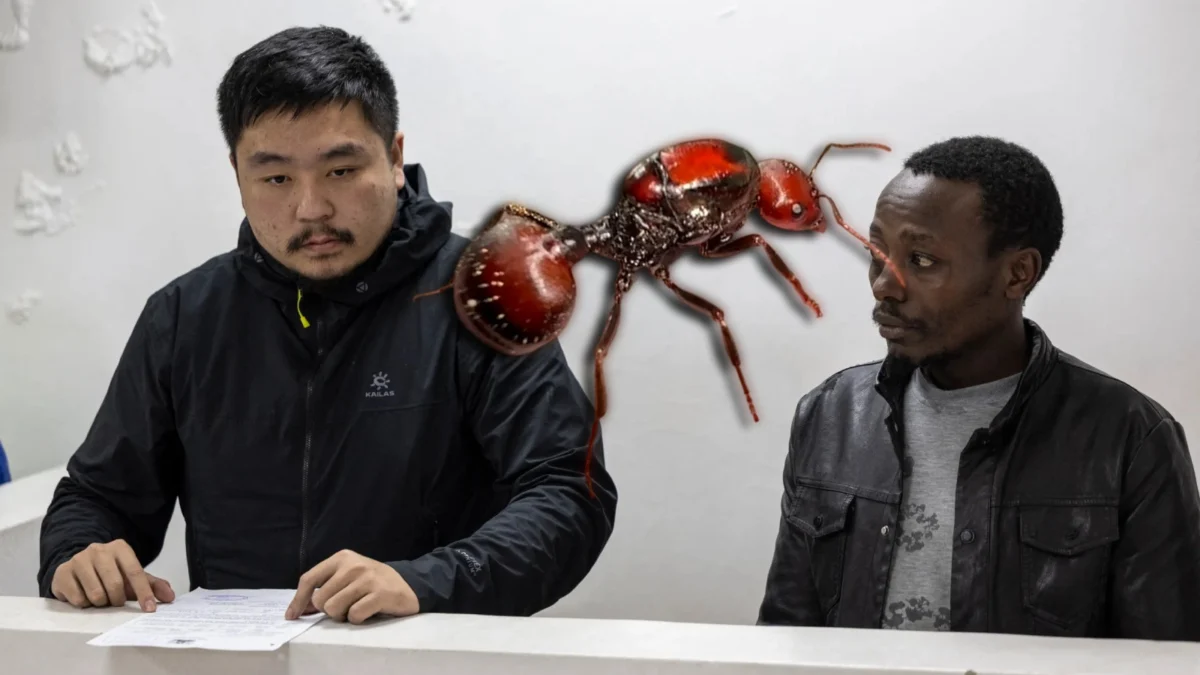
In a decisive ruling aimed at curbing the illegal exploitation of Kenya’s diverse biological resources, a Nairobi court has sentenced a Chinese national to 12 months in prison for attempting to smuggle more than 2,200 live ants out of the country. The defendant, Zhang Kequn, was also ordered to pay a fine of 1 million Kenyan shillings (approximately $7,700 USD). The sentencing follows a growing trend of "biopiracy," where foreign collectors and traffickers target small, often overlooked species for the international black market, posing significant risks to local ecosystems and national biodiversity.
The case, presided over by Magistrate Irene Gichobi, concluded that a stringent punishment was necessary to serve as a deterrent. Officials noted that while international attention often focuses on the trafficking of "charismatic megafauna" such as elephants and rhinoceroses, the illicit trade in insects and other micro-fauna is becoming an increasingly lucrative and dangerous enterprise. The court’s decision underscores Kenya’s commitment to protecting all facets of its natural heritage, regardless of the size of the organisms involved.
Details of the Seizure at Jomo Kenyatta International Airport
The incident began when Zhang Kequn was intercepted by security and customs officials at Jomo Kenyatta International Airport (JKIA) in Nairobi, the primary aviation hub for East Africa. During a routine screening of his luggage, authorities discovered a large quantity of glass and plastic test tubes hidden among personal effects. Upon closer inspection, the tubes were found to contain more than 2,200 live garden ants, meticulously packed for a long-haul flight to China.
Among the seized insects, wildlife experts identified 1,948 specimens of Messor cephalotes, a species of harvester ant native to East Africa. Known for their large size and striking polymorphic workers—which include "major" workers with disproportionately large heads—Messor cephalotes is highly coveted by insect enthusiasts and "ant-keepers" globally. The remaining insects included various other species, many of which were queens capable of establishing new colonies in foreign environments.
The ants were reportedly being trafficked to satisfy a burgeoning demand in the international "formiculture" community. In recent years, the hobby of keeping ants in elaborate, transparent habitats known as formicariums has exploded in popularity, particularly in Europe, North America, and East Asia. While many hobbyists operate legally, the demand for exotic and rare species often drives a clandestine trade that bypasses environmental regulations and quarantine protocols.
Judicial Proceedings and Sentencing Rationale
Zhang Kequn initially pleaded not guilty to the charges of operating without a permit and attempting to export wildlife without the requisite authority from the Kenya Wildlife Service (KWS). However, as the evidence against him mounted, he eventually admitted to the charges.
During the sentencing phase, Magistrate Irene Gichobi delivered a stern assessment of the defendant’s actions. The court described Zhang as an individual who lacked genuine remorse and characterized him as "not an entirely honest person." The Magistrate emphasized that the sentence was intended to send a clear message to international trafficking networks that Kenya’s wildlife—no matter how small—is protected by law.
"This is a rising trend that carries serious ecological consequences," the court noted, referring to the increasing frequency of insect trafficking. Under the terms of the ruling, Zhang has 14 days to file an appeal. If the sentence is upheld or if he fails to appeal, he will serve his prison term in Kenya, after which he may be deported or referred back to his home country.
A Chronology of the Case and Rising Trends
The prosecution of Zhang Kequn is not an isolated event but rather part of a documented increase in biopiracy cases within East Africa. The timeline of this specific case and its context within Kenyan law enforcement highlights a shifting strategy in wildlife protection:
- Detection and Arrest: Zhang was apprehended at JKIA while attempting to board a flight. The discovery of the test tubes led to an immediate intervention by the KWS and airport police.
- Species Identification: Entomologists were brought in to categorize the specimens, confirming the presence of the highly sought-after Messor cephalotes.
- Legal Filing: Charges were filed under the Wildlife Conservation and Management Act of 2013, which provides the legal framework for the protection of all wildlife species in Kenya.
- Prior Precedent: Last year, a similar case saw four men fined for attempting to smuggle thousands of ants out of Kenya. The lighter sentences in previous cases were deemed insufficient to halt the trade, leading to the tougher stance taken against Zhang.
- Sentencing: In April 2024, the Nairobi court finalized the 12-month jail term and the 1 million shilling fine.
The Ecological Impact of Ant Trafficking
While the removal of 2,200 ants might seem insignificant compared to the poaching of large mammals, ecologists warn that the cumulative effect of such trafficking is devastating. Ants like Messor cephalotes play a critical role in their native ecosystems as "ecosystem engineers."

Seed Dispersal and Soil Health
Harvester ants are vital for seed dispersal. By collecting seeds and storing them in underground granaries, they facilitate the growth of various plant species. Furthermore, their tunneling activities aerate the soil, allowing moisture and nutrients to reach plant roots more effectively. The mass removal of these insects can disrupt these natural cycles, leading to degraded soil quality and altered plant populations.
Invasive Species Risks
The primary concern for the destination countries—in this case, China—is the risk of invasive species. If exotic ants escape or are intentionally released into a non-native environment, they can outcompete local insect populations, destroy crops, and cause significant economic damage. Invasive ants are notoriously difficult to eradicate once they have established a colony, often leading to a loss of local biodiversity.
Biopiracy and Genetic Resources
Trafficking also falls under the umbrella of biopiracy, where biological resources or traditional knowledge are taken from a country without fair compensation or legal authorization. By smuggling live queens, traffickers are essentially stealing the genetic potential of the species, allowing foreign entities to breed and sell the insects commercially without any benefit returning to the country of origin.
Official Responses and Wildlife Advocacy
The Kenya Wildlife Service (KWS) has lauded the court’s decision, signaling a more aggressive approach to "micro-wildlife" protection. In a statement following the ruling, environmental advocates noted that the case represents a necessary evolution in conservation law.
"For too long, the focus has been exclusively on the ‘Big Five,’" said one Nairobi-based conservationist. "But the health of our savannahs and forests depends on the small creatures—the pollinators, the decomposers, and the seed dispersers. This ruling acknowledges that a harvester ant is just as much a part of Kenya’s national treasure as a lion or an elephant."
International wildlife monitoring groups, such as TRAFFIC, have also noted the shift. Their data suggests that as traditional wildlife products like ivory and rhino horn become harder to move due to increased surveillance and heavier penalties, smuggling rings are diversifying into reptiles, rare plants, and insects. These items are easier to conceal and often carry less social stigma, despite their high ecological value.
Broader Implications for International Law and Trade
The sentencing of Zhang Kequn highlights a critical gap in international wildlife regulation. While the Convention on International Trade in Endangered Species of Wild Fauna and Flora (CITES) protects many high-profile animals, many insect species are not currently listed, leaving individual nations to rely on their own domestic laws to prevent exploitation.
Kenya’s Wildlife Conservation and Management Act of 2013 is considered one of the most robust in Africa, providing for heavy fines and long prison sentences for those caught dealing in any form of wildlife without a permit. However, the challenge remains in the enforcement at transit points. The use of test tubes hidden in luggage is a common tactic, and without specialized training, customs officers may overlook these small containers.
The case also brings to light the role of social media and online forums in driving the demand for exotic pets. Platforms dedicated to ant-keeping allow collectors to showcase rare species, creating a competitive market where "rare" and "exotic" translate directly into high black-market prices. Experts suggest that some queen ants of the Messor genus can fetch hundreds of dollars on the private market, making the 2,200 ants seized from Zhang a potentially high-value cargo.
Conclusion
The imprisonment of Zhang Kequn marks a pivotal moment in East African wildlife jurisprudence. It serves as a stark warning that the era of treating insect smuggling as a minor offense is coming to an end. As Kenya continues to refine its border security and legal frameworks, the focus is broadening to encompass the entire spectrum of biodiversity.
For the global community, the case serves as a reminder of the hidden costs of the exotic pet trade. Behind every "transparent habitat" in a collector’s home may lie a trail of illegal trafficking that threatens the ecological stability of a nation thousands of miles away. As Zhang begins his 12-month sentence, the message from Nairobi is clear: Kenya’s natural resources are not for sale, no matter how small they may be.




 Yuyun Lusiyani
 Joko Widodo
 Eva Lovia
 admin
admin
 Lina Irawan