Pevita Pearce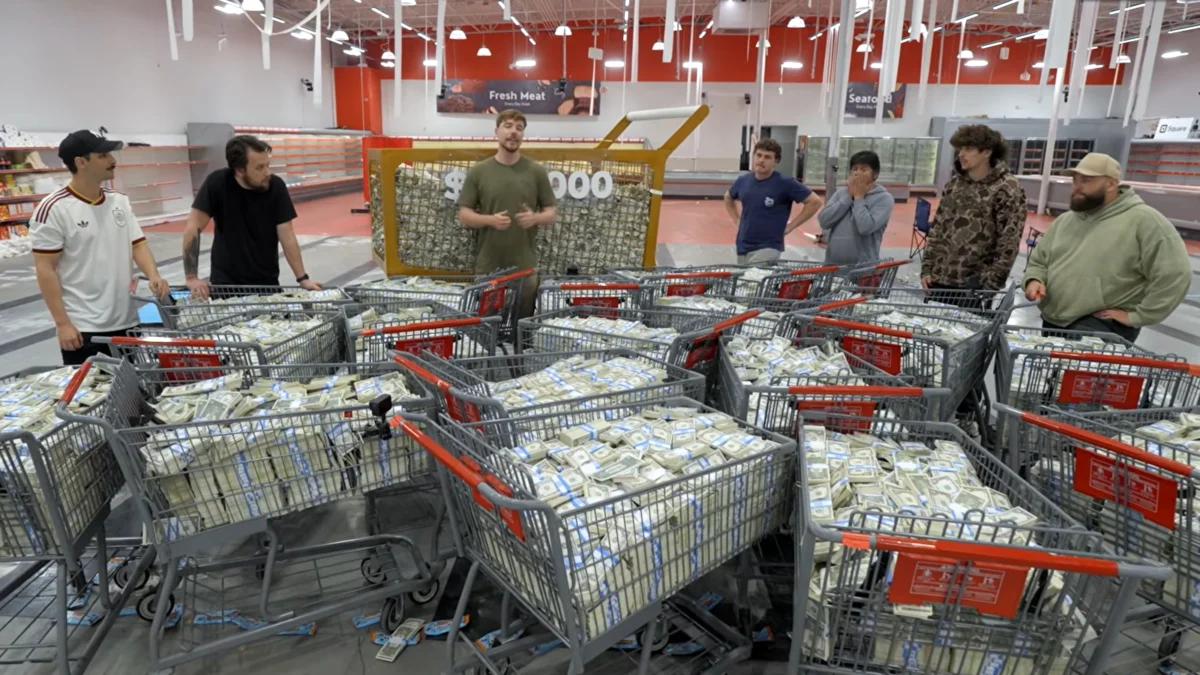
The landscape of digital entertainment and high-stakes reality content has undergone a significant shift following the release of the latest production from Jimmy Donaldson, the creator globally recognized as MrBeast. In a move that deviates from his traditional "last-to-leave" format, Donaldson has successfully negotiated a transition in his most recent challenge, moving from a $250,000 individual survival contest to a year-long, $1 million team-based endurance experiment. The challenge, set within a fully operational and stocked grocery store, reached a critical stalemate on its 67th day, prompting a fundamental restructuring of the rules and the ultimate prize.
This development marks a notable evolution in the MrBeast content model, which has historically relied on attrition to determine a single winner. By offering the final four contestants the opportunity to work as a collective for a significantly higher payout, Donaldson has effectively turned a competitive elimination game into a collaborative test of long-term psychological and physical resilience. The participants, who had already spent over two months in isolation, accepted the new terms, which include the daunting task of consuming the store’s entire inventory over the course of an estimated 365 days.
The Evolution of a High-Stakes Endurance Challenge
The project began as a standard high-budget MrBeast production. Initially, a group of contestants was placed inside a bespoke grocery store facility with the instruction that the last person to remain within the premises would secure a $250,000 cash prize. This format is a staple of Donaldson’s channel, which has previously featured challenges involving staying in solitary confinement, remaining in a circle for 100 days, or surviving in remote wilderness environments.
However, the grocery store challenge proved more resilient than previous iterations. By Day 67, four contestants remained, showing little sign of voluntary withdrawal despite the extended period of isolation and the limitations of the environment. Recognizing the potential for an indefinite deadlock, Donaldson entered the facility to offer a "pivot" to the remaining participants. The new proposal eliminated the elimination aspect of the game. Instead, the four individuals were invited to stay for a full year to collectively "eat the store" in exchange for a shared $1 million prize.
The transition from $250,000 for one person to $1 million for a team of four maintains the individual payout value at $250,000 per person, but it removes the risk of leaving with nothing after months of effort. This psychological shift from competition to cooperation was a decisive factor in the contestants’ unanimous agreement to the new terms.
Chronology of the Greenville Production
The origins of this video date back to January 2024 in Greenville, North Carolina, where Donaldson’s production headquarters are located. At the time, local residents and social media users noted the appearance of a new, brightly lit grocery store that appeared to have opened overnight. The storefront featured all the hallmarks of a standard retail outlet but remained closed to the general public, sparking immediate speculation that it was a set for an upcoming MrBeast production.
The timeline of the event, as presented in the recently released footage, confirms that the contestants were sequestered shortly after the facility was completed. The first 60 days of the challenge followed the original competitive format, during which several initial contestants were eliminated or chose to leave. By the two-month mark, the remaining four participants had established a domestic routine within the aisles of the store, utilizing the available products for sustenance and entertainment.
The Day 67 intervention by Donaldson served as the "season finale" of the first phase and the "pilot" for the second, more grueling phase. Following the agreement, the production team began an immediate overhaul of the facility to accommodate long-term habitation.
Infrastructure and Health: Sustaining a Year-Long Isolation
A primary concern in any long-term isolation stunt, particularly one involving a restricted diet and lack of outdoor access, is the physical and mental well-being of the participants. To address these concerns and ensure the challenge remained within ethical and safety guidelines, Donaldson committed to providing a comprehensive support system for the remaining four contestants.
The store, which was initially designed as a retail space, has been retrofitted with essential living amenities. These upgrades include the installation of private bedrooms, functioning showers, and a fully equipped gymnasium. Perhaps most significantly, the production has employed a professional team consisting of a nutritionist and a personal trainer. These experts are tasked with monitoring the contestants’ health and ensuring that the goal of "eating the store" does not result in malnutrition or chronic health issues.
The "eat everything" mandate carries significant logistical hurdles. A standard grocery store contains thousands of stock-keeping units (SKUs), ranging from fresh produce and meats to canned goods and frozen items. While the fresh inventory was largely consumed or processed in the first 67 days, the remaining inventory consists of high volumes of non-perishables. The nutritionist’s role is to balance the consumption of these items with the necessary caloric and vitamin requirements to sustain the contestants for a full calendar year.
The Day 67 Pivot: From Individual Rivalry to Team Survival
The decision to change the rules mid-contest is a rare occurrence in the MrBeast catalog. Historically, Donaldson has allowed challenges to run their course, even if they lasted longer than anticipated. The pivot on Day 67 suggests a strategic shift in content philosophy—prioritizing the narrative of human endurance and camaraderie over the tension of elimination.
During the negotiation, the emotional stakes were high. One contestant expressed significant hesitation, citing the impact of being away from his wife and two children for an additional ten months. The psychological toll of missing developmental milestones and family events is a heavy price for the $250,000 individual share of the prize. However, the collective agreement to stay highlights the "sunk cost" phenomenon, where individuals feel compelled to continue an endeavor because of the time and effort already invested. Having already sacrificed 67 days, the contestants viewed the guaranteed million-dollar payout as the only way to justify their continued absence from their normal lives.
Statistical Context of MrBeast’s Production Scale
To understand the magnitude of this challenge, it is necessary to look at the economic and logistical data surrounding MrBeast’s operations. Donaldson has previously stated that his primary channel’s videos often cost upwards of $3 million to $5 million to produce. The grocery store challenge likely exceeds these figures when considering the following factors:
- Real Estate and Inventory: The construction or lease of a full-scale grocery store, combined with the initial stocking of hundreds of thousands of dollars worth of inventory.
- Staffing: A 24/7 production crew, including security, camera operators, editors, and the newly added health professionals.
- Prize Pool: The $1 million payout is one of the larger cash prizes in recent YouTube history, though not unprecedented for the channel.
- Duration: A year-long shoot is an anomaly in the fast-paced world of digital content, where turnaround times are usually measured in weeks.
The decision to restock the store—as Donaldson promised to do to ensure the contestants have a balanced diet while they work through the original stock—further increases the overhead. This level of investment signals a move toward "slow-burn" content that can be serialized or released in long-form updates, mimicking the structure of traditional reality television franchises like Big Brother or Survivor.
Implications for Digital Media and Reality Entertainment
The grocery store challenge represents a significant milestone in the convergence of YouTube content and traditional broadcast television. By creating a controlled environment for a year-long study in human behavior and endurance, Donaldson is moving beyond the "viral stunt" phase of his career and into the realm of social experimentation.
Industry analysts suggest that this project could set a new precedent for creator-led content. If successful, the year-long format provides a massive amount of footage that can be distilled into multiple high-traffic videos, "Live" updates, and behind-the-scenes features, maximizing the return on investment. Furthermore, the focus on health and professional supervision mitigates potential controversies regarding contestant mistreatment, a common criticism of extreme endurance challenges.
The broader impact on the audience is also notable. MrBeast’s viewership, which skews younger, is being introduced to long-form narratives that prioritize patience and teamwork over instant gratification. The "twist" ending of the initial video has generated significant engagement on social media, with fans debating the ethics of the year-long commitment and the feasibility of the "eating the store" goal.
Conclusion and Future Outlook
As the four contestants settle into their new reality within the Greenville facility, the digital world awaits the next update on their progress. The challenge has effectively reset, with the clock now ticking toward a 365-day finish line. The success of this experiment will be measured not just by the final payout, but by the physical and mental state of the participants when they finally exit the sliding glass doors.
Jimmy Donaldson’s transition from a purveyor of quick-cut spectacles to a director of year-long endurance trials marks a maturation of the YouTube medium. By leveraging his massive resources to provide a safe yet incredibly difficult environment, he has created a narrative that is both absurd in its premise and compelling in its human stakes. Whether the four contestants can successfully "eat a grocery store" and maintain their resolve for a full year remains to be seen, but the challenge has already succeeded in redefining the boundaries of online entertainment.




 Jia Lissa
 Yuyun Lusiyani
 Joko Widodo
 Eva Lovia