Pevita Pearce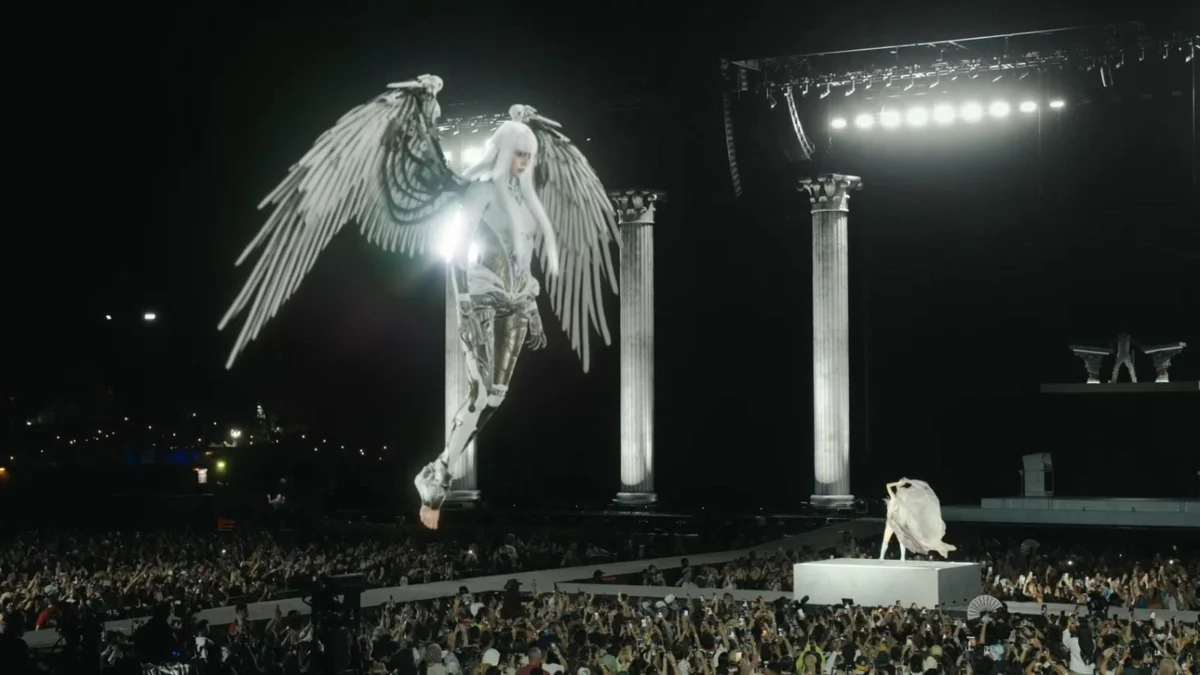
The intersection of high-fidelity digital art and live musical performance reached a new milestone during the second weekend of the 2026 Coachella Valley Music and Arts Festival, as BLACKPINK’s Lisa and renowned DJ and producer Anyma delivered a performance that blurred the lines between physical reality and digital fabrication. While the collaboration was initially hailed as a revolutionary leap in festival production, it has since become the center of a burgeoning industry debate regarding the transparency of live entertainment and the growing disparity between the in-person and at-home spectator experience.
The spectacle occurred during Anyma’s highly anticipated set, where the Italian producer—known for his pioneering work in the "Afterlife" audiovisual series—introduced a new collaborative track titled "Bad Angel" featuring Lisa. As the music reached its crescendo, millions of viewers tuning into the official Coachella YouTube livestream were presented with a staggering sight: a towering, hyper-realistic digital avatar of Lisa, appearing to stand several stories tall, loomed directly over the stage and the surrounding desert landscape. The digital figure moved with fluid, lifelike precision, interacting with the stage geometry in a manner that suggested a physical presence. However, the awe-inspiring moment quickly transitioned into a subject of controversy when festival-goers on the ground revealed that the "giant Lisa" was entirely invisible to those physically present in Indio, California.
The Mechanics of the Digital Illusion
The performance utilized advanced Augmented Reality (AR) technology, integrated directly into the broadcast feed provided by the festival’s media partners. Unlike traditional holograms or "Pepper’s Ghost" illusions, which require physical surfaces or specialized glass to project images for a live audience, this AR overlay was rendered in real-time and layered over the camera optics before being transmitted to the global audience.
Industry analysts suggest that the production likely employed a combination of high-precision spatial tracking and Unreal Engine 5 rendering. By syncing the movement of the festival’s jib and drone cameras with a 3D digital environment, the production team was able to "pin" the digital Lisa to specific coordinates in the physical world. For the digital viewer, the result was a seamless integration where the avatar appeared to cast shadows on the stage and reflect the ambient lighting of the desert night. For the tens of thousands of attendees standing in the Sahara Tent, however, the stage remained occupied only by Anyma and standard LED screen visuals.
Chronology of the Event and Social Media Backlash
The timeline of the controversy began at approximately 11:15 PM PT on Saturday night. As the livestream cut to wide-angle shots of the stage, social media platforms—specifically X (formerly Twitter), Reddit, and TikTok—exploded with clips of the massive digital Lisa. Fans praised the "insane production budget" of Coachella 2026, with many declaring it the greatest visual feat in the festival’s history.
The narrative shifted within thirty minutes. Attendees who were checking their phones while leaving the set began seeing the viral clips and expressing confusion. "I was right there in the front row, and we were all looking at the sky wondering where the ‘giant’ was," one Reddit user commented in a thread that garnered over 50,000 upvotes within hours. "We saw a great light show, but the ‘Bad Angel’ herself was a ghost to us."
By Sunday morning, the term "AR-Gate" began trending, as fans debated whether the festival had "tricked" the audience. While some praised the innovation as a way to enhance the free global broadcast, others felt that the "prestige" of being at a live event was being eroded by features reserved exclusively for those who did not purchase a ticket.
Supporting Data: The Rise of the Virtual Festival Attendee
The decision to prioritize the digital broadcast reflects a broader shift in the economics of major music festivals. Since 2024, Coachella has seen a significant increase in its digital footprint. Data from the 2026 festival indicates that while physical attendance remained capped at roughly 125,000 per weekend, the global livestream reached a record-breaking 45 million unique viewers across both weekends.
The "Lisa Effect" was a primary driver of these numbers. Following the launch of her independent label, LLOUD, Lisa’s solo brand has reached unprecedented heights, making her one of the most sought-after collaborators in the electronic and pop spheres. Internal metrics suggested a 300% spike in viewership the moment Anyma’s set began, largely attributed to the rumored appearance of the BLACKPINK star. By utilizing AR, Coachella was able to provide a "premium" visual experience to the 45 million digital viewers without the logistical and financial hurdles of building a physical 100-foot kinetic sculpture or a complex holographic array on-site.
Official Responses and Artist Context
Neither Anyma nor Lisa’s representatives have issued a formal apology, though Anyma’s creative team hinted at the intentionality of the choice. In a brief social media post following the set, Anyma shared a clip of the AR visual with the caption: "The future is a layer you choose to see." This aligns with Anyma’s established brand as an artist who explores the boundary between the human and the machine.
Lisa, who has been a frequent fixture at Coachella both as a headliner with BLACKPINK and as a solo artist, has consistently pushed for high-tech integration in her performances. Sources close to the production suggest that the AR model was based on a full-body volumetric scan of the artist, designed to ensure that the digital "Bad Angel" captured her exact dance style and facial expressions.
The event also follows a trend of viral moments at Coachella 2026. Just a week prior, Justin Bieber made headlines during his set by reviving the "Deez Nuts" meme, a moment that relied on classic shock-value humor rather than technological wizardry. The contrast between Bieber’s meme-driven virality and the Lisa/Anyma technical spectacle highlights the two different paths artists are currently taking to capture the internet’s fleeting attention.
Broader Implications for the Music and Tech Industries
The "Bad Angel" performance serves as a case study for the future of "phygital" (physical plus digital) events. As AR hardware like the Apple Vision Pro and various smart glasses become more integrated into consumer life, the discrepancy between the "naked eye" and the "digital eye" is expected to grow.
- The Evolution of VIP Experiences: Industry experts predict that future festivals may offer AR headsets to premium ticket holders, allowing them to see the digital overlays that are currently restricted to the broadcast. This could create a tiered reality where different sections of the crowd see different versions of the same show.
- Environmental and Logistical Sustainability: Building massive physical sets for a three-day event is notoriously wasteful and expensive. AR allows artists to create "impossible" architecture and massive spectacles with a fraction of the carbon footprint and shipping costs associated with traditional stage design.
- The Authenticity Debate: The primary criticism remains the "honesty" of the live experience. If the most iconic moment of a concert didn’t actually happen in the physical space, does it count as a "live" moment? Music critics are divided on whether this constitutes a new art form or a deceptive marketing tactic.
Technical Analysis: Why Not a Real Hologram?
The decision to use AR over a physical hologram was likely a matter of physics and environment. Coachella’s desert setting is notorious for wind, dust, and heat, all of which are detrimental to the delicate laser systems and translucent screens required for traditional holograms. Furthermore, the sheer scale of the digital Lisa—estimated to be roughly 110 feet tall—would have been impossible to project in an outdoor, high-wind environment without massive structural support that would have blocked the view of the stage for most of the audience.
By opting for a broadcast-only AR overlay, the production team avoided these physical limitations, achieving a level of detail and scale that would be physically impossible to replicate in the real world. The "Bad Angel" avatar featured intricate textures on its wings and reflective surfaces on its clothing that reacted to the virtual lighting, a level of fidelity that current projection technology cannot achieve in an open-air festival setting.
Conclusion: A New Era of Performance
As the dust settles on Coachella 2026, the collaboration between Lisa and Anyma will likely be remembered as the moment the "broadcast experience" officially separated from the "concert experience." While the frustration of the live attendees is understandable, the sheer scale of the global reaction suggests that for the modern festival, the audience watching on a screen is now just as important—if not more so—than the audience standing in the mud.
The "Bad Angel" illusion was not just a stunt; it was a glimpse into a future where the stage is merely a foundation for a much larger, digital world. Whether fans embrace this shift or demand a return to purely physical spectacles will likely determine the production strategies for the next decade of global entertainment. For now, the towering image of Lisa over the Coachella stage remains a digital ghost—one that didn’t exist in the desert, but will live forever in the archives of the internet.


 Jia Lissa
 Yuyun Lusiyani
 Joko Widodo
 Eva Lovia