
 Yuyun Lusiyani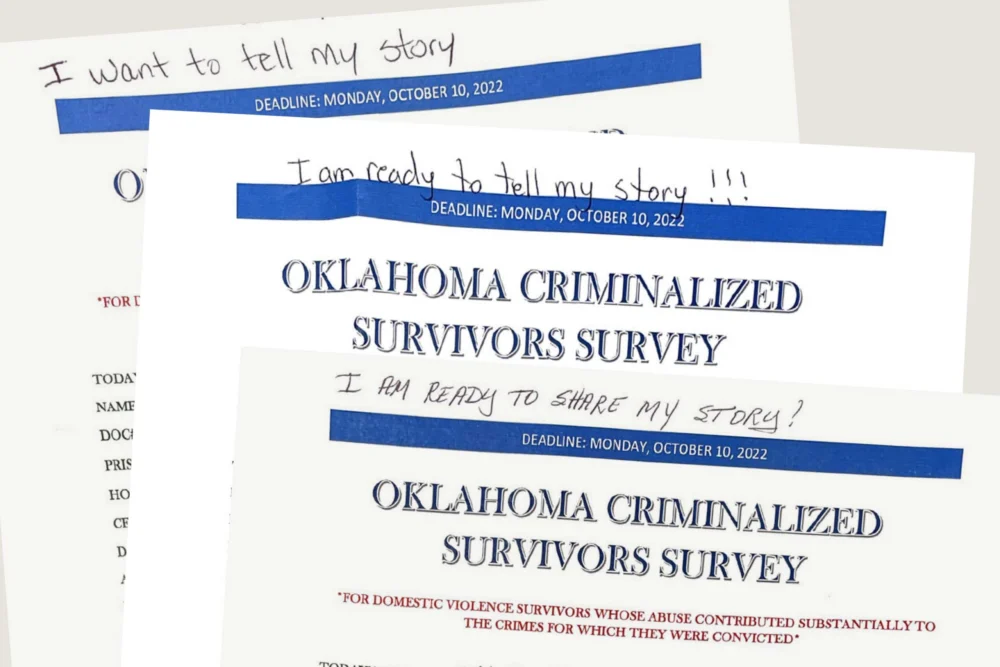
In the heart of Oklahoma, a state long characterized by its stringent criminal justice policies and high incarceration rates, particularly for women, a profound legislative shift has emerged. The Oklahoma Survivors’ Act, enacted in 2024, represents a landmark effort to address the deep-seated issue of domestic violence within the criminal justice system, offering a mechanism for survivors to seek reduced sentences when their offenses are inextricably linked to the abuse they endured. This pivotal legislation was not merely a product of legal advocacy but was significantly shaped by the harrowing testimonies of incarcerated women, collected through an audacious, unauthorized survey conducted within the walls of Mabel Bassett Correctional Center, the state’s largest women’s prison.
Located on a wide expanse of prairie 30 miles east of Oklahoma City, the small town of McLoud, with its fewer than 5,000 residents, hosts Mabel Bassett Correctional Center – a sprawling complex of concrete and razor wire at the edge of town. It was within these confines that the seeds of the Survivors’ Act were sown, cultivated by the unwavering determination of an incarcerated woman named April Wilkens, whose own quarter-century behind bars for a crime stemming from severe domestic abuse made her a powerful voice for change.
Oklahoma’s Stark Reality: Incarceration and Domestic Violence
Oklahoma has long grappled with a dual crisis: one of the highest rates of female incarceration in the United States, alongside persistently elevated rates of domestic abuse. For decades, the state’s approach to criminal justice has been marked by a preference for harsh punishment, evidenced by its record as having the most executions per capita of any state since capital punishment resumed in 1976, with 130 individuals put to death since then. This punitive ethos has contributed to a burgeoning prison population and escalating human and financial costs.
According to data from the Prison Policy Initiative, Oklahoma’s overall incarceration rate consistently ranks among the highest nationally, and its rate of imprisoning women is particularly alarming, often surpassing other states by a significant margin. A 2021 report by the Oklahoma Policy Institute highlighted that women in Oklahoma are incarcerated at a rate 1.5 times the national average. Concurrently, statistics from organizations like the Oklahoma Coalition Against Domestic Violence and Sexual Assault consistently show that domestic violence remains a pervasive issue across the state, with thousands of incidents reported annually. This confluence of high incarceration and high domestic abuse rates has created a tragic cycle, often trapping women who are victims of violence within the very system designed to uphold justice. Many of these women, driven to desperate acts by their abusers, find themselves facing lengthy sentences with little consideration for the context of their crimes.
The Genesis of a Movement: Legal Advocates and a Prisoner’s Plea
The recognition of this systemic failure spurred a dedicated effort by legal professionals. In 2022, Tulsa-based attorneys Colleen McCarty and Leslie Briggs, deeply troubled by Oklahoma’s grim statistics, visited April Wilkens at Mabel Bassett. Their mission was clear: to explore the possibility of legislative reform that would acknowledge the nexus between domestic violence and criminal behavior, and to advocate for reduced sentences for survivors whose crimes were a direct result of their abuse. This meeting was not merely a legal consultation; it was the catalyst for a broader movement.
April Wilkens’ own case epitomized the plight of many incarcerated women. Convicted of first-degree murder and handed a life sentence in 1998 for the shooting death of her ex-fiancé, Terry Carlton, Wilkens had a documented history of severe abuse, including beatings, rape, and stalking, for which she had repeatedly sought help from law enforcement—pleas that, according to trial testimony, were met with indifference. Her story resonated with countless others within the prison system, illuminating a critical blind spot in legal proceedings where the pervasive impact of abuse often went unheard or unacknowledged.
During their initial meeting, McCarty and Briggs articulated their ambition to pass legislation that could offer a lifeline to women like Wilkens. They sought to understand the true scope of the problem within the prison population: how many women were incarcerated for offenses undeniably tied to their experiences of abuse? Wilkens, a respected and well-liked leader among the lifers at Mabel Bassett, quickly devised a solution. She proposed drafting a questionnaire to survey her fellow prisoners about the abuse they had endured and its connection to their convictions.
The Unsanctioned Survey: Voices from Behind Bars
In the fall of 2022, April Wilkens embarked on a daring endeavor. Defying the strict protocols of the correctional facility, she distributed her self-designed questionnaire throughout Mabel Bassett. Moving through the rec yard, the library, and the chow hall, Wilkens engaged with women, explaining her purpose and soliciting their participation. Conducting an unauthorized survey carried significant risks, potentially leading to disciplinary action despite her nearly spotless record. Yet, for Wilkens, the potential for change outweighed the personal peril. She had spent years listening to the hushed stories of violence and despair, observing firsthand the intersection between abuse and crime, stories that rarely, if ever, found a voice in courtrooms. Some women had been prosecuted for failing to protect their children from abusive partners; others had committed crimes alongside their abusers under threats of further harm. These offenses, much like Wilkens’s own, were often unintelligible without the context of the preceding abuse.
There was no immediate incentive for the women to fill out the questionnaire; at that point, no law existed to offer them relief. Their willingness to participate was a testament to Wilkens’s force of personality, her credibility among her peers, and a simple, heartfelt request: "If you’ve experienced domestic violence, and that’s connected to why you’re here, will you fill this out?" The response was overwhelming and deeply moving. One hundred and fifty-six women completed the survey, sharing intimate and often horrific details of their lives.
Colleen McCarty, who would later become Wilkens’s attorney, recounted reading the stack of questionnaires in a single sitting, so profoundly affected by the women’s narratives that she had to lie down to process the emotional weight of their collective suffering. The anonymous excerpts from these surveys reveal not just individual pain but expose systemic failures within the justice system that allowed these histories to remain unheard in police reports, courtrooms, and sentencing decisions:
- "The abuse graduated from emotional to verbal to physical to sexual," wrote one woman, detailing the escalating cycle of violence.
- Another shared, "He said he was going to kill me and hide the body. His wife before me had her nose broken twice," illustrating a pattern of violence and the severe threats endured.
- "I kept begging for a divorce and he’d threaten to kill my children," conveyed the impossible choices faced by some victims.
- "From the beating I received, my left ear I don’t hear well," a stark physical reminder of sustained violence.
- "My children’s father he beat me barely made it out alive," underscoring the life-threatening nature of the abuse.
A fraction of these respondents, mirroring Wilkens’s situation, had resorted to extreme measures. "I didn’t realize I shot him until the gun went off," one woman wrote, describing a moment of desperation. Another simply stated, "One night just snapped, shot & killed my husband." Beyond the acts themselves, many women described a legal system that had utterly failed them. "My lawyer was arrested during my trial," one woman lamented, whose children were placed in foster care after her arrest. "I never even got a chance." The poignant plea of another, convicted decades ago, resonated with many: "Am ready to tell my story. Have been for a long time."
The Oklahoma Survivors’ Act: A Legislative Breakthrough
The raw data and powerful testimonies gathered by Wilkens became the cornerstone of the legislative campaign. They provided irrefutable evidence to lawmakers of the pervasive link between domestic abuse and criminal charges, and how rarely this crucial context was adequately considered in judicial proceedings. For two years, McCarty and Briggs, alongside a coalition of advocates, tirelessly championed the cause. Their efforts culminated in the passage of the Oklahoma Survivors’ Act in 2024, a significant legislative victory in a state often resistant to sentencing reform.
The Act, however, is not a blanket amnesty. It does not automatically reduce sentences for survivors. Instead, it establishes a formal mechanism through which incarcerated individuals can petition for relief. To be eligible, petitioners must demonstrate that domestic abuse was a "substantial contributing factor" in their offense. The ultimate decision to grant sentence reduction or resentencing rests with a judge, requiring a careful re-evaluation of cases with the previously overlooked context of abuse. This judicial discretion ensures a case-by-case review, aiming to balance justice with compassion and understanding.
The passage of the Survivors’ Act was hailed as a monumental step forward, offering hope for a "meaningful second look" at the sentences of women like Wilkens and the 156 others who shared their stories. It signaled a growing recognition within the state government that the existing criminal justice framework often failed to account for the complex realities of domestic violence, inadvertently punishing victims for their survival.
Broader Implications and Lingering Challenges
The Oklahoma Survivors’ Act carries significant implications, both within Oklahoma and as a potential model for other states. It highlights the critical need for trauma-informed justice systems that understand the dynamics of abuse, including coercive control, and how these factors can compel individuals to commit crimes. This shift acknowledges that traditional legal defenses, such as self-defense, often do not adequately capture the psychological and physical realities faced by victims of chronic domestic violence.
However, the journey from legislation to equitable implementation is often fraught with challenges. While the Act provides a legal pathway, the process of petitioning for relief can be arduous, requiring survivors to revisit traumatic experiences, gather evidence, and navigate complex legal procedures—often from within prison walls and with limited resources. The "substantial contributing factor" clause, while necessary, also introduces a subjective element that judges will interpret, potentially leading to inconsistencies in application. The resistance of the established system to change, as observed by the original reporter, remains a formidable obstacle. Despite the new law, many women with compelling stories, including April Wilkens herself, continue to wait behind bars, their petitions under review or yet to be filed and heard. The systemic blind spots that allowed these women’s histories to go unheard initially can prove persistent, requiring sustained advocacy and vigilance to ensure the Act fulfills its intended purpose.
The broader impact of the Act extends beyond individual sentence reductions. It raises awareness about the pervasive issue of domestic violence and its profound consequences, potentially influencing future policy decisions related to victim support, police training, and prosecutorial discretion. By acknowledging the link between abuse and crime, Oklahoma is taking a crucial step towards addressing the root causes of female incarceration rather than solely focusing on punitive measures. This represents a more holistic approach to justice, one that recognizes the human element behind criminal acts.
The ongoing fight for justice for domestic violence survivors incarcerated in Oklahoma underscores the profound significance of the Survivors’ Act. It is a testament to the power of collective action, the courage of those who speak out from behind bars, and the tireless dedication of legal advocates. As April Wilkens and many other women await the outcomes of their petitions, their stories continue to serve as a powerful reminder of the systemic failures that once defined their lives and the enduring hope that true justice, finally, might be within reach. Within the concrete walls of Mabel Bassett, the sentiment of one prisoner’s questionnaire response echoes, capturing the complex truth of their situation: "I was in a very abusive, sick relationship. I am FREE now." This poignant statement encapsulates the paradoxical freedom from abuse found within incarceration, even as the struggle for physical liberty continues.


 Ana Megawati
 Joko Widodo
 Eva Lovia
 Jia Lissa
 Pevita Pearce