
 admin
admin
Washington D.C. was gripped by an extraordinary national security breach on Friday, February 28, 2026, as a seemingly casual conversation in a popular downtown restaurant hours before a major U.S.-Israel joint military operation against Iran provided an astonishingly accurate, albeit unauthorized, preview of the impending strike. The incident, involving four individuals overheard discussing classified military action near the White House, has ignited a firestorm of debate over intelligence security protocols and the handling of sensitive geopolitical information.
The Precursor: An Unsettling Conversation in Washington D.C.
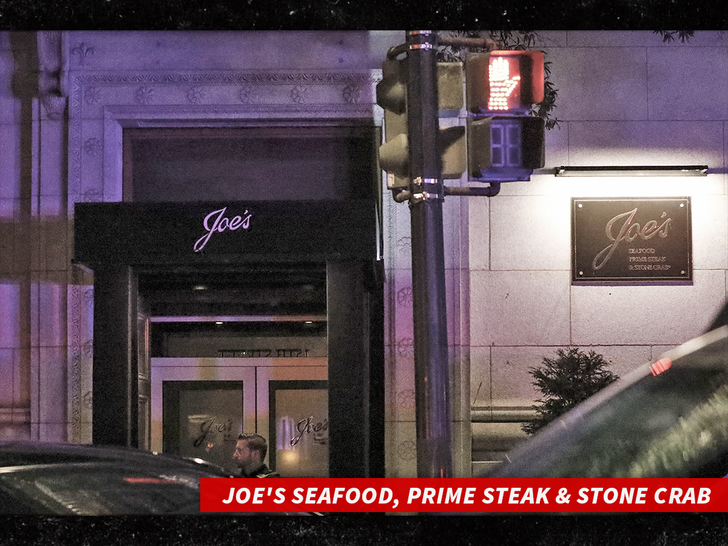
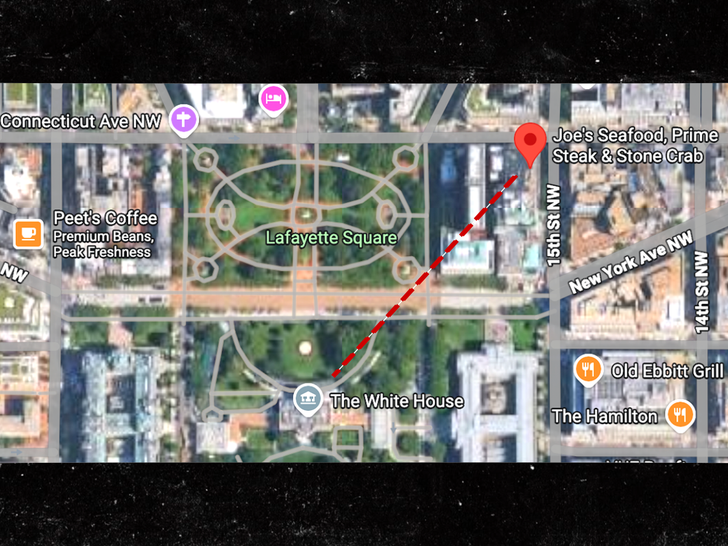
The remarkable series of events began at approximately 3:00 PM ET at Joe’s Seafood, Prime Steak & Stone Crab, a high-profile establishment located a mere 0.2 miles from the White House. Attorney Mark Geragos, a prominent legal figure, was present in the bar area, preparing to record an episode of his "2 Angry Men" podcast with co-host Harvey Levin. Geragos recounted overhearing a group of four men and two women at an adjacent high-top table. The men, dressed in conventional business attire of sports coats and collared shirts, engaged in a conversation that would soon prove chillingly prescient.
Around 3:45 PM ET, Geragos distinctly heard one of the men declare, in a voice clear enough to be overheard by others nearby, that the United States was going to bomb Iran "today." This statement, casually delivered in a public setting, immediately captured Geragos’s attention. The conversation continued, delving into details that suggested an intimate knowledge of classified military plans. Later, in a moment that would become infamously viral, one of the men was heard singing a modified version of The Beach Boys’ "Barbara Ann," substituting the lyrics with "Bomb Bomb Bomb, Bomb Bomb Iran." This seemingly flippant rendition of a highly sensitive geopolitical event underscored the astonishing lack of discretion exhibited by the individuals.
Geragos, unable to disengage from the unfolding conversation, relayed snippets of what he heard to Levin during their podcast recording. While initially cryptic, his remarks took on profound significance hours later. During the podcast, which was slated to drop at 1 PM ET, Geragos cryptically stated, "By the time this [the podcast] drops [1 PM ET] in Iran [pause] I’ll leave it at that," before adding, "Today is the day." This deliberate hinting, based on his overheard conversation, served as an uncanny forecast of the military action that was to follow.

The Unfolding Events: A Coordinated Strike on Iran
True to the overheard declaration, mere hours after the conversation at Joe’s, a coordinated military operation commenced. The United States and Israel launched a series of precision airstrikes against strategic targets within Iran. While initial reports were scarce and highly controlled, official statements from Washington and Jerusalem later confirmed the joint nature of the operation. Targets reportedly included facilities associated with Iran’s nuclear program, missile development sites, and infrastructure linked to the Islamic Revolutionary Guard Corps (IRGC) and its regional proxy networks.
Details emerging from defense officials indicated that the strikes were designed to degrade Iran’s capabilities, particularly its enriched uranium production and long-range missile arsenal, and to deter further destabilizing actions in the Middle East. Both nations emphasized the defensive nature of the operation, citing escalating threats to regional security and the failure of diplomatic efforts to curb Iran’s nuclear ambitions and support for militant groups. Satellite imagery, later released by independent intelligence analysts, showed significant damage to several suspected sites, including underground facilities near Natanz and Parchin.
Geopolitical Volatility: Decades of Tensions Culminate
The bombing of Iran on February 28, 2026, represents a dramatic escalation in the long-standing and complex geopolitical tensions that have simmered for decades between Iran, the United States, and Israel. The roots of this conflict are multifaceted, encompassing Iran’s pursuit of nuclear technology, its regional hegemonic aspirations, its support for various non-state actors (such as Hezbollah in Lebanon, Hamas in Gaza, and Houthi rebels in Yemen), and its persistent rhetoric against Israel and the U.S.
In the years leading up to the 2026 strike, international efforts to constrain Iran’s nuclear program through diplomacy and sanctions had repeatedly faltered. The Joint Comprehensive Plan of Action (JCPOA), or Iran nuclear deal, had been effectively dismantled, leading to Iran accelerating its uranium enrichment activities beyond agreed-upon limits and restricting international inspectors’ access. Intelligence reports from various Western agencies had consistently indicated Iran’s progress towards developing capabilities that could allow it to quickly produce weapons-grade material, raising alarms in Washington and Jerusalem.

Furthermore, regional proxy conflicts had intensified. Attacks on international shipping in the Persian Gulf, drone strikes on oil facilities in neighboring states, and an increasing frequency of rocket attacks emanating from Iranian-backed militias had created an untenable security environment. The U.S. and its allies had repeatedly warned Iran against these provocations, establishing a clear red line regarding the safety of international waterways and the stability of its regional partners. The joint U.S.-Israeli strike was framed by its perpetrators as a necessary, albeit drastic, measure to restore deterrence and prevent a wider, more devastating conflict.
Official Responses and International Condemnation
Following the confirmation of the strikes, official responses from involved parties and the international community were swift and varied.
- United States: A White House press briefing, held late Friday evening, saw the President, flanked by the Secretary of Defense and the National Security Advisor, confirm the operation. The President stated that the action was taken "to protect American interests, safeguard our allies, and prevent Iran from acquiring nuclear weapons capabilities." He emphasized that the U.S. sought no wider conflict but would "not hesitate to defend its people and its partners." The State Department issued a formal statement, detailing intelligence assessments regarding Iran’s nuclear advancements and its destabilizing regional activities, presenting a legal justification for the pre-emptive strike under international law.
- Israel: Prime Minister Benjamin Netanyahu addressed the nation, declaring the strikes a "vital act of self-defense" against an existential threat. He reiterated Israel’s long-standing policy of preventing Iran from developing nuclear weapons and pledged continued vigilance against Iranian aggression.
- Iran: The Iranian government reacted with furious condemnation. Supreme Leader Ali Khamenei vowed "severe revenge" against the "aggressors," labeling the strikes as an act of "state terrorism" and a blatant violation of Iran’s sovereignty. Iranian state media immediately began broadcasting images of damaged sites, albeit selectively, to galvanize public support and portray the nation as a victim of foreign aggression. Foreign Minister Hossein Amir-Abdollahian called for an emergency session of the United Nations Security Council, demanding international action against the U.S. and Israel.
- United Nations: The UN Secretary-General issued a grave statement expressing deep concern over the escalation, calling for immediate de-escalation and a return to diplomatic channels. The UN Security Council convened an emergency meeting, where member states largely condemned the unilateral use of force but were divided on assigning blame, reflecting existing geopolitical fault lines.
- International Reactions:
- European Union: Expressed alarm, urging all parties to exercise maximum restraint and avoid further destabilization of the region. They called for a renewed commitment to diplomacy.
- Russia and China: Strongly condemned the strikes, characterizing them as an illegal act of aggression that undermined international law and risked regional catastrophe. Both nations called for an immediate cessation of hostilities and warned against foreign interference in the internal affairs of sovereign states.
- Regional Allies (e.g., Saudi Arabia, UAE): While not explicitly endorsing the strikes, some Gulf states issued cautious statements expressing concern over Iranian regional activities and reiterating their commitment to regional stability, implicitly acknowledging the perceived threat from Tehran.
The Aftermath: Regional Instability and Global Repercussions
The immediate aftermath of the U.S.-Israel strikes saw a sharp increase in regional instability. Oil prices surged on global markets, with Brent crude briefly exceeding $120 a barrel, as fears of disruptions to energy supplies from the Strait of Hormuz mounted. Stock markets worldwide experienced significant volatility, reflecting investor anxiety over the potential for a wider conflict.
Iran immediately announced it would further accelerate its nuclear program, threatening to withdraw from the Non-Proliferation Treaty (NPT) and expel all remaining international inspectors. Iranian-backed militias across the region, including in Iraq, Syria, and Yemen, launched retaliatory rocket and drone attacks against U.S. military bases and allied targets, leading to a dangerous cycle of tit-for-tat exchanges. Maritime security alerts were heightened in the Persian Gulf, with increased naval presence from international forces.
Humanitarian organizations expressed grave concerns over the potential for civilian casualties, although official reports from Washington and Jerusalem maintained that strikes were precisely targeted to avoid non-combatant harm. The prospect of a new wave of refugees fleeing conflict zones also became a pressing concern for international aid agencies.
The Investigation: A Breach of National Security?
Beyond the military and geopolitical ramifications, the most immediate domestic concern in the U.S. centered on the egregious security breach highlighted by Mark Geragos’s account. The fact that highly classified information regarding an imminent military operation was discussed openly, and even sung about, in a public restaurant just steps from the White House, triggered an immediate and high-level investigation.
The Federal Bureau of Investigation (FBI) and relevant intelligence agencies launched a comprehensive probe to identify the individuals involved in the conversation at Joe’s Seafood. Questions immediately arose: Who were these four men in business attire? What was their relationship to government or military operations? How did they obtain such sensitive, classified information? And why did they display such a shocking lack of operational security in a public venue?
The incident has been widely condemned as a "textbook definition of ‘loose lips sink ships’," echoing a famous World War II anti-espionage slogan. Experts in national security and intelligence protocol have called for a complete overhaul of information handling procedures, particularly for personnel with access to sensitive intelligence. The potential for adversaries to glean critical information from such public indiscretions poses a severe threat to national security, far beyond the specifics of this single event. The investigation is expected to explore potential legal ramifications for those involved, including charges of unauthorized disclosure of classified information.
Looking Ahead: Pathways to De-escalation or Further Conflict
As the dust settles from the initial strikes, the international community faces a critical juncture. The immediate challenge is to prevent a full-scale regional war. Diplomatic efforts, though severely strained, are expected to intensify, with key players like the UN, European powers, and potentially Russia and China, attempting to mediate a de-escalation.
However, the path forward is fraught with peril. Iran’s vowed retaliation and its acceleration of nuclear activities create a dangerous trajectory. The U.S. and Israel have indicated readiness for further action if deemed necessary, setting a tense stage for future interactions. The long-term implications for global energy security, regional alliances, and the future of nuclear non-proliferation remain profoundly uncertain. The overheard conversation in Washington D.C., a stark reminder of human fallibility in the face of grave national secrets, has inadvertently become a historical footnote to a momentous and perilous chapter in Middle East geopolitics.




 Yuyun Lusiyani
 Joko Widodo
 Eva Lovia
 Pevita Pearce

 Lina Irawan