Lina Irawan
The landscape of wearable technology underwent a significant shift at the Galaxy Unpacked 2026 event in London, where Samsung Electronics officially introduced its inaugural "intelligent eyewear" platform. Developed through a high-profile multi-industry partnership involving Google, the South Korean luxury eyewear brand Gentle Monster, and the American prescription specialist Warby Parker, the new hardware represents a strategic pivot in the augmented reality (AR) and artificial intelligence (AI) sectors. Rather than pursuing the bulky, display-heavy form factors that characterized previous generations of head-mounted displays, Samsung has opted for a "stealth tech" approach, integrating advanced multimodal AI into frames that are indistinguishable from conventional fashion eyewear.
The announcement occurred alongside the debut of Samsung’s latest generation of foldable smartphones, signaling the company’s intent to move toward an "agentic AI" ecosystem where digital assistance is persistent and ambient. By leveraging Google’s Android XR platform and Gemini AI, the glasses aim to transition the user interface from a handheld screen to a voice- and vision-based interaction model, potentially redefining the role of the smartphone in daily life.
Technical Architecture and the Snapdragon AR1 Gen 1 Platform
At the core of the Samsung Intelligent Eyewear is the Qualcomm Snapdragon AR1 Gen 1 platform. This chipset was engineered specifically for power-efficient, slim-profile smart glasses, prioritizing on-device AI processing and seamless connectivity over the heavy graphical demands of full-scale mixed reality. The integration of the AR1 platform allows the frames to remain lightweight while managing complex tasks such as real-time language translation, acoustic beamforming for clear audio, and visual recognition.
The hardware configuration excludes a traditional heads-up display (HUD) or holographic lenses. Samsung’s engineers determined that the current limitations of battery life and thermal management in display-based AR glasses often lead to a compromised user experience. Instead, the device relies on a multimodal feedback loop. A high-resolution camera mounted in the frame provides visual context to the Gemini AI, which then communicates with the user via ultra-linear miniature speakers embedded in the temples.

Power management is a critical component of the device’s utility. The glasses offer up to nine hours of continuous operation on a single charge, a figure that aligns with a standard workday. To extend this, the accompanying charging case—designed to look like a premium leather glasses fold—holds enough capacity for seven additional full charges. This brings the total potential battery life to over 60 hours, addressing one of the primary hurdles of previous wearable tech: the "charging fatigue" that often leads to device abandonment.
Software Integration: Gemini AI and Android XR
The software ecosystem is arguably the most significant differentiator for Samsung’s eyewear. By utilizing Google’s Android XR platform, the glasses function as a natural extension of the Android mobile environment. This allows for deep integration with Google Workspace, Samsung Notes, and the broader Galaxy AI suite.
Sameer Samat, President of the Android Ecosystem at Google, emphasized during the keynote that the partnership’s goal was to bring "helpful and context-aware intelligence into everyday life." The Gemini AI integration allows the glasses to "see" what the wearer sees. For instance, if a user looks at a menu in a foreign language, the AI can provide an instant audio translation. If a user is attending a lecture, the glasses can capture the contents of a whiteboard and automatically generate a summarized set of notes in the Samsung Notes app.
Furthermore, the device introduces a "Live POV Sharing" feature. During a video call via Google Meet or WhatsApp, the wearer can stream their exact field of vision to the recipient, a tool Samsung expects will be widely adopted in remote technical support, medical consultations, and creative collaborations. Control mechanisms are similarly streamlined; while the glasses support voice commands and touch-sensitive temples, more complex gesture controls are offloaded to connected peripherals such as the Galaxy Watch, creating a "Personal Area Network" of devices that work in unison.
Design Philosophy: Bridging the Gap Between Fashion and Function
Historically, the failure of smart glasses to achieve mainstream adoption has been attributed to the "social friction" of their design. Devices like the original Google Glass were often criticized for their conspicuous and "tech-first" appearance. Samsung has sought to mitigate this by collaborating with Gentle Monster and Warby Parker, two entities with established dominance in the global eyewear market.

The collaboration has resulted in two distinct design languages:
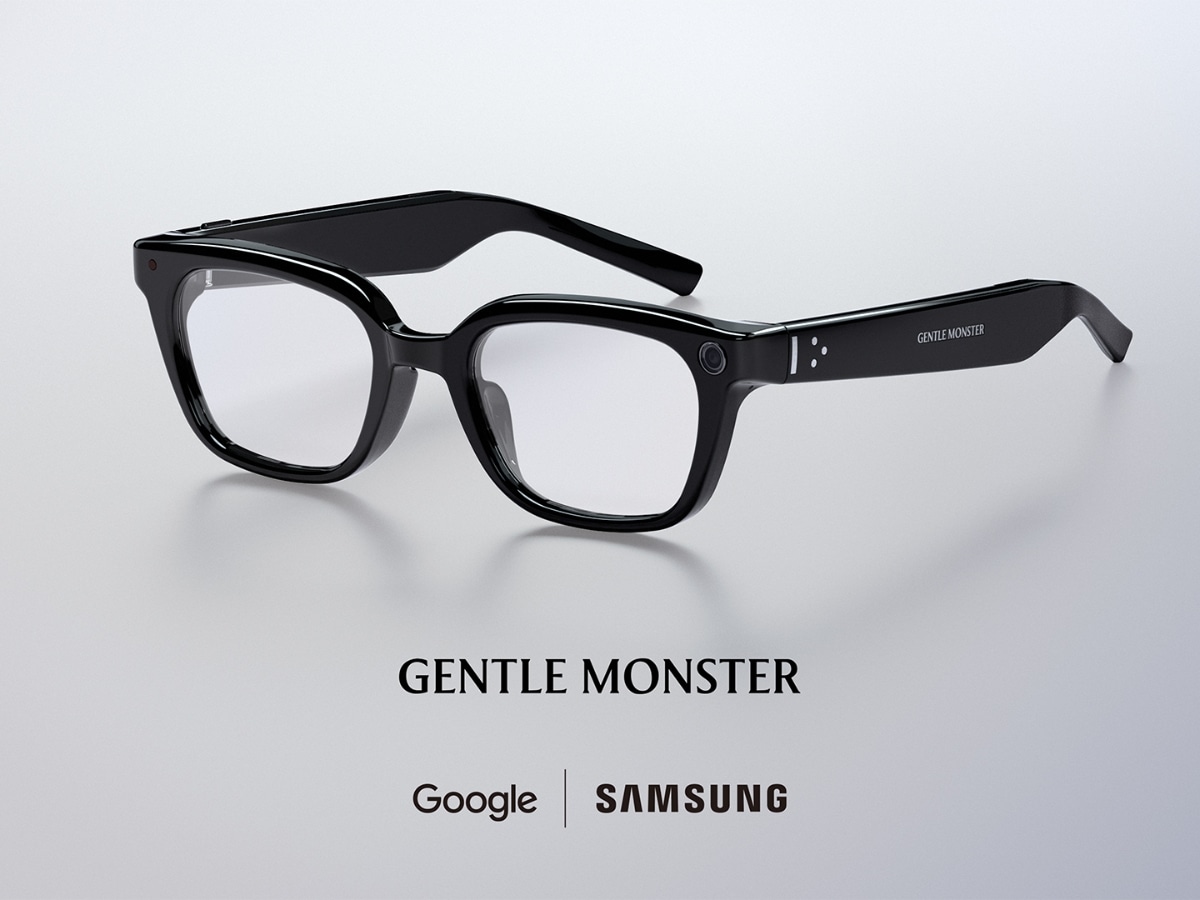
- The Gentle Monster Edition: Aimed at the fashion-forward consumer, this model features a bold, avant-garde silhouette with a straight upper rim and soft lower curves. It is finished in a high-gloss black acetate, catering to the luxury market where eyewear is viewed as a primary style statement.
- The Warby Parker Edition: This version focuses on classic, everyday wearability. Utilizing a rich "tortoiseshell" brown frame with a slightly upswept brow line, it is designed to appeal to the mass market and those who require prescription integration.
Both brands have ensured that the distribution of internal components—such as the battery cells and PCB boards—does not compromise the balance or comfort of the frames. Samsung noted that the development process involved extensive ergonomic testing to ensure the frames make optimal contact with the forehead and ears, reducing the fatigue often associated with heavier smart wearables.
The Privacy Framework and the "Tally Light" Standard
The inclusion of a camera in a wearable device inevitably raises significant privacy concerns. Samsung has addressed this through both hardware and software safeguards. The glasses feature a prominent "tally light"—an LED indicator that glows when the camera or microphones are active. This is a non-bypassable hardware feature designed to alert bystanders that recording or AI analysis is in progress.
Additionally, the device includes "wear detection" sensors. If the glasses are removed from the wearer’s head, all recording and data processing functions are instantly terminated. Samsung has also committed to a "Privacy-First" data policy, stating that visual data processed for real-time AI assistance is not stored on the company’s servers unless explicitly saved by the user.
Won-Joon Choi, Chief Operating Officer at Samsung, stated that as agentic AI reshapes the mobile experience, the company is prioritizing "intuitive and responsive" interactions that respect local regulatory frameworks. This includes compliance with the EU’s AI Act and various regional privacy laws in North America and the Asia-Pacific, including Australia’s evolving digital privacy standards.

Market Context and Competitive Landscape
The launch of the Samsung Intelligent Eyewear places the company in direct competition with Meta, which has seen unexpected success with its Ray-Ban Meta Smart Glasses. While Meta’s offering has focused heavily on social media integration and content creation, Samsung appears to be positioning its product as a productivity and lifestyle tool, leaning heavily on the "prosumer" capabilities of the Gemini AI.
The broader market for AR and smart glasses is projected to grow significantly between 2026 and 2030. Industry analysts suggest that the "screenless" AI interface represents the next major evolution in computing, following the desktop, mobile, and cloud eras. By bypassing the need for a screen, Samsung is betting that users will value "presence" and "engagement in the moment" over the immersive but isolating experiences offered by VR headsets like the Apple Vision Pro.
The strategic importance of this launch cannot be overstated. For Samsung, the glasses serve as a "glue" for the Galaxy ecosystem, incentivizing users to remain within their hardware loop by offering features that are only unlocked when paired with a Galaxy smartphone or watch.
Global Release and Economic Implications
While a specific price point was not disclosed during the London event, industry insiders suggest the frames will be positioned in the premium tier, likely ranging between $350 and $550 USD, depending on lens customization and brand partnership.
The initial rollout is scheduled for the fourth quarter of 2026, with the United States and South Korea serving as the primary launch markets. A secondary wave of releases is expected to follow in early 2027, covering the United Kingdom, the European Union, and Australia.
The success of the Samsung Intelligent Eyewear will likely depend on the "utility-to-friction" ratio. If the Gemini AI can provide enough genuine value—through live translation, navigation, and hands-free productivity—to justify the need for another rechargeable device, Samsung may finally succeed where others have faltered. As the "Agentic AI" era begins, these glasses represent Samsung’s most aggressive attempt yet to move the center of the digital world from the palm of the hand to the bridge of the nose.



 Yuyun Lusiyani
 Joko Widodo
 Jia Lissa
 Pevita Pearce
 admin
admin