
 Nila Kartika Wati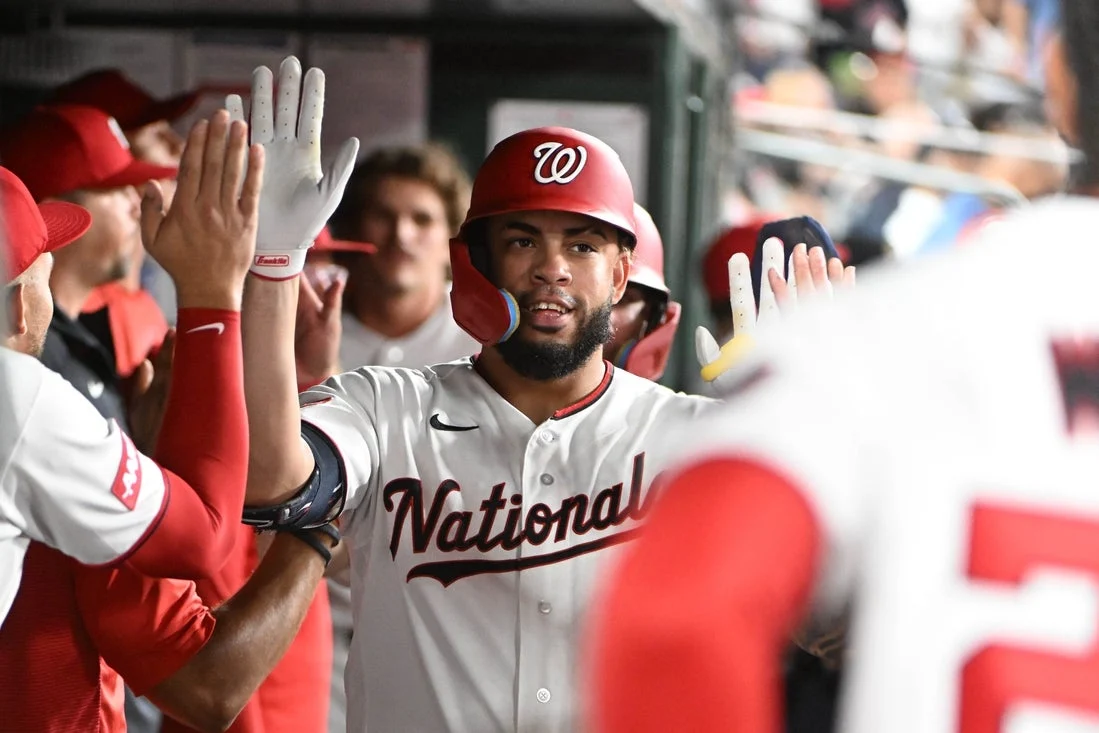
The Washington Nationals are poised to extend their impressive post-All-Star break surge, aiming for their fourth consecutive series victory as they welcome the Toronto Blue Jays to Nationals Park on Wednesday afternoon. This pivotal matchup, the series finale, carries significant weight for both clubs as they navigate the critical latter stages of the Major League Baseball season. The Nationals, riding a wave of recent success, demonstrated their resilience and offensive prowess in a hard-fought 8-6 triumph over the Blue Jays on Tuesday, evening the series after a narrow 3-2 defeat in Monday’s opener. This recent stretch has seen Washington secure six wins in their last nine contests, a performance that manager Blake Butera highlighted as indicative of the heightened stakes. "Obviously, we understand meaningful games going into late July and August," Butera commented, underscoring the palpable shift in atmosphere as the calendar turns towards the pennant race. "Each win just feels like it means more and more every time out." With an demanding eight-game road trip looming, featuring matchups against division rivals Atlanta and Philadelphia, the Nationals are keen to conclude their current six-game homestand on a high note, carrying momentum into challenging away environments.
Blue Jays Seek Series Split Amidst Injury Concerns
For the Toronto Blue Jays, the Wednesday matinee presents an opportunity to salvage a split of their six-game road trip, which has seen them compile a 4-8 record since the All-Star break. Their performance has been inconsistent, leaving them in a precarious position in the competitive American League playoff picture. Manager John Schneider’s club will rely on rookie right-hander Trey Yesavage (4-5, 3.92 ERA) to anchor their pitching effort against the Nationals’ Zack Littell (7-8, 5.17 ERA), a fellow right-hander who may operate behind an opener. The Blue Jays’ recent pitching woes are particularly evident in Yesavage’s last four starts, a stretch that has seen him go winless with a 6.11 ERA. In his most recent outing against the Boston Red Sox on Friday, Yesavage surrendered three runs on five hits over four innings, a performance marred by a high pitch count despite striking out a career-high nine batters. "I was getting ahead early," Yesavage reflected on his outing. "I think every batter I faced, I got to a two-strike count. It’s just a matter of putting them away, which really drove up the pitch count." This inefficiency on the mound, while showcasing his strikeout potential, raises questions about his ability to go deep into a game against a potent Nationals lineup. Notably, Yesavage has no prior history facing the Nationals, adding another layer of uncertainty to his start.
The Blue Jays’ offensive efforts have also been tempered by a significant injury concern. On Tuesday night, slugger Vladimir Guerrero Jr. exited the game in the fourth inning with right hamstring tightness after legging out an infield single in the third. Despite Guerrero Jr.’s desire to continue playing, manager John Schneider opted for caution. "He wanted to stay in," Schneider stated, "and it was just my call to be careful with him and not have anything worse happen." Schneider did not rule out Guerrero Jr.’s participation in Wednesday’s game, a development that would be a significant boost to the Blue Jays’ offensive firepower. In Tuesday’s contest, George Springer provided a late spark for Toronto with a three-run homer in the eighth inning, narrowing the Nationals’ lead to 8-6. Springer has been a bright spot for the Blue Jays since the All-Star break, batting .333 (14-for-42) with two doubles, three homers, five runs, and 11 RBIs, elevating his season average to .234. Kazuma Okamoto contributed his 24th home run of the season for the Blue Jays, a testament to his consistent power output.
Nationals’ Offensive Surge Fuels Momentum
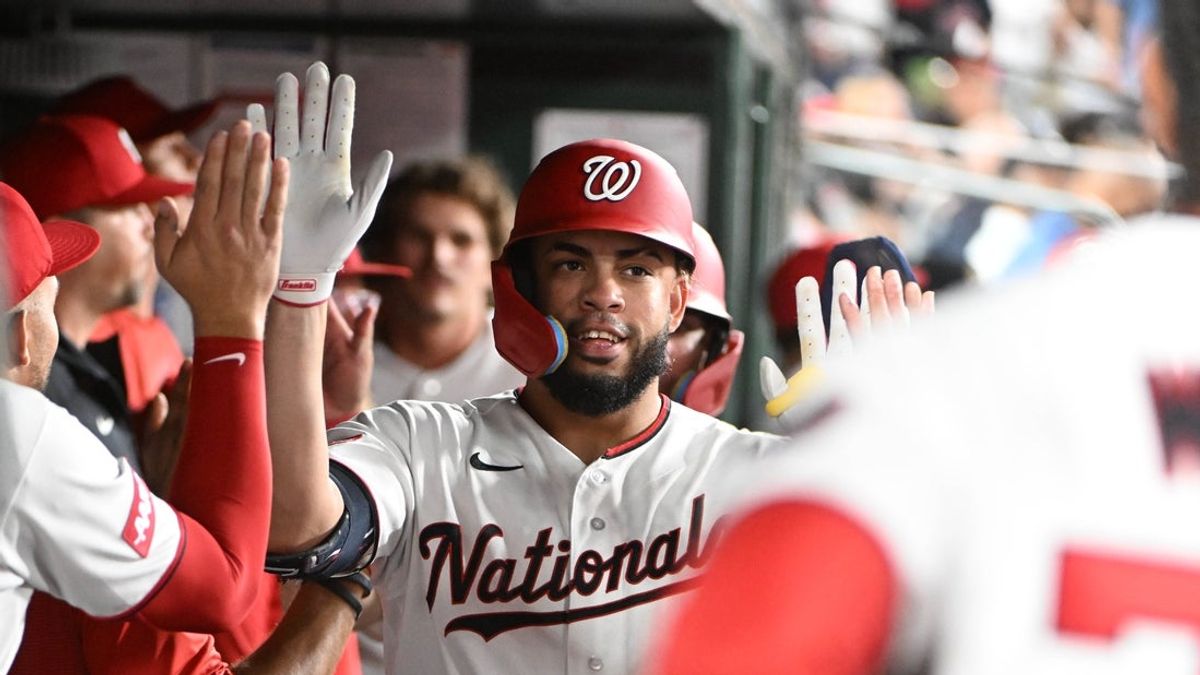
The Washington Nationals’ recent success is largely attributable to a resurgent offense that has demonstrated both patience and power. In Tuesday’s victory, the Nationals leveraged early plate discipline, drawing a team-record six walks in the first inning against Blue Jays starter Shane Bieber, to set the tone. Their offensive onslaught continued in the fourth inning with back-to-back home runs from first baseman Luis Garcia Jr. and outfielder Dylan Crews. Garcia Jr.’s two-run blast in the fourth inning, captured in a photograph by Brad Mills of Imagn Images, exemplified the Nationals’ timely hitting. Crews, who has been on a tear, has now reached base safely in 10 consecutive games, batting an impressive .314 (11-for-35) with three doubles, three homers, eight walks, nine runs, and six RBIs during this span.
The collective offensive might of the Nationals has not gone unnoticed by their teammates. Closer Clayton Beeter, who secured his 11th save on Tuesday, expressed his confidence in the lineup. "It’s unbelievable," Beeter remarked. "One through nine, I feel like everybody’s a tough out. Just talking to guys around the league, everybody’s respecting our lineup, and that’s good to see." This sentiment of respect from opposing clubs highlights the growing apprehension surrounding the Nationals’ offensive capabilities, a stark contrast to earlier in the season.
Pitching Matchup: Littell vs. Yesavage
The pitching matchup for Wednesday’s series finale pits Zack Littell against Trey Yesavage. Littell, a veteran right-hander, has shown flashes of effectiveness, particularly when utilizing an opener strategy. After surrendering eight runs in a start against the Oakland Athletics on July 18, Littell worked behind an opener in his subsequent outing and delivered a more polished performance. Though he took the loss, he allowed only one run on four hits over five innings in a tight 3-2 defeat to the Arizona Diamondbacks on Friday. Littell’s career numbers against the Blue Jays are solid, with a 2-0 record and a 4.68 ERA in six appearances, including four starts. This experience against Toronto could prove beneficial.
Conversely, Yesavage, a rookie, is navigating a challenging stretch in his first full MLB season. His recent struggles, particularly the inability to consistently finish innings efficiently, have put added pressure on the Blue Jays’ bullpen. The Nationals’ ability to draw walks and work deep into counts could further exacerbate Yesavage’s pitch count issues, potentially leading to an earlier exit and an increased reliance on Toronto’s relief corps.
Broader Implications: Playoff Race and Team Trajectory
The outcome of this series has significant implications for both teams as they jockey for position in their respective playoff races. For the Nationals, a series win would not only extend their impressive streak but also solidify their status as a team capable of competing in the latter half of the season. This surge in performance could boost morale and confidence, providing a crucial psychological edge as they embark on a difficult road swing. The team’s recent offensive explosion, coupled with improved pitching performances, suggests a potential turning point. Analyzing their performance since the All-Star break, the Nationals have shown a marked improvement in key offensive metrics, including on-base percentage and slugging percentage. Their ability to win close games and come from behind, as evidenced by Tuesday’s victory, indicates a growing maturity and resilience within the roster.
For the Blue Jays, the series split is the minimum expectation heading into the final game. Failure to do so would represent another step backward in their quest for a postseason berth. Their inconsistent play since the break has allowed other teams to gain ground, and any further slip-ups could prove costly. The health of key players like Vladimir Guerrero Jr. will be paramount, and the team will need to find more consistent offensive production from their entire lineup to compete effectively in the coming weeks. The Blue Jays’ ability to rebound from their recent road trip struggles and string together wins will be a critical indicator of their playoff aspirations. The analytical data suggests that while the Blue Jays possess significant power, their overall team batting average and on-base percentage have been lagging, making them susceptible to strong pitching and well-executed defensive strategies.
As the season progresses, the Nationals appear to be trending upwards, displaying the kind of form that could see them become spoilers or even legitimate contenders. The Blue Jays, on the other hand, are at a crucial juncture, needing to find a more consistent rhythm and address any lingering injury concerns to remain firmly in the playoff conversation. Wednesday’s game at Nationals Park is more than just a mid-summer contest; it’s a litmus test for both clubs, shaping their trajectories as the dog days of August approach.



 Yuyun Lusiyani
 Joko Widodo
 Jia Lissa
 Pevita Pearce
 admin
admin
