
 Jia Lissa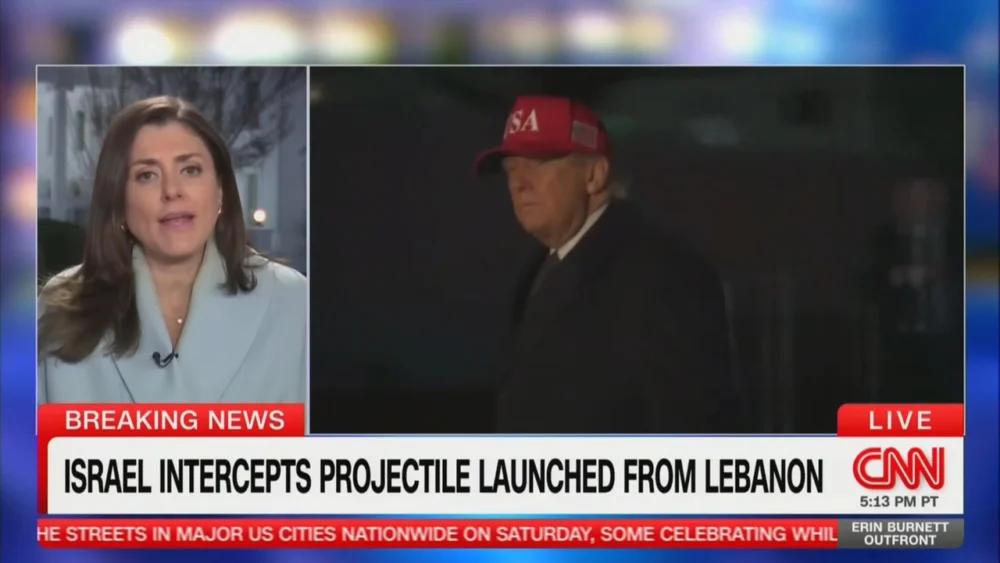
President Donald Trump returned to the White House on Sunday evening following a weekend at his Mar-a-Lago estate, notably declining to address the press corps regarding the ongoing military operations in the Middle East. Despite the gravity of the recent joint U.S.-Israeli strikes that resulted in the death of Iranian Supreme Leader Ali Khamenei and several high-ranking officials within the Islamic Revolutionary Guard Corps (IRGC), the President focused his public interactions on the aesthetic updates to the White House grounds. As he traversed the South Lawn at approximately 8:14 p.m. ET, the President bypassed a group of shouting reporters, choosing instead to highlight the installation of new historical monuments in the Rose Garden.
CNN’s senior White House correspondent Kristen Holmes, who was present for the President’s arrival, noted the unusual nature of the encounter. Traditionally, the President utilizes the "chopper talk" format to engage with the media, often answering questions for several minutes before entering the residence. However, on this occasion, Holmes reported that the President "completely ignored" inquiries regarding the escalation of hostilities with Iran and the status of American service members. Instead, the President gestured toward two newly installed statues, which appeared to depict Founding Fathers Thomas Jefferson and Benjamin Franklin. Describing the monuments as "unbelievable," the President encouraged those present to view the works before retreating into the White House without providing a briefing on the military situation.
The Symbolism of the Rose Garden Installations
The installation of the Jefferson and Franklin statues comes at a time of intense national and international scrutiny. According to White House associates, the statues were placed as part of a broader effort to emphasize American heritage and the foundational principles of the Republic. The timing, however, has drawn criticism from media observers and political analysts who argue that the President is using domestic symbolism to deflect from the immediate complexities of a major foreign conflict.
Emma Nicholson, an associate producer for CBS News, captured the moment on social media, documenting the President’s brief comments on the "unbelievable" craftsmanship of the statues. While the White House Historical Association has not yet released a formal statement on the origin of these specific bronzes, their placement in the Rose Garden—a site often used for major policy announcements and diplomatic receptions—suggests a desire to cement a specific historical narrative during a period of wartime leadership.
Operation Epic Fury: A Strategic Overview
The silence from the President on Sunday night stands in stark contrast to the seismic shifts occurring in the Middle East. Over the preceding 48 hours, the United States and Israel executed a coordinated military campaign dubbed "Operation Epic Fury." This operation involved a series of high-precision kinetic strikes targeting command-and-control centers across Tehran and other strategic Iranian hubs.
The primary objective of the mission was the "decapitation" of the Iranian leadership structure. Reports confirmed that Supreme Leader Ali Khamenei was killed in a strike on a secure compound, marking the most significant shift in Iranian governance since the 1979 Revolution. Alongside Khamenei, dozens of senior military and political figures were eliminated, effectively paralyzing the regime’s immediate ability to coordinate a large-scale conventional response.
Military analysts suggest that the success of Operation Epic Fury relied on unprecedented intelligence sharing between the U.S. and Israeli Mossad. The use of stealth technology and cyber-warfare to disable Iranian air defense systems allowed coalition aircraft to operate with near-impunity over Iranian airspace. Despite these tactical successes, the operation has not been without cost, leading to significant questions regarding the long-term stability of the region and the potential for asymmetric retaliation.
Casualties and the Human Cost of Conflict
While the administration has touted the military success of the strikes, the human cost to the United States military has become a focal point for domestic concern. On Saturday, three American service members were killed during a retaliatory drone strike on a U.S. outpost, and five others sustained injuries ranging from shrapnel wounds to traumatic brain injuries.
Prior to his return to Washington, President Trump released a pre-recorded video message addressing the losses. In the video, he adopted a somber tone, stating, "As one nation, we grieve for the true American patriots who have made the ultimate sacrifice for our nation, even as we continue the righteous mission for which they gave their lives." He further warned the American public that the conflict might result in additional casualties, noting, "Sadly, there will likely be more before it ends. That’s the way it is, likely be more. But we’ll do everything possible where that won’t be the case."
The President’s admission that more deaths are "likely" has sparked a debate on Capitol Hill regarding the transparency of the administration’s exit strategy. Members of the press, including Kristen Holmes, have sought clarification on what the "righteous mission" entails and how long the U.S. intends to maintain its current kinetic posture.
Timeline of the Weekend’s Events
To understand the current tension, a review of the weekend’s rapid developments is essential:
- Friday, 11:00 p.m. ET: Initial reports of large explosions in Tehran and Isfahan surface on social media. The Pentagon remains silent.
- Saturday, 4:00 a.m. ET: The Israeli Defense Forces (IDF) and the U.S. Central Command (CENTCOM) issue a joint statement confirming "Operation Epic Fury" is underway, targeting "terrorist infrastructure and leadership."
- Saturday, 1:00 p.m. ET: Intelligence sources confirm the death of Ali Khamenei. The Iranian state media enters a period of total blackout.
- Saturday, 6:30 p.m. ET: A suicide drone attack on a U.S. base in the region results in three American fatalities.
- Sunday, 12:00 p.m. ET: President Trump conducts an interview with The Daily Mail, asserting that the mission will be concluded in "four weeks—or less."
- Sunday, 5:00 p.m. ET: A pre-recorded video of the President is released, vowing to "avenge" the deaths of the fallen service members and deliver a "punishing blow to the terrorists."
- Sunday, 8:14 p.m. ET: The President arrives at the White House, ignores press questions, and inspects the new Rose Garden statues.
Strategic Analysis: The "Four-Week" Prediction
One of the most controversial aspects of the President’s recent rhetoric is his claim that the conflict with Iran will be resolved in less than a month. In his interview with The Daily Mail, Trump expressed confidence that the removal of the top tier of Iranian leadership would lead to a rapid collapse of the regime’s resistance.
However, defense experts caution that "decapitation strikes" rarely lead to immediate peace. The "four-week" timeline is viewed by many in the diplomatic community as highly optimistic. While the IRGC’s top brass has been severely diminished, the presence of "sleeper cells" and proxy militias—such as Hezbollah in Lebanon and various PMF groups in Iraq—remains a potent threat. The vacuum created by Khamenei’s death could lead to an internal power struggle or a desperate, decentralized insurgency.
Furthermore, the "punishing blow" promised by the President suggests a transition from targeted strikes to a broader campaign against Iranian infrastructure. This escalation carries the risk of drawing in other regional powers or disrupting global energy markets, as the Strait of Hormuz remains a critical chokepoint for oil transit.
Domestic and International Reactions
The reaction to the President’s silence on Sunday has been divided along partisan lines. Supporters of the administration argue that the President is projecting an image of calm and confidence by focusing on the enduring symbols of American democracy. They suggest that the military details are best left to the Department of Defense and that the President’s primary role is to provide moral leadership and resolve.
Conversely, critics argue that the refusal to answer questions from the press pool undermines the principles of transparency, particularly during a time of war. Representative Seth Moulton (D-MA), a member of the House Armed Services Committee, stated in a brief interview that "ignoring the press to look at statues while American families are mourning their children is a dereliction of the duty to inform the public."
Internationally, the reaction has been a mix of support and apprehension. European allies, while largely supportive of efforts to curb Iranian nuclear ambitions and regional aggression, have expressed concern over the lack of a clear post-strike diplomatic framework. The United Nations Security Council is expected to convene an emergency session on Monday to discuss the implications of the Supreme Leader’s death and the legality of the joint strikes under international law.
Conclusion and Future Implications
As Washington moves into a new week, the focus remains on the Pentagon for updates on the military theater and on the White House for a more formal articulation of U.S. policy. The installation of the Jefferson and Franklin statues in the Rose Garden serves as a reminder of the President’s preference for historical grandiosity, but the unanswered questions regarding "Operation Epic Fury" continue to mount.
The President’s promise to "avenge" the fallen service members suggests that the United States is prepared for a sustained engagement, despite the "four-week" estimate provided to the media. With the Iranian regime in a state of unprecedented disarray, the coming days will determine whether the Middle East is entering a period of fundamental realignment or a new era of protracted and unpredictable conflict. For now, the silent return of the Commander-in-Chief to the White House leaves both the press and the public waiting for a comprehensive explanation of the nation’s path forward.

 Yuyun Lusiyani
 Joko Widodo
 Eva Lovia
 Pevita Pearce