
 Pevita Pearce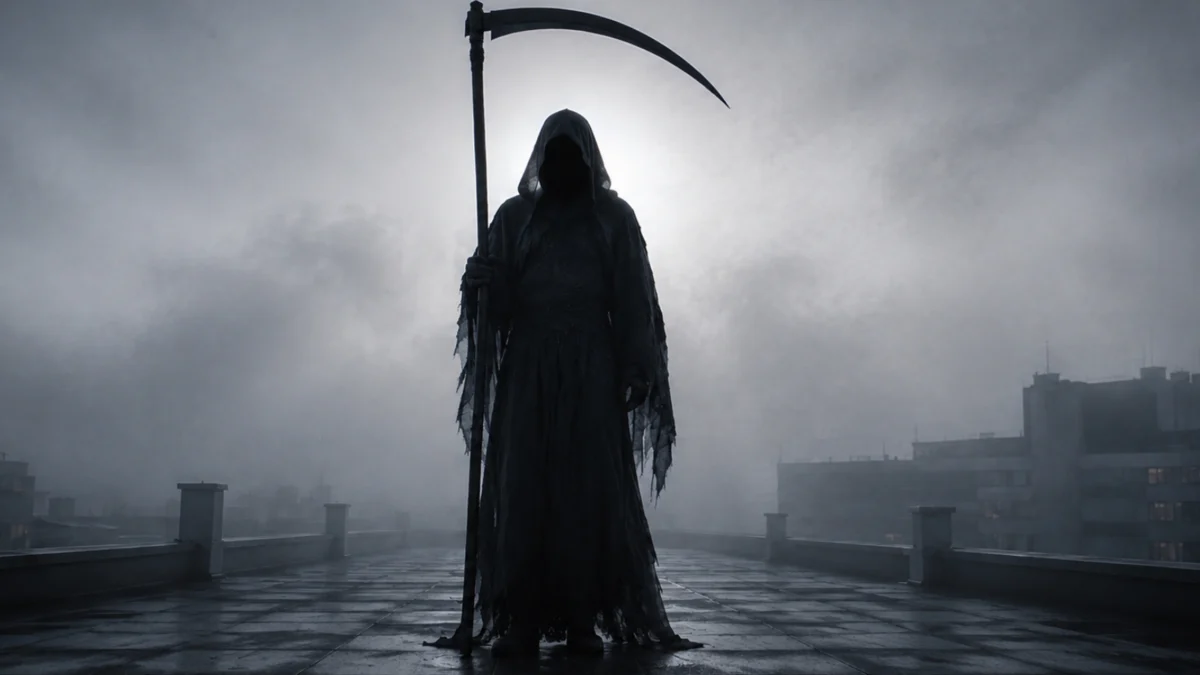
The tranquility of Ysbyty Glan Clwyd in St Asaph, North Wales, was severely disrupted on June 6 when a man dressed in a costume reminiscent of the Grim Reaper scaled the hospital’s roof. Leon Gillespie, a 26-year-old resident of the region, was observed by terrified patients, visitors, and medical staff as he paced above the hospital’s main entrance while brandishing a long blade. The incident, which triggered a significant response from emergency services, concluded with Gillespie’s arrest and subsequent legal proceedings that have highlighted growing concerns regarding security and public order on National Health Service (NHS) premises.
According to court reports and witness testimonies, Gillespie was dressed entirely in black, wearing a costume that many observers identified as the personification of death. While on the roof, he reportedly made deliberate noises to attract attention and stared down at the individuals entering and exiting the medical facility. The sight of a figure associated with mortality standing atop a building dedicated to healing caused immediate distress among the hospital’s occupants, many of whom were already dealing with personal health crises or visiting ailing relatives.
Emergency Response and Tactical Intervention
The response to the situation was immediate and multi-faceted. North Wales Police dispatched four patrol cars to the scene, while the North Wales Fire and Rescue Service provided specialized vehicles and equipment to manage the high-altitude confrontation. The area surrounding the entrance of Ysbyty Glan Clwyd was cordoned off to ensure the safety of the public and to provide a clear operating space for emergency crews.
Negotiators and emergency personnel worked to bring Gillespie down from the roof without further incident. After a period of tension, the 26-year-old was successfully apprehended and taken into custody. During the subsequent investigation, Gillespie offered a peculiar defense regarding his attire. While witnesses and the prosecution described the outfit as a Grim Reaper costume, Gillespie insisted that he was dressed as a crow. He clarified through legal representation that he was not portraying the character from the popular film and comic series The Crow, but rather a generic bird. This distinction, however, did little to mitigate the legal consequences of his actions.
Legal Proceedings and Judicial Outcomes
Leon Gillespie appeared before the Llandudno Magistrates’ Court to face charges stemming from the hospital incident as well as a series of prior criminal activities. He pleaded guilty to the charge of causing a nuisance without reasonable excuse on NHS premises. Under the Criminal Justice and Immigration Act 2008, specifically Section 119, it is a criminal offense to cause a nuisance or disturbance on NHS grounds that interferes with the staff’s ability to work or patients’ ability to receive care.
The court heard that the June 6 rooftop stunt was not Gillespie’s first brush with the law in 2024. His legal troubles began earlier in the spring. On March 26, Gillespie was involved in a theft at a Pets at Home retail outlet, where he stole cat food and kitty litter valued between £30 and £40. Following this, on May 28, he was again caught shoplifting, this time targeting a Sainsbury’s supermarket in Llandudno, where he stole various food and drink items.

For the hospital disturbance, the magistrates handed down a fine of £200 (approximately $269 USD). The prior thefts resulted in an additional £100 fine ($134 USD), along with a requirement to pay £100 in prosecution costs and £50 in compensation to the affected businesses. The total financial penalty reflects the court’s attempt to address a pattern of erratic and antisocial behavior that had escalated from retail theft to a high-profile public order offense at a critical infrastructure site.
A Chronology of Erratic Behavior
The timeline of Gillespie’s activities suggests a rapid decline in behavioral stability over the course of three months:
- March 26, 2024: Theft of feline supplies from Pets at Home.
- May 28, 2024: Shoplifting incident at Sainsbury’s in Llandudno.
- June 6, 2024: Rooftop standoff at Ysbyty Glan Clwyd involving a black costume and a blade.
- September 2024: Sentencing at Llandudno Magistrates’ Court.
The transition from low-level shoplifting to a theatrically charged rooftop protest at a hospital has raised questions about the underlying motivations behind Gillespie’s actions. During the court proceedings, no clear explanation or motive was provided for why he chose to target the hospital or why he selected the specific costume and blade for the June 6 event.
Security Challenges and the NHS "Zero Tolerance" Policy
The incident has prompted a response from the Betsi Cadwaladr University Health Board, which oversees the operations of Ysbyty Glan Clwyd. A spokesperson for the board emphasized that healthcare facilities must remain safe environments for both employees and the public.
"The health board has previously stated it has a zero-tolerance approach to abuse, aggression, or nuisance within its hospital sites," the spokesperson remarked. The statement underscored the fact that such incidents do more than just cause a temporary distraction; they divert critical resources away from patient care and can cause lasting psychological trauma to vulnerable individuals.
Ysbyty Glan Clwyd is a major district general hospital in North Wales, serving as a hub for emergency medicine, surgery, and specialized care. The presence of an armed individual on the roof necessitated the temporary redirection of administrative focus and the deployment of security protocols that can delay the movement of patients and medical supplies.
Broader Implications of Public Nuisance in Healthcare Settings
The case of Leon Gillespie is part of a broader trend of unusual and often disruptive incidents occurring at hospitals globally. While some events are driven by benign intentions, such as a heavy metal band performing for a terminally ill patient in Ottawa, others involve more sinister or delusional behaviors. For instance, in 2023, South African authorities arrested TikTok influencer Matthew Lani for allegedly impersonating a doctor and sneaking into a hospital to film content.

When individuals engage in "stunts" or "performances" in medical settings, the legal system must balance the severity of the disruption against the intent of the actor. In the United Kingdom, the "nuisance on NHS premises" charge is specifically designed to address behaviors that do not necessarily reach the threshold of violent assault but are nonetheless damaging to the function of the healthcare system.
The use of a blade in Gillespie’s case added a layer of potential danger. While he was charged with a nuisance offense, the presence of a weapon often triggers more severe "possession of an offensive weapon" charges. The court’s decision to focus on the nuisance aspect suggests a judicial focus on the disruption of the hospital’s peace rather than an intent to commit physical harm with the blade.
The Cost of Emergency Resource Diversion
One of the primary concerns raised by local authorities in the wake of the Gillespie case is the cost and resource drain associated with the emergency response. The deployment of four police vehicles and multiple fire service units represents a significant expenditure of taxpayer money. In many jurisdictions, there is an ongoing debate regarding whether individuals who cause "self-inflicted" emergency scenarios should be held financially liable for the costs of the deployment.
In this instance, the £200 fine for the hospital incident is seen by some members of the public as a lenient penalty given the scale of the emergency response. However, the magistrates’ court must operate within sentencing guidelines that consider the defendant’s financial means and the specific nature of the guilty plea.
Conclusion and Future Outlook
The sentencing of Leon Gillespie brings a close to a series of bizarre events that have troubled the St Asaph and Llandudno communities. While the "Grim Reaper" of Ysbyty Glan Clwyd may have claimed he was merely a "crow," the impact of his actions was felt deeply by those who witnessed the event.
As hospitals continue to face challenges ranging from staffing shortages to security breaches, the Gillespie case serves as a reminder of the fragility of the "safe space" that medical facilities are intended to be. The Betsi Cadwaladr University Health Board and North Wales Police have signaled that they will continue to pursue prosecution for any individual who compromises the safety and serenity of healthcare environments.
For now, the residents of St Asaph can return to a sense of normalcy, though the image of a black-clad figure on the hospital roof remains a chilling footnote in the local news cycle of 2024. The case highlights the necessity of robust security measures and the continued application of public order laws to protect the sanctity of the National Health Service.


 Yuyun Lusiyani
 Joko Widodo
 Jia Lissa
 admin
admin
