
 Eva Lovia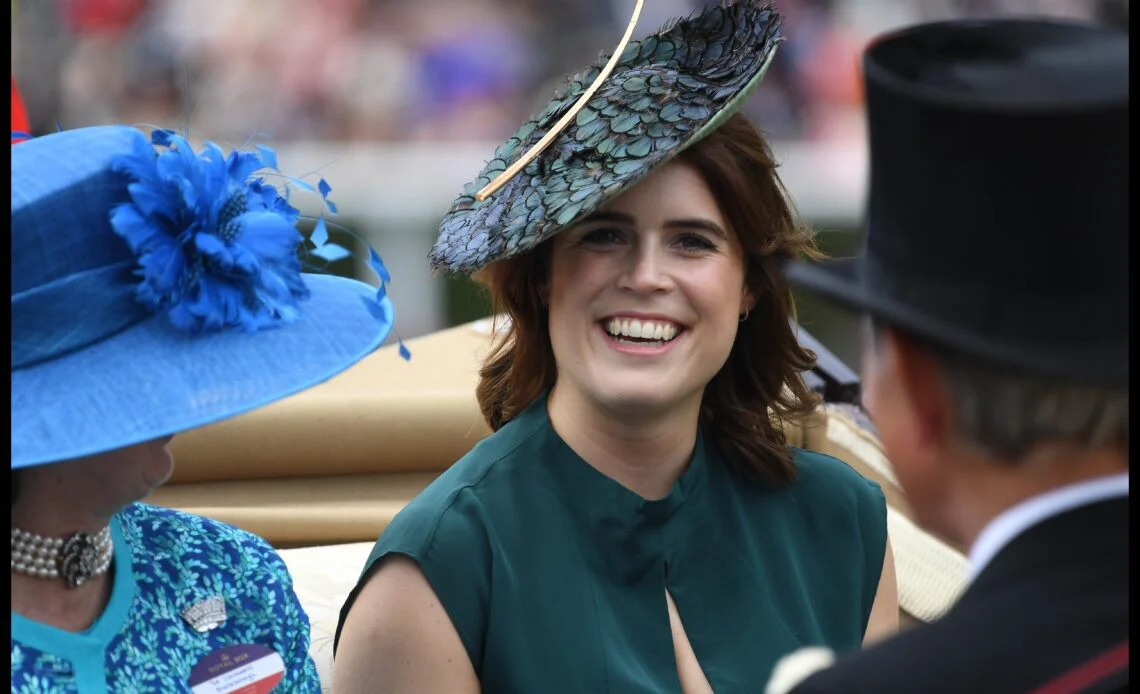
The newest addition to the British Royal Family, the daughter of Princess Eugenie and her husband Jack Brooksbank, has officially secured her place in the line of succession, becoming the fifteenth individual in line to the throne. Her birth, which occurred on August 3rd, 2026, at 6:20 PM in a Lisbon hospital, has triggered a notable reshuffling of royal positions, impacting several prominent members of the extended Royal Family. This significant event, marking the first time a member of the House of Windsor has been born in Portugal, has also ignited considerable interest and speculation regarding the baby’s as-yet-unannounced name.
The arrival of Princess Eugenie’s third child has directly influenced the standing of her great uncle, Prince Edward, and her aunt, Anne, the Princess Royal. Prior to the birth, Prince Edward, Duke of Edinburgh, occupied the fifteenth position. He has now moved down to sixteenth place, superseded by his new grand-niece. Similarly, the Princess Royal, who has seen her position in the line of succession gradually descend over the decades, now finds herself at nineteenth, a testament to the continuous growth and generational shifts within the monarchy.
A Shifting Tapestry of Succession
The intricacies of royal succession are governed by the Bill of Rights 1689 and subsequent acts, most notably the Succession to the Crown Act 2013, which abolished the male-preference primogeniture for those born after October 28, 2011. This means that while older generations may still be subject to older rules, all royal births after this date are subject to the new laws, where sons and daughters have equal claim to the throne.
For Prince Edward, his journey in the line of succession began with a strong position. Born the youngest child of Queen Elizabeth II and Prince Philip, Duke of Edinburgh, he was third in line at the time of his birth. However, the births of his elder siblings’ children, including Prince Andrew’s daughters Princess Beatrice and Princess Eugenie, and subsequently Eugenie’s own children, have steadily moved him further down the order. His current position at sixteenth reflects the ever-expanding family tree of the monarchy.
The Princess Royal’s situation is also a fascinating illustration of succession dynamics. Anne, the second child of Queen Elizabeth II, was initially second in line to the throne. Her ascent to second place occurred in February 1952, following her mother’s accession to the throne. However, the birth of her younger brother, Prince Andrew, in 1960, saw him placed ahead of her in the line of succession. Over the years, as her siblings and their descendants have been born, Anne’s position has continued to descend. The arrival of Princess Eugenie’s new daughter further solidifies this downward trend, placing her at nineteenth.
The birth of Princess Eugenie’s daughter has also highlighted a significant demographic reality within the senior ranks of the monarchy. With this latest addition, the first 26 individuals in the line of succession are now direct descendants of the late Queen Elizabeth II and Prince Philip, Duke of Edinburgh. Extending this further, the first 32 positions are occupied by direct descendants of King George VI and Queen Elizabeth, the Queen Mother. This concentration underscores the enduring legacy of Queen Elizabeth II’s reign and the extensive lineage she and Prince Philip established.
A Birth Marked by Tradition and Location
The official announcement of the baby’s arrival was made through the @RoyalFamily social media account on X (formerly Twitter) on August 4th, 2026. The statement, brimming with familial joy, read: "Her Royal Highness Princess Eugenie and Mr Jack Brooksbank are delighted to announce the safe arrival of their daughter, born on Monday, 3rd August 2026, at 6.20pm, at a hospital in Lisbon, Portugal. The baby was born weighing 6 pounds 9 ounces." The message concluded with a poignant acknowledgement of the baby’s place within the wider family: "Their Majesties The King…" followed by a picture, indicating the King’s awareness and likely personal notification.
The birth of the baby occurred remarkably close to a significant anniversary – the 126th birthday of Queen Elizabeth, the Queen Mother, who was born on August 4th, 1900. This proximity in timing may subtly underscore a connection to historical figures within the Royal Family.
While no name was immediately provided with the announcement, speculation has been rife. Given Princess Eugenie and Jack Brooksbank’s established pattern of choosing middle names that honour family members for their two sons, August and Ernest, it is widely anticipated that their daughter will also bear a name with familial significance. This tradition was evident with their sons: August, born in February 2021, and Ernest, born in May 2023. The names August and Ernest are both linked to the family of Prince Albert, the consort of Queen Victoria, suggesting a potential inclination towards Victorian-era names or names of historical royal importance.
Naming Speculation: A Nod to the Past?
The choice of Victorian-era names for their sons has led to considerable conjecture about potential names for their new daughter. "Victoria" itself has emerged as a strong contender. The name, while iconic, has not been used as a primary given name within the immediate Royal Family for some time, meaning a new baby named Victoria would not be sharing her first name with a close relative, a factor that might be appealing. Furthermore, "Victoria" is one of Princess Eugenie’s own middle names, further strengthening the possibility of its selection.
Other names frequently mentioned in speculative discussions include Elizabeth, in honour of the late Queen, and perhaps variations of names associated with Queen Victoria’s extensive family. The Royal Family has a long-standing tradition of honouring past monarchs and influential figures through naming conventions, and it is highly probable that the chosen name will reflect this rich heritage. The fact that the baby is a girl for the first time in this particular branch of the family might also influence the selection, potentially leading to a name that is perceived as more traditionally feminine or evocative of royal matriarchs.
A Historic Birthplace and a Glimpse of the Future
The choice of Lisbon, Portugal, as the location for the birth is noteworthy. While many royal births have occurred in London hospitals, particularly in the private Wing of the Lindo at St Mary’s Hospital, Paddington, Princess Eugenie’s choice signifies a personal decision that places her and her family outside of the immediate United Kingdom for this significant event. This is not unprecedented; members of the Royal Family have historically had children in various locations, often influenced by their residences or their partners’ origins. However, it marks a unique chapter for the House of Windsor, being the first instance of a royal birth taking place on Portuguese soil.
The sole image released of the newborn shows her being tenderly held shortly after her birth. The baby is presented as a healthy infant, a source of immense joy for her parents and the wider Royal Family. The immediate dissemination of this image, accompanied by the official announcement, allowed the public to share in the family’s happiness and offered a first glimpse of the newest royal.
Reactions and the Broader Royal Landscape
The news of the birth was met with immediate and widespread positive reactions across social media platforms and within the media. The Royal Family’s official channels were abuzz with congratulatory messages. As noted in the official announcement, Their Majesties The King and Queen were among the first to be informed and expressed their delight. This suggests a close and supportive relationship between the King and his niece, Princess Eugenie, and her family.
The birth also serves as a subtle reminder of the ongoing evolution of the monarchy. While the focus often remains on the direct line of succession to the throne – the King, the Prince of Wales, Prince William’s children – the births of individuals like Princess Eugenie’s daughter underscore the depth and breadth of the modern Royal Family. These births contribute to the continuity of the institution, ensuring that the line of succession remains robust for generations to come, even as the individuals occupying those positions shift and change over time.
The implications of this birth extend beyond mere changes in succession numbers. It represents a new chapter for Princess Eugenie and Jack Brooksbank, expanding their family and their role within the wider royal narrative. Their preference for a more private life, as demonstrated by their choice of birth location, also reflects a modern approach to royal visibility. As the baby grows, her presence will undoubtedly become a more visible part of the royal landscape, though likely within the context of her parents’ chosen level of public engagement. The naming of the child will be the next significant announcement, offering a definitive clue to the family’s inspirations and their connection to the rich history of the British monarchy. The continued development of the Royal Family, marked by such joyous events, ensures its enduring relevance and appeal in the 21st century.


 Yuyun Lusiyani
 Joko Widodo
 Pevita Pearce
 admin
admin
 Lina Irawan