
 Pevita Pearce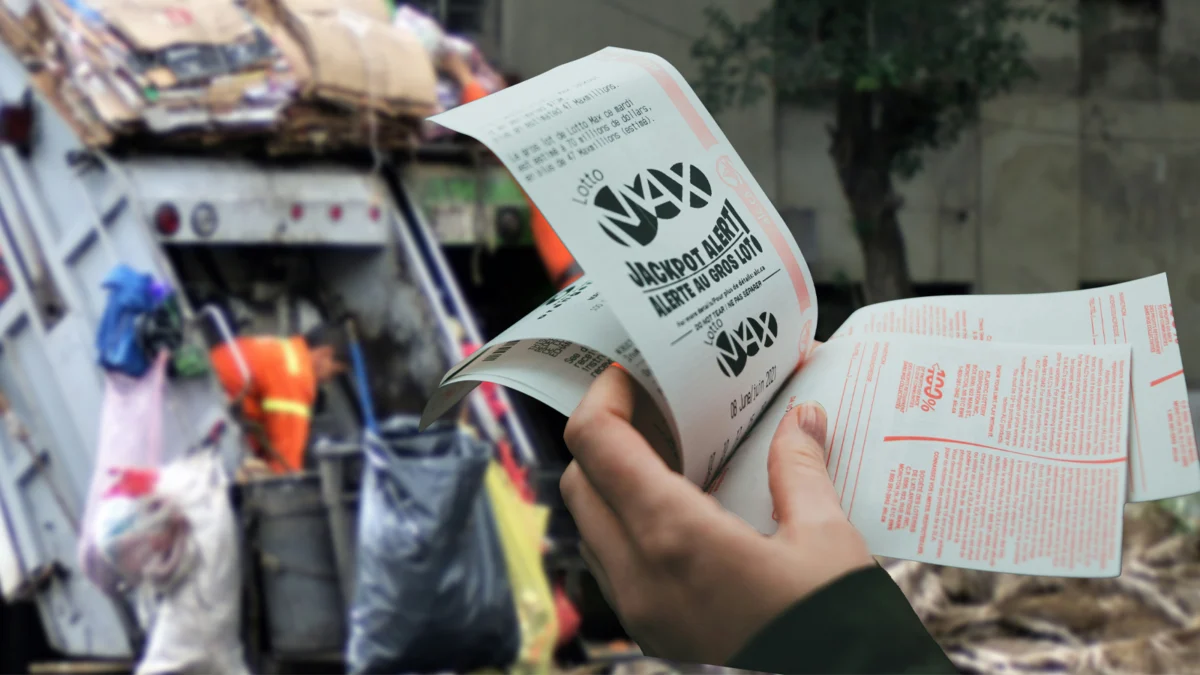
The quiet town of Bitonto, nestled in Italy’s southern Apulia region, recently became the stage for a dramatic narrative of loss and redemption that challenged the logistical capabilities of local municipal services. What began as a routine check of a lottery ticket escalated into a high-stakes salvage operation involving a dedicated team of sanitation workers, a mountain of urban refuse, and a one-million-euro prize that was nearly lost to a landfill forever. This incident, characterized by a simple linguistic misunderstanding and a subsequent "miraculous" recovery, highlights the complexities of lottery prize claims and the unexpected intersections between public services and private fortune.
The sequence of events was set in motion when an anonymous resident of Bitonto visited a local lottery outlet to verify the results of their ticket. Upon scanning the document, the terminal displayed a message indicating that the ticket was "non-payable." In the context of the Italian lottery system, this specific notification does not signify a losing ticket; rather, it indicates that the prize amount exceeds the maximum threshold that an individual retailer is authorized to pay out in cash or via direct bank transfer at the point of sale. Unaware of this technical distinction, the player interpreted the message as a confirmation of a loss. Disheartened, the individual discarded the ticket into a public waste bin, effectively throwing away a life-changing sum of money.
The Anatomy of a Misunderstanding: Lottery Payout Protocols
To understand how such a significant error occurred, it is necessary to examine the operational framework of lottery systems in Italy. Retailers, typically found in local "Tabaccherie" (tobacco shops), serve as the primary interface for lottery players. These vendors are equipped with terminals that can validate tickets for games like SuperEnalotto or regional draws. However, Italian law and lottery regulations impose strict caps on the amounts these shops can handle.
Generally, prizes up to €543.48 can be paid out directly by any authorized retailer. For winnings between €543.49 and €2,300, the retailer may still process the claim, but the payment is often handled through specific banking procedures. When a prize exceeds these amounts—as was the case with the €1 million win in Bitonto—the terminal displays a "non-payable" or "claim at central office" message. The winner is then required to present the physical ticket at a designated branch of the Intesa Sanpaolo bank or at the national lottery headquarters in Rome. The anonymous player’s failure to recognize this protocol nearly resulted in the permanent loss of the €1,000,000 prize, which was won with the numbers 2, 4, 8, 10, and 51.
The realization of the error only occurred later, when a relative of the player reviewed the winning numbers and confirmed that the discarded ticket was, in fact, the jackpot winner. By that time, however, the ticket was no longer in the player’s possession; it had been collected by the municipal waste management service.
The Recovery Mission: SANB’s Two-Day Search
The recovery effort was spearheaded by SANB (Servizi Ambientali del Nord Barese), the company responsible for waste collection and environmental services in Bitonto and several surrounding municipalities. Upon being alerted to the situation, SANB management, led by Roberto Nicola Toscano, had to act with extreme precision to prevent the ticket from being destroyed.
The timing of the incident proved to be a critical factor. The ticket had been discarded shortly before a Sunday collection round. In many jurisdictions, waste collected over the weekend is processed or compacted immediately; however, the specific logistics of the Sunday route in Bitonto meant that the refuse was held in a transit state before being sent to a larger landfill or incineration facility. This window of opportunity allowed SANB to identify the specific truck that had serviced the bin where the ticket was thrown.
The search operation was described by Toscano as a monumental task. A team of sanitation workers was assigned to comb through several tons of garbage. The process involved manually opening bags and sifting through loose debris in search of a small, thermal-paper slip. For two days, the workers labored through the refuse, facing both the physical toll of the work and the statistical improbability of finding such a small item in a vast sea of waste.
On Tuesday morning, the search concluded with a breakthrough. The ticket was discovered inside a torn plastic bag, nestled among other discarded papers and household waste. Despite the environment, the ticket remained legible and intact enough for validation. The discovery prompted a celebration among the SANB staff, with reports indicating that the workers cheered as if they had won the prize themselves.

Financial and Legal Implications of the Recovery
While the recovery of the ticket was a cause for celebration, it also brought to light the administrative and financial realities of such an operation. Before the search began, the lottery winner was required to sign a formal declaration. This legal document stipulated that the winner would be responsible for all costs incurred by SANB during the two-day search. These costs included the labor hours of the personnel involved, the use of machinery, and the disruption of standard waste processing schedules.
This arrangement underscores a vital principle in public administration: the use of public resources for private benefit must be compensated. While the exact "bill" for the search has not been publicly disclosed, it is expected to be a significant sum, though it pales in comparison to the €1 million windfall.
Furthermore, the winner must navigate Italy’s "tax on luck." Since 2020, Italy has imposed a 20% tax on lottery winnings exceeding €500. Consequently, the €1 million prize will be subject to a €200,000 deduction, leaving the winner with a net sum of €800,000, minus the search costs paid to SANB.
Comparative Context: The Global Challenge of Abandoned Tickets
The incident in Bitonto is not an isolated case of lottery-related chaos. The history of gambling is replete with stories of lost, stolen, or discarded tickets that lead to complex legal battles. A notable parallel occurred earlier this year in Arizona, United States, involving a $13 million winning ticket. In that instance, a customer at a Circle K convenience store left behind a ticket that turned out to be a jackpot winner. An employee of the store discovered and cashed the ticket, leading to a protracted legal dispute over the rightful ownership of the funds.
These cases highlight a recurring theme in the lottery industry: the physical ticket is a "bearer instrument." This means that, in many jurisdictions, whoever holds the physical ticket is presumed to be the owner unless evidence of theft or fraud is presented. The Bitonto winner’s decision to involve the waste management company and sign a legal declaration was a crucial step in establishing their rightful claim to the found property, preventing potential disputes that often arise when valuable items are recovered from the trash.
Sociological and Psychological Perspectives
The Bitonto "miracle" also offers insight into the "near-miss" phenomenon and the psychological impact of lottery play. The player’s initial disappointment—the "pocketing of the loss"—is a common reaction in high-stakes environments where expectations are high. The subsequent emotional rollercoaster, from the despair of losing a million euros to the anxiety of a two-day garbage hunt, and finally the relief of recovery, reflects the extreme volatility associated with sudden wealth.
In Bitonto, a town with a population of approximately 50,000, the event has become a local legend. It has reinforced a sense of community pride in the local sanitation workers, who are often overlooked but proved to be the essential agents of the winner’s change in fortune. In a lighthearted post-script to the event, Roberto Nicola Toscano and his colleagues reportedly purchased a scratch-off lottery card themselves. In a final stroke of irony, they won €50, a modest sum that served as a symbolic nod to the "luck" they had just spent forty-eight hours excavating.
Conclusion: Lessons from the Bitonto Incident
The recovery of the €1 million ticket in Bitonto serves as a cautionary tale for lottery participants worldwide. It emphasizes the importance of fully understanding the feedback provided by automated terminals and the necessity of double-checking results against official winning numbers before discarding any ticket.
From an institutional standpoint, the event demonstrated the efficiency and responsiveness of the SANB waste management team. Their ability to backtrack through the waste stream to locate a specific item speaks to the sophisticated logistics involved in modern municipal services.
Ultimately, the story concludes as a rare instance where a series of errors—misinterpreting a message and discarding a fortune—was corrected by sheer persistence and a bit of luck. As the anonymous winner prepares to claim their €800,000 net prize, the town of Bitonto remains a testament to the fact that sometimes, even when a million euros is thrown in the trash, it isn’t necessarily gone for good. The event remains a unique case study in the intersection of human error, public service dedication, and the unpredictable nature of fortune.



 Yuyun Lusiyani
 Joko Widodo
 Jia Lissa
 admin
admin
