
 Pevita Pearce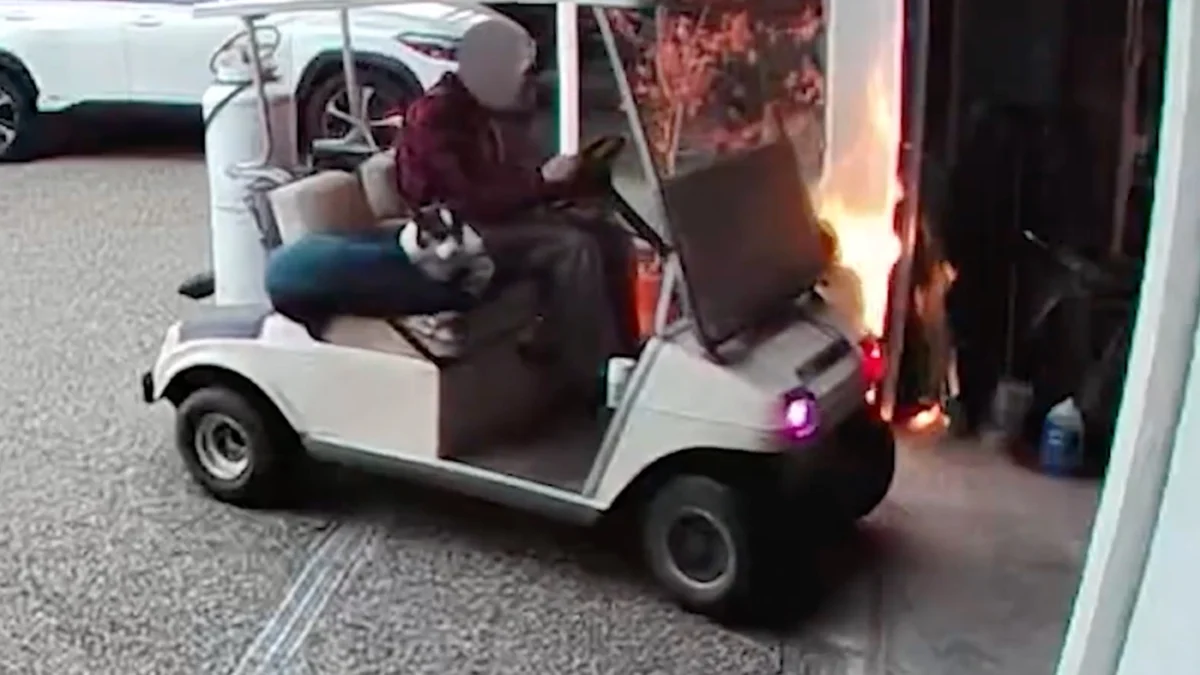
A 47-year-old man in Port Orchard, Washington, was taken into custody following a highly unusual and dangerous series of events involving a homemade flamethrower, a golf cart, and a residential arson that caused significant property damage. The incident, which occurred in a quiet neighborhood in Kitsap County, has drawn national attention due to the surreal nature of the suspect’s getaway and the specialized nature of the weapon used to initiate the blaze. Authorities have identified the suspect and charged him with multiple felonies, including first-degree arson and second-degree assault, following a confrontation with a witness and an ensuing investigation by the Kitsap County Sheriff’s Office and the Washington State Patrol.
Details of the Incident and Immediate Response
The event began when the suspect, whose identity has been processed through the Kitsap County judicial system, arrived at a residence in Port Orchard. According to surveillance footage recovered from the scene, the man approached an open garage adjacent to a residential home while operating a golf cart. Seated next to him on the passenger side of the small vehicle was a dog, which remained with the suspect throughout the duration of the crime.
The suspect was equipped with an improvised incendiary device, described by investigators as a "DIY flamethrower." This mechanism consisted of a high-output weed burner—a tool typically used for agricultural or landscaping purposes to clear vegetation—which had been modified and connected to a large propane tank situated on the rear of the golf cart. Upon reaching the garage, the suspect activated the device, directing a stream of fire toward the wooden frame of the garage doorway.
Witnesses and investigators noted that the fire spread with alarming speed. Surveillance video suggests that the suspect may have utilized an additional liquid accelerant to exacerbate the flames, ensuring the structure was fully engulfed within minutes. At the time of the ignition, the homeowner was inside the main residence, reportedly unaware that the adjacent structure was being systematically destroyed.
Chronology of the Arson and Escape Attempt
The timeline of the event highlights a rapid escalation from property damage to a life-threatening confrontation. Following the ignition of the garage, the suspect did not immediately flee but rather observed the initial spread of the fire before steering his golf cart away from the property.
- Arrival and Ignition: At approximately the time of the incident, the suspect pulled up to the open garage. Using the propane-powered weed burner, he ignited the structural supports of the building.
- Escalation: The fire quickly transitioned from the doorframe to the interior of the garage, fueled by the presence of a vehicle and other household items stored within.
- The Confrontation: As the suspect attempted to leave the neighborhood on the golf cart, he was spotted by a local resident who had witnessed the act of arson. The neighbor attempted to intervene and question the man’s presence and actions.
- Deception and Assault: In a bizarre attempt to deflect suspicion, the suspect claimed to be an employee of the local fire department. However, when the neighbor continued to challenge him, the suspect’s demeanor turned aggressive. He allegedly brandished a lit torch—part of the flamethrower assembly—and waved it menacingly at the neighbor. Furthermore, reports indicate the suspect attempted to use the golf cart to strike the neighbor, leading to the second-degree assault charge.
- Apprehension: The neighbor managed to avoid injury and quickly flagged down a passing Washington State Trooper. The trooper, alerted to the ongoing emergency and the description of the suspect, was able to intercept the golf cart and take the 47-year-old man into custody without further incident.
Impact Analysis: Property Damage and Economic Loss
The financial toll of the incident is substantial, reflecting the destructive power of improvised incendiary devices in residential settings. Fire investigators from the Kitsap County Fire Marshal’s Office conducted a thorough assessment of the scene once the blaze was suppressed by responding fire crews.
The total estimated damages to the structure and its contents range between $150,000 and $175,000. This figure includes the structural repair of the garage, smoke damage mitigation for the primary residence, and the loss of personal property stored within the utility space. A significant portion of the loss is attributed to a vehicle parked inside the garage, valued at approximately $25,000, which was declared a total loss due to heat and fire damage.
In Washington State, arson is categorized by the degree of danger posed to human life and the value of the property destroyed. Under RCW 9A.48.020, Arson in the First Degree occurs when a person maliciously causes a fire or explosion that is "manifestly dangerous to human life" or occurs in a dwelling. Given that the garage was in close proximity to an occupied home, the prosecutor’s office moved forward with the highest possible arson charge.
Official Statements and Legal Proceedings
Following the arrest, the suspect was booked into the Kitsap County Jail. Preliminary reports from the Washington State Patrol and the New York Post indicated that the suspect was under the influence of both alcohol and marijuana at the time of the incident. This intoxication likely played a significant role in the erratic nature of the crime, including the use of a golf cart as a getaway vehicle and the failed attempt to impersonate a firefighter.
The homeowner, who remained unharmed, expressed profound confusion regarding the motive behind the attack. In statements provided to local law enforcement, the victim clarified that he had no prior relationship with the suspect and was unaware of any grievances that might have led to his home being targeted. This "stranger-on-stranger" aspect of the crime has added a layer of concern for the local community, as it suggests a random act of violence rather than a targeted dispute.
A spokesperson for the Kitsap County Sheriff’s Office emphasized the danger posed by the homemade device. "The use of a modified weed burner as a weapon of arson represents a significant threat to public safety," the official stated. "The rapid spread of the fire and the suspect’s subsequent behavior toward a witness demonstrate a complete disregard for the lives of the residents and the first responders who arrived on the scene."
Supporting Data: Arson Trends and Public Safety
The Port Orchard incident mirrors broader concerns regarding arson and the use of accelerants in residential crimes. According to data from the Federal Bureau of Investigation’s (FBI) Uniform Crime Reporting (UCR) program, arson remains one of the most difficult crimes to prosecute due to the destruction of evidence inherent in the act. However, the prevalence of high-definition residential surveillance systems, as seen in this case, has significantly increased the clearance rate for such offenses.
In Washington State, fire departments respond to thousands of intentionally set fires annually. National Fire Protection Association (NFPA) statistics indicate that:
- Property damage from intentional fires in the United States exceeds $1 billion annually.
- Residential structures account for nearly 45% of all arson targets.
- A significant percentage of arsonists (approximately 20-25%) act under the influence of controlled substances or alcohol, which often leads to the use of unconventional methods or vehicles, such as the golf cart utilized in this instance.
The use of a weed burner as a flamethrower also highlights a gap in the regulation of high-heat landscaping tools. While these devices are legal for agricultural use, their modification into "DIY flamethrowers" has become a recurring theme in various criminal reports across the country, prompting some safety advocates to call for stricter guidelines on high-capacity propane attachments.
Broader Implications and Community Safety
The incident in Port Orchard serves as a stark reminder of the unpredictability of suburban crime and the importance of community vigilance. The role of the neighbor was pivotal; without the immediate observation and intervention of a bystander, the suspect may have successfully evaded the initial police response.
The psychological impact on the victim and the neighborhood is often more enduring than the physical damage. "Stranger-on-stranger" arson creates a sense of vulnerability within a community, as residents realize that traditional safety measures—such as having no known enemies—may not protect against a random, intoxicated individual with an improvised weapon.
As the legal process unfolds, the suspect faces a potentially lengthy prison sentence. In Washington, First Degree Arson is a Class A felony, punishable by up to life imprisonment and a fine of up to $50,000. The additional charge of Second Degree Assault, also a felony, carries significant weight, particularly as it involved a weapon (the lit torch) and a vehicle.
The dog involved in the incident was reportedly taken into the care of local animal control services following the suspect’s arrest. Authorities have not indicated that the animal was harmed during the incident, though it remained a passive witness to the entire sequence of events.
In conclusion, the Port Orchard flamethrower arson stands as a highly anomalous case in Kitsap County’s recent history. It combines elements of high-stakes property crime with a surreal method of execution and escape. The successful apprehension of the suspect by the Washington State Patrol, facilitated by a vigilant neighbor, prevented further potential assaults and ensured that the individual responsible for the $175,000 in damages will face the full extent of the law. Moving forward, the case will likely be cited in discussions regarding the dangers of improvised incendiary devices and the critical role of surveillance and citizen involvement in modern law enforcement.



 Yuyun Lusiyani
 Joko Widodo
 Jia Lissa
 admin
admin
