
 Pevita Pearce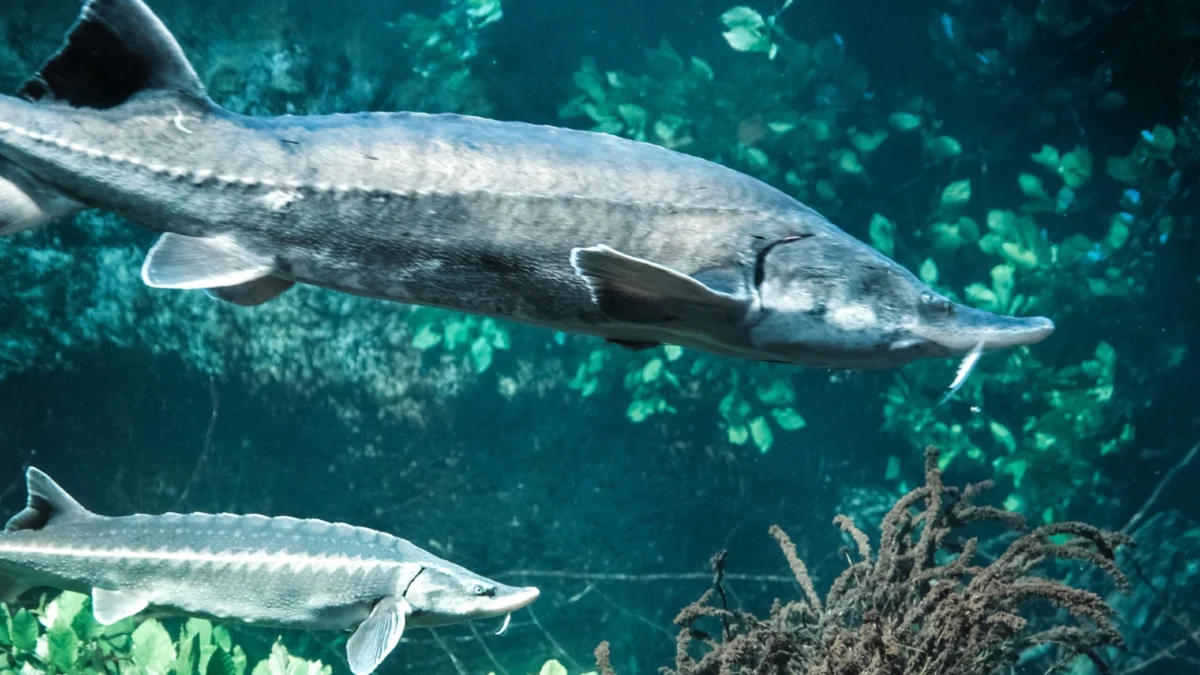
A comprehensive multi-decade study conducted by researchers from Michigan and Wisconsin has fundamentally altered the scientific understanding of the lake sturgeon (Acipenser fulvescens), revealing that these prehistoric survivors can live significantly longer than previously documented. While earlier estimates capped the lifespan of the species at approximately 150 years, the new findings suggest that female sturgeon in Lake Michigan may reach ages exceeding 400 years. This discovery places the lake sturgeon among the longest-lived vertebrates on the planet, rivaling the longevity of the Greenland shark and providing new insights into the evolutionary resilience of a species that has remained largely unchanged for 150 million years.
The study, published in the Journal of Fish Biology, represents the culmination of 44 years of intensive field research across five distinct populations of lake sturgeon. By analyzing growth rates and recapture data, scientists have established a new ceiling for the species’ biological clock, with findings indicating that males can live up to 279 years, while females—which generally grow larger and live longer—can reach a staggering 427 years. This longevity suggests that some individual sturgeon currently swimming in the Great Lakes may have been born before the arrival of the first European settlers in the region.
The Science of Determining Prehistoric Age
To reach these conclusions, researchers from the Michigan Department of Natural Resources (DNR) and various regional universities utilized a combination of long-term tracking and modern aging techniques. The methodology involved capturing fish, determining their sex, recording precise measurements, and tagging them before release. Over the course of four decades, the recapture of these tagged individuals allowed scientists to calculate exact growth increments over known time intervals.
Historically, the age of a sturgeon was estimated by examining the cross-sections of their pectoral fin rays. Much like the rings of a tree, these bony structures develop annual growth layers. However, this method becomes increasingly difficult as the fish ages because the growth rings become so tightly packed that they are nearly impossible to distinguish. By comparing the physical growth of recaptured fish against the ring data, the researchers were able to create a more accurate mathematical model for aging.
Edward Baker, the manager of the Michigan DNR’s Marquette research station, noted that the previous 150-year estimate was likely a conservative baseline based on smaller sample sizes and less sophisticated modeling. The new data suggests that the "living dinosaur" moniker frequently applied to the sturgeon is even more appropriate than once thought. The ability of a vertebrate to maintain biological function for over four centuries is a rare physiological feat, necessitating unique cellular repair mechanisms and a slow metabolic rate that scientists are now eager to study further.
A Legacy of 150 Million Years
The lake sturgeon is a relic of the Upper Cretaceous period, having survived the mass extinction event that wiped out the terrestrial dinosaurs 66 million years ago. Their physical characteristics reflect this ancient lineage; they lack a traditional skeleton, possessing instead a cartilaginous frame and a heterocercal tail similar to that of a shark. Their bodies are armored with five rows of bony plates, known as scutes, rather than the scales found on more modern teleost fish.
As the largest freshwater fish in North America, lake sturgeon are an apex component of the Great Lakes ecosystem. They can reach weights of 200 to 300 pounds and lengths exceeding seven feet. Despite their size, they are bottom-dwellers, using their sensitive barbels (whisker-like organs) to locate prey such as insect larvae, crayfish, and snails on the lake floor. Their slow growth and late maturation—females often do not reach reproductive age until they are 20 to 25 years old—make them uniquely vulnerable to environmental changes and overharvesting.
The Historical Decline and the 1% Threshold
The revelation of the sturgeon’s extreme longevity adds a somber layer to the history of their decline in the Great Lakes. In the early 1800s, the sturgeon population in the region was estimated to be around 2 million. However, by the late 19th century, they were treated as a nuisance by commercial fishermen. Because their heavy, armored bodies often destroyed thin nylon fishing nets intended for whitefish and lake trout, sturgeon were frequently caught, piled on beaches, and burned.
Later, the perception of the fish shifted from "trash fish" to a valuable commodity. The discovery that sturgeon eggs could be processed into high-quality caviar and their swim bladders used to produce isinglass (a gelatinous substance used in beer and wine clarification) led to an era of intense overexploitation. By the early 20th century, the population had collapsed.
Today, the Great Lakes sturgeon population is estimated to be less than 1% of its historical abundance. While the discovery that they can live for 400 years is a testament to their individual durability, it highlights the fragility of the population as a whole. If a female sturgeon that takes 25 years to reach maturity is killed, the loss to the reproductive potential of the species is immense, spanning centuries of potential offspring.

Contemporary Threats and Regulatory Challenges
The survival of the lake sturgeon is currently jeopardized by a trifecta of modern challenges: habitat fragmentation, chemical pollution, and climate change. The construction of dams on the tributaries where sturgeon spawn has historically cut off access to vital breeding grounds. Furthermore, as bottom-feeders, sturgeon are particularly susceptible to the bioaccumulation of toxins that settle in lake sediments, which can interfere with their reproductive health and longevity.
In 2024, the U.S. Fish and Wildlife Service (USFWS) reviewed the status of the lake sturgeon to determine if it warranted protection under the Endangered Species Act (ESA). Despite the precarious population levels, the USFWS ultimately denied the listing, concluding that while the species faced challenges, the ongoing conservation efforts by state and tribal agencies were sufficient to prevent extinction. This decision was met with mixed reactions from environmental groups, who argued that federal oversight is necessary to ensure uniform protection across state lines.
The impact of climate change presents a newer, more unpredictable threat. Sturgeon rely on specific temperature cues to begin their upstream spawning migrations. As Great Lakes water temperatures rise and weather patterns become more volatile, the timing of these migrations may become decoupled from the availability of food sources for the newly hatched larvae, potentially leading to recruitment failure.
Conservation Efforts and Path to Recovery
The new data regarding the sturgeon’s 400-year lifespan has significant implications for how conservationists manage the species. Traditional management cycles often operate on five- or ten-year plans, but for a fish that lives for four centuries, such timeframes are insufficient. Recovery must be viewed through a multi-generational lens.
In Michigan and Wisconsin, intensive restoration programs are already underway. These include the use of streamside rearing trailers, which raise young sturgeon in the water of the specific river where they will eventually be released. This process helps the fish "imprint" on the water’s chemical signature, ensuring they return to the same site to spawn decades later.
Tribal nations around the Great Lakes have also taken a leading role in sturgeon conservation. For many Indigenous communities, the sturgeon (known as Nmé in Anishinaabemowin) is a sacred relative and a clan animal. Tribal-led initiatives have been instrumental in restoring spawning reefs and advocating for the removal of obsolete dams that block migration routes.
Comparative Longevity and Biological Implications
The finding that lake sturgeon can live up to 427 years places them in an elite group of "centenarian" species. For comparison, the Greenland shark is currently the longest-lived vertebrate, with some individuals estimated to be 512 years old. Other long-lived species include the bowhead whale (211 years) and the Rougheye rockfish (205 years).
The ability of the lake sturgeon to nearly match the longevity of the Greenland shark—a deep-sea inhabitant—while living in freshwater environments is particularly noteworthy. Freshwater ecosystems are generally more susceptible to temperature fluctuations and human interference than the deep ocean. The sturgeon’s success suggests a highly evolved set of biological defenses against senescence (the process of biological aging).
Biologists are interested in exploring how these fish maintain their DNA integrity over such vast periods. Understanding the mechanisms that allow a sturgeon to resist cancer and organ failure for 400 years could have broader implications for geriatric research and the study of longevity in other species, including humans.
Conclusion: A Witness to History
The realization that a single fish could live through the entirety of modern American history—from the colonial era to the digital age—transforms the lake sturgeon from a mere biological specimen into a living witness to the environmental transformation of the Great Lakes. The data provided by the Michigan and Wisconsin researchers serves as both a scientific breakthrough and a conservationist’s warning.
While the lake sturgeon has proven its ability to endure for millions of years as a species and centuries as individuals, its future remains tied to the health of the Great Lakes. The current population, though stable in some pockets, remains a shadow of its former self. Protecting a creature that lives for 400 years requires a commitment that extends beyond the current generation of scientists and policymakers. It requires a long-term vision of stewardship that matches the extraordinary lifespan of the fish itself. As research continues, the "living dinosaur" of Lake Michigan remains a symbol of resilience, reminding the world that some of the planet’s greatest mysteries are still swimming beneath the surface of the Great Lakes.



 Yuyun Lusiyani
 Joko Widodo
 Jia Lissa
 admin
admin
