
 Pevita Pearce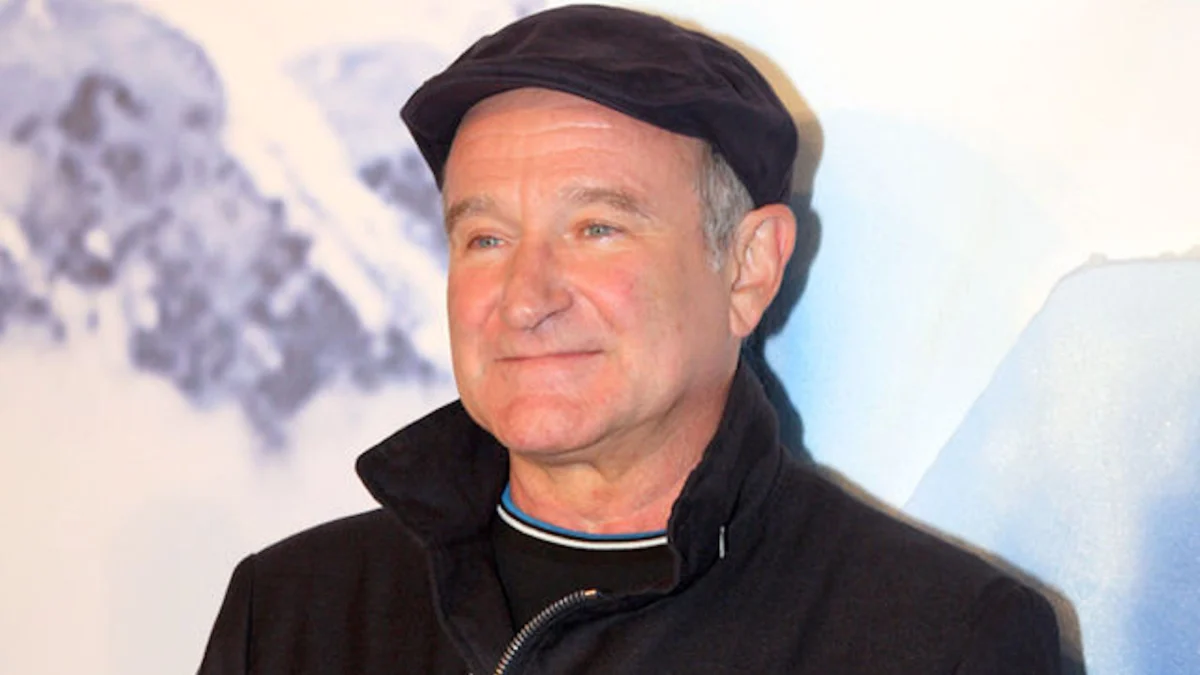
The children of the late Academy Award-winning actor and comedian Robin Williams have officially reactivated their father’s dormant Instagram account, ending a decade of digital silence to establish a verified bastion for his authentic legacy. Zak, Zelda, and Cody Williams announced the revival of the @robinwilliams account nearly a month after what would have been the actor’s 75th birthday, framing the move as a strategic defense against the "rampant abuse" of artificial intelligence tools that have increasingly been used to simulate Williams’ voice and likeness without authorization.
The account had remained largely untouched since Williams’ passing in August 2014 at the age of 63. However, the rapid proliferation of generative AI and "deepfake" technology has created a digital landscape where the actor’s persona is frequently co-opted for unauthorized content. By reclaiming the platform, the Williams estate intends to provide a "safe, trusted place" where fans can engage with genuine archival material, ensuring that the actor’s memory remains tethered to his actual life and work rather than algorithmic recreations.
A Strategic Move for Authenticity in the Digital Age
In a joint statement released via the newly reactivated account, Zak, Zelda, and Cody Williams expressed their gratitude for the enduring global appreciation of their father’s career. They noted that while it is heartening to see new generations discovering his filmography—which spans from the manic energy of Mork & Mindy to the poignant depth of Good Will Hunting—the evolution of technology has necessitated a more proactive approach to managing his digital footprint.
"As technology evolves, we want this to be a safe, trusted place where the stories, photos, videos, and memories shared reflect his legacy with authenticity, warmth, and care," the siblings stated. They emphasized that the account will serve as a curated repository of the moments that defined Williams’ extraordinary life, both as a world-renowned performer and as a father.
The decision highlights a growing trend among the estates of deceased public figures who find themselves at odds with the "digital resurrection" industry. For the Williams family, the project is less about social media engagement and more about establishing a definitive source of truth to counteract the "AI slop"—a term used by Zelda Williams to describe low-quality, AI-generated content—that has flooded platforms like TikTok and Instagram in recent years.
The Long-Standing Battle Against AI Encroachment
Zelda Williams, a director and actress in her own right, has been the most vocal critic within the family regarding the use of AI to mimic her father. She addressed the awkwardness of reviving the account in a recent social media post, acknowledging that seeing a deceased loved one’s profile become active again can be jarring for the public.
"Believe me, I know it’s a little strange," she wrote. "Making that space into one where people can find authentic clips and photos of him is one of the best ways we’ve now found to fight back against rampant AI abuse of his voice and likeness on here."
This is not a new conflict for Zelda. During the 2023 SAG-AFTRA strike, which centered heavily on the ethical and legal implications of AI in Hollywood, she was a prominent voice advocating for the protection of an actor’s "digital soul." She has previously described AI recreations of her father as "personally disturbing," comparing them to a "Frankensteinian monster" cobbled together from data points rather than human intent.
In late 2025, Zelda issued a stern plea to the public to stop sharing AI-generated videos of her father with her. She argued that these recreations strip away the nuance and humanity of a performance, reducing a legendary career to a "vaguely similar" facsimile. "It’s dumb, it’s a waste of time and energy, and believe me, it’s NOT what he’d want," she asserted.
Chronology of a Legacy Under Threat
The timeline of the Williams family’s engagement with his digital legacy reveals a shift from private mourning to public advocacy:
- August 2014: Robin Williams passes away at 63. His social media accounts become inactive as the family grieves privately.
- 2015–2022: The estate maintains a traditional approach to his legacy, focusing on licensing and charitable endeavors.
- Summer 2023: The SAG-AFTRA and WGA strikes bring the issue of AI likeness to the forefront of the entertainment industry. Zelda Williams speaks out against the unauthorized cloning of her father’s voice.
- October 2025: Zelda issues a viral statement condemning "AI slop" and the "maddening" practice of puppeteering deceased actors for social media engagement.
- July–August 2026: On the heels of what would have been his 75th birthday, the children officially revive the Instagram account to serve as a verified archive.
The Broader Impact on the Entertainment Industry
The Williams family’s struggle is a microcosm of a much larger legal and ethical debate currently unfolding in the United States and abroad. The rise of sophisticated Large Language Models (LLMs) and voice-cloning software has made it possible for hobbyists and corporations alike to create "new" content featuring deceased stars.
This phenomenon has prompted legislative action. In 2024 and 2025, several bills were introduced in the U.S. Congress, such as the NO FAKES Act, aimed at protecting the "right of publicity" for individuals, ensuring that their voice and likeness cannot be used without consent, even after death. The Williams estate’s decision to curate an official Instagram account provides a practical, platform-level solution to a problem that legislation has yet to fully solve.
Industry analysts suggest that the "Robin Williams Model" may become the standard for high-profile estates. By flooding the digital space with high-quality, authentic content, estates can effectively "out-compete" AI-generated fakes in search algorithms and fan engagement. This shift transforms a social media account from a marketing tool into a protective shield for a performer’s intellectual property and human dignity.
Supporting Data: The Rise of the Digital Afterlife
The demand for "digital resurrections" is supported by significant market data. According to industry reports on AI trends in entertainment, the market for "AI-generated influencers and avatars" is projected to grow by over 35% annually through 2030. For estates of actors like Williams—whose voice was an integral part of his identity—the risk is particularly high.
Voice cloning technology has reached a point where only a few seconds of audio are required to create a near-perfect replica. For a performer like Williams, who left behind thousands of hours of recorded material, the "data set" available to AI developers is vast. This availability makes his likeness a primary target for creators of unauthorized content, ranging from harmless "what if" scenarios to potentially malicious misinformation or commercial exploitation.
Reactions and Ethical Considerations
The move has been met with widespread support from the acting community and fans alike. Many see it as a necessary stand against the commodification of grief and the erosion of artistic integrity.
Ethicists argue that the "human element" of performance—the spontaneous choices, the emotional depth, and the lived experience—cannot be replicated by algorithms. Zelda Williams has consistently echoed this sentiment, noting that her father’s genius lay in his unpredictability and his humanity, qualities that AI, by its very nature, lacks.
"To watch the legacies of real people be condensed down to ‘this vaguely looks and sounds like them so that’s enough’… is maddening," Zelda previously noted. Her critique points to a fundamental concern: if the public accepts "good enough" facsimiles, the value of actual human creativity may be permanently diminished.
Preserving the "Extraordinary Life and Work"
As the revived account begins to share rare photos and behind-the-scenes clips, the focus remains squarely on the man behind the characters. Robin Williams was more than just a comedic force; he was a dedicated philanthropist, a supporter of the USO, and a co-founder of Comic Relief USA, which raised over $80 million for the homeless.
The Williams children intend for the Instagram account to reflect this multifaceted life. By highlighting his charitable work alongside his cinematic achievements, they hope to ensure that his legacy is defined by his actual contributions to the world rather than the "Frankensteinian" creations of modern software.
In the end, the revival of the Robin Williams Instagram account is a testament to the enduring power of human connection. In an era where the lines between reality and simulation are increasingly blurred, the Williams family is choosing to draw a firm boundary. Their message is clear: while technology can mimic a voice, it cannot replace a soul, and the most effective way to honor a legacy is to protect its truth.



 Yuyun Lusiyani
 Joko Widodo
 Jia Lissa
 admin
admin
