
 Yuyun Lusiyani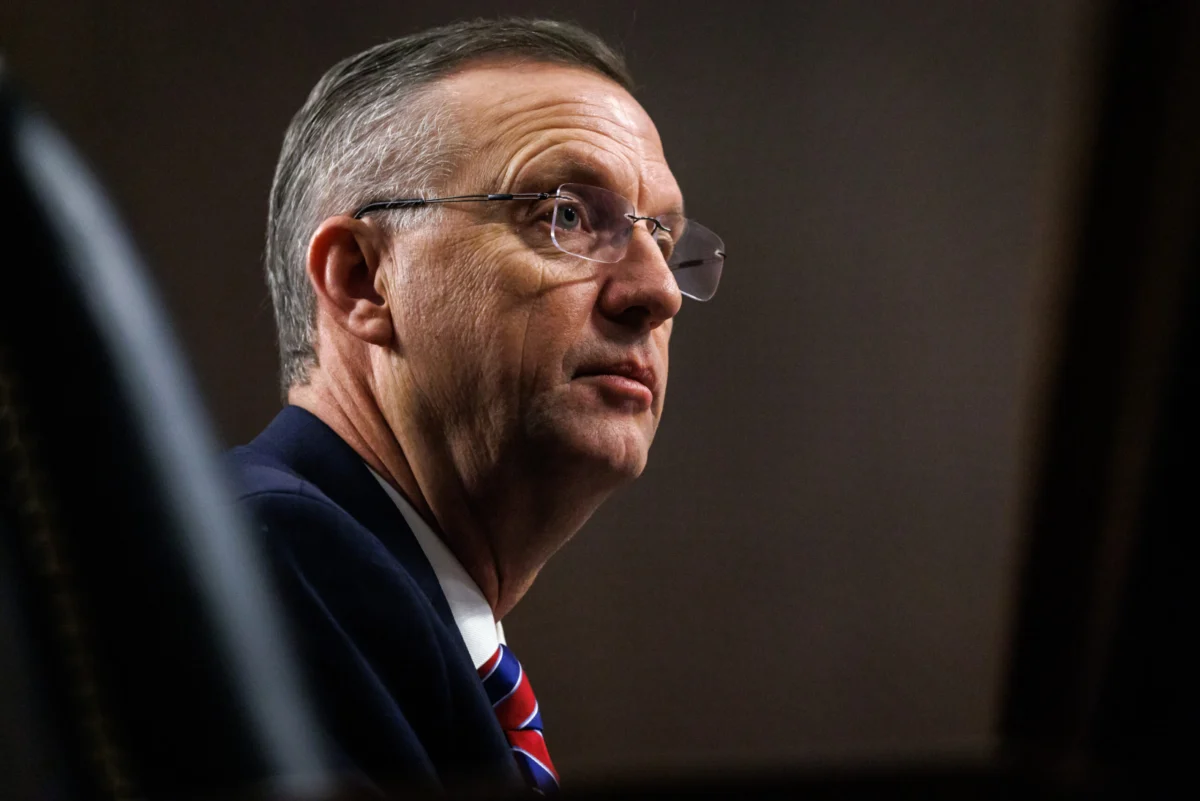
More than sixty House Democrats have launched a concerted effort to hold Department of Veterans Affairs (VA) Secretary Doug Collins accountable, demanding comprehensive answers regarding the severe and escalating strain on the agency’s mental healthcare services. This congressional pressure comes in the wake of President Donald Trump’s second administration, during which a significant and troubling deterioration in the VA’s capacity to provide critical mental health support to the nation’s veterans has been observed. The lawmakers, spearheaded by Rep. Judy Chu (D-CA), a practicing psychologist, dispatched a detailed letter to Secretary Collins last week, citing a spring investigation by ProPublica that laid bare a alarming trend: the VA’s mental health workforce has been in a precipitous decline, leaving countless veterans in dire need of care facing prolonged waits and reduced quality of service.
Congressional Scrutiny and Demands for Transparency
The collective voice of over 60 Democratic representatives underscores a profound concern for the welfare of the veteran community, a demographic particularly vulnerable to mental health challenges stemming from their service. Rep. Chu, whose professional background lends significant weight to her advocacy, emphasized the moral imperative behind their inquiry. "Caring for our nation’s Veterans is a fundamental responsibility," the congressional letter asserts, articulating a principle that transcends political divides. "That includes ensuring access to high-quality mental health care."
The letter is not merely a statement of concern; it is a direct demand for transparency and accountability. Lawmakers have explicitly requested that the VA furnish detailed information pertaining to the documented shortage of mental health providers within its system. They seek clarity on the extent of this deficit, its geographic distribution, and, crucially, its tangible impact on the veteran population. Furthermore, the congressional delegation has pushed the agency to disclose specific data on the average wait times veterans are currently experiencing for mental health appointments, a critical metric of accessibility and responsiveness. The Aug. 14 deadline for the VA’s response signals the urgency with which Congress views this unfolding crisis.
Unpacking the ProPublica Investigation: A System at a "Breaking Point"
The impetus for this congressional action largely stems from the investigative journalism of ProPublica, which earlier this spring unveiled a stark reality within the VA. While the Department of Veterans Affairs has historically grappled with a shortfall of mental health providers, the investigation meticulously documented how this long-standing issue has demonstrably worsened under the current Trump administration. The report highlighted a disturbing trend: hundreds of dedicated mental health staffers have departed the VA, creating a significant void that has largely gone unfilled. This exodus has placed immense pressure on the remaining workforce, leading to what many describe as an unsustainable environment.
ProPublica’s extensive investigation painted a vivid and troubling picture of the experiences of both mental health providers and the veterans desperately seeking their assistance. With a shrinking workforce and no corresponding reduction in demand, the remaining VA professionals have been stretched to their absolute limits. One psychologist, formerly employed by a VA facility in Arizona, shared a particularly distressing account. She described how the agency, in an apparent effort to manage overwhelming caseloads, replaced some crucial one-on-one therapy sessions with large online group sessions, some accommodating as many as 35 veterans. Even the individual sessions that remained were reportedly curtailed, sometimes lasting a mere 16 minutes – a duration many professionals consider woefully inadequate for effective therapeutic intervention, especially for complex trauma-related conditions. "It was always bad," the psychologist recounted, expressing a sentiment of despair, "And now it’s at a breaking point."
Further corroborating these anecdotal accounts, ProPublica obtained internal VA exit surveys from departing mental health staffers. These surveys provided a stark, unfiltered glimpse into the reasons behind the exodus. Repeatedly, former employees cited their inability to deliver high-quality care as a primary motivator for their departure. "Mental Health is understaffed, burned out," wrote one New York-based staffer in their exit survey. "There is not enough mental health care for the Veterans who need the services." This sentiment underscores a systemic issue where dedicated professionals feel compromised in their mission to serve, leading to a vicious cycle of burnout and attrition.
Veterans Falling Through the Cracks: Personal Stories of Disillusionment
The direct consequence of this systemic strain falls squarely on the shoulders of the veterans themselves, many of whom are now reporting that they are falling through the cracks of a system designed to support them. Jason Beaman, a Navy and Army veteran, shared his disheartening experience with ProPublica. He recounted being repeatedly shuffled between therapists, only to find each new provider eventually leaving the VA. This constant disruption in care, the necessity of re-establishing trust and rapport with new professionals, ultimately led to his disillusionment. "I just quit. I don’t want to mess with the therapist anymore," Beaman expressed this spring, his words echoing the frustration and despair of many who have lost faith in the continuity and quality of VA mental health services. Such stories are not isolated incidents but represent a growing trend of veterans disengaging from care due to perceived instability and inadequacy.
The data further supports these individual narratives. ProPublica reported that as of January, the Department of Veterans Affairs employed approximately 500 fewer psychologists and psychiatrists compared to the same period last year. More recent VA data, according to the investigation, indicates that these critical headcount declines are not only persisting but are continuing to worsen, pointing to a deepening crisis rather than a temporary fluctuation.
A Chronology of Mounting Concerns
- Last Year (2024): President Donald Trump returns to office, his administration pledging to deliver veterans "the highest quality care."
- Early 2025: ProPublica begins its in-depth investigation into the state of VA mental healthcare, uncovering significant workforce reductions and impacts on veteran care.
- January 2025: ProPublica data indicates the VA has approximately 500 fewer psychologists and psychiatrists compared to January 2024.
- Spring 2025: ProPublica publishes its investigation, detailing the plummeting mental health workforce, increased wait times, reduced session lengths, and veteran disillusionment.
- Last Week (Late June/Early July 2025): Over 60 House Democrats, led by Rep. Judy Chu, send a formal letter to VA Secretary Doug Collins, demanding answers and transparency regarding the issues raised by the ProPublica report.
- August 14, 2025: Deadline set by congressional lawmakers for the VA to provide a comprehensive response to their inquiries.
- June 11, 2025 & June 26, 2025: (As per internal series timeline references) These dates may represent internal milestones in the ongoing investigation or subsequent reporting by ProPublica, indicating sustained scrutiny.
The Broader Implications: Why Veteran Mental Health Matters Critically
The crisis within the VA’s mental healthcare system carries profound implications that extend far beyond administrative figures and congressional inquiries. The Department of Veterans Affairs is, by a significant margin, the country’s largest integrated healthcare system, serving a staggering 9 million veterans. This immense patient population faces a disproportionately higher rate of mental health issues compared to the general populace. Conditions such as Post-Traumatic Stress Disorder (PTSD), traumatic brain injury (TBI), depression, anxiety disorders, and substance use disorders are tragically common among those who have served.
Perhaps the most harrowing statistic is the suicide rate among veterans, which stands at roughly twice that of the civilian population. This stark reality underscores the critical importance of accessible, high-quality mental healthcare for this demographic. The VA’s mental health staff has historically developed a deep and specialized expertise in addressing the unique psychological and emotional needs of veterans, often dealing with complex trauma and the specific challenges of military-to-civilian transition. Indeed, numerous studies have indicated that veterans often receive superior care within the VA system compared to private providers, largely due to this specialized understanding and integrated approach.
Russell Lemle, former chief psychologist for the San Francisco VA Health Care System and now a senior policy analyst at the Veterans Healthcare Policy Institute, eloquently summarized the gravity of the situation: "VA psychologists are best in class. When you lose them, the veterans are the ones who pay the price." This sentiment highlights not just a staffing shortage, but a loss of invaluable institutional knowledge and specialized skill sets that are difficult, if not impossible, to replicate quickly. The erosion of this expertise threatens to undermine the very foundation of comprehensive veteran care.
Beyond individual well-being, the implications stretch to societal costs. Inadequate mental healthcare can lead to homelessness, unemployment, increased involvement with the justice system, and family disintegration among veterans, creating a ripple effect across communities. The promise made by the Trump administration upon its return to office – to deliver "the highest quality care" – rings hollow against the backdrop of these documented declines.
Official Response: Defense and Counter-Accusations
In the face of mounting evidence and congressional pressure, the Department of Veterans Affairs has offered a defense of its operations. Quinn Slaven, a VA spokesperson, responded to inquiries from ProPublica by asserting the administration’s commitment. "The Trump Administration is solely focused on measuring VA’s success by how well it serves Veterans," Slaven wrote in an email, adding, "This commonsense approach has led to dramatic improvements for Veterans, families, caregivers, and survivors across the country."
Slaven specifically countered the narrative of declining services by claiming that the VA completed a record number of mental healthcare appointments in the past fiscal year, while simultaneously asserting that veterans’ wait times have been lowered. These claims, however, are viewed with skepticism by critics and lawmakers, who question whether an increase in appointment numbers necessarily translates to an improvement in appointment quality or duration, especially when accompanied by a shrinking workforce. If staff are seeing more patients, but for shorter periods or in larger group settings, the effectiveness of care could be compromised despite higher overall appointment counts.
Further, the VA has adopted an aggressive stance against the investigative reporting itself. Peter Kasperowicz, another VA spokesperson, declined ProPublica’s request for an interview and instead accused the publication of attempting to mislead the public. Kasperowicz alleged that ProPublica was "cherry picking issues that are limited to a handful of sites and in many cases were worse under the Biden Administration." This accusation suggests a political framing of the issue, seeking to deflect criticism by attributing systemic problems to previous administrations or minimizing their current scope.
Interestingly, after ProPublica shared the findings of its investigation and the names of veterans whose experiences would be featured, the VA reportedly reached out to several of these individuals to inquire about their care and offer assistance. While this action could be seen as a positive step, it also highlights the potential for reactive measures in response to public scrutiny, rather than proactive systemic improvements.
Looking Ahead: The Battle for Veteran Mental Health
The congressional letter and the Aug. 14 deadline mark a critical juncture in the ongoing battle for robust veteran mental healthcare. The outcome of this inquiry will not only determine the immediate transparency and accountability of the VA but could also influence future policy decisions, funding allocations, and staffing strategies.
The implications are far-reaching. Should the VA fail to provide satisfactory answers or demonstrate a credible plan to address the workforce crisis and its impact on care quality, it could further erode trust between veterans and the institution designed to support them. This loss of trust can have devastating long-term consequences, deterring veterans from seeking help when they need it most.
For the Trump administration, the issue of veteran care is a politically sensitive one, often invoked as a hallmark of national responsibility. The current scrutiny places pressure on Secretary Collins and the administration to reconcile their public commitments with the realities reported by investigative journalists and now echoed by a significant bloc of Congress. The debate also reignites broader discussions about the adequate funding and management of the VA, and the delicate balance between ensuring comprehensive, specialized care within a public system and potentially relying more on private sector options, a strategy that has its own set of complexities and criticisms.
As the Aug. 14 deadline approaches, all eyes will be on the Department of Veterans Affairs to see if it can provide the clarity and reassurance demanded by Congress and, more importantly, by the millions of veterans who have served the nation and are now seeking the care they were promised and so profoundly deserve. The crisis in veteran mental health is not merely a bureaucratic challenge; it is a moral imperative that demands an immediate and effective response.




 Joko Widodo
 Jia Lissa
 Pevita Pearce
 admin
admin